
In the realm of physics, the speed of light—approximately 299,792,458 meters per second—is the universal speed limit. For decades, this was a concept reserved for astronomers and theoretical physicists. However, in the contemporary landscape of technology, “light speed” has transitioned from a scientific constant to the foundational benchmark of modern digital infrastructure. As we demand instantaneous data, global connectivity, and real-time processing, the tech industry is increasingly focused on things that travel at the speed of light: photons, radio waves, and the information they carry.
Understanding what travels at the speed of light is no longer just a lesson in optics; it is an exploration of how fiber-optic networks, satellite constellations, and upcoming photonic processors are reshaping the world. From the way we secure our data to how we train massive Artificial Intelligence (AI) models, the mastery of the speed of light is the primary driver of technological evolution.

The Backbone of Global Connectivity: Fiber Optics and Photonic Data
The most prevalent example of technology traveling at the speed of light is the global fiber-optic network. While we often think of the internet as a “cloud,” it is physically grounded in millions of miles of glass and plastic threads that wrap around the planet.
How Light Carries Information
In a fiber-optic cable, data is converted from electrical signals (electrons) into light pulses (photons). These photons travel through a core of glass by bouncing off the walls of the cable through a process called total internal reflection. Because light has a much higher frequency than electricity traveling through copper wire, it can carry significantly more data over longer distances with minimal signal degradation. This is the technology that enables 4K streaming, high-speed downloads, and the seamless functioning of global financial markets.
The Transition from Electrical Signals to Light
Historically, data transmission relied on copper wires and electrical impulses. However, electrons are heavy and generate significant heat due to resistance. Photons, being massless, do not suffer from the same physical limitations. The tech industry’s shift toward “all-optical” networking is driven by the need to reduce latency—the delay between a command and a response. In high-performance computing (HPC) and data centers, even the nanoseconds saved by switching from copper to light-based interconnects can result in a competitive advantage.
Beyond the Cable: Satellite Communication and the Vacuum of Space
While fiber optics are the gold standard for terrestrial speed, the next frontier of light-speed technology is occurring above our heads. Radio waves and microwaves are forms of electromagnetic radiation, and like visible light, they travel at the speed of light (c) in a vacuum.
Starlink and the Rise of Low-Earth Orbit (LEO) Constellations
Traditional satellite internet relied on massive satellites in Geostationary Orbit (GEO), roughly 35,000 kilometers away. The distance caused a noticeable lag, as the signal had to travel 70,000 kilometers for a round trip. Modern tech companies like SpaceX with Starlink and Amazon with Project Kuiper are deploying thousands of small satellites in Low-Earth Orbit (LEO), just 550 kilometers above the surface.
In a vacuum, light travels approximately 30% faster than it does through a glass fiber-optic cable. This means that for long-distance communication (such as between London and Sydney), a laser link between satellites in space can technically be faster than a physical cable on Earth. This “laser-mesh” networking is the cutting edge of global telecommunications, aiming to provide light-speed access to the most remote corners of the globe.
The Latency Challenge in Deep Space Technology
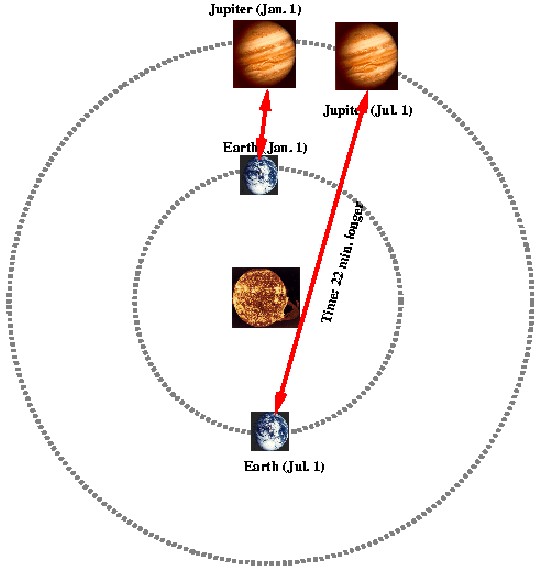
As humanity looks toward Mars and beyond, the speed of light becomes a technological bottleneck rather than an advantage. Even traveling at the speed of light, a signal takes between 3 and 22 minutes to reach Mars from Earth. This has forced software engineers to develop highly autonomous AI tools for rovers and spacecraft. Since real-time “remote control” is impossible due to the light-speed delay, the technology must be capable of making its own decisions, highlighting how the physical constants of the universe dictate the development of software and AI.

The Quest for Photonic Computing and Light-Based Hardware
For decades, Moore’s Law—the observation that the number of transistors on a microchip doubles every two years—has driven tech progress. However, we are reaching the physical limits of silicon. As transistors get smaller, they leak heat and consume massive amounts of energy. The solution being explored by the most innovative hardware startups is photonic computing.
Replacing Electrons with Photons in Processors
Photonic computing involves using light instead of electricity to perform logic operations. In a standard computer chip, electrons move through silicon pathways, generating heat and encountering resistance. A photonic chip uses microscopic “waveguides” to direct light pulses.
The implications for technology are staggering. Light-speed processors could potentially be 1,000 times faster than current silicon chips while consuming a fraction of the power. For AI companies, this is the holy grail. Training a Large Language Model (LLM) currently requires massive data centers that consume as much electricity as small cities. Moving to light-based processing would allow for more powerful AI tools that are environmentally sustainable and exponentially faster.
Silicon Photonics and the Data Center Revolution
We are currently in a hybrid phase known as “Silicon Photonics.” This technology integrates laser sources and optical detectors directly onto silicon substrates. It allows data to move between the different components of a server—such as the CPU, GPU, and memory—at the speed of light. As AI workloads increase, the “interconnect bottleneck” (the speed at which data moves between chips) has become the primary limiting factor. Silicon photonics solves this by ensuring that data within the machine travels at the same speed as the data traveling across the ocean.
Security at the Speed of Light: Quantum Key Distribution (QKD)
As our ability to manipulate light improves, so does our ability to secure data. Digital security is currently in a race against quantum computers, which threaten to break traditional encryption. The tech industry’s answer is Quantum Key Distribution (QKD), a method of securing communication that relies on the fundamental properties of light.
How Light Ensures Unhackable Data
QKD uses individual photons to send encryption keys. According to the laws of quantum mechanics, the act of observing a quantum system changes that system. If a hacker attempts to intercept or “measure” the photons carrying the encryption key, the state of the photons changes, alerting the sender and receiver to the breach.
This is “security at the speed of light.” It doesn’t rely on complex mathematical puzzles that a powerful computer might eventually solve; instead, it relies on the physical properties of light itself. Governments and financial institutions are already beginning to implement QKD-protected fiber-optic links to ensure that their digital assets remain secure in the post-quantum era.
The Future of the Quantum Internet
The ultimate goal of this technology is the creation of a “Quantum Internet.” This would be a network where quantum information is transmitted via “entangled” photons. Unlike the current internet, which sends bits (0s and 1s), a quantum internet would transmit qubits. This would enable a level of distributed computing and privacy that is currently impossible. While still in the experimental phase, the hardware—specifically specialized lasers and single-photon detectors—is being developed at an accelerating pace.
Conclusion: The Final Frontier of Tech Development
When we ask “what travels at the speed of light,” we are essentially asking what defines the boundaries of modern technology. Our world is increasingly built on the behavior of photons. Whether it is the fiber-optic cables enabling a global economy, the satellite arrays providing universal internet access, or the experimental photonic chips that will power the next generation of AI, the speed of light is the heartbeat of the digital age.
The transition from the era of the electron to the era of the photon represents one of the most significant shifts in human history. As we continue to refine our gadgets, software, and infrastructure, our goal remains the same: to move closer to that universal speed limit. In the tech world, speed isn’t just a feature—it is the platform upon which all future innovation will be built. By harnessing the things that travel at the speed of light, we are not just making faster devices; we are expanding the possibilities of what humanity can achieve in the digital realm.
aViewFromTheCave is a participant in the Amazon Services LLC Associates Program, an affiliate advertising program designed to provide a means for sites to earn advertising fees by advertising and linking to Amazon.com. Amazon, the Amazon logo, AmazonSupply, and the AmazonSupply logo are trademarks of Amazon.com, Inc. or its affiliates. As an Amazon Associate we earn affiliate commissions from qualifying purchases.