
In an era dominated by instant wire transfers, peer-to-peer payment apps, and digital wallets, the humble paper check remains a resilient fixture in the world of personal and business finance. Whether you are receiving a tax refund, a gift from a relative, or payment for freelance services, knowing exactly what to write on the back of a check is a fundamental financial literacy skill.
Properly endorsing a check is more than just a formal requirement; it is a critical security measure that dictates how the funds are handled and who can access them. Writing the wrong information—or writing nothing at all—can lead to processing delays, potential fraud, or your bank outright refusing the deposit. This guide provides a comprehensive deep dive into the nuances of check endorsement, ensuring your financial transactions remain secure and efficient.

1. The Essential Types of Check Endorsements
The act of signing the back of a check is legally known as “endorsing.” This signature signifies that you, the payee, are authorizing the transfer of funds from the payer’s account to your own (or to a third party). However, a simple signature is not always the best approach. Depending on your goals, you should choose one of the following three primary endorsement types.
The Blank Endorsement
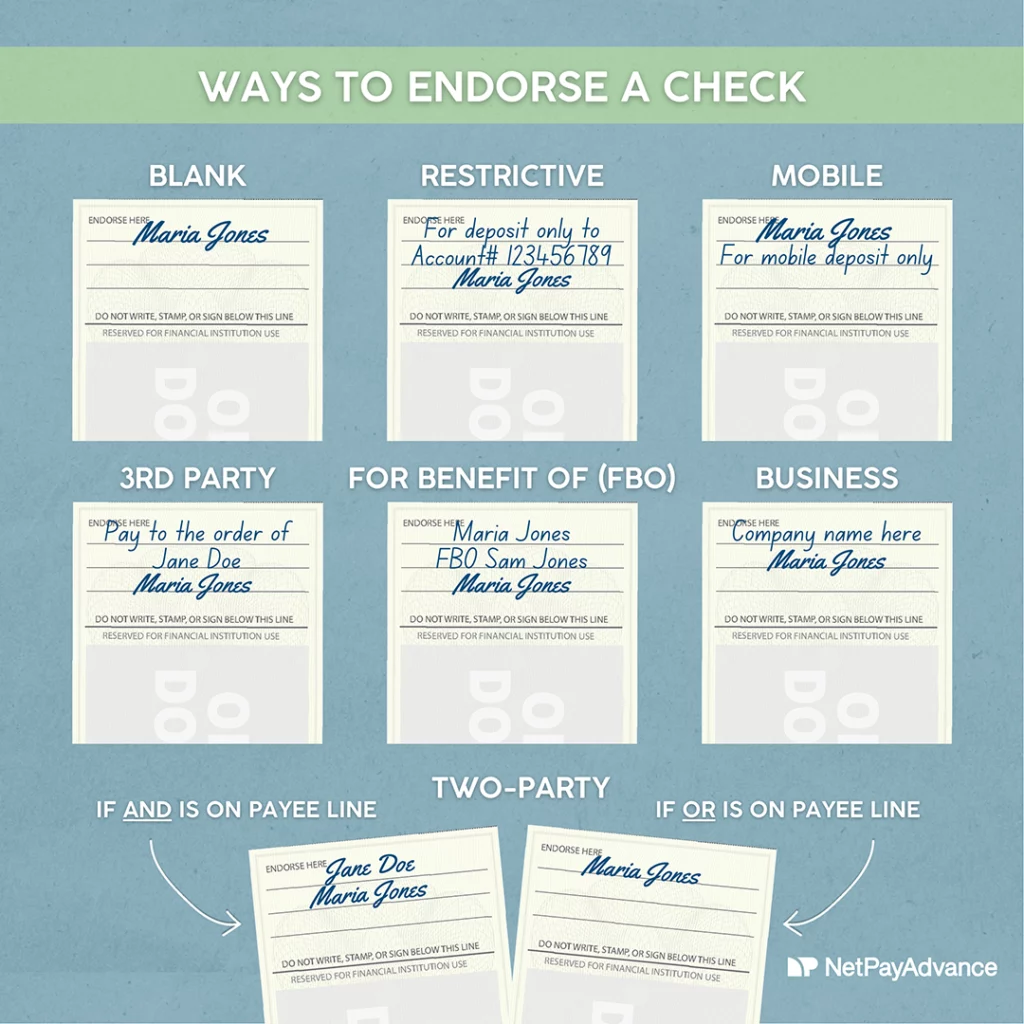
The blank endorsement is the most common and the simplest method. It involves merely signing your name exactly as it appears on the “Pay to the Order of” line on the front of the check. While easy, it is also the least secure. Once a check is signed with a blank endorsement, it becomes a “bearer instrument.” This means that technically, anyone who holds the check can cash or deposit it. For this reason, you should only use a blank endorsement if you are physically standing at the teller window of your bank.
The Restrictive Endorsement
For most people, the restrictive endorsement is the gold standard for security. By writing “For Deposit Only” followed by your account number and your signature, you effectively “restrict” the check’s use. If a check with this endorsement is lost or stolen, it cannot be cashed by a third party at a convenience store or a different bank. It must be deposited into the account number specified. This is the recommended method for checks sent through the mail or placed in a bank’s overnight drop box.
The Special Endorsement (Third-Party Checks)
A special endorsement allows you to transfer a check made out to you to someone else. To do this, you write “Pay to the order of [Name of Third Party]” and then sign your name underneath. This effectively turns the check over to that person. It is important to note, however, that many modern banks are hesitant to accept third-party checks due to the high risk of fraud. If you plan to use a special endorsement, it is wise to verify with the receiving bank beforehand.
2. Navigating the Digital Shift: Endorsing for Mobile Deposits
The rise of fintech has revolutionized how we interact with paper checks. Mobile deposit technology allows users to snap a photo of a check and deposit it via a smartphone app. However, this convenience comes with specific requirements regarding what you must write on the back.
The “For Mobile Deposit Only” Requirement
In 2018, updated federal regulations (specifically amendments to Regulation CC) gave banks more power to refuse mobile deposits that aren’t properly labeled. Most banks now require you to write “For Mobile Deposit Only” or “For Remote Deposit Only” directly under your signature. Some banks go a step further, requiring you to include the specific name of the institution, such as “For Mobile Deposit at [Bank Name] Only.”
Failing to include this phrase can lead to the check being rejected during the automated clearing process. Worse, if the check is processed without this note and you accidentally try to deposit the physical check again later, you could be flagged for “double-presentment” fraud, which can lead to account freezes or penalties.
Security Features in the Endorsement Area
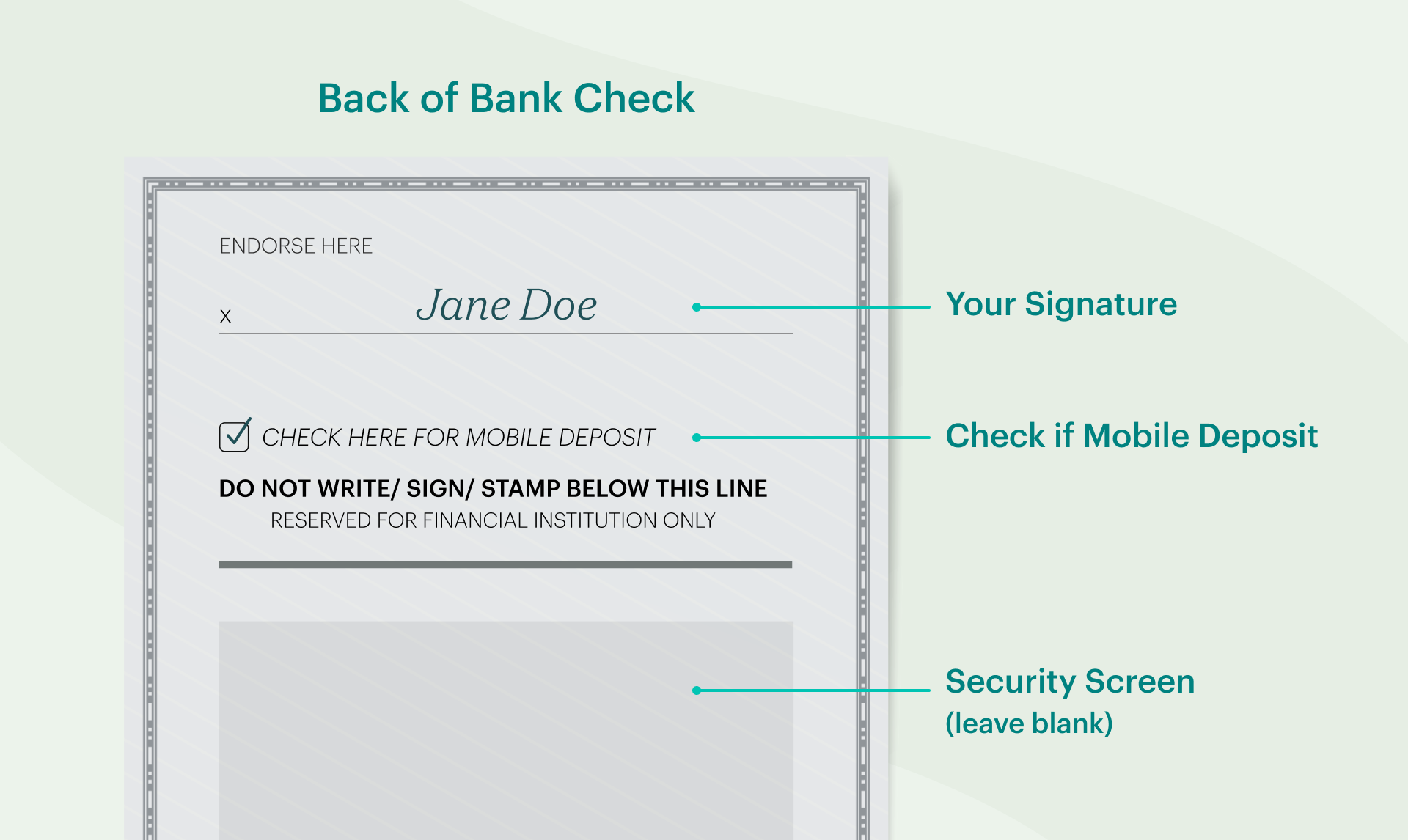
When you look at the back of a modern check, you will see a printed line that says “Endorse Here” and often a warning that says “Do not sign/write/stamp below this line.” This is not merely a suggestion. The space below that line is reserved for bank processing stamps and “trailing endorsements” as the check moves through the Federal Reserve system. If your writing drifts into this area, it can interfere with the high-speed scanners used by banks, leading to manual processing fees or delays in fund availability.
3. Handling Complex Payee Scenarios
Financial transactions are not always straightforward. Often, a check is made out to multiple parties or contains errors. Knowing what to write in these specific scenarios is vital to ensuring the funds are cleared without a hitch.
Multiple Payees: “And” vs. “Or”
If a check is made out to two people (for example, a wedding gift or a joint tax refund), look closely at the word connecting the names.
- If the check says “John AND Jane Doe”: Both individuals must endorse the back of the check. Most banks will also require that the check be deposited into a joint account held by both parties.
- If the check says “John OR Jane Doe”: Only one signature is required. Either John or Jane can endorse and deposit the check into their individual account or a joint account.
- If there is no “and” or “or” (just two names): The Uniform Commercial Code (UCC) generally treats this as “or,” meaning only one signature is needed, but individual bank policies may be stricter.
Misspelled Names and Discrepancies
It is a common occurrence: a client or relative misspells your name on a check. If you receive a check where your name is spelled “Jonathon” but your legal name and bank account say “Jonathan,” do not ignore it. The correct procedure is to sign the back with the misspelling first (matching the front of the check) and then sign your correct legal name immediately underneath. This provides a clear paper trail for the bank’s audit purposes and proves that you are indeed the intended recipient.
Business and Entity Endorsements
When endorsing a check made out to a business, you cannot simply sign your own name. You must indicate your authority to act on behalf of the company. A proper business endorsement typically includes the business name, followed by the signature of the authorized representative and their title (e.g., “ABC Consulting, LLC, by Jane Smith, Manager”). Many businesses use a rubber stamp for this purpose to ensure the “For Deposit Only” restriction and account number are applied consistently.
4. Best Practices for Financial Security and Fraud Prevention
The back of a check is a gateway to your bank account. Treating it with the same level of security as your PIN or digital password is essential for maintaining your financial health.
The “Timing” Rule of Endorsement
A common mistake is signing a check as soon as you receive it, long before you reach the bank. This is a significant security risk. If you sign a check at your home office and then lose your wallet on the way to the bank, that check is as good as cash to anyone who finds it. The best practice is to wait until you are at the bank teller or ready to take the mobile deposit photo before you put pen to paper. If you must sign it early, always use a restrictive endorsement (“For Deposit Only”) to neutralize the risk of theft.
Using the Right Tools
Always use blue or black ink when endorsing a check. High-speed bank scanners often struggle to pick up light colors like red, green, or pencil. Furthermore, ensure your signature matches the signature card you have on file with your financial institution. While signatures evolve over time, a radical discrepancy can trigger fraud alerts and cause the bank to hold the funds while they verify your identity.
Keeping Records
After you have endorsed and deposited a check—especially via a mobile app—what should you do with the physical paper? Most financial experts recommend writing “VOID” or “Mobile Deposit on [Date]” across the front of the check after the app confirms the upload was successful. Keep the physical check in a secure location for 14 to 30 days (depending on your bank’s specific policy) before shredding it. This ensures that if there is a technical glitch or a dispute with the payer, you still have the original document as evidence.
5. Conclusion: Why Proper Endorsement Matters
In the broader context of personal finance, the way you handle checks is a reflection of your overall financial discipline. While the digital age has automated many aspects of our lives, the legal and procedural requirements of “negotiable instruments”—the category to which checks belong—remain rooted in the need for clarity and security.
By understanding what to write on the back of a check, you protect yourself from three major risks:
- Theft: Restrictive endorsements ensure that lost checks cannot be cashed.
- Liability: Proper mobile deposit labels prevent accidental double-deposits and legal complications.
- Inefficiency: Correct signatures and placement prevent bank holds and manual processing delays.
Whether you are managing a small business or simply depositing a birthday check, taking the extra ten seconds to write a clear, restrictive endorsement is a simple but powerful habit. In the world of money management, it is often these small details that provide the strongest foundation for long-term financial security.
aViewFromTheCave is a participant in the Amazon Services LLC Associates Program, an affiliate advertising program designed to provide a means for sites to earn advertising fees by advertising and linking to Amazon.com. Amazon, the Amazon logo, AmazonSupply, and the AmazonSupply logo are trademarks of Amazon.com, Inc. or its affiliates. As an Amazon Associate we earn affiliate commissions from qualifying purchases.