
For anyone in Texas looking to engage with the financial markets, a fundamental question often arises: “What time does the stock market open here?” While the stock market itself doesn’t have a specific “Texas opening time,” understanding its operating hours relative to the Central Time Zone (CT) is crucial for investors, traders, and anyone looking to keep a pulse on their portfolio. The major U.S. stock exchanges, primarily the New York Stock Exchange (NYSE) and NASDAQ, operate on Eastern Time (ET). This means a simple time zone conversion is all it takes to align your local clock with the bustling activity of Wall Street.
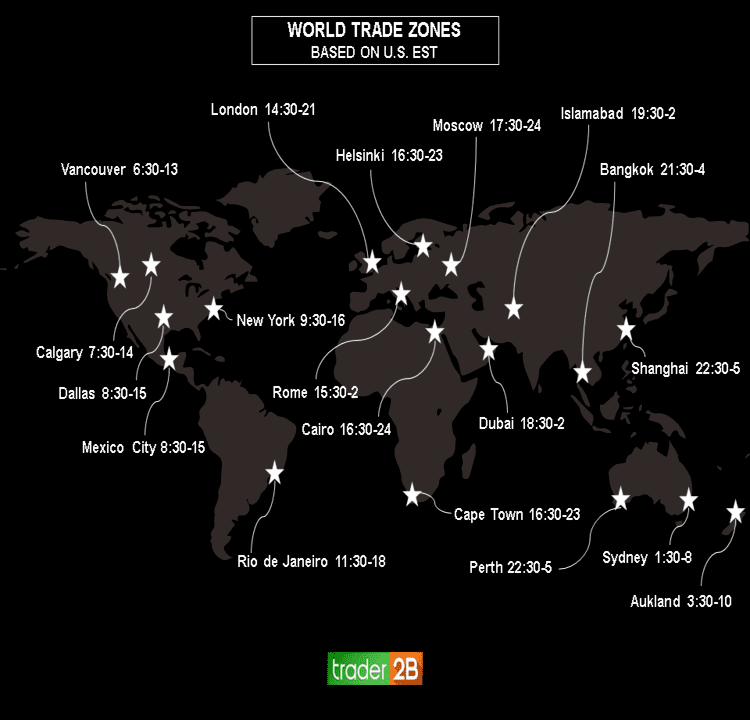
This article delves into the precise timings of the U.S. stock market, factoring in the Central Time Zone, and explores why these hours are so important for strategic financial decisions. We’ll cover the core trading sessions, delve into pre-market and after-hours trading, and discuss the broader implications for Texas-based investors, ensuring you’re always in sync with the market’s heartbeat.
Understanding U.S. Stock Market Hours
The rhythm of the U.S. stock market is set by the operating hours of its primary exchanges, the New York Stock Exchange (NYSE) and the NASDAQ. These hours are standard across the United States, irrespective of the state you’re in, but their local interpretation varies with time zones.
Core Trading Session: NYSE and NASDAQ
The backbone of stock market activity is the regular trading session. This is when the vast majority of trading volume occurs, liquidity is highest, and most individual investors make their moves.
- Eastern Time (ET): The core trading session runs from 9:30 AM ET to 4:00 PM ET, Monday through Friday.
- Central Time (CT): For investors in Texas and other Central Time Zone states, this translates to 8:30 AM CT to 3:00 PM CT.
This 6.5-hour window is typically characterized by intense activity, especially during the opening and closing hours. The opening bell often sees a rush of orders accumulated overnight, reacting to pre-market news or global market movements, while the closing bell can be influenced by institutional investors rebalancing portfolios or futures and options expiration. Understanding this core window in your local time is the first and most critical step for any Texas-based investor to effectively monitor their investments and execute trades.
Pre-Market and After-Hours Trading
Beyond the core trading session, the stock market offers extended hours trading opportunities through pre-market and after-hours sessions. These periods allow investors to react to news, earnings reports, and economic data released outside regular hours. However, they come with their own set of characteristics and risks.
- Pre-Market Trading: This session typically runs from 4:00 AM ET to 9:30 AM ET (or 3:00 AM CT to 8:30 AM CT in Texas). During this time, trading is generally less liquid, meaning there are fewer buyers and sellers, which can lead to wider bid-ask spreads and higher price volatility. Major corporate announcements, such as quarterly earnings reports, are often released during pre-market hours, providing early movers with opportunities (and risks) to trade before the main market opens.
- After-Hours Trading: Following the regular session, after-hours trading usually extends from 4:00 PM ET to 8:00 PM ET (or 3:00 PM CT to 7:00 PM CT in Texas). Similar to pre-market trading, this session tends to have lower liquidity and can experience significant price swings, particularly in response to late-day news or global market developments. Both extended-hours sessions are primarily utilized by institutional investors and experienced traders who have the tools and expertise to navigate their unique dynamics. For the average retail investor, while accessible, they require a deeper understanding of market mechanics and risk.
Weekend and Holiday Closures
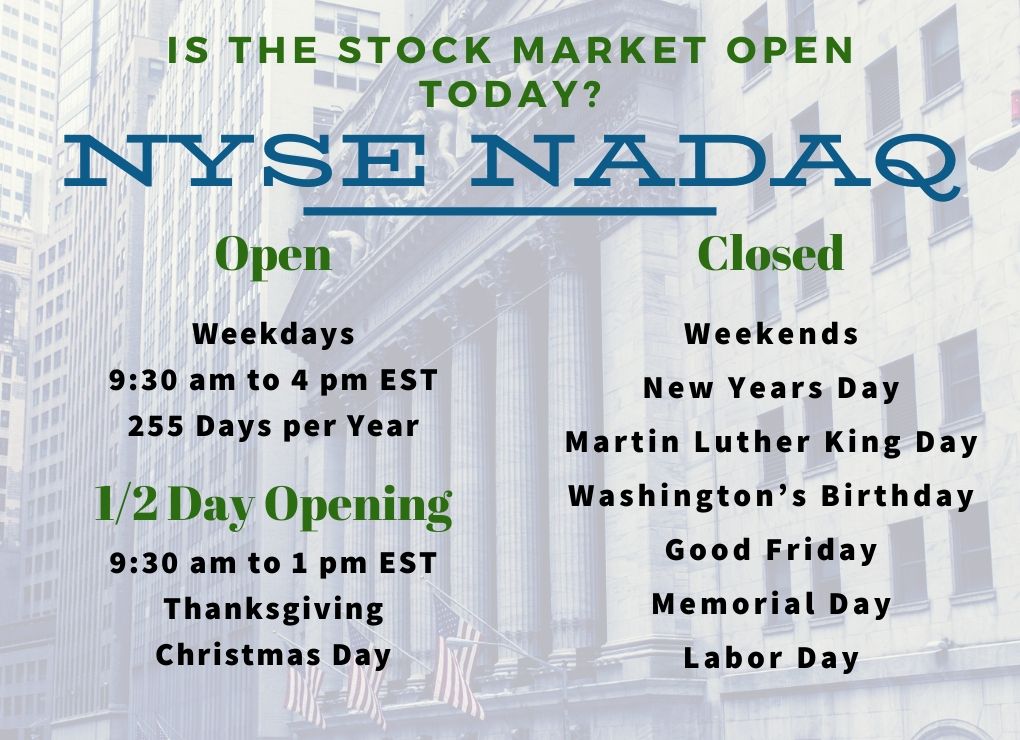
The stock market observes weekends and a number of federal holidays, during which it is completely closed. It’s crucial for investors to be aware of these non-trading days to avoid missing opportunities or being surprised by a lack of market activity. Common holidays when the U.S. stock market is closed include:
- New Year’s Day
- Martin Luther King, Jr. Day
- Presidents’ Day
- Good Friday
- Memorial Day
- Juneteenth National Independence Day
- Independence Day
- Labor Day
- Thanksgiving Day
- Christmas Day
Occasionally, the market may also have early closures, often on the day before or after a major holiday, such as Black Friday. These schedules are published annually by the exchanges, and most reputable brokerage platforms provide timely notifications to their clients. Being aware of these closures prevents frustration and helps in planning trading and investment strategies around market downtime.
Why Time Zones Matter for Texas Investors
While the stock market operates on a universal schedule, its interaction with local time zones creates specific considerations for investors in different regions. For Texans, the Central Time Zone connection is more than just a numerical conversion; it’s a practical aspect of daily trading and investment management.
Aligning Local Time with Market Action
The stock market’s most dynamic periods often occur at its open and close. For someone in Texas, the 8:30 AM CT opening bell means market activity kicks off relatively early in the business day. This can be advantageous, allowing individuals to engage with the market before their primary work responsibilities fully consume their day. Conversely, the 3:00 PM CT closing bell allows for wrap-up activities well before the typical end of a workday for many.
However, precise time alignment is crucial for real-time decision-making. News breaks and economic data releases often happen according to ET, requiring investors to quickly translate these events to their CT framework. A slight miscalculation or a delayed reaction due to time zone confusion could mean missing a critical entry or exit point in a fast-moving market, especially for day traders or those employing short-term strategies. Many financial news outlets and trading platforms default to Eastern Time, making a conscious effort to convert essential times to CT a necessary discipline for Texas investors.
Practical Implications for Day Trading and Monitoring
For active traders and those who closely monitor their portfolios, the time zone difference has significant practical implications. Day traders, who execute numerous trades within a single day, must be intimately familiar with the 8:30 AM CT to 3:00 PM CT window. Their entire routine—from pre-market research to trade execution and post-market analysis—revolves around this schedule.
- Morning Rush: The first hour (8:30 AM to 9:30 AM CT) is typically characterized by high volatility and volume as investors react to overnight news and pre-market activity. Texans need to be ready at 8:30 AM sharp to capitalize on these early movements.
- Midday Lull: Often, the market experiences a quieter period in the late morning to early afternoon CT, as initial reactions subside and traders await further catalysts.
- Afternoon Frenzy: The final hour (2:00 PM to 3:00 PM CT) can again see increased activity as investors close positions, institutions rebalance, and end-of-day news impacts sentiment.
Furthermore, monitoring financial news channels, analyst reports, and economic calendars becomes an exercise in constant time conversion. An announcement scheduled for 10:00 AM ET is 9:00 AM CT, requiring Texas investors to adjust their focus accordingly. This continuous mental adjustment underscores the importance of a clear understanding of time zones to maintain a competitive edge and ensure informed trading decisions.
Strategic Considerations for Texas Investors
Navigating the stock market from the Central Time Zone offers both unique challenges and opportunities. Developing a strategic approach that accounts for these time differences can significantly enhance an investor’s effectiveness and potentially improve financial outcomes.
Leveraging Pre-Market and After-Hours Sessions
For the average Texas investor, the extended trading hours (3:00 AM CT to 8:30 AM CT pre-market, and 3:00 PM CT to 7:00 PM CT after-hours) can be a double-edged sword. While these sessions offer flexibility, they also present specific risks due to lower liquidity and potentially wider price spreads.
- Opportunities: These sessions are ideal for reacting swiftly to earnings reports, merger announcements, or significant global news that breaks outside of core hours. For instance, a Texan could place an order after 3:00 PM CT if a major company announces stellar earnings, potentially getting ahead of the crowd before the next day’s regular open.
- Risks: The lower trading volume means that it can be harder to execute trades at desired prices, and sudden news can lead to exaggerated price movements. Furthermore, the average investor often competes with institutional traders and advanced algorithms during these times.
Therefore, for Texans considering extended-hours trading, it’s vital to:
- Understand the risks: Be aware of increased volatility and wider spreads.
- Use limit orders: Always specify the exact price at which you want to buy or sell to avoid unexpected executions.
- Focus on highly liquid stocks: Trading larger, more established companies might reduce some of the liquidity risks.
Balancing Work-Life with Market Participation
The 8:30 AM CT open and 3:00 PM CT close can surprisingly align well with a standard workday for many Texans. The market opening an hour and a half after the typical 9:00 AM start for many jobs, and closing two hours before the typical 5:00 PM end, offers distinct advantages.
- Morning Prep: For those with a 9-to-5 job, the 8:30 AM CT open means they can devote the hour and a half before work to check news, monitor pre-market activity, and finalize their trading plans.
- Lunch Break Opportunities: A well-timed lunch break can be used to check in on the market, analyze midday trends, or execute trades.
- Post-Market Analysis: The 3:00 PM CT close allows for a couple of hours of post-market analysis, portfolio adjustments, and planning for the next day, all before the evening commitments begin.
For investors who cannot actively monitor the market during core hours, technology offers solutions. Setting up price alerts, utilizing stop-loss orders, and employing dollar-cost averaging strategies can help manage investments without requiring constant real-time attention. Texas investors can leverage their time zone to integrate market activities efficiently into their daily routines without sacrificing professional or personal commitments.
The Importance of a Trading Plan
Regardless of the time zone, a robust trading plan remains the cornerstone of successful investing. For Texas investors, incorporating market hours into this plan is non-negotiable. A comprehensive plan should include:
- Investment Goals: Clearly defined short-term and long-term objectives.
- Risk Tolerance: An understanding of how much risk you are willing to take on.
- Entry and Exit Strategies: Pre-determined conditions for buying and selling assets.
- Position Sizing: How much capital to allocate to each trade.
- Research and Due Diligence: A systematic approach to evaluating investments.
- Time Zone Integration: Explicitly stating how market hours (8:30 AM – 3:00 PM CT) will be managed, including plans for pre-market and after-hours activity if applicable.
Having a disciplined approach helps to mitigate emotional decision-making, which can be amplified during periods of high market volatility, particularly around the opening and closing bells. For Texans, a well-thought-out plan ensures that their investing strategy aligns perfectly with the market’s operational schedule, maximizing their potential for success.
Beyond Opening Hours: Factors Influencing Market Activity
While knowing the opening hours in Texas is fundamental, truly understanding market dynamics requires looking beyond the clock. Several external factors continuously shape market sentiment and influence trading activity throughout and even outside core hours.
Economic Indicators and News Releases
The pulse of the stock market is heavily influenced by a constant stream of economic data and news. These releases can dictate market direction, often triggering significant volatility.
- Scheduled Releases: Key economic indicators like inflation reports (CPI), employment figures (non-farm payrolls), interest rate decisions from the Federal Reserve, and GDP growth numbers are often released at specific times (e.g., 8:30 AM ET or 10:00 AM ET, meaning 7:30 AM CT or 9:00 AM CT). These announcements can cause immediate and dramatic price movements, particularly if the data deviates significantly from market expectations.
- Corporate Earnings: Companies regularly release their quarterly earnings reports, often outside of regular trading hours—either pre-market or after-hours. These reports can send individual stock prices soaring or plummeting, impacting related sectors and even the broader market.
- Geopolitical Events: Unexpected geopolitical developments, policy changes, or global crises can introduce uncertainty and volatility, often with immediate market reactions.
Texas investors must pay close attention to these scheduled events and remain vigilant for breaking news, as they can heavily influence trading strategies and portfolio performance, sometimes even more so than the simple opening and closing bells.
Global Market Influences
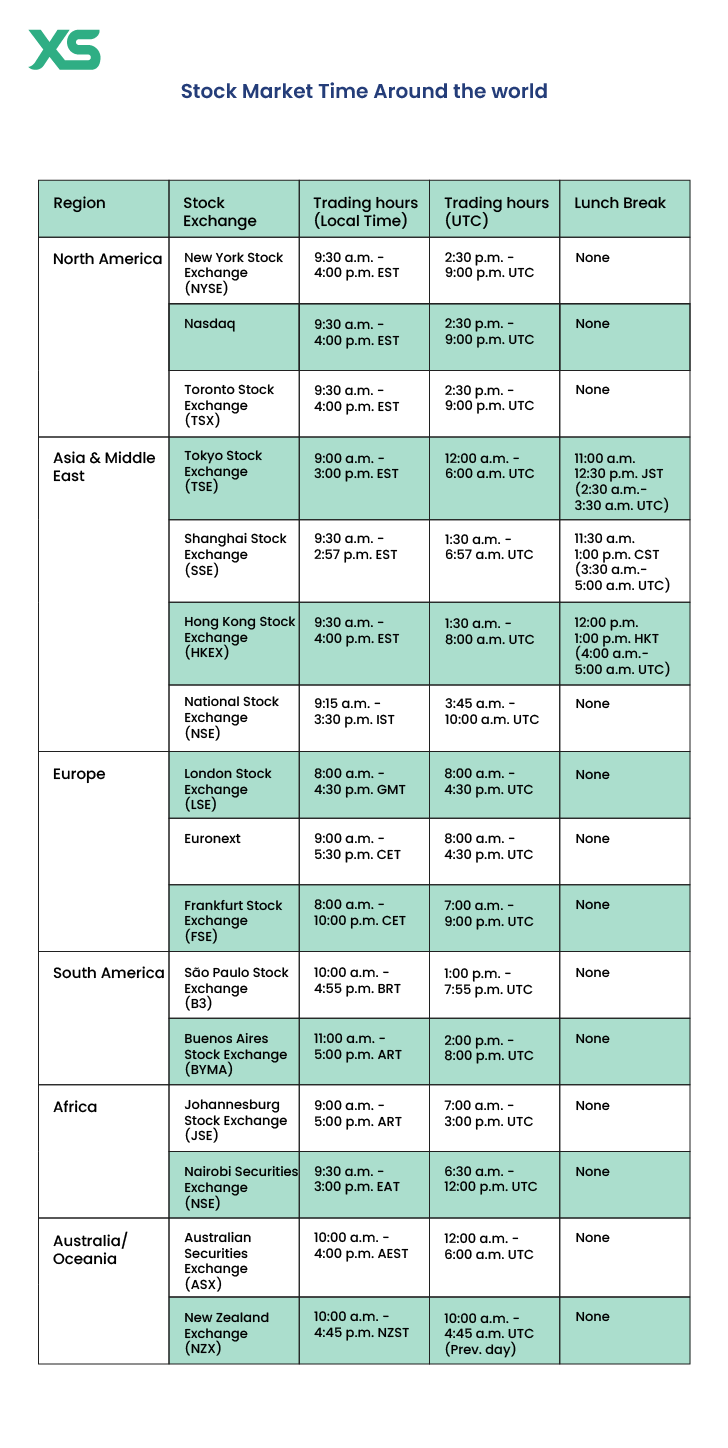
The U.S. stock market does not operate in a vacuum. Its performance is often swayed by what happens in other major global markets, particularly in Asia and Europe.
- Overnight Impact: When the U.S. market is closed, Asian markets (like Tokyo and Shanghai) and European markets (like London and Frankfurt) are actively trading. Their performance, in response to global news, economic data, or even U.S. corporate announcements made after Wall Street closes, can set the tone for the U.S. pre-market and opening session. A strong close in Europe or Asia might lead to a positive sentiment for the U.S. open, and vice-versa.
- Interconnectedness: With increased globalization, supply chains, corporate earnings, and investor sentiment are deeply interconnected across continents. A significant economic event in China or a political development in Europe can quickly ripple through global markets, affecting U.S. stocks even before Texas investors have had their morning coffee.
Monitoring global market summaries before the U.S. open (around 7:00 AM CT) can provide valuable insights into potential market sentiment for the day.
Technological Advancements in Trading
The technological landscape of the stock market has evolved dramatically, influencing how trading occurs and how quickly information spreads.
- Algorithmic and High-Frequency Trading (HFT): A significant portion of trading volume today is driven by algorithms and HFT firms that execute millions of trades per second. These automated systems can react to market data faster than any human, potentially exacerbating volatility during critical moments.
- Accessibility and Information Flow: Online brokerage platforms and financial news apps provide real-time data, news, and trading capabilities at investors’ fingertips. This democratization of access means that information spreads rapidly, and market reactions can be almost instantaneous. For Texas investors, leveraging these tools is crucial for staying competitive and making timely decisions.
- Cybersecurity: As trading becomes increasingly digital, digital security is paramount. Protecting trading accounts and personal financial information from cyber threats is a critical aspect of modern investing.
These technological advancements underscore the need for Texas investors to not only understand market hours but also to be adept at utilizing available tools, processing information quickly, and being aware of the underlying forces that shape market behavior.
In conclusion, for those in Texas, the stock market officially opens at 8:30 AM Central Time and closes at 3:00 PM Central Time, Monday through Friday. While this simple time conversion answers the initial question, successful engagement with the financial markets requires a deeper understanding of extended trading hours, holiday schedules, the impact of economic news, global market influences, and technological shifts. By integrating this knowledge into a disciplined investment strategy, Texas investors can navigate the complexities of the market with confidence and make informed decisions that align with their financial goals.
aViewFromTheCave is a participant in the Amazon Services LLC Associates Program, an affiliate advertising program designed to provide a means for sites to earn advertising fees by advertising and linking to Amazon.com. Amazon, the Amazon logo, AmazonSupply, and the AmazonSupply logo are trademarks of Amazon.com, Inc. or its affiliates. As an Amazon Associate we earn affiliate commissions from qualifying purchases.