
The financial markets, with their intricate dance of supply and demand, operate within specific time parameters that are crucial for any investor to understand. At the heart of global market sentiment often sits the Dow Jones Industrial Average (DJIA), a bellwether index whose movements are watched by millions daily. Understanding its operational hours extends far beyond merely knowing when trading stops; it delves into the strategic implications for investment decisions, risk management, and market analysis.
The Regular Trading Session: Core Hours for the DJIA
At its core, the question of “what time does DJIA close” directly refers to the cessation of regular trading for the underlying stocks that comprise the index on their respective exchanges, primarily the New York Stock Exchange (NYSE) and NASDAQ. These exchanges adhere to a standard operating schedule that has been foundational to market operations for decades.

Standard Market Operating Hours
The regular trading session for the U.S. stock market, including all components of the DJIA, begins at 9:30 AM Eastern Time (ET) and concludes precisely at 4:00 PM Eastern Time (ET), Monday through Friday. This seven-and-a-half-hour window is when the vast majority of trading volume occurs, and it is during this period that the official opening and closing prices of the constituent stocks—and by extension, the DJIA itself—are determined.
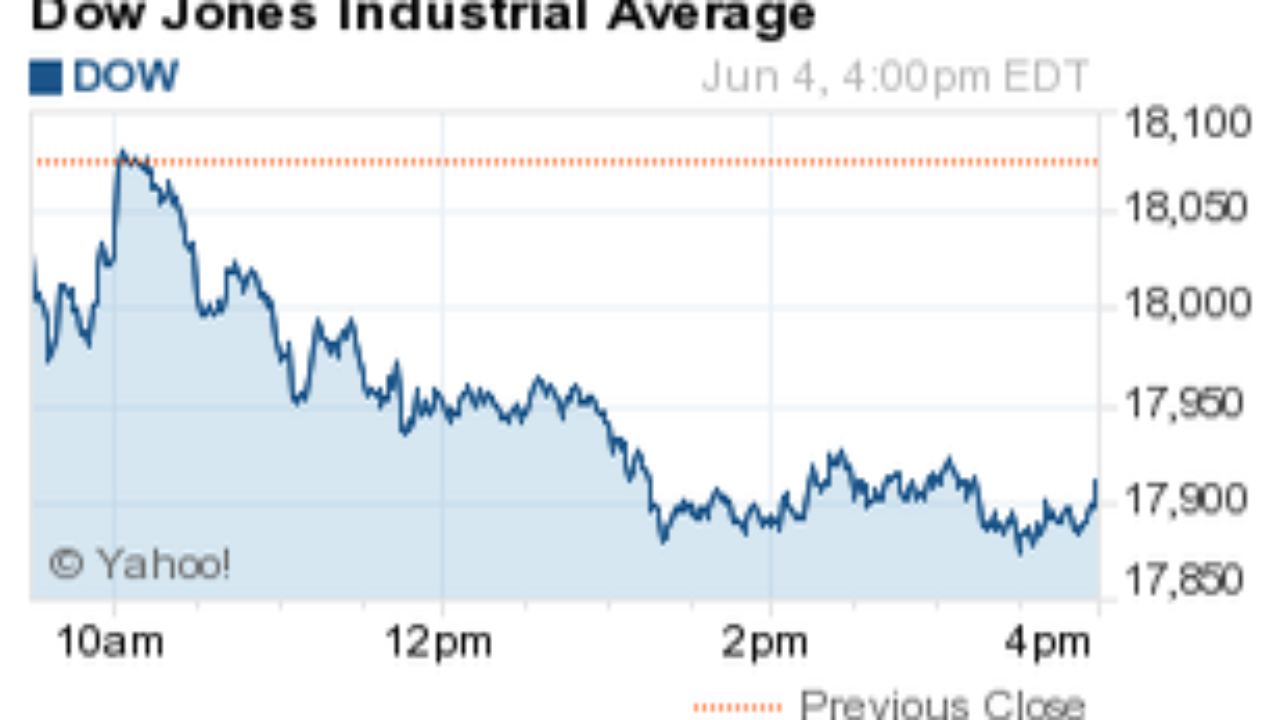
The 4:00 PM ET closing bell signifies the end of the official trading day, marking the point at which the final index value for that day is calculated and widely reported. This closing price is a critical metric, serving as a benchmark for daily performance and influencing investor sentiment moving into the next trading session. While the clock striking four signals the end of regular trading, it doesn’t always mean the end of market activity for the day.
The Significance of the Closing Bell
The closing bell is more than just a symbolic end to the trading day; it’s a moment of significant strategic importance. Many institutional investors, portfolio managers, and even individual traders execute trades in the minutes leading up to 4:00 PM ET. This period often sees heightened volatility and increased volume as market participants adjust positions, rebalance portfolios, or attempt to capitalize on late-day news.
The closing price of the DJIA encapsulates all the buying and selling pressure, economic data releases, corporate earnings announcements, and geopolitical events that have transpired throughout the regular trading session. It provides a definitive snapshot of market sentiment and performance, offering a clear reference point for analysts and investors to gauge daily market direction. Furthermore, the closing price often forms the basis for futures and options contracts, highlighting its critical role in derivative markets.
Beyond the Bell: Pre-Market and After-Hours Trading
While the regular trading session dictates the official closing time of the DJIA, market activity doesn’t strictly adhere to these hours. The advent of electronic trading has paved the way for robust pre-market and after-hours sessions, extending the window for investors to react to news and execute trades.
Understanding Pre-Market Trading
Pre-market trading typically commences as early as 4:00 AM ET and runs until the market opens at 9:30 AM ET. During this period, investors can place buy and sell orders for stocks, often reacting to overnight news, early morning earnings reports, or global market movements. While activity exists, pre-market sessions are generally characterized by lower trading volumes and wider bid-ask spreads compared to regular hours. This reduced liquidity can lead to increased volatility and potentially larger price swings on fewer shares traded, posing both opportunities and risks.
After-Hours Trading Dynamics
Following the 4:00 PM ET closing bell, after-hours trading can extend as late as 8:00 PM ET. Similar to pre-market sessions, this period allows investors to react to information released after the regular close, such as late-day earnings reports, economic data, or breaking news. Many companies intentionally time their announcements for after-hours to allow investors and analysts time to digest the information before the next trading day begins.
The dynamics of after-hours trading mirror those of pre-market: lower liquidity, wider spreads, and heightened volatility. This environment can present challenges for individual investors who might find it difficult to execute trades at their desired prices or might be exposed to significant price gaps at the next market open. Institutions with access to sophisticated trading systems and direct market access often dominate these extended hours.
Implications of Extended Hours for Investors
For the DJIA, while its official close is 4:00 PM ET, the underlying stocks are subject to these extended trading sessions. This means that even after the official index value is set, the value of the component companies can continue to fluctuate. Investors holding exchange-traded funds (ETFs) that track the DJIA or individual stocks within the index should be aware that the “value” of their holdings can change significantly outside of regular trading hours, influenced by after-hours news and trading. Understanding these extended hours is crucial for a comprehensive view of market dynamics and for mitigating potential overnight risks.
Market Holidays and Early Closings: Exceptions to the Rule
The regular 9:30 AM to 4:00 PM ET schedule is the norm, but there are specific days throughout the year when the U.S. stock market either remains closed entirely or observes an abbreviated trading schedule. These exceptions are important for investors to note, as they impact trading liquidity, market sentiment, and portfolio planning.
Official Market Holidays
The NYSE and NASDAQ observe several federal holidays, during which the markets are completely closed. These typically include:
- New Year’s Day
- Martin Luther King, Jr. Day
- Presidents’ Day
- Good Friday
- Memorial Day
- Juneteenth National Independence Day
- Independence Day
- Labor Day
- Thanksgiving Day
- Christmas Day
On these days, no trading occurs, and the DJIA does not post a new official closing value. Investors must plan around these closures, as they represent periods of no market activity and potential for pent-up demand or supply to be released upon reopening.
Abbreviated Trading Days
In addition to full holidays, the market occasionally operates on an abbreviated schedule, typically closing early. Common instances include:
- The day before Independence Day (if it falls on a weekday)
- The day after Thanksgiving (Black Friday)
- Christmas Eve (if it falls on a weekday)
On these days, the market often closes at 1:00 PM ET. While shorter, these sessions can still be active, though volume might be lower as many market participants take extended breaks. The early close still means an official DJIA closing value is recorded, but it reflects a truncated trading period. Investors should always consult the official exchange calendars to stay informed about upcoming market holidays and early closings to adjust their trading strategies accordingly.
The Global Context: DJIA’s Closing in a 24/7 World
While the DJIA has a definitive closing time in New York, the global nature of financial markets means that economic activity and market sentiment never truly sleep. When the U.S. market closes, major markets in Asia, Europe, and other regions are either just opening or in full swing, influencing sentiment that will ultimately impact the DJIA when it reopens.
Interconnectedness of Global Markets
The close of the DJIA at 4:00 PM ET marks a shift in focus to other major financial centers. As the U.S. market winds down, markets in London, Frankfurt, Tokyo, Hong Kong, and Sydney are operating or preparing to open. News, economic data releases, and corporate announcements from these regions can significantly influence U.S. stock index futures, which trade almost 24 hours a day. For instance, a major economic report out of China overnight can set the tone for European markets, which in turn influences U.S. pre-market trading and the DJIA’s opening performance.
This interconnectedness means that investors tracking the DJIA must adopt a global perspective. While the official index doesn’t trade after 4:00 PM ET, the factors that drive its movements are constantly evolving across different time zones. Major currency movements, commodity price changes, and geopolitical developments overseas can create significant gaps or surges in the DJIA’s value at the next U.S. market open, reflecting events that occurred hours after its last official close.

Strategic Considerations for Investors
Understanding the DJIA’s closing time in the context of global markets is vital for strategic investors. It highlights the importance of staying informed about international developments, even when the local market is closed. Investors might consider using U.S. futures markets as a proxy to gauge potential opening moves for the DJIA, as these contracts trade nearly around the clock and react immediately to global news flow.
Furthermore, for those involved in international investing or with diversified global portfolios, synchronizing their understanding of trading hours across different time zones becomes paramount. The DJIA’s closing time, therefore, is not an isolated event but a critical point within a continuous, globally integrated financial ecosystem, where information and capital flow seamlessly, shaping market narratives that transcend geographical boundaries and trading bells.
aViewFromTheCave is a participant in the Amazon Services LLC Associates Program, an affiliate advertising program designed to provide a means for sites to earn advertising fees by advertising and linking to Amazon.com. Amazon, the Amazon logo, AmazonSupply, and the AmazonSupply logo are trademarks of Amazon.com, Inc. or its affiliates. As an Amazon Associate we earn affiliate commissions from qualifying purchases.