
The financial markets are a complex ecosystem, constantly ebbing and flowing in response to a myriad of global and local forces. Among the most watched indicators is the Dow Jones Industrial Average (DJIA), often simply referred to as “the Dow.” For investors, economists, and even the general public, understanding how the Dow performed today offers a quick, albeit often superficial, glimpse into the health and direction of the broader stock market and, by extension, the economy itself. This daily ritual of checking the Dow’s numbers is more than just a fleeting interest; it’s a window into the prevailing investor sentiment, corporate fortunes, and the economic narratives shaping our financial futures.
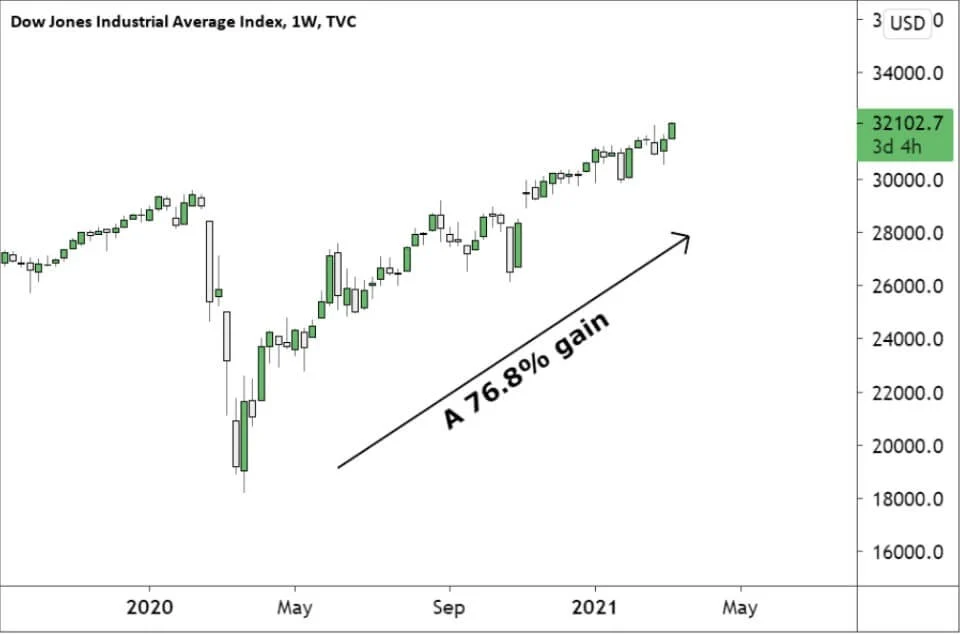
While a single day’s movement might seem inconsequential in the grand scheme of long-term investing, the aggregate of these daily shifts forms the patterns and trends that ultimately define market cycles. Delving beyond the headline numbers—whether the Dow was up a hundred points or down two hundred—requires a deeper understanding of what the index represents, the forces that influence its daily gyrations, and how these movements might be interpreted within a robust financial strategy. This article aims to demystify the Dow’s daily performance, offering insights into its significance, the factors driving its fluctuations, and how informed individuals can contextualize these numbers rather than react impulsively.
The Dow Jones Industrial Average: A Bellwether of the Market
The Dow Jones Industrial Average holds a unique place in financial history, having served as a barometer for American industry for over a century. Its daily movements are scrutinized worldwide, often dictating the tone of financial news and influencing countless investment decisions.
What Exactly is the Dow?
The Dow Jones Industrial Average is a stock market index that tracks the performance of 30 large, publicly-owned companies traded on the New York Stock Exchange (NYSE) and NASDAQ. Established in 1896 by Charles Dow, editor of The Wall Street Journal, it was initially composed primarily of industrial companies, hence its name. While its composition has evolved significantly over time to include diverse sectors like technology, healthcare, and finance, the “industrial” moniker has remained. The Dow is a price-weighted index, meaning companies with higher stock prices have a greater influence on the index’s value than those with lower prices, regardless of their market capitalization. This contrasts with market-cap-weighted indices like the S&P 500, which give more weight to larger companies. The companies selected for the Dow are typically well-established, “blue-chip” corporations considered leaders in their respective industries, making the index a reflection of robust sectors of the U.S. economy. Prominent examples include Apple, Microsoft, Johnson & Johnson, and JPMorgan Chase.
Why Its Daily Movement Matters
The daily movement of the Dow is more than just a numerical update; it’s a vital indicator that ripples through the financial world. Firstly, it serves as a quick proxy for investor sentiment. A significant upward move often signals optimism about economic prospects and corporate profitability, while a substantial decline can reflect growing anxieties or negative news. Secondly, due to its historical prominence and media coverage, the Dow’s performance frequently influences investor psychology, potentially leading to herd mentality as individuals react to perceived market trends. For many, especially those with retirement accounts or broad market index funds, the Dow’s daily performance offers an accessible, albeit simplified, snapshot of how their investments might be faring. Economically, while not a perfect indicator, consistent trends in the Dow can suggest underlying shifts in economic health, consumer confidence, and business investment. Policymakers, analysts, and business leaders all pay close attention to the Dow’s movements as part of a broader set of economic data points.
Decoding the Day’s Price Action: Key Influencers
The Dow’s daily fluctuations are rarely arbitrary. They are the cumulative result of countless transactions, driven by a complex interplay of identifiable economic, corporate, and geopolitical factors. Understanding these drivers is crucial for anyone seeking to interpret “how the Dow did today” with greater nuance.
Economic Data Releases
Macroeconomic data plays a pivotal role in shaping daily market movements. Reports such as inflation rates (Consumer Price Index, Producer Price Index), employment figures (non-farm payrolls, unemployment rate), Gross Domestic Product (GDP) growth, manufacturing indices (PMI), and consumer confidence surveys can directly impact investor expectations for corporate earnings and future economic growth. Positive economic news, like lower-than-expected inflation or strong job growth, often signals a healthy economy and can push the Dow higher, as it suggests a favorable environment for businesses. Conversely, disappointing data can trigger sell-offs. For instance, a surprising surge in inflation might suggest tighter monetary policy from the Federal Reserve, which could dampen economic activity and corporate profits, leading to a down day for the Dow.
Corporate Earnings and News
Since the Dow is comprised of 30 specific companies, their individual performance and outlook have a direct impact on the index. During earnings season, when these companies report their quarterly results, the market can be highly reactive. Strong earnings reports, positive guidance for future quarters, or unexpected product announcements from Dow components can significantly boost the index. Conversely, earnings misses, lowered forecasts, or negative corporate news (e.g., regulatory challenges, major product recalls, executive changes) can drag the Dow down. The cumulative effect of multiple Dow components performing well or poorly on the same day can dictate the index’s overall direction. For example, if a few heavily weighted tech companies in the Dow report stellar earnings, it can offset weaker performance from other sectors.
Geopolitical Events and Global Markets
The globalized nature of modern finance means that events far beyond U.S. borders can profoundly influence the Dow. Geopolitical tensions, such as trade disputes, military conflicts, or major policy shifts in key economies, can introduce uncertainty and volatility. For instance, concerns over trade relations with China or instability in the Middle East can trigger risk aversion, prompting investors to sell stocks and seek safer assets, thereby pushing the Dow lower. Similarly, significant economic news from other major economies (e.g., the Eurozone, Japan, China) can spill over into U.S. markets. A robust day for Asian or European markets might set a positive tone for U.S. trading, while widespread declines internationally can predispose the Dow to a negative opening.
Central Bank Policies and Interest Rates
Central banks, most notably the U.S. Federal Reserve, wield immense influence over the financial markets through their monetary policy decisions. Changes in interest rates, quantitative easing/tightening programs, or even hawkish/dovish statements from central bank officials can send powerful signals to investors. Higher interest rates typically increase borrowing costs for businesses and consumers, potentially slowing economic growth and reducing corporate profits, which can lead to a market downturn. Conversely, lower rates aim to stimulate economic activity and can boost stock prices. The anticipation or announcement of these policy shifts can cause significant daily swings in the Dow as investors adjust their portfolios to the changing economic landscape.
Market Sentiment and Technical Factors
Beyond tangible news and data, market sentiment—the overall psychological mood of investors—plays a critical role. Fear and greed can drive irrational decisions, leading to overreactions to news. If investors are broadly optimistic, they might be more inclined to buy, pushing the Dow up even on lukewarm news. If pessimism prevails, even good news might be met with skepticism. Technical factors, derived from charting and statistical analysis of price movements, also influence daily trading. Support and resistance levels, moving averages, and other technical indicators are watched by algorithmic traders and human analysts alike, and breaches of these levels can trigger automated buying or selling that contributes to the Dow’s daily trajectory.
Interpreting Daily Swings: Beyond the Headlines

While the daily performance of the Dow captures headlines, a discerning investor understands that these immediate movements are merely snapshots. True insight comes from placing these daily figures into a broader context, recognizing the difference between noise and signal.
The Importance of Context
A Dow movement of 100 points, while sounding significant, must be viewed relative to the index’s current level. When the Dow is at 10,000, a 100-point move represents a 1% change. When it’s at 35,000, a 100-point move is less than 0.3%, a relatively minor fluctuation. Therefore, focusing on the percentage change rather than absolute points offers a more accurate understanding of the day’s magnitude. Moreover, understanding why the Dow moved is far more important than the movement itself. Was it due to a fundamental shift in economic outlook, a major corporate announcement, or simply a reaction to temporary news? For example, a decline due to a temporary geopolitical spat might be less concerning than a decline driven by weakening corporate earnings across multiple sectors, as the latter could signal a more fundamental problem. Ignoring context can lead to misinterpretations and poor decision-making.
Short-Term Volatility vs. Long-Term Trends
One of the biggest pitfalls for individual investors is to overreact to short-term volatility. The Dow is constantly subject to short-term fluctuations driven by the daily news cycle, algorithmic trading, and shifting sentiment. These “noise” movements can be distracting and, if responded to emotionally, can lead to buying high and selling low. Smart investing focuses on long-term trends. Over decades, despite numerous corrections, bear markets, and crises, the Dow (and the broader market) has shown a historical tendency to trend upwards. A single day’s decline, even a substantial one, rarely invalidates a sound long-term investment strategy. Instead, daily volatility should be seen as part of the market’s natural rhythm, not a reason for panic or immediate action. Investors who maintain a disciplined approach, anchored to their financial goals, are better positioned to weather these short-term storms.
The Role of Volume and Breadth
Beyond just the price movement, professional analysts often look at trading volume and market breadth to gauge the conviction behind a day’s move. Volume refers to the total number of shares traded in the Dow components or the broader market. High volume on a strong upward move suggests broad participation and conviction among buyers, lending more credibility to the rally. Conversely, a sharp decline on heavy volume can indicate widespread selling pressure and fear. Low volume on either an up or down day might suggest less conviction, implying that the movement is driven by fewer participants or temporary factors. Market breadth, which assesses the number of advancing versus declining stocks, offers another layer of insight. If the Dow is up but most individual stocks are down (poor breadth), it might indicate that the rally is concentrated in just a few large companies, potentially masking underlying weakness in the broader market. These indicators provide a more holistic view of the market’s health than price action alone.
Practical Implications for Investors and Financial Planning
Understanding how the Dow performs today and why is not just an academic exercise; it has tangible implications for personal finance and investment strategy. The insights gained from market analysis should inform, not dictate, prudent financial decisions.
Don’t Panic: Maintaining a Long-Term Perspective
The most crucial advice for any investor watching the Dow’s daily gyrations is: don’t panic. Emotional reactions to market downturns are a primary cause of poor investment returns. Selling off investments during a sharp decline means locking in losses, often missing the subsequent recovery. Historical data repeatedly shows that markets recover from even severe crises, and patient investors who stay the course tend to be rewarded. For those investing for long-term goals like retirement, education, or a down payment, daily market movements are mostly irrelevant. A well-constructed financial plan includes diversification, risk tolerance assessment, and a clear understanding of investment horizons. Sticking to this plan, rather than reacting to every Dow headline, is paramount. Regularly reviewing your portfolio and rebalancing, if necessary, based on your financial goals rather than market timing, is a far more effective strategy.
Diversification as a Strategy
Relying solely on the Dow as a measure of your financial well-being is a risky approach. While the Dow represents a significant portion of the U.S. economy, it’s concentrated in just 30 large companies. A robust investment strategy emphasizes diversification across various asset classes (stocks, bonds, real estate), different market capitalizations (large-cap, mid-cap, small-cap), geographical regions (U.S., international developed, emerging markets), and sectors. This diversification helps to mitigate risk. If one sector or market segment underperforms, others may perform well, cushioning the overall portfolio against significant losses. For instance, if the industrial companies in the Dow are struggling, a diversified portfolio might still benefit from strong performance in emerging market tech stocks or U.S. small-cap value stocks. Investing in broader indices like the S&P 500 or total market funds also provides a more comprehensive representation of the market than the Dow alone.
Utilizing Financial Tools and Resources
In today’s digital age, individuals have access to an unprecedented array of financial tools and resources to track and understand market movements. Reputable financial news websites (e.g., The Wall Street Journal, Bloomberg, Reuters, Financial Times), investment platforms, and dedicated financial apps provide real-time Dow quotes, historical data, expert analysis, and economic calendars. These tools allow investors to track not only the Dow but also its constituent companies, sector performance, and relevant economic data. Subscribing to financial newsletters or following reputable financial commentators can also provide valuable insights. However, it’s essential to critically evaluate information sources and avoid relying solely on sensational headlines. Educational resources on personal finance and investing can help individuals build a solid foundation, enabling them to interpret market news intelligently and make informed decisions aligned with their financial objectives.
Looking Ahead: What to Watch For
While the past informs the present, investing is inherently forward-looking. Understanding today’s Dow performance also involves anticipating what might influence its movements tomorrow and beyond.
Upcoming Economic Calendars
Prudent investors and financially savvy individuals keep a close eye on the upcoming economic calendar. Key events such as Federal Reserve meetings, inflation data releases, employment reports, and GDP announcements are often scheduled well in advance. Knowing when these catalysts are expected allows for informed anticipation of potential market reactions. For example, if a significant inflation report is due, one might expect increased volatility around its release. Similarly, a quarterly earnings schedule for major Dow components provides a roadmap for company-specific news that could move the index. Proactively identifying these upcoming events helps investors contextualize daily market movements and prepare for potential shifts in sentiment or direction.

The Interconnectedness of Global Economies
The Dow, while a U.S.-centric index, operates within a deeply interconnected global economic framework. What happens in Beijing, Berlin, or Brussels can and often does impact Wall Street. Therefore, keeping a global perspective is essential. Monitoring major economic indicators from China (e.g., manufacturing data, trade balances), the Eurozone (e.g., GDP, inflation), and other key trading partners offers valuable clues about global economic health. Geopolitical developments, international trade negotiations, and commodity price fluctuations (like oil) all have ripple effects that can reach the Dow. Understanding these global linkages provides a richer context for interpreting today’s Dow performance and preparing for future market dynamics.
In conclusion, “how the Dow did today” is far more than a simple number. It’s a complex interplay of economic fundamentals, corporate performance, geopolitical shifts, and human psychology. While daily movements offer a pulse check, true financial wisdom lies in understanding the underlying drivers, maintaining a long-term perspective, and integrating this knowledge into a diversified, goal-oriented financial plan. For those committed to sound personal finance and intelligent investing, the Dow’s daily performance serves as a valuable, but not all-consuming, piece of the larger financial puzzle.
aViewFromTheCave is a participant in the Amazon Services LLC Associates Program, an affiliate advertising program designed to provide a means for sites to earn advertising fees by advertising and linking to Amazon.com. Amazon, the Amazon logo, AmazonSupply, and the AmazonSupply logo are trademarks of Amazon.com, Inc. or its affiliates. As an Amazon Associate we earn affiliate commissions from qualifying purchases.