
The Dow Jones Industrial Average (DJIA) is one of the most widely followed and quoted stock market indices in the world, often serving as a barometer for the health of the U.S. economy and corporate America. For investors, economists, and the general public alike, the question of its all-time high is not merely an academic exercise; it reflects periods of significant economic expansion, technological innovation, and shifting market dynamics. Understanding these peaks offers valuable insights into the forces that drive market performance and the enduring resilience—or potential fragility—of the financial landscape.
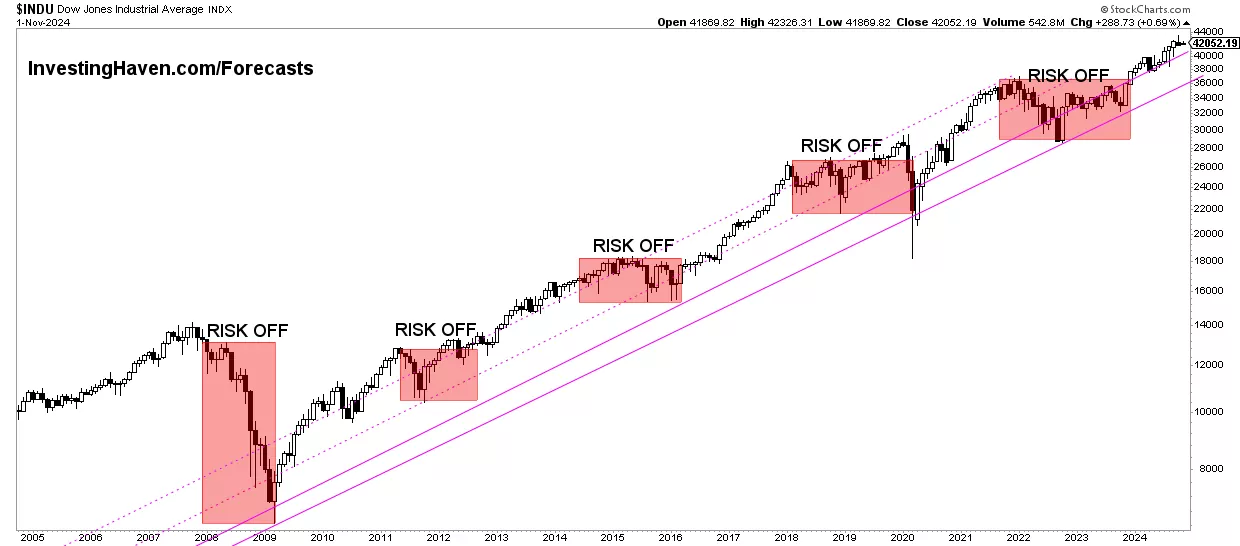
Tracing the Dow’s journey to its loftiest points reveals a compelling narrative of progress, recovery, and periodic euphoria. It’s a testament to the long-term upward trajectory of capitalism, even amidst profound challenges. However, chasing these highs without a deeper understanding of their context can be misleading. This exploration delves into the historical records of the Dow, examining the milestones, the underlying factors that propelled it to these heights, and the broader implications for investors seeking to navigate the complex world of finance.
Understanding the Dow Jones Industrial Average (DJIA)
Before diving into its record-breaking figures, it’s crucial to grasp what the Dow Jones Industrial Average truly represents and how it functions as a market indicator.
A Brief History and Its Significance
The Dow Jones Industrial Average was created in 1896 by Charles Dow, editor of The Wall Street Journal and co-founder of Dow Jones & Company. Initially composed of 12 industrial companies, it aimed to provide a clear, concise measure of the U.S. stock market’s performance, particularly focusing on the nation’s burgeoning industrial sector. Over its more than a century-long existence, the Dow has evolved considerably. Its constituent companies have changed numerous times to reflect shifts in the U.S. economy, moving from primarily heavy industries to a diverse mix of technology, finance, healthcare, and consumer goods companies.
Despite its relatively small number of components (30 large, publicly traded companies), the DJIA remains highly influential. Its significance stems from its historical depth, its role as a leading indicator during periods of growth and recession, and its ability to capture the performance of some of the most prominent corporations in the world. While critics often point to its limitations—such as its price-weighted methodology and limited company count—its longevity and widespread recognition make it an indispensable part of financial discourse.
How the Dow is Calculated and What it Represents
Unlike market-capitalization-weighted indices like the S&P 500, the Dow Jones Industrial Average is a price-weighted index. This means that stocks with higher share prices have a greater impact on the index’s value, regardless of their market capitalization. The index is calculated by summing the prices of its 30 component stocks and dividing by the “Dow Divisor.” This divisor is adjusted periodically for stock splits, spin-offs, and changes in the index’s composition to maintain historical continuity.
What the Dow represents, therefore, is not the total market value of the U.S. economy, but rather the collective performance of 30 bellwether companies that are considered leaders in their respective industries. A rising Dow typically signals investor confidence in these major corporations and, by extension, in the broader economic outlook. Conversely, a falling Dow can indicate concerns about corporate profitability, economic slowdowns, or market instability. Its movements are often seen as a proxy for the sentiment of large, institutional investors and the overall health of American blue-chip stocks.
Charting the Peaks: A Historical Overview of Dow’s All-Time Highs
The Dow’s journey to its highest points is a reflection of successive eras of economic growth, technological advancement, and sometimes, speculative fervor. Each new peak tells a story of market evolution.
Early Milestones and Post-War Booms
The Dow’s early history saw modest gains, with significant fluctuations corresponding to economic cycles and major global events. It first crossed 100 in 1906, then saw unprecedented highs in the “Roaring Twenties,” culminating above 380 points in 1929 before the devastating crash. The recovery was slow, taking over two decades to surpass that peak in the mid-1950s, amidst the post-World War II economic boom. The index then entered a period of steady growth, gradually climbing through the 1960s and 70s, though inflation-adjusted returns were often modest. The 1980s marked a significant acceleration, driven by deregulation, globalization, and a shift towards supply-side economics. The Dow broke 1,000 in 1972 and then really began its ascent, reaching 2,000 in 1987 (just before the Black Monday crash) and then 3,000 in the early 1990s.
The Dot-Com Bubble and the New Millennium
The late 1990s were characterized by the “dot-com bubble,” a period of intense speculation in technology stocks. While the NASDAQ Composite was the primary beneficiary of this boom, the Dow also rode the wave, with its components benefiting from broader economic expansion and technological integration. The index crossed 10,000 for the first time in 1999, reflecting the optimism of the new millennium. However, the burst of the dot-com bubble in the early 2000s and the subsequent economic downturn, exacerbated by the September 11th attacks, brought a period of contraction. The market slowly recovered through the mid-2000s, reaching new highs above 14,000 in 2007, just before the onset of the Great Financial Crisis.
The Post-Financial Crisis Recovery and Recent Records
The 2008 financial crisis saw the Dow plummet to around 6,500 points by early 2009, representing a massive loss of value. However, an aggressive response from global central banks, including quantitative easing and near-zero interest rates, coupled with government stimulus packages, laid the groundwork for one of the longest bull markets in history. From 2009 onwards, the Dow embarked on a remarkable recovery. It surpassed its pre-crisis highs, breaching 15,000, 20,000, 25,000, and eventually 30,000 points. This decade-plus bull run was fueled by strong corporate earnings, technological advancements, globalization, and sustained low interest rates. Each new thousand-point milestone was celebrated, becoming a symbol of economic resilience and investor confidence.
The 2020s and Beyond: Navigating New Territories
The 2020s began with unprecedented volatility, as the COVID-19 pandemic triggered a swift and severe market crash in early 2020. Yet, similar to 2008, massive fiscal and monetary stimulus packages quickly propelled the market to new highs. The Dow recovered its losses and then some, propelled by a unique combination of factors: rapid vaccine development, booming tech sector performance, unprecedented consumer demand for goods, and continued liquidity injections by central banks. It soared past 35,000 and even flirted with 40,000 points, continually setting new all-time records. As of late 2023 and early 2024, the Dow continues to reach new peaks, reflecting sustained corporate profitability, robust labor markets, and optimism regarding disinflation and potential interest rate cuts. The exact highest point is a moving target, constantly being redefined, but it is typically in the range of 39,000 to 40,000 points, as of early 2024, representing the culmination of long-term economic expansion and effective monetary policies.
Drivers Behind the Dow’s Ascent
The Dow’s trajectory to ever-higher levels is not accidental. It’s the result of a complex interplay of economic fundamentals, technological progress, and policy decisions.
Corporate Earnings and Economic Growth
At its core, the stock market reflects the profitability and growth prospects of the companies within it. Sustained economic growth, characterized by rising GDP, job creation, and increased consumer spending, generally translates into higher corporate revenues and earnings. When Dow components report strong financial results, their stock prices tend to rise, pulling the index higher. Innovation, productivity gains, and successful market expansion by these industrial titans are direct contributors to their bottom lines and, consequently, to the Dow’s performance.
Technological Innovation and Sectoral Shifts

Technological advancements have been a continuous engine of growth for the Dow. From the industrial revolution to the advent of computing, the internet, and now artificial intelligence, each wave of innovation has reshaped industries and created new leaders. The Dow, while historically “industrial,” has adapted by including companies at the forefront of these shifts. The inclusion of tech giants and innovative healthcare firms, for example, reflects the evolving nature of the U.S. economy and ensures the index captures growth from new frontiers, propelling it to new heights.
Monetary Policy and Investor Sentiment
Central bank monetary policies, particularly interest rates and quantitative easing, play a significant role. Lower interest rates make borrowing cheaper for companies, stimulating investment and expansion. They also make stocks more attractive relative to bonds, driving capital into the equity markets. Loose monetary policy, often enacted during economic downturns, injects liquidity into the financial system, which can inflate asset prices. Investor sentiment, often a reflection of confidence in the economy and corporate future, also fuels market rallies. Periods of optimism, fueled by positive news or perceived stability, can lead to increased buying activity and push indices higher.
Geopolitical Stability and Global Market Dynamics
While primarily a U.S. index, the Dow is not immune to global forces. Periods of geopolitical stability and increasing international trade generally foster a more predictable and favorable environment for multinational corporations, many of which are Dow components. Conversely, global crises or trade wars can introduce uncertainty and volatility. The interconnectedness of global markets means that economic growth in key trading partners, or stability in international financial systems, can indirectly support the profitability of Dow companies and thus the index’s upward trend.
Implications of Record Highs for Investors and the Economy
A Dow at an all-time high elicits different reactions, from celebration to caution. Understanding its implications is vital for both financial decision-making and economic assessment.
Market Euphoria vs. Underlying Fundamentals
Record highs often generate market euphoria, encouraging more people to invest, sometimes with a fear of missing out (FOMO). While positive sentiment can sustain rallies, it’s crucial for investors to distinguish between a market surge driven by strong underlying fundamentals (e.g., robust earnings, innovation) and one fueled primarily by speculation or excessive optimism. A market consistently hitting new highs without commensurate growth in corporate profits or economic output could signal an overvalued market, potentially setting the stage for a correction. Astute investors look beyond the headline number to assess the health of the economy and individual companies.
The Wealth Effect and Consumer Confidence
When the stock market performs well, it can create a “wealth effect.” Individuals and households who own stocks or have retirement accounts linked to the market see their net worth increase on paper. This perceived increase in wealth can boost consumer confidence, leading to higher spending on goods and services, which in turn stimulates economic activity. The wealth effect is a powerful mechanism by which a strong stock market can positively feedback into the broader economy, fostering a virtuous cycle of growth and further market appreciation.
Risks and Volatility Associated with Peaks
While new highs are often celebrated, they also inherently carry increased risk. Markets at their peaks can be more susceptible to corrections, as even minor negative news or shifts in economic data can trigger profit-taking or a reassessment of valuations. Valuations might be stretched, meaning companies trade at higher price-to-earnings ratios, implying higher expectations for future growth. If these expectations are not met, prices can fall rapidly. Volatility tends to increase near market tops, making it a challenging environment for investors who lack a disciplined strategy.
Long-Term Perspective: Time in the Market
For individual investors, the biggest lesson from the Dow’s historical highs is the importance of a long-term perspective. While short-term fluctuations and even significant crashes are inevitable, the Dow has historically demonstrated a powerful upward bias over decades. This reinforces the principle that “time in the market beats timing the market.” Investors who consistently remain invested, even through downturns, are more likely to participate in the eventual recoveries and subsequent record-breaking runs. The highest points are merely milestones on a much longer journey of wealth creation.
Investing Strategies in a High-Flying Market
Navigating a market at or near its all-time high requires a thoughtful approach, focusing on prudence and long-term goals rather than reactive decisions.
Diversification and Risk Management
In any market environment, but especially one at record highs, diversification is paramount. Spreading investments across different asset classes (stocks, bonds, real estate), industries, and geographies can help mitigate risk. If one sector or asset class experiences a downturn, others may perform better, buffering overall portfolio losses. Risk management also involves assessing one’s personal risk tolerance and adjusting asset allocation accordingly, ensuring that investment choices align with individual financial goals and comfort levels.
Valuing Companies Beyond Index Performance
A rising tide lifts all boats, but not all boats are equally seaworthy. When the Dow is hitting records, it’s easy to assume all underlying companies are fundamentally strong. However, shrewd investors delve deeper, evaluating individual company fundamentals, such as earnings growth, debt levels, competitive advantage, and management quality. Investing in companies with solid balance sheets and compelling growth prospects, even if they are temporarily out of favor, can be a more sustainable strategy than blindly buying into popular names just because the index is rising.
The Role of Dollar-Cost Averaging
Dollar-cost averaging (DCA) is a disciplined investment strategy where an investor invests a fixed amount of money at regular intervals, regardless of the asset’s price. When the market is high, this strategy means buying fewer shares at higher prices. When the market pulls back, it means buying more shares at lower prices. Over time, DCA can help average out the purchase price and reduce the risk associated with investing a lump sum at an unfavorable time, which can be particularly relevant when markets are at their historical peaks. It removes the emotional element of trying to time the market, allowing investors to participate in long-term growth systematically.

Conclusion: Navigating the Heights of the Market
The question “What is the highest Dow Jones has ever been?” is more than just a search for a numerical record; it’s an inquiry into the very dynamics of market progress and economic resilience. Each new all-time high reflects a period of significant growth, innovation, and often, a successful navigation through past challenges. From its humble beginnings to its current multi-tens-of-thousands point valuation, the Dow Jones Industrial Average has served as a consistent, if imperfect, mirror of American corporate success and economic expansion.
For investors, these peaks are not merely points of celebration but serve as crucial reminders of both opportunity and caution. They underscore the power of long-term investing, the necessity of diversification, and the enduring importance of understanding the fundamental drivers behind market movements. While the specific number will undoubtedly continue to climb as economies evolve and companies innovate, the lessons derived from the Dow’s historical journey to its highest points remain timeless: success in investing hinges on informed decisions, a disciplined approach, and a steadfast focus on long-term financial goals, regardless of where the index stands on any given day.
aViewFromTheCave is a participant in the Amazon Services LLC Associates Program, an affiliate advertising program designed to provide a means for sites to earn advertising fees by advertising and linking to Amazon.com. Amazon, the Amazon logo, AmazonSupply, and the AmazonSupply logo are trademarks of Amazon.com, Inc. or its affiliates. As an Amazon Associate we earn affiliate commissions from qualifying purchases.