
The integration of shotguns into modern military arsenals represents a specialized intersection of tactical engineering and battlefield utility. While modern infantry doctrine emphasizes long-range precision and rapid-fire intermediate caliber carbines, the shotgun retains a vital, albeit niche, role within contemporary military operations. From close-quarters battle (CQB) in dense urban environments to the specialized requirements of door breaching and non-lethal crowd control, military shotguns are defined by their rugged mechanical design, modularity, and devastating terminal ballistics.
The Evolution of Combat Shotguns and Modern Specifications
The modern military shotgun has moved far beyond the simplistic designs of the early 20th century. Today’s service weapons must meet stringent standards regarding reliability, environmental durability, and ergonomic integration with advanced soldier systems. A combat shotgun must be able to function in extreme temperatures, handle the corrosive effects of salt spray in maritime environments, and operate reliably under the duress of rapid, sustained fire.
Tactical Modularity and Accessory Integration
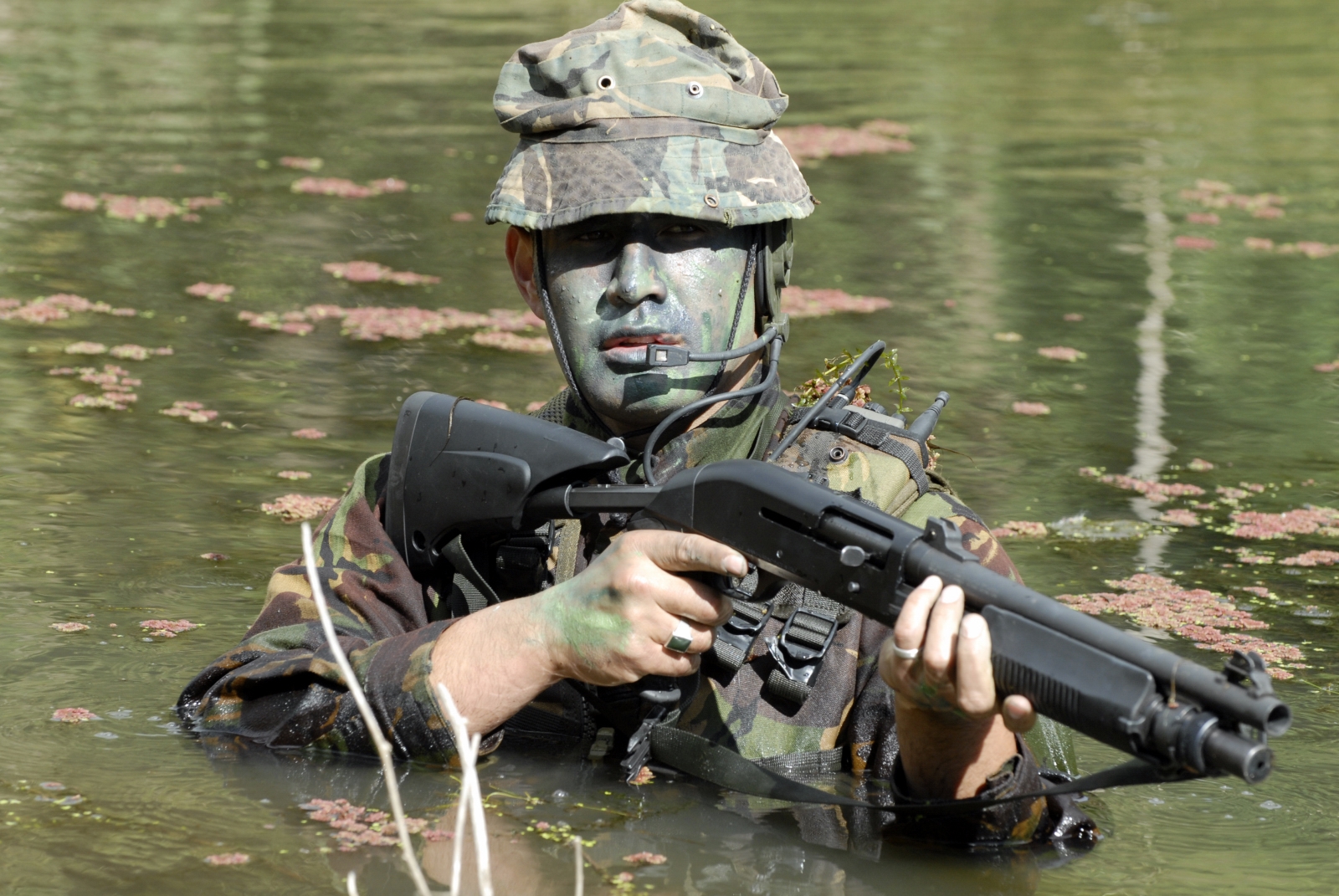
The most significant shift in military shotgun technology is the adoption of the MIL-STD-1913 Picatinny rail interface. Modern platforms, such as the Benelli M4 (designated as the M1014 Joint Service Combat Shotgun), feature extensive rail real estate. This allows operators to mount sophisticated aiming solutions, including low-magnification red dot sights, laser aiming modules (LAMs), and high-intensity weapon-mounted lights. The ability to integrate these electronics transforms the shotgun from a simple “point-and-shoot” tool into a high-precision instrument capable of engaging targets with speed and accuracy under low-light conditions.
The Shift to Semi-Automatic Reliability
For decades, the pump-action shotgun was the gold standard for reliability. However, gas-operated, self-regulating semi-automatic systems have fundamentally changed the landscape. Systems like the Auto-Regulating Gas Operated (A.R.G.O.) system found in the Benelli M4 utilize two self-cleaning stainless steel pistons to cycle the action. This technology allows the shotgun to fire a wide variety of ammunition—from low-recoil breaching rounds to high-brass buckshot—without requiring manual adjustments from the operator. This evolution has made the semi-automatic shotgun a viable choice for high-stress, high-volume combat scenarios where manual cycling might result in short-stroking or increased fatigue.
Primary Platforms in Contemporary Military Service
While numerous specialized weapons exist, a few platforms have risen to the top of military acquisition programs due to their track record of success in global theaters of operation. These weapons are chosen not for their rate of fire, but for their mission-specific reliability and their ability to bridge the gap between kinetic engagement and tactical utility.
The Benelli M1014 (M4 Super 90)
The M1014 is perhaps the most iconic modern combat shotgun. Adopted by the United States Marine Corps in the late 1990s, the weapon was designed specifically to meet the requirements of a multi-purpose combat shotgun. Its modularity is its primary strength; the stock can be replaced to suit different operational requirements, and the internal design is exceptionally easy to field-strip without specialized tools. Its ability to maintain a high rate of fire while remaining controllable is why it remains the benchmark for special operations and infantry units globally.
Mossberg 590A1: The Gold Standard for Durability
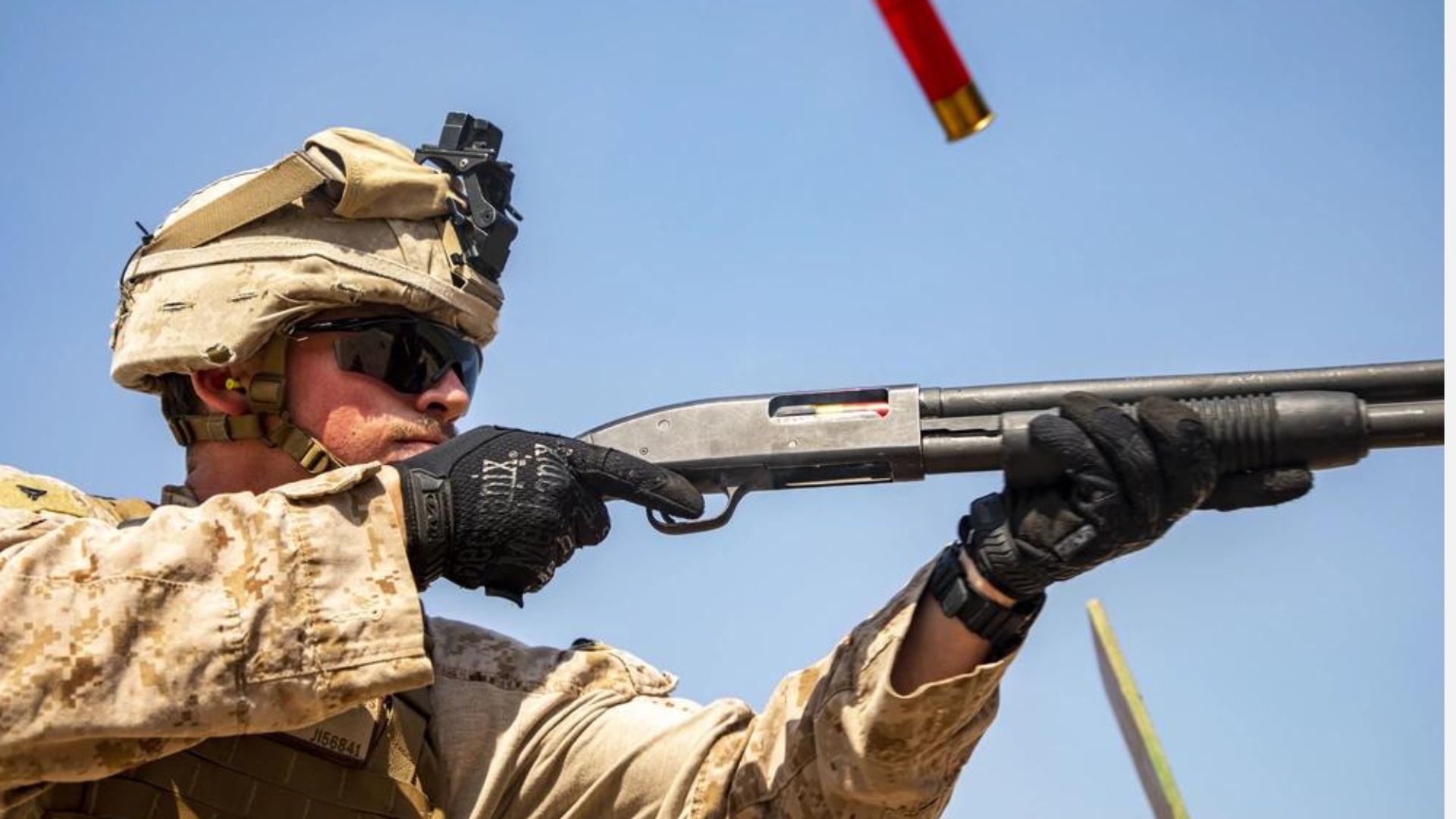
In contrast to the high-tech semi-automatics, the Mossberg 590A1 represents the pinnacle of the pump-action genre. It is the only shotgun to pass the U.S. Army’s Mil-Spec 3443G torture test, which includes firing thousands of rounds and surviving extreme environmental stress tests. The 590A1 is favored for its simplicity and the inherent reliability of a manual action. In environments where extreme filth, dust, or cold could potentially impede a gas-operated system, the 590A1 remains the preferred choice for many conventional infantry units, particularly for guard duty, base defense, and shipboard operations.
The Remington 870 MCS
The Modular Combat Shotgun (MCS) system represents an attempt to provide a “one-size-fits-all” solution. The MCS is designed to be configurable in seconds, allowing an operator to switch barrels and stock configurations to turn the weapon from a short-barreled breaching tool into a longer-range weapon for home defense or guard duty. This level of versatility ensures that the shotgun remains relevant even as infantry kits become increasingly streamlined and weight-conscious.
Strategic Employment and Specialized Ammunition
The role of the shotgun in the military is defined not just by the platform, but by the projectile it fires. Modern combat shotguns serve as force multipliers because they can switch between diverse ammunition types instantaneously, allowing a single operator to perform multiple roles within a squad.
Breaching Applications
One of the most common uses for a military shotgun is as a dedicated breaching tool. In urban warfare, explosive entry is not always feasible or safe for surrounding personnel. Using frangible breaching rounds—which consist of compressed powdered metal designed to disintegrate upon contact with solid surfaces like door hinges or locks—operators can gain entry into structures with minimal collateral risk. This turns the shotgun into a surgical tool rather than a brute-force weapon.
Lethal and Less-Lethal Flexibility
The versatility of 12-gauge shotshells allows the same weapon to fire lethal buckshot (typically 00 buck) for close-quarters engagements and less-lethal options for crowd management. Non-lethal rounds, such as rubber fin-stabilized projectiles or beanbag rounds, allow military personnel to manage civilian disturbances or escalate the use of force appropriately. This flexibility is critical in peacekeeping operations where the line between combatants and civilians is often blurred, requiring soldiers to exercise high degrees of restraint.
Terminal Ballistics in Close Quarters
Inside buildings, hallways, or narrow urban corridors, the kinetic energy delivered by 12-gauge buckshot is virtually unmatched by any individual small arm. A single shot of 00 buck delivers multiple projectiles, each with enough energy to incapacitate a target instantly. In “door-kicking” scenarios, the shotgun provides a massive psychological advantage and a high probability of stopping a threat instantly, making it the preferred weapon for entry teams leading the way into hostile rooms.
The Future of Military Shotguns: Trends and Integration
As we look toward the future of infantry technology, the role of the shotgun is shifting toward greater integration with electronic warfare and advanced lethality. There is a growing trend toward “smart” shotguns that incorporate sensor data to help the operator track targets or ensure the optimal use of ammunition in low-visibility environments.
Smart Optics and Advanced Aiming
The integration of thermal imaging and night vision optics specifically tuned for shotgun patterns is becoming more prevalent. When an operator is clearing a dark warehouse, a thermal scope paired with a wide-pattern shotgun allows for rapid engagement of targets that are obscured by smoke or debris. This turns the shotgun into an effective low-light clearing tool, keeping it relevant even as carbines gain more sophisticated optics.
Continued Development in Ammunition Technology
Military R&D is currently focusing on “smart” 12-gauge rounds. These include air-burst capabilities or extended-range projectiles that use fins for stability, pushing the effective range of the shotgun out to 100 meters or more. By increasing the range and precision of the platform, the military hopes to extend the life of the shotgun as a primary infantry weapon, ensuring that soldiers can transition seamlessly from long-range precision fires to close-quarters dominance.

Final Assessment
The military shotgun is a tool of distinct tactical utility. While it will never replace the assault rifle as the primary infantry weapon, its role as a force multiplier—capable of breaching, non-lethal intervention, and devastating close-range terminal performance—remains secure. Through the use of rugged, modular platforms like the M1014 and the Mossberg 590A1, the military has successfully retained the shotgun’s relevance, ensuring that it remains a critical piece of the modern warfighter’s kit. As technology evolves, we can expect the shotgun to become even more specialized, focusing on the unique demands of urban combat and the complex requirements of modern asymmetric warfare.
aViewFromTheCave is a participant in the Amazon Services LLC Associates Program, an affiliate advertising program designed to provide a means for sites to earn advertising fees by advertising and linking to Amazon.com. Amazon, the Amazon logo, AmazonSupply, and the AmazonSupply logo are trademarks of Amazon.com, Inc. or its affiliates. As an Amazon Associate we earn affiliate commissions from qualifying purchases.