
In the increasingly complex landscape of digital security, organizations face a relentless barrage of sophisticated cyber threats. From ransomware attacks that paralyze operations to subtle, long-term data exfiltration campaigns, the perimeter of the modern enterprise has effectively vanished. As remote work becomes the norm and cloud infrastructure dominates the IT stack, traditional antivirus software and perimeter firewalls are no longer sufficient to ensure safety. This is where Managed Detection and Response (MDR) enters the fray.
MDR is a managed cybersecurity service that provides organizations with outsourced detection of and response to cyber threats. By combining human expertise with advanced technology stacks, MDR goes beyond simple monitoring, providing the active investigation and intervention necessary to stop breaches before they spiral into catastrophic events.
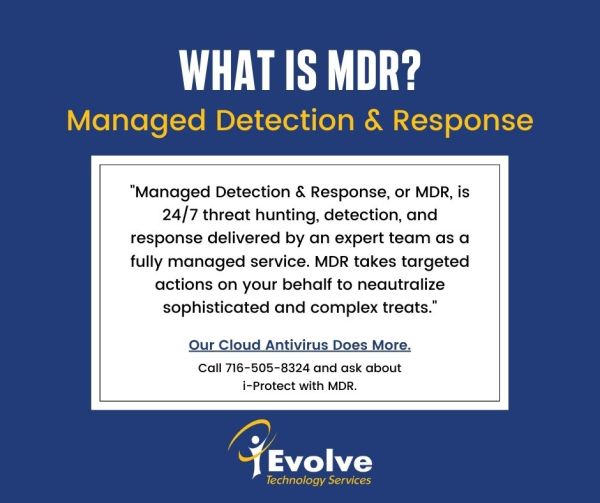
The Architecture of Managed Detection and Response
MDR is not a single tool; it is a service-based approach that integrates people, processes, and technology. Unlike traditional Managed Security Service Providers (MSSPs) that often focus primarily on managing security devices and alerting, MDR is outcome-focused. It centers on the ability to detect malicious activity and, crucially, to respond to it effectively.
The Role of Technology
At the core of an MDR service is a sophisticated technology stack, typically involving Endpoint Detection and Response (EDR) agents, Network Traffic Analysis (NTA) tools, and Security Information and Event Management (SIEM) platforms. These tools collect vast amounts of telemetry from across the IT environment—logs from servers, cloud workloads, endpoints, and identity providers. Through the application of machine learning, behavioral analytics, and threat intelligence feeds, this raw data is distilled into actionable insights. The technology serves as the eyes and ears of the organization, identifying anomalies that deviate from established baselines of “normal” behavior.
Human Expertise and Threat Hunting
While automation is essential for speed, it is rarely enough to interpret the nuances of a complex attack. MDR providers employ seasoned security analysts—often referred to as threat hunters—who actively probe the environment for threats that automated systems might miss. These experts understand the TTPs (Tactics, Techniques, and Procedures) used by modern threat actors. They don’t just wait for an alarm; they hypothesize, investigate, and validate, ensuring that sophisticated “living-off-the-land” attacks—where hackers use legitimate system tools to hide their tracks—are identified and neutralized.
Why Organizations are Shifting to MDR
The shift toward MDR is driven by a stark reality: the shortage of skilled cybersecurity professionals and the sheer volume of security alerts that internal teams face daily. Many organizations struggle with “alert fatigue,” where security teams are overwhelmed by thousands of notifications, leading to critical threats being overlooked amidst the noise.
Bridging the Cybersecurity Talent Gap
Building an internal Security Operations Center (SOC) that operates 24/7 is prohibitively expensive for most small and mid-sized enterprises. It requires hiring specialized analysts, maintaining high-end software licenses, and staying up-to-date with a global threat landscape that changes hourly. MDR bridges this gap by providing an “SOC-as-a-Service.” This allows organizations to access enterprise-grade security capabilities without the burden of building and staffing a complex internal department. It provides immediate maturity to the security posture, regardless of the company’s internal headcount.

Rapid Response and Remediation
The speed of response is the single most important factor in limiting the damage of a cyberattack. An MDR provider is contractually and operationally equipped to intervene the moment a threat is confirmed. This might include isolating an infected endpoint from the network to prevent lateral movement, terminating malicious processes, or revoking compromised user credentials. Because the MDR team is familiar with the organization’s environment, they can execute these response actions precisely, minimizing downtime and preventing the disruption of critical business processes.
Key Differences Between MDR and Related Security Models
To fully understand what an MDR is, it is helpful to distinguish it from other security models, such as standard EDR or traditional MSSPs. While terms are often used interchangeably, their operational goals differ significantly.
MDR vs. EDR (Endpoint Detection and Response)
EDR is a tool; MDR is a service. An organization can purchase an EDR software license and install it on their endpoints, but that tool is only as effective as the person managing it. If the internal IT team lacks the time or expertise to monitor the EDR console 24/7, the software will simply produce alerts that are never addressed. MDR takes that EDR technology and pairs it with a team of experts who manage, monitor, and respond to the outputs of that tool.
MDR vs. MSSP (Managed Security Service Provider)
The primary distinction between MDR and an MSSP is the focus on “response” rather than “management.” An MSSP is historically focused on managing the health of security infrastructure, such as updating firewall rules, patching software, and reporting on compliance. An MDR provider is focused on threat hunting and incident response. If a firewall rule needs updating, an MSSP handles it. If a sophisticated actor bypasses the firewall and begins encrypting databases, the MDR provider identifies the breach and stops the movement.
Integrating MDR into a Future-Proof Strategy
Adopting an MDR service is a strategic move that reflects a shift from a reactive security mindset to a proactive one. However, the success of an MDR implementation depends heavily on integration and transparency.
Data Visibility and Cloud Integration
For an MDR to be effective, it must have comprehensive visibility into the organization’s assets. This means the service must be integrated not just with on-premises servers and employee laptops, but also with cloud environments like AWS, Azure, or Google Cloud, as well as SaaS applications like Microsoft 365. Modern threats rarely stick to one vector; they move fluidly between cloud storage, email accounts, and physical hardware. A high-quality MDR service will normalize this disparate data to provide a unified picture of the organizational security posture.
Continuous Improvement and Threat Intelligence
A static security posture is a vulnerable one. MDR providers are constantly fed by global threat intelligence networks. When a new vulnerability is discovered or a new group of threat actors emerges, the MDR provider updates its detection logic across its entire customer base simultaneously. This collective defense model ensures that if one organization is hit by a novel attack, the MDR provider learns from it and can immediately shield every other client in their ecosystem. This gives organizations a level of protection that would be impossible to achieve in isolation.
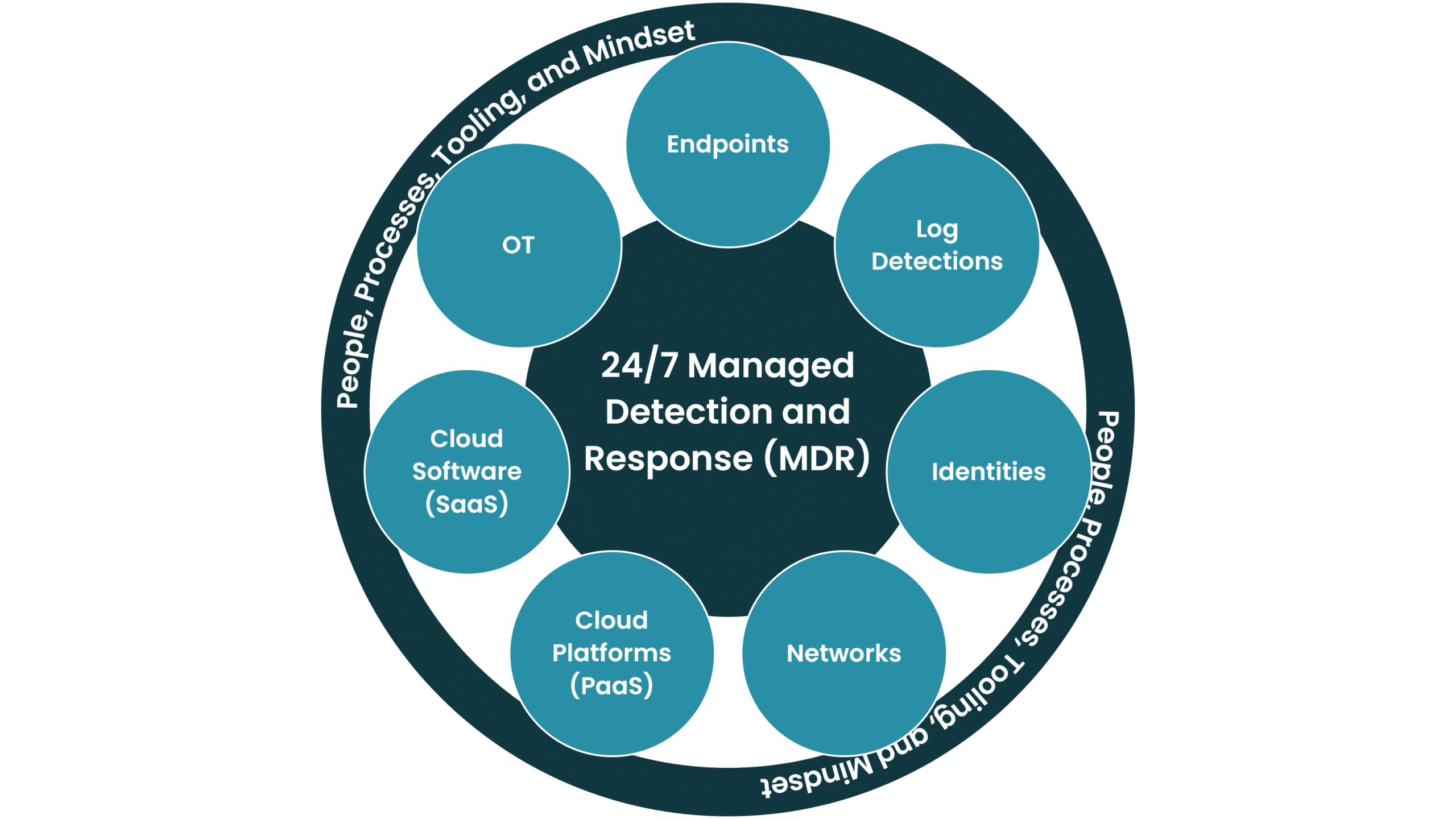
The Human Element of Communication
While the technical output of MDR is the removal of threats, the operational output is the communication loop. Effective MDR providers work as an extension of the client’s IT team. They provide regular reporting, context-rich summaries of incidents, and strategic recommendations for improving the overall security hygiene of the organization. This collaborative approach turns the MDR provider into a trusted advisor, helping stakeholders understand their risk profile and make informed decisions about their long-term digital security investments.
In summary, an MDR service is the modern answer to an environment where cyber threats are constant, evolving, and highly targeted. By combining cutting-edge detection technology with the intuition and specialized knowledge of human analysts, MDR empowers businesses to operate with confidence, knowing that they have a vigilant, round-the-clock partner watching over their digital infrastructure. It represents the essential transition from simply “hoping to stay safe” to “actively ensuring resilience.”
aViewFromTheCave is a participant in the Amazon Services LLC Associates Program, an affiliate advertising program designed to provide a means for sites to earn advertising fees by advertising and linking to Amazon.com. Amazon, the Amazon logo, AmazonSupply, and the AmazonSupply logo are trademarks of Amazon.com, Inc. or its affiliates. As an Amazon Associate we earn affiliate commissions from qualifying purchases.