
Understanding how to calculate “what percentage of a number is another” is not merely a mathematical exercise; it’s a foundational skill for navigating the complex landscape of personal finance, investing, and business. This simple calculation unlocks a deeper understanding of financial ratios, growth, profitability, and risk, empowering individuals and entrepreneurs to make more informed decisions. From assessing the true cost of a loan to evaluating investment performance or dissecting a business’s profit margins, the ability to contextualize numbers as percentages is indispensable for financial literacy and success.
The Fundamental Concept: Unlocking Financial Ratios
At its core, determining what percentage of a number is another number is about establishing a proportional relationship. It quantifies how much one value contributes to or represents a part of another, larger, or reference value. This simple comparison, when expressed as a percentage, provides a standardized and easily digestible metric that can be applied across diverse financial scenarios, making otherwise disparate figures comparable and meaningful.
Basic Calculation: From Fractions to Percentages
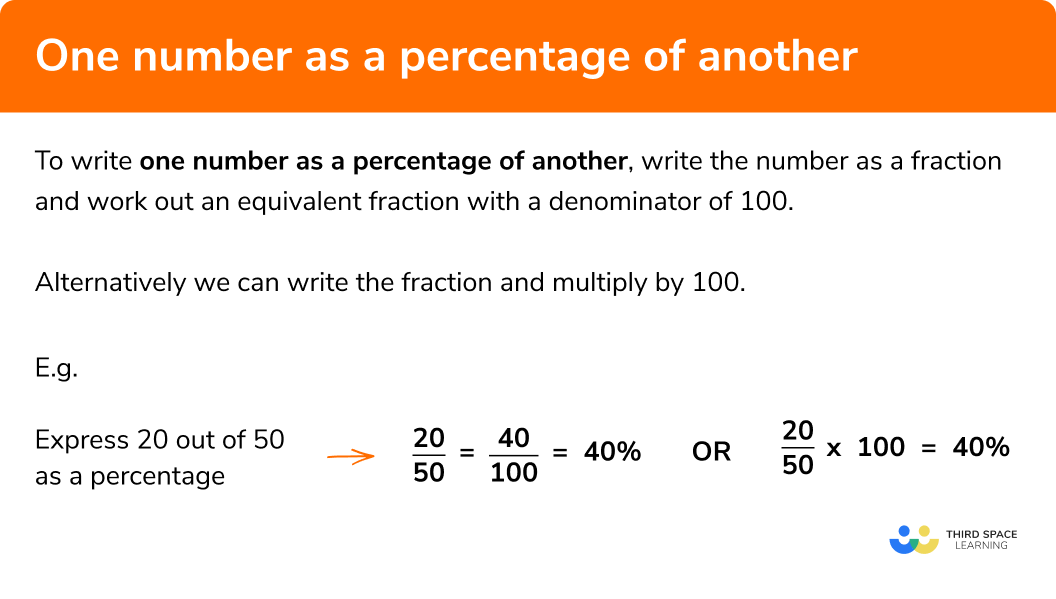
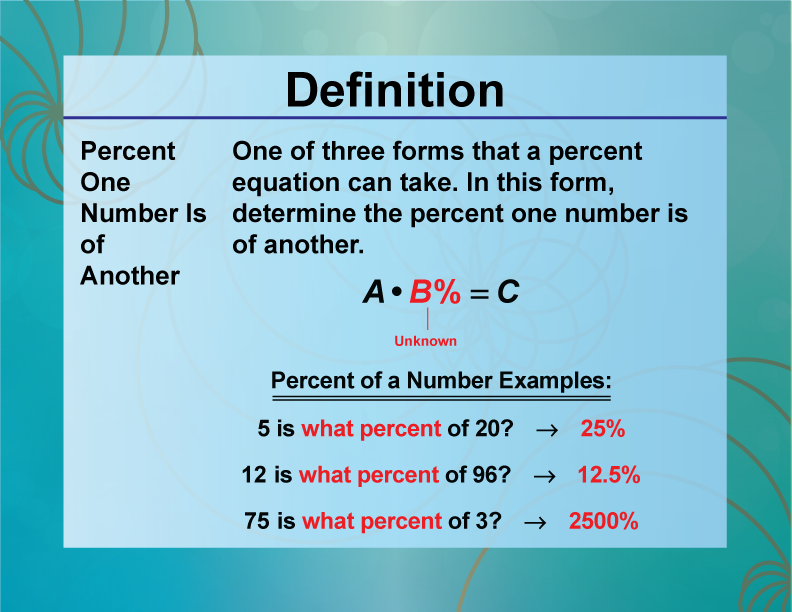
The method for calculating “what percentage of a number is another” is straightforward. If you want to find out what percentage ‘A’ is of ‘B’, you divide ‘A’ by ‘B’ and then multiply the result by 100.
The formula is: (Part / Whole) * 100 = Percentage.
For example, if you earned $50 in interest on a $1,000 investment, the calculation would be ($50 / $1,000) * 100 = 5%. This 5% represents your return on investment, a crucial metric for evaluating financial performance. This conversion from a raw fraction to a standardized percentage allows for immediate comprehension and comparison, irrespective of the absolute values involved.
Why Percentages Matter in Finance
Percentages are the universal language of financial comparison and analysis. They strip away the absolute scale of numbers, allowing us to compare apples to oranges in a meaningful way. A $100 profit might seem small, but if it’s from a $200 initial investment, a 50% profit margin tells a powerful story of efficiency. Conversely, a $1,000 interest payment sounds substantial, but if it’s on a $100,000 loan, a 1% interest rate indicates a relatively low borrowing cost. Without percentages, comparing the efficiency of different businesses, the returns of various investments, or the impact of inflation on different asset classes would be cumbersome and less intuitive. They provide context, highlight trends, and enable predictive analysis, making them an indispensable tool for anyone managing money.
Applying Percentages in Personal Finance
In personal finance, percentages serve as a compass, guiding individuals toward sound financial health and helping them navigate the complexities of daily money management. From structuring a budget to understanding the true cost of borrowing, percentages provide clarity and actionable insights.
Budgeting and Expense Allocation
One of the most practical applications of percentages in personal finance is budgeting. Common budgeting rules, like the 50/30/20 rule (50% for needs, 30% for wants, 20% for savings and debt repayment), are built entirely on percentage allocation. By calculating “what percentage of your income is spent on housing” or “what percentage is allocated to groceries,” individuals gain a clear picture of their spending habits relative to their total income. This allows for easy identification of areas where spending might be excessive or where more funds could be redirected towards savings or debt reduction. For instance, if your rent is $1,500 and your monthly take-home income is $4,000, your housing costs represent ($1,500 / $4,000) * 100 = 37.5% of your income, indicating whether you are within or exceeding typical housing cost guidelines.
Understanding Interest Rates and Loans
Interest rates, expressed as percentages, are perhaps the most critical component when dealing with loans, credit cards, and savings accounts. The Annual Percentage Rate (APR) on a loan tells you the annual cost of borrowing as a percentage of the amount borrowed, while the Annual Percentage Yield (APY) on a savings account indicates the effective annual rate of return, accounting for compounding interest. Understanding how to calculate the percentage of interest paid relative to the principal, or the percentage of your monthly payment that goes towards interest versus principal, is crucial for managing debt effectively. A seemingly small difference in APR can translate into thousands of dollars over the lifetime of a mortgage or car loan, making percentage literacy a powerful tool for saving money and avoiding unnecessary financial burdens.
Tracking Savings and Debt Reduction
Percentages are also vital for tracking progress towards financial goals. Whether it’s saving for a down payment, retirement, or paying off a loan, expressing progress as a percentage provides motivation and a clear benchmark. If you have a goal to save $20,000 and you currently have $8,000, you’ve achieved ($8,000 / $20,000) * 100 = 40% of your goal. Similarly, tracking the percentage of a loan principal that has been paid off can be incredibly motivating. This clear, quantifiable progress helps individuals stay disciplined and adjust their strategies as needed to hit their financial targets.
Percentages in Investing and Wealth Building
For investors, percentages are the lingua franca of performance evaluation, risk management, and strategic allocation. They allow for consistent measurement and comparison across different asset classes, timeframes, and market conditions.
Measuring Investment Returns and Losses
The core of investment analysis lies in calculating percentage returns. Whether it’s a stock, bond, mutual fund, or real estate, investors constantly ask, “What percentage did my investment grow (or shrink) by?” A stock that increases from $100 to $110 has a 10% return ([$110 – $100] / $100 * 100). This percentage allows investors to compare the performance of different assets, even if their initial costs were vastly different. Understanding both realized gains (from sales) and unrealized gains (on paper) as percentages helps in portfolio rebalancing and tax planning. Similarly, calculating losses as percentages helps investors understand the impact of market downturns and implement stop-loss strategies to mitigate risk.
Diversification and Asset Allocation
Strategic asset allocation, a cornerstone of successful investing, is fundamentally based on percentages. Investors decide what percentage of their portfolio should be allocated to stocks, bonds, real estate, or other assets, often guided by their age, risk tolerance, and financial goals. A common approach might be a 60% stock, 40% bond portfolio. As market values fluctuate, the actual percentages of each asset class in the portfolio will shift. Regularly calculating these percentages and rebalancing (adjusting holdings back to the target percentages) is crucial for maintaining the desired risk profile and maximizing long-term returns. For example, if your stocks outperform and now represent 70% of your portfolio, you might sell some stocks and buy more bonds to bring the allocation back to 60/40, thereby reducing overall risk.
Inflation’s Impact
Inflation, the rate at which the general level of prices for goods and services is rising, and purchasing power is falling, is always expressed as a percentage. Understanding what percentage your investments need to grow by just to maintain their purchasing power is critical. If inflation is 3%, your investments need to generate at least a 3% return after taxes and fees just to break even in real terms. This percentage perspective highlights the importance of investing in assets that have the potential to outpace inflation, rather than letting your money lose value over time in low-interest savings accounts.
Business & Entrepreneurial Finance: Profitability and Growth
For businesses and entrepreneurs, percentages are not just metrics; they are vital signs that indicate health, efficiency, and potential for growth. They guide strategic decisions, from pricing products to managing operational costs and attracting investors.
Calculating Profit Margins
Profit margins, universally expressed as percentages, are paramount in business. Gross profit margin (Gross Profit / Revenue * 100) shows the percentage of revenue left after deducting the cost of goods sold. Operating profit margin (Operating Income / Revenue * 100) indicates the percentage of revenue remaining after all operating expenses are paid. Net profit margin (Net Income / Revenue * 100) reveals the ultimate percentage of revenue that trickles down to the bottom line after all expenses, taxes, and interest. These percentages allow business owners to benchmark their performance against competitors, identify areas for cost reduction, and make informed pricing decisions. A healthy profit margin signals efficiency and sustainability, crucial for attracting investment and ensuring long-term viability.
Sales Growth and Market Share
Businesses constantly monitor sales growth and market share, both typically expressed as percentages. Calculating “what percentage did our sales increase this quarter compared to last year” provides insights into the effectiveness of marketing strategies and overall market demand. Similarly, market share—the percentage of total sales in an industry generated by a particular company—is a key indicator of competitive position and industry influence. If a company’s sales increase by 15% year-over-year while the overall market only grew by 5%, it indicates that the company is not only growing but also expanding its market share, a highly desirable outcome for investors and stakeholders.
Understanding Operating Expenses
Analyzing operating expenses as a percentage of revenue is critical for cost control. Businesses need to know “what percentage of our revenue goes towards salaries,” “what percentage to marketing,” or “what percentage to administrative overhead.” By calculating these ratios, management can identify inefficiencies, negotiate better deals with suppliers, or streamline processes to improve profitability. For instance, if payroll consistently represents 40% of revenue, and industry benchmarks suggest 30%, it prompts an investigation into staffing levels or compensation structures. This percentage-based analysis allows for precise management of resources and optimization of the business model.

The Power of Percentage Thinking: Making Informed Financial Decisions
The ability to calculate “what percentage of a number is another” transcends simple arithmetic; it cultivates a fundamental “percentage thinking” mindset crucial for financial empowerment. It encourages individuals and businesses to look beyond absolute figures and to contextualize every financial transaction, investment, or expense within a broader framework. This perspective enables more accurate comparisons, highlights critical relationships between different financial components, and ultimately leads to more strategic and effective decision-making across personal finance, investing, and business management. Embracing percentage thinking means always asking, “Compared to what?” or “What proportion does this represent?” leading to a more nuanced and powerful understanding of your financial world.
aViewFromTheCave is a participant in the Amazon Services LLC Associates Program, an affiliate advertising program designed to provide a means for sites to earn advertising fees by advertising and linking to Amazon.com. Amazon, the Amazon logo, AmazonSupply, and the AmazonSupply logo are trademarks of Amazon.com, Inc. or its affiliates. As an Amazon Associate we earn affiliate commissions from qualifying purchases.