
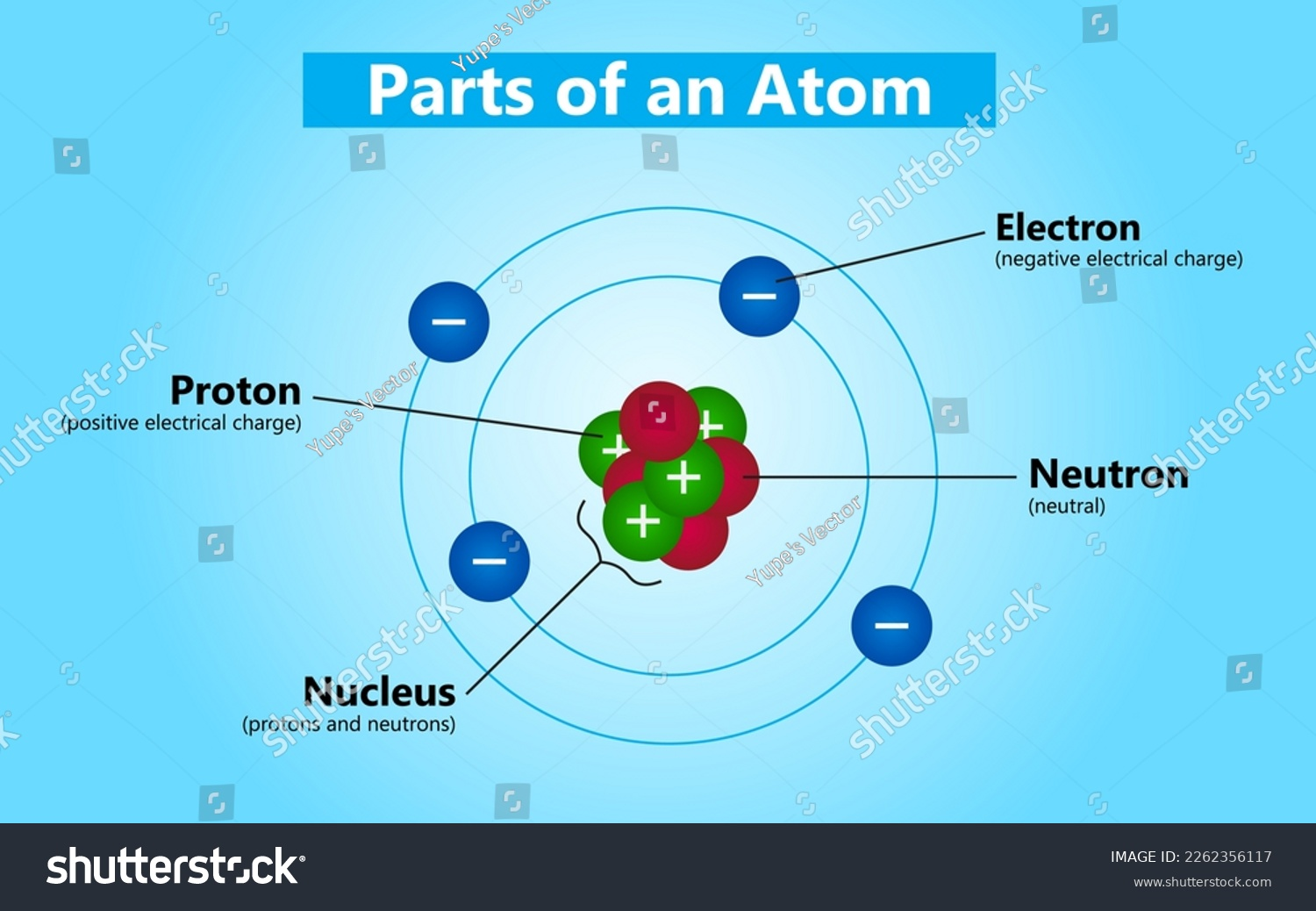
In the foundational world of chemistry and physics, the answer to the question “what part of an atom has a positive charge?” is straightforward: the proton, located within the nucleus. However, in the rapidly evolving landscape of modern technology, this single subatomic particle is much more than a scientific fact. It is the literal and metaphorical engine driving the next generation of semiconductors, quantum computers, and energy storage solutions.
To understand the trajectory of hardware engineering and digital infrastructure, one must first understand the behavior of the positively charged nucleus. In this deep dive, we explore how the positive charge of the atom serves as the cornerstone for the tech industry’s most significant breakthroughs.

The Nucleus of Computing: Positive Charges in Semiconductor Engineering
At the heart of every smartphone, laptop, and server lies the silicon chip. The functionality of these chips depends entirely on our ability to manipulate the electrical properties of atoms. Specifically, the positive charge held within the nucleus of an atom dictates how electricity flows through a circuit.
The Role of Protons in Silicon Doping
Pure silicon is a poor conductor of electricity. To make it functional for technology, engineers engage in a process called “doping.” This involves adding impurities—atoms of other elements—into the silicon crystal lattice. When we add an element like phosphorus, we introduce extra electrons (negative charges). However, when we add an element like boron, we create a “hole.”
In tech terms, a “hole” acts as a positive charge carrier. While the protons in the nucleus remain stationary, their positive attraction influences how these holes move. This dance between the negative electron and the positive influence of the nucleus allows for the creation of P-type (positive) and N-type (negative) semiconductors. The junction between these two is what allows a transistor to act as a switch, the binary “0” and “1” of all digital logic.
Nanoscale Engineering and Electrostatic Interference
As we move toward 3nm and 2nm process nodes in chip manufacturing, the positive charge of the nucleus becomes a challenge to manage. At such microscopic scales, the electrostatic pull of the protons can lead to “leakage” or “tunneling,” where electrons jump across barriers they shouldn’t. Tech giants like TSMC and Intel are currently developing Gate-All-Around (GAA) transistor architectures specifically to better contain and direct the influence of atomic charges, ensuring that the positive core of the atom remains an asset rather than a liability in high-speed computing.
Quantum Computing: Leveraging Ionized Atoms for Processing Power
While classical technology relies on the flow of electrons, the frontier of Tech—Quantum Computing—often looks directly at the positively charged part of the atom as the primary tool for calculation. This is most evident in “Ion Trap” quantum computers.
Ion Trap Technology: The Power of the Positive Ion
In an ion trap quantum computer, scientists take an atom and strip away one or more of its electrons. Because the part of the atom that has a positive charge (the nucleus containing protons) now outweighs the negative electrons, the entire atom becomes a “positive ion.”
Using electromagnetic fields, tech researchers can suspend these positively charged ions in a vacuum. Because they are charged, they can be manipulated with extreme precision using lasers. These trapped ions serve as qubits (quantum bits). Unlike classical bits, these qubits can exist in multiple states simultaneously, allowing quantum computers to solve complex cryptographic and logistical problems that would take a traditional supercomputer thousands of years to process.
Precision Control and Decoherence
The primary hurdle in quantum tech is “decoherence”—the tendency of a quantum state to collapse due to outside interference. The stability of the positive charge in the nucleus is vital here. Because the nucleus is much heavier and more stable than the electron cloud surrounding it, ion-trap systems are known for having longer “coherence times” than other types of quantum hardware. This makes the positive charge of the atom one of the most reliable foundations for the future of decentralized computing and advanced AI modeling.

Energy Storage: The Cation’s Journey in Battery Tech
If semiconductors are the brain of the tech world, batteries are the heart. The entire mobile revolution—from the first iPhone to the latest Tesla—is built upon the movement of positive charges.
Lithium-Ion Mechanics and the Positive Charge
In a lithium-ion battery, the “positive charge” is carried by lithium ions (cations). When a battery is charging, lithium atoms lose an electron and become positively charged. These ions then move from the cathode to the anode. When you use your device, the ions move back.
The efficiency of this tech depends on how easily these positive charges can migrate through the electrolyte and how many of them can be packed into a small space. The “positive” side of the battery (the cathode) is often the most expensive and technologically complex part of the device, involving rare-earth metals like cobalt and nickel designed to host these positive ions safely.
Solid-State Batteries: The Next Tech Frontier
The tech industry is currently racing toward “solid-state” batteries. Traditional batteries use a liquid electrolyte, which can be volatile. Solid-state technology aims to use a solid ceramic or polymer to facilitate the movement of positive charges. This would allow for faster charging, longer lifespans, and significantly higher safety. By optimizing the pathway for the positively charged lithium ion, tech companies hope to double the range of electric vehicles and create gadgets that only need to be charged once a week.
Digital Security and the Physics of Randomness
As we move further into a tech-driven society, the security of our data is paramount. Interestingly, the physical properties of the atom—specifically the interactions involving the positively charged nucleus—are providing new ways to protect digital assets through Quantum Key Distribution (QKD).
Quantum Key Distribution (QKD)
Most modern encryption is based on mathematical problems that could eventually be cracked by powerful enough computers. QKD, however, bases security on the laws of physics. By using the spin or polarization of particles influenced by their atomic charge, tech firms can create encryption keys that are physically impossible to intercept without detection.
The positive charge of the nucleus plays a role in the stability of the emitters used in these systems. By utilizing the predictable nature of atomic transitions (where electrons move between energy levels regulated by the nucleus’s positive pull), engineers can generate “true” random numbers. Unlike software-generated randomness, which is “pseudo-random,” atomic randomness is a fundamental property of the universe, providing an unhackable foundation for digital security.
Protecting the Nucleus of Corporate Data
For the modern enterprise, “security at the atomic level” is becoming a standard. We are seeing a shift from perimeter-based security (firewalls) to data-centric security where the data itself is encrypted using methods derived from quantum mechanics. As AI tools become more adept at breaking traditional codes, the tech industry’s reliance on the physical constants of the atom—specifically the charge-based interactions within hardware—will become the ultimate line of defense.
Conclusion: The Tiny Giant of the Tech World
What part of an atom has a positive charge? The proton. But for the technologist, that positive charge is the beginning of a story that ends with artificial intelligence, global connectivity, and sustainable energy.
The tech industry is no longer satisfied with simply using materials as they found them; we are now at a stage where we manipulate the subatomic. From the “holes” in a silicon wafer that allow our apps to run, to the trapped ions that power quantum experiments, the positive charge of the atom is the most powerful tool in the digital age. As we look toward a future defined by 2nm chips, solid-state power, and quantum-secured networks, it is clear that our most advanced innovations are built on the smallest, most positive foundations.
aViewFromTheCave is a participant in the Amazon Services LLC Associates Program, an affiliate advertising program designed to provide a means for sites to earn advertising fees by advertising and linking to Amazon.com. Amazon, the Amazon logo, AmazonSupply, and the AmazonSupply logo are trademarks of Amazon.com, Inc. or its affiliates. As an Amazon Associate we earn affiliate commissions from qualifying purchases.