
The intricate tapestry of life on Earth is woven with a bewildering array of organisms, each with unique characteristics and evolutionary histories. Among these, the deuterostomes represent a significant clade within the animal kingdom, distinguished by a fundamental developmental pattern that sets them apart from their protostome counterparts. While the term “deuterostome” might sound arcane, understanding its biological significance offers profound insights into animal evolution, developmental biology, and even the origins of human anatomy. This exploration delves into the defining features of deuterostomes, their evolutionary journey, and their remarkable diversity, highlighting why this group holds such a crucial place in our understanding of the biosphere.

The Defining Developmental Blueprint: Blastopore Fate
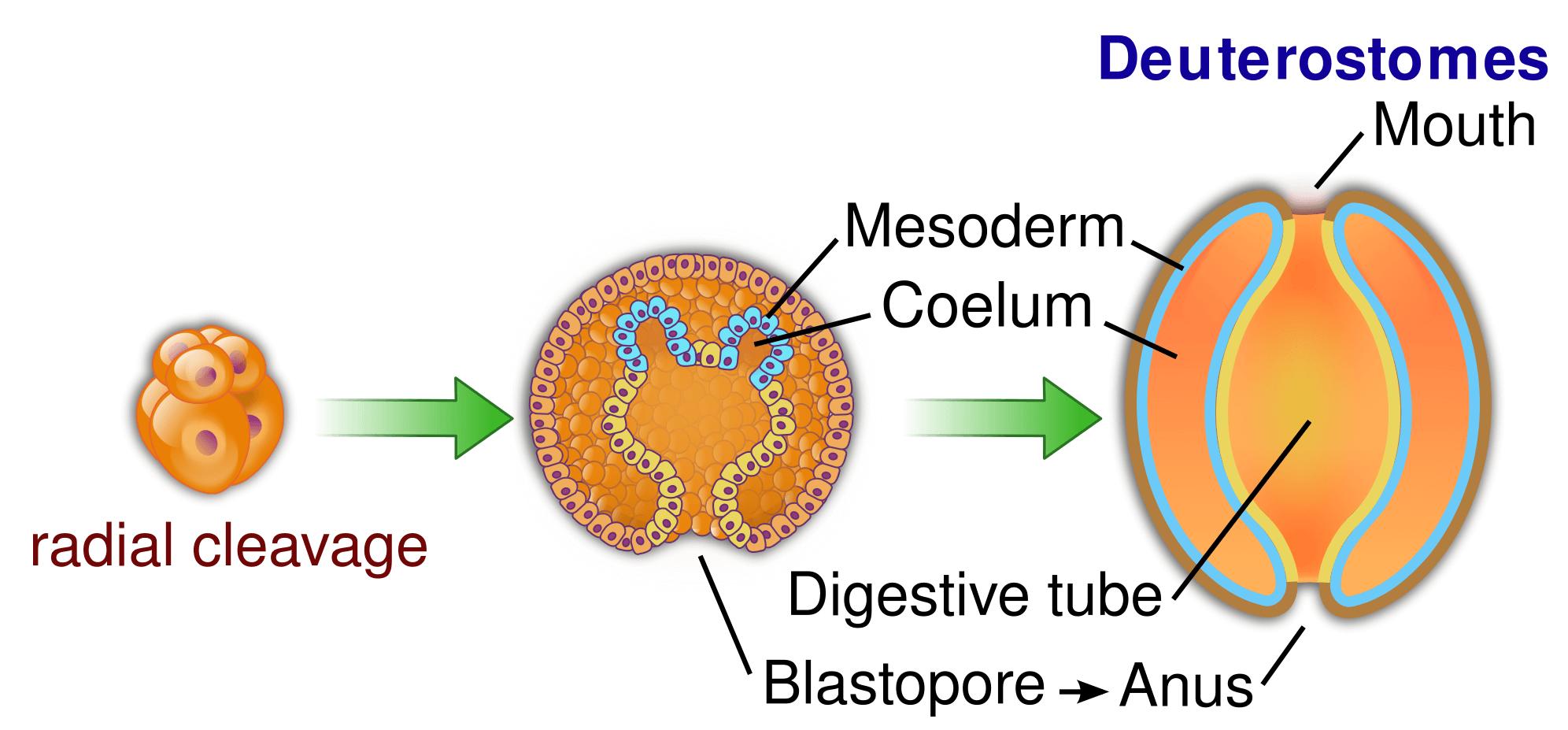
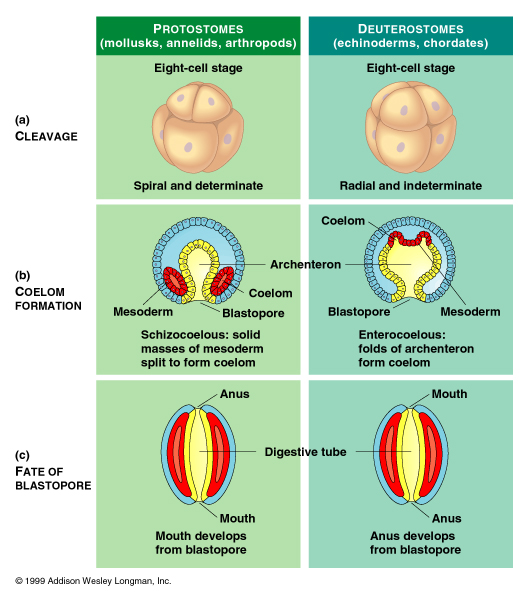
At the heart of the deuterostome definition lies a key difference in embryonic development: the fate of the blastopore. The blastopore is the first opening to form in the developing embryo, an invagination of the blastula. In deuterostomes, a group that includes vertebrates, echinoderms, and hemichordates, the blastopore develops into the anus. The mouth, in contrast, forms as a secondary opening. This developmental characteristic, known as deuterostomy (meaning “second mouth”), is a defining feature and a primary criterion for classifying an organism as a deuterostome.
Understanding the Embryonic Journey
To fully appreciate deuterostomy, it’s essential to contrast it with protostomy (meaning “first mouth”), the developmental pattern seen in the other major bilaterian superphylum, the protostomes. In protostomes, which include arthropods, mollusks, and annelids, the blastopore typically gives rise to the mouth. The anus then forms as a secondary opening. This fundamental divergence in early embryonic development has profound implications for the subsequent formation of other bodily structures, including the digestive tract and coelom.
The Coelom: A Cavity of Significance
Another critical feature shared by many deuterostomes, though not exclusively so, is the enterocoelous formation of the coelom. The coelom is a fluid-filled body cavity that develops within the mesoderm, the middle germ layer. In enterocoely, the coelom forms as outpocketings of the primitive gut (the archenteron). These outpocketings then expand and eventually fuse, enclosing the coelom. This contrasts with schizocoely, where the coelom arises from a split within the mesoderm, a pattern more commonly observed in protostomes. The presence and formation of the coelom are vital for organ development, support, and locomotion, providing a hydrostatic skeleton and allowing for greater complexity in internal organ systems.
The Deuterostome Tree of Life: Major Phyla and Their Representatives
The deuterostome clade is comprised of several distinct phyla, each exhibiting a fascinating array of forms and ecological roles. While the developmental pattern of deuterostomy is a unifying characteristic, these phyla showcase remarkable evolutionary diversification.
Echinodermata: The Spiny-Skinned Wonders
The phylum Echinodermata is perhaps one of the most visually striking and evolutionarily distinct deuterostome groups. This phylum includes familiar marine animals such as starfish (sea stars), sea urchins, sand dollars, brittle stars, and sea cucumbers. A hallmark of echinoderms, aside from their pentaradial symmetry (five-part radial symmetry) in their adult form (a secondary adaptation from an originally bilateral larval form), is their unique water vascular system. This complex hydraulic system is used for locomotion, feeding, respiration, and sensory perception. Their calcified endoskeleton, made of ossicles, provides support and protection. Despite their radial symmetry as adults, their free-swimming larvae are bilaterally symmetrical, providing evidence of their deuterostome ancestry.
Chordata: The Foundation of Vertebrate Life
The phylum Chordata is arguably the most well-known deuterostome group, as it encompasses all vertebrates, including humans. Chordates are defined by four key characteristics that are present at some stage of their life cycle: a notochord (a flexible rod that supports the body), a dorsal hollow nerve cord (which develops into the brain and spinal cord), pharyngeal slits (involved in filter feeding or respiration), and a post-anal tail. While not all chordates retain these features throughout their adult lives (for example, adult humans have remnants of pharyngeal slits and a tailbone), they are present in the larval or embryonic stages.
This phylum is further divided into subphyla:
- Cephalochordata (Lancelets): Small, fish-like marine invertebrates that retain all four chordate characteristics throughout their lives.
- Urochordata (Tunicates or Sea Squirts): Marine invertebrates that exhibit all chordate features in their larval stage but often lose or modify them in their sessile adult form.
- Vertebrata (Vertebrates): This subphylum includes jawless fish, cartilaginous fish, bony fish, amphibians, reptiles, birds, and mammals. Vertebrates are characterized by the presence of a vertebral column (backbone) that encloses and protects the dorsal nerve cord.
The evolutionary transition from invertebrates to vertebrates, a monumental step in biological history, occurred within the Chordata, highlighting the immense adaptive potential of the deuterostome body plan.
Hemichordata: The Enigmatic Bridge
The phylum Hemichordata comprises marine invertebrates, such as acorn worms and pterobranchs, that possess characteristics that bridge the gap between echinoderms and chordates. Historically, their classification has been debated, with some features suggesting affinities with echinoderms and others with chordates. Hemichordates possess a proboscis, a collar, and a trunk, and exhibit a rudimentary notochord-like structure called a stomochord, which was once thought to be a true notochord. However, modern molecular and developmental studies firmly place them within the deuterostome clade, often considered the sister group to the chordates.
Evolutionary Significance and Phylogeny
The study of deuterostomes is not merely an academic exercise in classification; it is fundamental to understanding the grand narrative of animal evolution. The divergence of deuterostomes from protostomes is a major branching point in bilaterian evolution, shaping the diverse body plans we observe today.
The Great Bilaterian Split
The evolutionary history of Bilateria, animals with bilateral symmetry, is divided into two major superphyla: Protostomia and Deuterostomia. This fundamental split likely occurred early in the Cambrian period, a time of explosive diversification of animal life. The distinct developmental strategies – protostomy and deuterostomy – represent an early evolutionary decision that led to divergent pathways in organogenesis and body plan construction. Understanding this split is crucial for reconstructing the ancestral bilaterian and tracing the origins of key animal features.
Shared Ancestry and Divergent Paths
While sharing the deuterostome developmental blueprint, the echinoderms, chordates, and hemichordates have followed remarkably different evolutionary trajectories. Echinoderms, with their unique radial symmetry, adapted to a benthic (bottom-dwelling) lifestyle in marine environments. Chordates, through the development of the notochord and subsequent vertebral column, paved the way for the evolution of complex nervous systems, efficient locomotion, and the colonization of diverse habitats, including terrestrial and aerial environments. Hemichordates, occupying a more niche existence, provide crucial insights into the evolutionary connections between these major groups.
Deuterostomes in Human Anatomy and Health
The relevance of deuterostomes extends directly to human biology and medicine. As vertebrates, humans are profoundly deuterostomes, and our anatomy and physiology are direct reflections of this evolutionary heritage.
From Blastopore to Anus: A Familiar Development
The fact that our anus develops from the blastopore is a fundamental aspect of human embryology. This developmental pathway influences the structure of our digestive system, the arrangement of our organs, and the overall organization of our bodies. Understanding deuterostome development helps us comprehend congenital anomalies and developmental disorders that can arise when these intricate processes go awry.
Comparative Anatomy and Evolutionary Medicine
The study of deuterostomes, particularly vertebrates, provides a powerful lens for understanding human anatomy through comparative anatomy. By examining the homologous structures across different vertebrate species – from the skeletal systems of fish and birds to the reproductive systems of mammals – we gain deeper insights into the evolutionary pressures that have shaped our own bodies. This comparative approach is invaluable in evolutionary medicine, helping us understand the genetic and developmental underpinnings of diseases and the evolution of disease resistance and susceptibility.
In conclusion, the title “What is a Deuterostome?” opens a door to a fascinating realm of biology. These animals, united by a unique developmental strategy, represent a cornerstone of the animal kingdom’s evolutionary history. From the spiny stars of the ocean to the intricate complexity of the human body, deuterostomes showcase the remarkable power of evolutionary innovation and the profound interconnectedness of all life on Earth. Their study continues to illuminate the fundamental principles of life’s development and diversity.
aViewFromTheCave is a participant in the Amazon Services LLC Associates Program, an affiliate advertising program designed to provide a means for sites to earn advertising fees by advertising and linking to Amazon.com. Amazon, the Amazon logo, AmazonSupply, and the AmazonSupply logo are trademarks of Amazon.com, Inc. or its affiliates. As an Amazon Associate we earn affiliate commissions from qualifying purchases.