
Understanding your vehicle’s tires goes far beyond simply knowing they’re round and black. For the financially savvy car owner, discerning the precise meaning of tire specifications, particularly “tire height,” is a crucial aspect of responsible vehicle management, directly influencing everything from fuel economy and maintenance costs to resale value and long-term financial outlays. While the term “tire height” might seem straightforward, its numerical representation on a tire’s sidewall is often misunderstood, carrying significant monetary implications.
Demystifying Tire Dimensions: Beyond the Sidewall Code
The seemingly cryptic series of numbers and letters emblazoned on a tire’s sidewall is, in fact, a detailed specification sheet. Among these numbers, the actual “height” of a tire, or more accurately, its overall diameter, isn’t immediately obvious but is derived from a key component: the aspect ratio. Grasping this code is the first step towards making financially prudent decisions about your vehicle’s footwear.
The Anatomy of a Tire Size Code
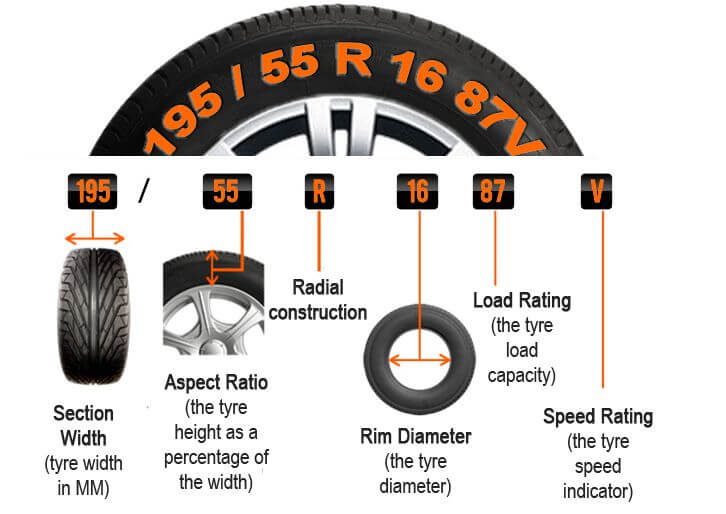
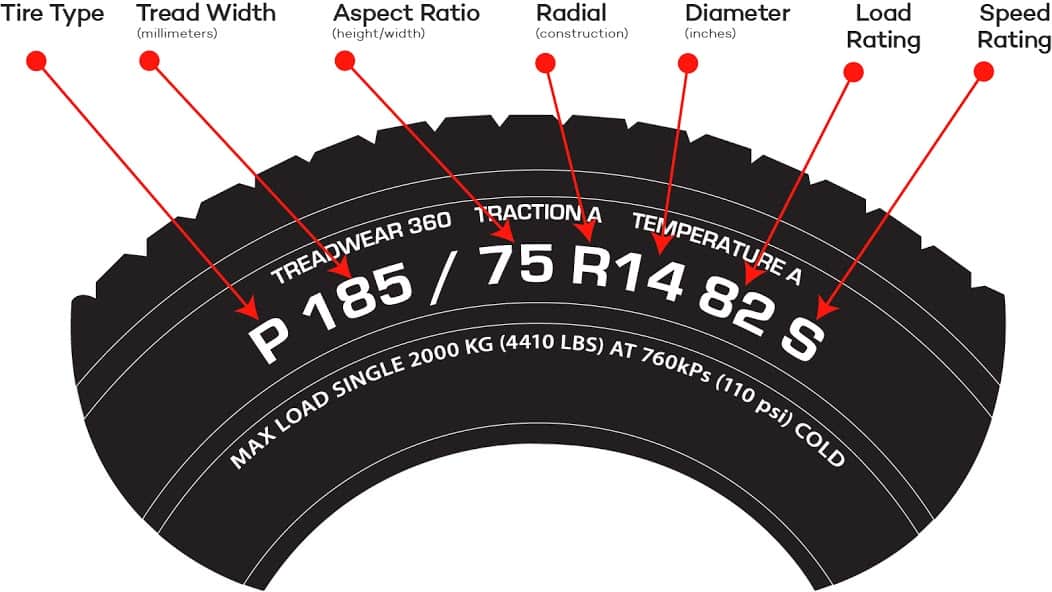
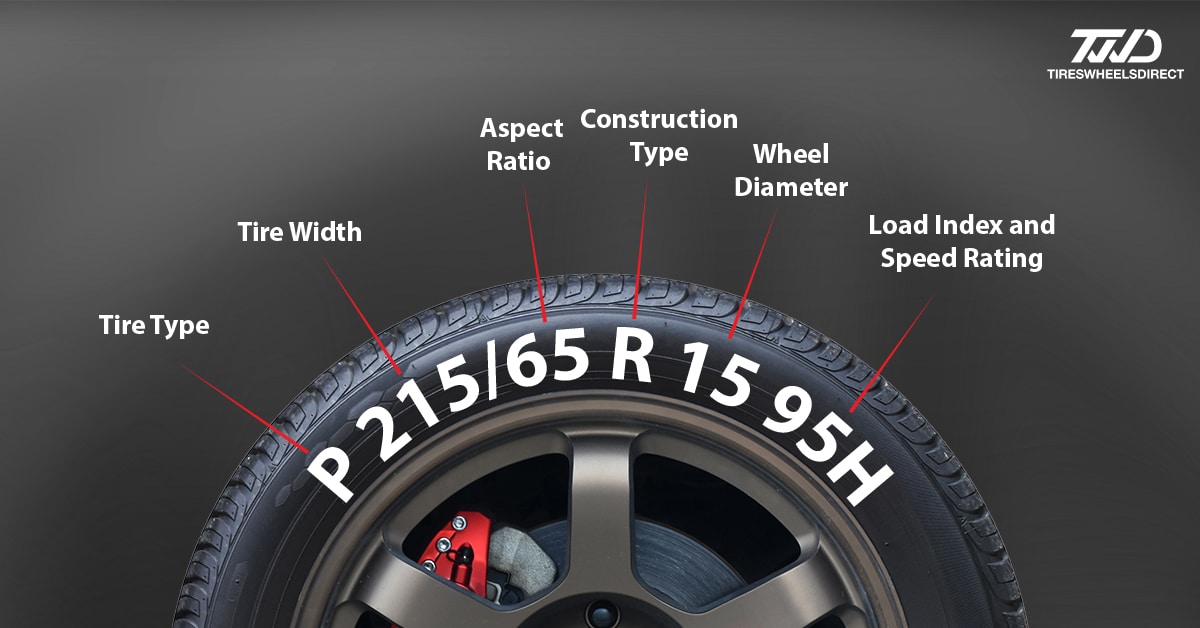
Let’s dissect a common tire size, for example, “P225/55R17.”
- P (or LT, or C): This prefix indicates the tire’s intended vehicle type. ‘P’ stands for Passenger car, ‘LT’ for Light Truck, and ‘C’ for Commercial. Choosing the wrong type can lead to suboptimal performance, premature wear, and potential safety issues, all of which translate to higher costs down the line.
- 225: This is the tire’s section width, measured in millimeters, from sidewall to sidewall. In our example, 225mm. A wider tire often means more grip but can also increase rolling resistance, negatively impacting fuel efficiency.
- 55: This is the aspect ratio, expressed as a percentage. It represents the height of the sidewall as a percentage of the tire’s section width. In our case, the sidewall height is 55% of 225mm. This number is critical for calculating the overall tire height.
- R: Denotes the tire’s internal construction, typically “Radial.” Radial tires are standard and offer good performance and longevity, which helps reduce replacement frequency.
- 17: This is the diameter of the wheel (rim) the tire is designed to fit, measured in inches. A larger rim often implies a lower aspect ratio tire to maintain overall diameter, influencing ride comfort and tire cost.
The Critical Role of Aspect Ratio in Overall Tire Height
The aspect ratio (the “55” in our example) is the most direct numerical contributor to what people generally refer to as “tire height” or sidewall profile. A lower aspect ratio (e.g., 40, 35) means a shorter sidewall, while a higher aspect ratio (e.g., 70, 75) indicates a taller sidewall.
To calculate the actual sidewall height in millimeters:
- Sidewall Height = (Section Width * Aspect Ratio) / 100
- For P225/55R17: (225 mm * 55) / 100 = 123.75 mm
The overall tire height or diameter is then calculated by adding two sidewall heights to the wheel diameter (converted to millimeters):
- Overall Tire Diameter = (2 * Sidewall Height) + Wheel Diameter (in mm)
- For P225/55R17: (2 * 123.75 mm) + (17 inches * 25.4 mm/inch) = 247.5 mm + 431.8 mm = 679.3 mm (or approximately 26.7 inches).
Understanding this calculation is vital because even minor deviations in overall tire height from the manufacturer’s specifications can have a cascading effect on vehicle performance and, more importantly, your wallet.
The Financial Ripples of Tire Height Choices
Every decision related to tire height—whether adhering to factory specifications or opting for a different size—carries a direct financial consequence. These impacts range from the day-to-day operational costs to long-term financial commitments and even potential insurance ramifications.
Fuel Efficiency: Taller vs. Shorter
Tire height has a direct bearing on a vehicle’s gearing and speedometer accuracy, which in turn affects fuel efficiency.
- Taller Tires: Installing tires with a larger overall diameter than factory specification effectively “raises” your gearing. This means the engine has to work harder to accelerate, especially from a stop, potentially decreasing fuel economy in city driving. On the highway, if the engine can maintain speed at lower RPMs, it might seem to improve fuel efficiency marginally, but this is often offset by the increased rolling resistance and mass. Crucially, a taller tire will make your speedometer read lower than your actual speed, potentially leading to speeding tickets if not accounted for.
- Shorter Tires: Conversely, shorter tires (smaller overall diameter) effectively “lower” your gearing. The engine will rev higher at any given speed, leading to increased fuel consumption across the board. While acceleration might feel snappier, the constant higher RPMs will burn more fuel. A shorter tire will also cause your speedometer to read higher than your actual speed, making you think you’re going faster than you really are.
In both scenarios, departing from the manufacturer’s recommended overall diameter almost invariably leads to suboptimal fuel efficiency and potentially higher fuel bills over the vehicle’s lifespan.
Maintenance and Longevity: A Cost Perspective
The correct tire height is integral to the proper functioning of your vehicle’s suspension, braking, and electronic stability systems.
- Suspension Wear: Incorrect tire height can alter the vehicle’s center of gravity and suspension geometry. This can put undue stress on shock absorbers, struts, and other suspension components, leading to premature wear and costly repairs. Replacing these components is not cheap, and frequent replacements erode your vehicle maintenance budget.
- Braking Performance: The vehicle’s braking system is calibrated for a specific tire diameter. Altering this can impact braking efficiency, increasing stopping distances, which is not only a safety concern but can also accelerate wear on brake pads and rotors, leading to more frequent and expensive replacements.
- Transmission and Drivetrain Strain: For vehicles with automatic transmissions, changing tire height can confuse the transmission’s shift points, causing it to work harder and potentially shortening its lifespan. For all-wheel-drive or four-wheel-drive vehicles, maintaining consistent tire height across all four wheels is paramount; mismatched heights can cause severe damage to the differentials and transfer case, leading to multi-thousand-dollar repair bills.
- Tire Life: Using an incorrect tire size can lead to uneven tire wear patterns, significantly reducing the lifespan of the tires themselves. Tires are a substantial investment, and shortening their life means more frequent replacements, directly hitting your personal finance budget.
Impact on Vehicle Value and Insurance
Financially, vehicle modifications, including significant changes in tire height, can have a dual effect on value and insurance.
- Resale Value: While some modifications might appeal to a niche market, non-standard tire sizes can often deter potential buyers or even depreciate the vehicle’s resale value, especially if they are poorly executed or compromise the vehicle’s original engineering. Buyers often prefer factory-spec vehicles for peace of mind regarding reliability and maintenance.
- Insurance Implications: Insurance policies are typically based on the vehicle’s factory specifications. Significant modifications, such as altering tire height, if not declared to your insurer, could potentially void parts of your policy or lead to issues in the event of a claim. Even declared modifications might increase your premiums due to perceived higher risk or increased replacement costs. Always consult your insurance provider before making substantial changes.
Customization and Costs: When Height Changes Everything
The desire to customize a vehicle, whether for aesthetics, off-road performance, or utility, often involves altering tire height. While appealing, these modifications are rarely without substantial financial implications beyond the initial purchase of the tires themselves.
Lifting and Lowering: More Than Just Aesthetics
- Lifting a Vehicle: Increasing a vehicle’s ride height by installing taller tires (and often a lift kit) is common for off-road enthusiasts. However, this involves not just the cost of new, often more expensive, larger tires but also the lift kit itself, professional installation, and potentially recalibrating the speedometer, adjusting suspension components, and even replacing driveline parts to accommodate the new angles. These combined costs can run into thousands of dollars. Furthermore, lifted vehicles often experience higher fuel consumption due to increased aerodynamic drag and heavier components.
- Lowering a Vehicle: Conversely, lowering a vehicle (which typically involves fitting tires with a significantly lower aspect ratio) is popular for aesthetic or performance reasons. This often requires new tires, potentially new wheels, and suspension modifications (e.g., coilovers, lowering springs). The immediate financial impact includes the cost of these components and their installation. Long-term, lowered vehicles can suffer from increased wear on suspension components due to reduced travel, a harsher ride, and increased risk of damage from road obstacles, leading to costly repairs.
Hidden Costs of Mismatched Tires
A critical, yet often overlooked, financial pitfall is running mismatched tires. For most vehicles, especially those with advanced traction control or all-wheel-drive systems, all four tires should be of the exact same size, model, and wear level.
- AWD/4WD Systems: Even a small difference in overall tire height (as little as 1/4 inch in circumference) between tires on an AWD or 4WD vehicle can cause constant stress on the differential and transfer case. These systems are designed to detect wheel speed differences and compensate. If the differences are due to mismatched tire sizes, the system will continuously engage and disengage, leading to premature wear, overheating, and ultimately, catastrophic failure of expensive driveline components. Repairs for these failures can easily run into thousands of dollars, far exceeding the cost of a proper set of tires.
- Traction Control and ABS: Modern vehicles rely on precise wheel speed sensor readings for anti-lock braking (ABS) and traction/stability control systems. Mismatched tire heights can confuse these systems, leading to erratic performance, false error codes, and compromised safety, potentially requiring expensive diagnostic work or even component replacement.
Making Informed Financial Decisions for Your Wheels
Given the substantial financial implications, approaching tire selection and modifications with a clear understanding of tire height is paramount. This isn’t just about safety and performance; it’s about safeguarding your automotive investment and avoiding unnecessary expenses.
Consulting Your Owner’s Manual and Professionals
The single most reliable source of information regarding appropriate tire height and size for your vehicle is your owner’s manual. It provides the manufacturer’s recommended specifications, which are optimized for performance, safety, and longevity. Deviating from these recommendations without professional guidance is a financial risk.
When considering any change to tire height, consult with a reputable automotive professional or tire specialist. They can advise on suitable alternatives, potential impacts, and ensure any modifications are performed correctly, minimizing financial and safety risks. They can also help recalibrate speedometers if necessary and discuss specific implications for your vehicle’s make and model.
Balancing Performance, Aesthetics, and Your Budget
Ultimately, the decision regarding tire height involves balancing various factors against your financial capacity and long-term goals.
- Prioritize Safety and OEM Specifications: For most drivers, sticking to the manufacturer’s recommended tire height and size offers the best balance of safety, performance, fuel efficiency, and lowest long-term operational costs.
- Account for Total Cost of Ownership: When considering modifications that alter tire height, look beyond the initial purchase price of the tires. Factor in potential increases in fuel consumption, accelerated wear on other vehicle components, installation costs, and any potential impacts on insurance or resale value. A seemingly minor change can trigger a ripple effect of hidden costs.
- Invest in Quality: Regardless of the specific height, investing in high-quality tires suitable for your driving conditions will pay dividends in safety, longevity, and performance, reducing the frequency of replacements and associated labor costs.
By understanding what “tire height” truly means in its numerical context and appreciating its far-reaching financial implications, you empower yourself to make smarter, more economical choices that protect your vehicle and your wallet.
aViewFromTheCave is a participant in the Amazon Services LLC Associates Program, an affiliate advertising program designed to provide a means for sites to earn advertising fees by advertising and linking to Amazon.com. Amazon, the Amazon logo, AmazonSupply, and the AmazonSupply logo are trademarks of Amazon.com, Inc. or its affiliates. As an Amazon Associate we earn affiliate commissions from qualifying purchases.