
In the modern economic landscape, healthcare remains one of the most resilient sectors for career investment. Among the various paths available, Diagnostic Medical Sonography—commonly referred to as ultrasound technology—stands out as a high-ROI (Return on Investment) career. However, not all ultrasound roles are created equal from a financial perspective. When asking “what kind of ultrasound techs are there,” the answer is best viewed through the lens of earning potential, specialization costs, and market demand.
For those looking to maximize their personal finance goals or transition into a high-paying side hustle within the medical field, understanding the financial hierarchy of sonography is essential. This guide breaks down the various types of ultrasound technicians by their economic output, specialized market value, and the business opportunities they present.

Evaluating the ROI: Which Ultrasound Specialties Command the Highest Salaries?
The financial journey of an ultrasound technician begins with choosing a specialty. While a general sonography certificate provides a stable baseline income, the “money” in this field is found in high-complexity niches. The more specialized the anatomy, the higher the barrier to entry, and subsequently, the higher the hourly rate or annual salary.
The Baseline: General Abdominal and OB/GYN Sonography
Most technicians begin their journey in general sonography, which covers the abdominal cavity and obstetrics/gynecology. From a personal finance perspective, this is the most common entry point. The tuition-to-salary ratio is favorable, with many two-year associate programs leading to starting salaries ranging from $60,000 to $75,000 depending on the region. While it is the “standard” path, it offers the most stability, acting as a financial safety net for those who may want to pivot into more lucrative niches later.
The High-Dividend Sector: Cardiac Sonography (Echocardiography)
Cardiac sonographers, or echocardiographers, focus exclusively on the heart. In the world of business finance and medical billing, cardiac procedures often command higher reimbursement rates from insurance providers. This trickles down to the technician’s paycheck. Because heart disease remains a leading health expenditure globally, the demand for cardiac “techs” is inelastic. Choosing this specialty can often bump an annual salary by $10,000 to $20,000 compared to generalists, making it a high-yield investment of one’s educational hours.
The Specialized Niche: Vascular Technology and Neurosonology
Vascular technologists specialize in the circulatory system, looking for blood clots and arterial blockages. Similarly, neurosonologists focus on the brain’s blood flow. These are technical, high-stakes roles that often require additional certification (RVT or RPhS). From a wealth-building perspective, these specialties are excellent because they are often required in surgical settings or emergency departments, which offer shift differentials—extra pay for nights, weekends, or on-call hours—that can significantly boost take-home pay.
The Financial Landscape of Travel Sonography and Independent Contracting
For the sonographer looking to accelerate their journey toward “Fire” (Financial Independence, Retire Early) or simply looking to maximize their short-term income, the “Travel Tech” model is the ultimate side-hustle-turned-full-time-strategy.
Capitalizing on the Travel Tech Boom: Stipends and Tax-Free Income
Travel ultrasound technicians operate much like travel nurses. They take 13-week assignments in areas with acute staffing shortages. The financial advantage here is twofold: a higher base hourly rate and non-taxable housing and meal stipends. For a savvy individual, this can result in a net income that is nearly double that of a permanent staff member. By minimizing living expenses while on assignment, travel techs can funnel large sums of capital into investment portfolios, real estate, or high-yield savings accounts.
The Business of Being a 1099 Contractor in Medical Imaging
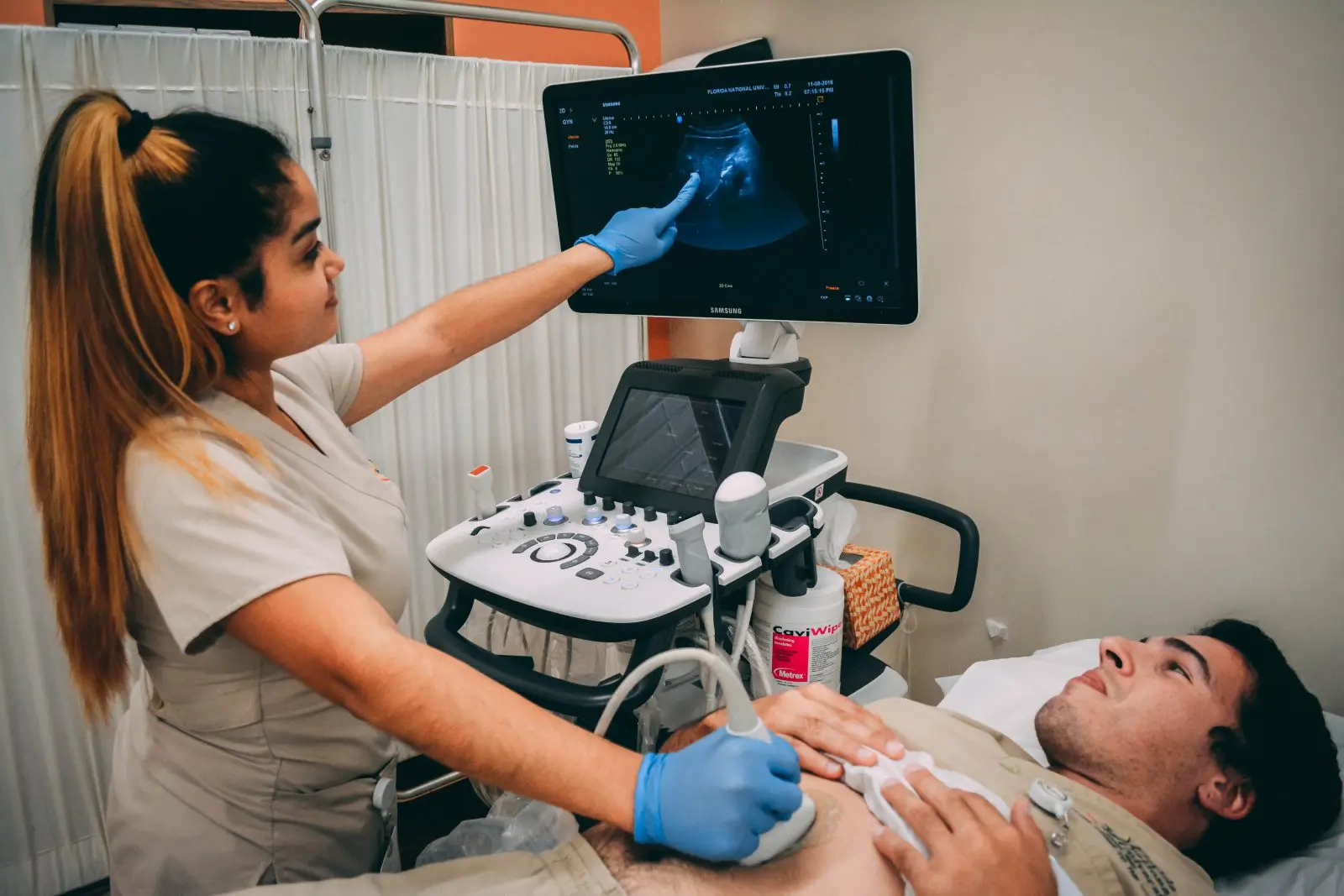
Beyond agency travel, some ultrasound techs choose to operate as independent 1099 contractors. This shifts the focus from personal finance to business finance. By forming an LLC, a technician can contract directly with smaller clinics or physician offices that do not need a full-time sonographer. This allows the technician to set their own rates—often $50 to $100 per hour—while taking advantage of business tax deductions such as home office expenses, equipment, and professional development.
Entrepreneurial Opportunities: The Economics of Starting a Private Ultrasound Studio
When exploring “what kind” of ultrasound techs exist, we must include the entrepreneurs. Sonography is one of the few medical fields where a non-physician can feasibly own and operate a service-based business, particularly in the elective and mobile sectors.
Overhead and Equipment: Navigating Medical Device Financing
The primary hurdle to becoming an ultrasound entrepreneur is the “CapEx” (Capital Expenditure). A high-quality diagnostic ultrasound machine can cost anywhere from $20,000 for a refurbished unit to over $150,000 for a state-of-the-art 4D machine. From a business finance perspective, this requires an understanding of medical equipment financing and leasing. Successful tech-entrepreneurs often leverage equipment loans where the machine itself serves as collateral, allowing them to preserve their personal cash flow while the business generates the revenue to pay off the debt.
3D/4D Elective Ultrasound: A Lucrative Side-Hustle Model
A popular business model is the elective prenatal imaging studio. Unlike diagnostic medical sonography, which relies on complex insurance billing (and the lower margins associated with it), elective studios operate on a cash-pay basis. Customers pay out-of-pocket for “keepsake” photos and videos of their unborn children. With low overhead—often just a small office suite and one machine—this model offers high profit margins and avoids the bureaucratic headache of medical coding and insurance denials.
Future-Proofing Your Income: Financial Resilience in an AI-Driven Market
As technology evolves, the financial value of a technician is increasingly tied to their ability to work alongside AI and advanced software. Investing in one’s “human capital” is the best way to ensure long-term earning power.
Investing in Continuing Education as a Wealth-Building Strategy
In many professions, continuing education (CEU) is a chore. In sonography, it is a financial strategy. Each additional credential (e.g., adding “Breast Sonography” or “Musculoskeletal” to an existing “Abdominal” credential) makes a technician more “liquid” in the job market. This diversification of skills prevents “income stagnation.” If one sector of the medical market slows down, a multi-credentialed tech can easily pivot to where the money is flowing.
Long-term Wealth Management for Allied Health Professionals
Because many ultrasound technicians work in hospital systems, they have access to 403(b) or 401(k) plans with employer matching. This is essentially “free money” that, when combined with a high-specialty salary, can lead to significant wealth accumulation over a 20-year career. Furthermore, understanding the “Business Finance” of one’s department can lead to roles in Lead Sonography or Department Management, moving the technician from the bedside to a corporate salary structure with bonuses and stock options.

Conclusion: Choosing the Path to Financial Success
What kind of ultrasound techs are there? There are generalists, specialists, travelers, and entrepreneurs. From a money-centric perspective, the “best” kind is the one that aligns with your specific financial goals. If you value stability and a steady paycheck, a specialized hospital role in Cardiac or Vascular imaging provides a high floor. If you value rapid wealth accumulation and have a high risk tolerance, the travel tech or independent contractor route offers a high ceiling.
Ultimately, sonography is more than a medical role; it is a financial vehicle. By strategically choosing a niche, managing the costs of education and equipment, and potentially venturing into business ownership, an ultrasound technician can build a robust financial future in one of the most essential sectors of the global economy. Whether you are looking for a high-paying career or a scalable business model, the world of ultrasound technology offers a diverse range of paths to profitability.
aViewFromTheCave is a participant in the Amazon Services LLC Associates Program, an affiliate advertising program designed to provide a means for sites to earn advertising fees by advertising and linking to Amazon.com. Amazon, the Amazon logo, AmazonSupply, and the AmazonSupply logo are trademarks of Amazon.com, Inc. or its affiliates. As an Amazon Associate we earn affiliate commissions from qualifying purchases.