
The landscape of Artificial Intelligence has undergone a seismic shift since the public debut of ChatGPT in late 2022. Initially, Large Language Models (LLMs) were viewed primarily as sophisticated text predictors—tools capable of drafting emails, summarizing reports, or writing poetry. However, the technology has rapidly transcended the boundaries of the written word. We have entered the era of “Multimodality,” where the most advanced models are no longer confined to processing and producing strings of characters.
Today’s leading AI architectures are designed to perceive, reason, and create across a spectrum of media, including images, audio, video, and even complex software code. This evolution represents a transition from “Large Language Models” to “Multimodal Large Language Models” (MLLMs), marking a significant step toward Artificial General Intelligence (AGI). Understanding which models possess these capabilities—and how they achieve them—is essential for navigating the current technological frontier.
The Evolution of Multimodal Large Language Models
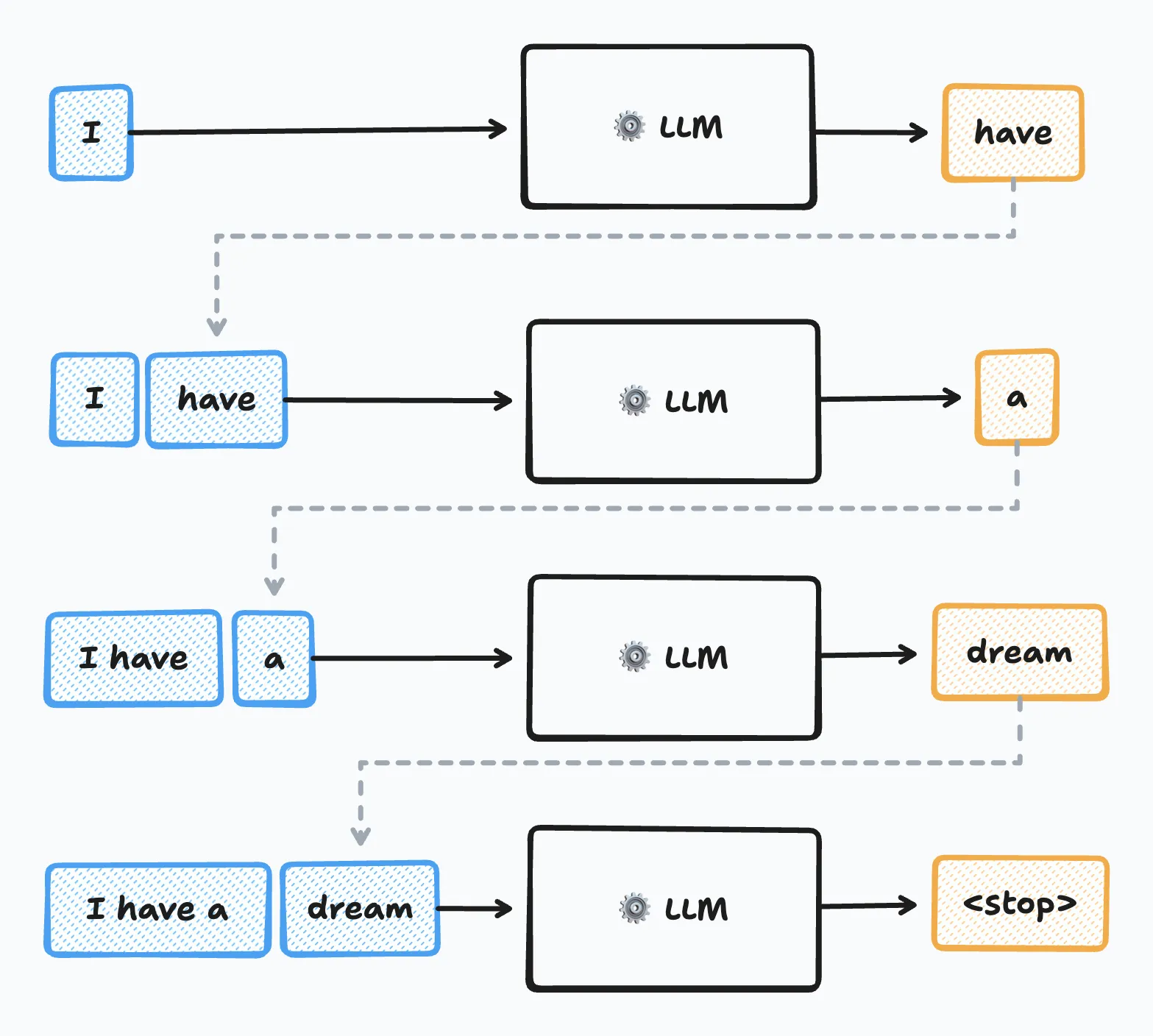
To understand how an LLM can generate more than text, one must first understand the shift in model architecture. Traditional LLMs were trained on massive datasets of text, learning the statistical relationships between tokens (words or parts of words). Modern multimodal models, however, are trained on interleaved datasets that include images paired with captions, video sequences, and audio waveforms.
From Text-Only to Omni-Channel Inputs
The primary breakthrough in generating non-text output lies in the integration of different “encoders.” In a text-only model, the system uses a text encoder to turn words into mathematical vectors. In a multimodal model, such as OpenAI’s GPT-4o or Google’s Gemini 1.5 Pro, the system incorporates vision encoders and audio processors into a unified transformer architecture. This allows the model to “see” a photograph or “hear” a voice memo and process that information in the same “latent space” where it processes text. This cross-modal alignment is what allows the model to understand a prompt like “Explain this chart” or “Compose a melody that sounds like this poem.”
The Architecture of Multimodal Processing
The “Omni” in models like GPT-4o refers to their native multimodality. Unlike earlier iterations that used separate “plugin” models (where one model described an image in text and another model processed that text), native MLLMs process all data types simultaneously. This reduces latency and prevents the loss of nuance that occurs when translating between different formats. By operating within a unified neural network, these models can output diverse data types with a level of coherence that was previously impossible.
Visual and Image Generation Capabilities
One of the most visible ways LLMs have expanded is through the synthesis and interpretation of visual data. While specialized models like Midjourney have long dominated the creative art space, LLMs are now integrating these capabilities directly into their conversational interfaces.
Text-to-Image Synthesis and DALL-E Integration
Modern LLMs often function as the “brain” behind powerful image generation engines. For instance, DALL-E 3 is integrated directly into the ChatGPT ecosystem. In this setup, the LLM acts as an expert prompt engineer; when a user asks for “a futuristic city in the style of Cyberpunk,” the LLM expands that simple request into a highly detailed technical description, which the image generation component then renders. This allows for a much higher degree of “prompt adherence,” ensuring that the generated image contains exactly what the user requested.
Image Understanding and Vision-Language Models (VLM)
Beyond generating images, certain LLMs are classified as Vision-Language Models. These systems can analyze visual input and generate descriptive or analytical text. For example, a developer can upload a screenshot of a website UI, and a VLM-capable LLM can generate the functional HTML and CSS code required to recreate that design. This bidirectional relationship—text to image and image to text/code—represents a major leap in utility, moving the LLM from a simple writer to a visual collaborator.
Audio, Speech, and Music Generation
The auditory dimension is perhaps the most personal and nuanced frontier for LLMs. Generating text is an intellectual exercise, but generating human-like speech or emotive music requires an understanding of rhythm, tone, and prosody.
Text-to-Speech (TTS) and Natural Voice Synthesis
Newer LLMs are capable of generating synthetic speech that is virtually indistinguishable from a human voice. Unlike traditional, robotic text-to-speech systems, these models understand context. If the text indicates excitement, the model can adjust its pitch and speed accordingly. Models like GPT-4o and specialized audio LLMs can even replicate specific “vocal personalities,” including breathing patterns and emotional inflections. This is achieved by tokenizing audio snippets similarly to how text is tokenized, allowing the model to predict the next “sound” in a sequence.
AI-Driven Music Composition and Sound Design
Beyond speech, specialized LLMs like those developed by Suno or Udio (and experimental versions of Google’s Gemini) are capable of generating full musical compositions. By training on vast libraries of audio data, these models understand the structures of melody, harmony, and orchestration. A user can provide a text prompt describing a genre, mood, and lyrics, and the LLM generates a complete audio file. This is not just a synthesis of existing clips; it is a generative process where the model constructs the audio waveform from scratch based on its learned understanding of music theory and acoustics.
Video and Motion Synthesis
The “Holy Grail” of generative AI is video—the ability to create moving images that maintain temporal consistency and adhere to the laws of physics. While this is the most computationally expensive form of generation, LLMs are making rapid strides here.
The Frontiers of Text-to-Video
Models such as OpenAI’s Sora, Kling, and Runway Gen-3 have demonstrated that LLMs (specifically Diffusion Transformers) can generate high-definition video from text prompts. These models do not just generate a series of images; they predict how objects move through three-dimensional space over time. When a user prompts for a “golden retriever jumping through a hoop in a sunny park,” the model must understand the physics of gravity, the fluid motion of fur, and the way light changes as the dog moves.
Temporal Consistency and Physics in AI Video
The primary challenge in video generation is “hallucination” in motion—where objects might morph or disappear between frames. The latest LLMs address this by using “spatiotemporal patches,” essentially treating video as a three-dimensional block of data. By processing the entire sequence at once rather than frame-by-frame, these models achieve a level of consistency that allows for long-form video generation (up to 60 seconds or more), which was previously considered the ceiling for generative technology.
Code, Data, and Action-Oriented Outputs
Finally, some of the most impactful non-text outputs from LLMs are not sensory (like images or sound) but functional. These models generate structured data and executable actions that bridge the gap between digital thought and physical or virtual reality.
Automated Software Engineering and Scripting
While code is technically text, its generation serves a completely different purpose. Advanced LLMs like Claude 3.5 Sonnet and GitHub Copilot are optimized for “logical generation.” They produce functional software, debug complex systems, and even architect entire databases. Because these models are trained on the logic of programming languages, they can generate more than just snippets; they can create entire repositories, run tests, and iterate on their own errors. This “computational generation” is what powers the current surge in AI-driven productivity tools.
Embodied AI: Bridging LLMs with Physical Robotics
Perhaps the most futuristic application of LLMs is in the field of robotics. “Large Action Models” (LAMs) are a subset of LLMs that generate “actions” rather than words. When integrated into a robotic frame, the LLM processes visual data from the robot’s cameras and generates motor commands (e.g., “extend arm 30 degrees,” “apply 5 Newtons of pressure”). This allows robots to understand natural language commands like “pick up the red cup and bring it to me” without needing to be pre-programmed for every specific environment. The LLM generates the pathing and the physical maneuvers required to complete the task in real-time.
The Future of General-Purpose AI
The transition of LLMs from text-only generators to multimodal powerhouses marks the end of the “chatbot” era and the beginning of the “AI agent” era. We are no longer limited to interacting with machines through a keyboard; we can interact through sight, sound, and action.
As these models continue to evolve, the distinction between different “kinds” of LLMs will likely blur. We will move toward a single, unified model that can seamlessly switch between writing a legal brief, composing a symphony, rendering a 3D architectural walkthrough, and controlling a robotic assistant. The technological trend is clear: the LLMs of the future will not just tell us about the world; they will show us, sing to us, and act within the world alongside us. This expansion into multimodality is not just an incremental update—it is a fundamental redefining of what it means for a machine to “understand” its environment.
aViewFromTheCave is a participant in the Amazon Services LLC Associates Program, an affiliate advertising program designed to provide a means for sites to earn advertising fees by advertising and linking to Amazon.com. Amazon, the Amazon logo, AmazonSupply, and the AmazonSupply logo are trademarks of Amazon.com, Inc. or its affiliates. As an Amazon Associate we earn affiliate commissions from qualifying purchases.