
The U.S. Navy Flight Demonstration Squadron, known globally as the Blue Angels, represents the pinnacle of aerial precision and technological prowess. For decades, the team has relied on cutting-edge platforms to execute their high-speed, low-altitude maneuvers. Understanding the jet they fly—the Boeing F/A-18E/F Super Hornet—requires looking beyond the airshow spectacle to analyze the engineering, systems integration, and the specific technological evolution that keeps these machines at the forefront of naval aviation.
The Evolution of the Platform: From Hornet to Super Hornet
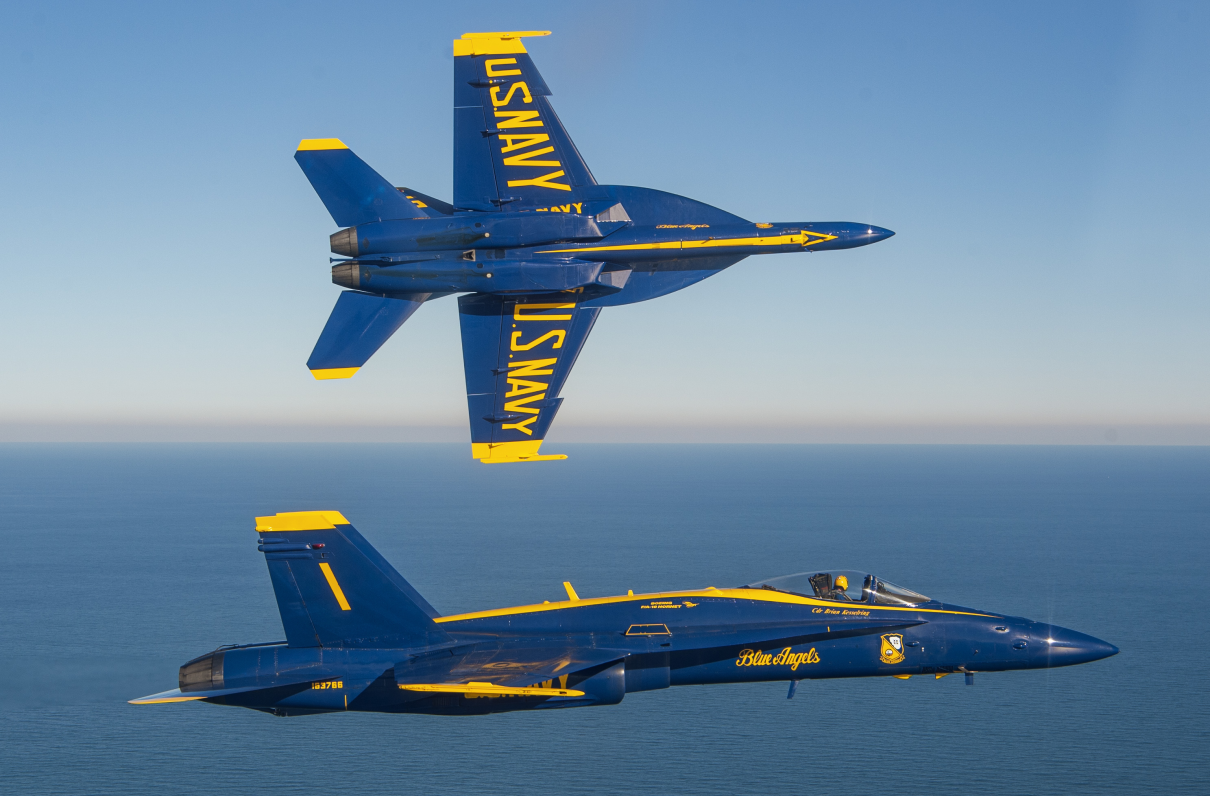
To understand the current technology of the Blue Angels, one must first look at the transition from the legacy F/A-18 Hornet to the F/A-18E/F Super Hornet. The Blue Angels officially transitioned to the Super Hornet in 2020, marking a significant leap in the technical capabilities of the demonstration team.
The Legacy of the F/A-18 A/B/C/D
For thirty-four years, the Blue Angels operated the classic Hornet. This platform served as the workhorse of the Navy’s carrier air wings, offering a versatile interface between ground-attack capabilities and air-to-air superiority. However, by the late 2010s, the aging digital architecture and mechanical limitations of the legacy airframe became apparent. As the technology landscape shifted toward sensor fusion and integrated networking, the team required a platform that better mirrored the modern fleet.
The Super Hornet’s Technological Edge
The F/A-18E/F is not merely a larger version of its predecessor; it is a comprehensively redesigned system. The Super Hornet features a 25% larger airframe, which allows for increased fuel capacity and longer range—critical factors when the team performs across vast geographical regions. Beyond the physical dimensions, the “E” (single-seat) and “F” (two-seat) models feature sophisticated flight control systems that allow for more precise handling, which is essential for the tight, formation-based geometry that defines a Blue Angels performance.
Advanced Avionics and Digital Flight Control Systems
The core of the Super Hornet’s performance lies in its complex digital ecosystem. While the Blue Angels strip away weapons systems to save weight and focus on aerobatic performance, the internal avionics suite remains a masterclass in modern aerospace engineering.
Fly-By-Wire and Sensor Integration
The F/A-18 Super Hornet utilizes a digital fly-by-wire flight control system. In older aircraft, pilot inputs were mechanically linked to control surfaces via cables and pulleys. In the Super Hornet, the pilot’s movements of the stick are translated into digital signals, processed by flight control computers, and then sent to hydraulic actuators. This system enables the “Auto-GCAS” (Automatic Ground Collision Avoidance System) logic and other stability augmentations that allow pilots to push the envelope with extreme precision.
For the Blue Angels, this translates into an incredibly smooth control response. The computer filters out minor, erratic pilot inputs, ensuring that the formation remains rock-steady during high-speed passes where the jets are separated by as little as 18 inches.

The Mission Computer Architecture
The Super Hornet’s mission computers are the heart of its tactical capabilities. While the Blue Angels do not use the radar or targeting pods, the underlying architecture provides the pilots with real-time data on their performance metrics, engine status, and flight path integrity. This digital dashboard provides a level of situational awareness that allows pilots to execute complex maneuvers with micro-second timing, maintaining the synchronization necessary for their iconic diamond formation.
Propulsion Technology and Engine Dynamics
The power behind the Blue Angels’ performance comes from twin General Electric F414-GE-400 turbofan engines. The transition from the F404 engines used in the older Hornet to the F414 in the Super Hornet represents a significant upgrade in thrust-to-weight ratio and fuel efficiency.
Thrust and Thermodynamic Efficiency
The F414 engine generates roughly 22,000 pounds of thrust with afterburners engaged. This immense power is crucial for the “vertical climb” maneuvers that define the opening and closing of their shows. From a technical standpoint, the F414 is designed with a “Full Authority Digital Engine Control” (FADEC) system. FADEC manages every aspect of engine performance, from fuel flow to variable geometry inlet guide vanes, optimizing the combustion cycle in real-time.
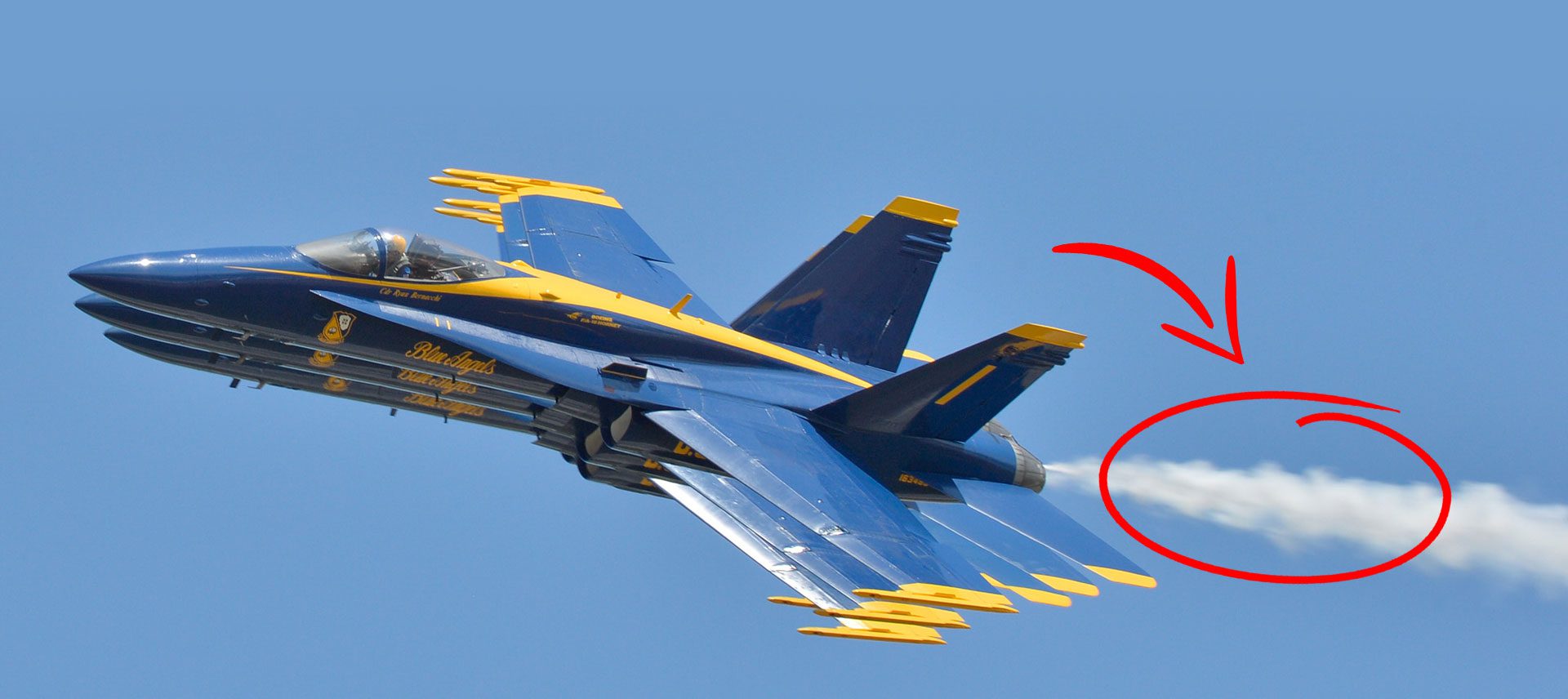
This level of computer-managed propulsion ensures that the jets can transition from idle to maximum thrust almost instantaneously. During a performance, the pilots use this capability to manage energy states precisely, ensuring they have the necessary kinetic energy for high-G turns while maintaining the exact fuel flow required for smoke oil deployment—a specialized system that pumps diesel fuel into the exhaust stream to create the famous white trails.
Reliability and Maintainability
The engineering philosophy behind the Super Hornet focuses heavily on maintainability. The F414 engine is modular, meaning technicians can replace individual components of the engine without needing to perform a complete teardown. For the Blue Angels, who travel nearly every weekend, this technological accessibility is a vital component of their mission. The integration of modern diagnostic tools allows the maintenance crew to monitor engine health data via a digital interface, predicting potential failures before they occur. This “predictive maintenance” is a standard practice in modern aviation tech, ensuring that the fleet remains mission-capable throughout the grueling airshow season.
The Future of Demonstration Tech
As the aviation industry shifts toward 6th-generation fighters and increased AI integration, the platform flown by the Blue Angels remains a benchmark for how established, high-performance hardware can be adapted to serve both tactical and public-facing roles.
Data-Driven Performance
In the future, the integration of real-time telemetry data between the lead pilot and the rest of the formation is likely to become more sophisticated. Current innovations in the broader military space—such as enhanced heads-up displays (HUDs) and integrated helmet-mounted cueing systems—are already influencing how pilots perceive their environment. While the Blue Angels currently rely on visual cues and years of experience, the future of demonstration flying will likely see an increase in digital overlays and augmented reality (AR) systems, providing pilots with an even more granular view of their position relative to the rest of the team.
Sustaining the Platform
The long-term viability of the Super Hornet within the Blue Angels fleet relies on ongoing software upgrades. The Navy’s “Block III” upgrade program for the Super Hornet includes advanced networking capabilities, reduced radar cross-section, and a vastly improved cockpit display system. As these updates trickle down to the Blue Angels, the team will continue to fly the most modern version of a combat-proven aircraft, serving as a live demonstration of how digital modernization keeps legacy hardware relevant for decades.
The selection of the Super Hornet was not just an aesthetic upgrade; it was a technological necessity. By adopting this platform, the Blue Angels have ensured that their performance remains a showcase of contemporary engineering, from the digital flight controls that enable razor-thin formation flying to the high-bypass turbofans that turn diesel into sky-filling art. The “what” behind the Blue Angels is a testament to the fact that precision, when powered by superior software and propulsion technology, creates the ultimate aerial experience.
aViewFromTheCave is a participant in the Amazon Services LLC Associates Program, an affiliate advertising program designed to provide a means for sites to earn advertising fees by advertising and linking to Amazon.com. Amazon, the Amazon logo, AmazonSupply, and the AmazonSupply logo are trademarks of Amazon.com, Inc. or its affiliates. As an Amazon Associate we earn affiliate commissions from qualifying purchases.