
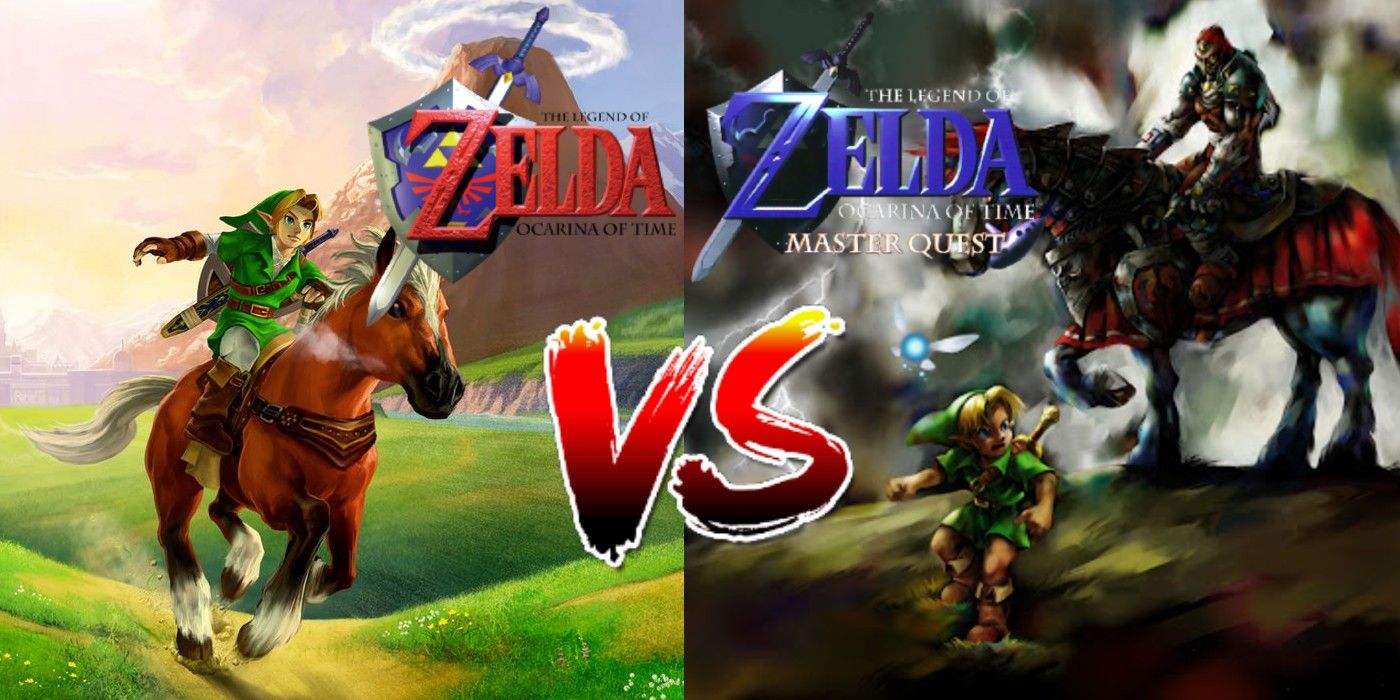
The Legend of Zelda: Ocarina of Time stands as a monumental achievement in video game history, lauded for its revolutionary 3D gameplay, intricate world design, and compelling narrative. Within its storied legacy lies a fascinating, technically distinct iteration known as Master Quest. Far from a simple re-release or a minor patch, Master Quest represents a significant re-imagining of Ocarina of Time’s core challenges, offering a sophisticated and demanding experience tailored for veteran players. It is a testament to the enduring appeal of the original’s game design and the potential for technological modification to breathe new life into a classic.

The Enduring Technological Legacy of Ocarina of Time
To fully appreciate Master Quest, one must first understand the foundational game from which it derives. The Legend of Zelda: Ocarina of Time, released in 1998 for the Nintendo 64, was more than just a popular game; it was a technological and design benchmark that redefined 3D adventure games for generations. Its innovations were not merely aesthetic but deeply embedded in its programming and system architecture.
A Technical Marvel of Its Era
The Nintendo 64, while powerful for its time, presented significant technical constraints, particularly in terms of cartridge storage and processing power. Despite these limitations, Nintendo EAD crafted an expansive, seamless Hyrule Field, dynamic character models, and complex dungeon environments. The game pioneered features such as “Z-targeting,” an auto-lock system that allowed players to focus on enemies or objects in a 3D space, fundamentally solving many of the camera and combat issues prevalent in early 3D games. This system was a sophisticated piece of code that tracked multiple objects, prioritized targets, and smoothly adjusted the player’s perspective, becoming an industry standard almost overnight.
Furthermore, Ocarina of Time’s use of real-time lighting effects, environmental textures, and a nascent physics engine contributed to an unprecedented sense of immersion. The development team skillfully managed polygon counts and texture memory to create diverse landscapes and detailed interiors without sacrificing performance. The game’s ability to transition between vast outdoor areas and intricate indoor dungeons with minimal loading screens showcased an advanced understanding of data streaming and memory management for the N64 hardware.
Impact on 3D Game Design Paradigms
Beyond its raw technical achievements, Ocarina of Time established a blueprint for 3D game design that reverberated throughout the industry. Its non-linear yet guided progression, where players could explore an open world but were always aware of their next objective, was a triumph of information architecture and user experience. The innovative integration of music, not just as ambiance but as a core gameplay mechanic through the Ocarina songs, demonstrated a creative fusion of technology and artistry. Each song was a distinct programmatic trigger, enabling specific interactions with the game world, from changing the time of day to warping between locations, requiring precise input recognition and corresponding script execution. This level of interactive musicality was a technical novelty that deepened player engagement and expanded the game’s interactive potential.
Unpacking Master Quest: A Deeper Dive
Master Quest is not a sequel, nor is it merely a “hard mode” in the conventional sense of simply increasing enemy health or damage output. Instead, it is a comprehensive overhaul of the original game’s dungeon design and puzzle logic, demanding a profound re-evaluation of familiar environments.
Origin and Release
The initial conception of Master Quest emerged during the development of Ocarina of Time itself, reportedly as an alternative, harder version of the main game. However, it was ultimately shelved until 2002 when it made its public debut as a bonus disc included with pre-orders of The Legend of Zelda: The Wind Waker for the Nintendo GameCube in North America. This made Master Quest a sought-after collector’s item and a unique piece of Zelda history, giving it an almost mythical status among fans. It later found a more widespread audience when it was seamlessly integrated as an unlockable mode within The Legend of Zelda: Ocarina of Time 3D for the Nintendo 3DS in 2011.
Core Differences: What Makes it “Master Quest”?
The fundamental distinction of Master Quest lies in its remixed dungeons. Every single dungeon, from the humble Deku Tree to the formidable Ganon’s Castle, has been meticulously redesigned. This involves far more than just repositioning enemies. Developers went back into the game’s level editor and logic scripting to alter room layouts, change the placement of keys and items, modify puzzle solutions, and introduce new challenges using existing assets in unexpected ways. The goal was to disorient veterans, forcing them to unlearn years of muscle memory and approach each dungeon with a fresh perspective, akin to playing a brand-new game.
Crucially, while the original Master Quest on GameCube remixed dungeon layouts, it did not mirror the overworld. That particular disorienting feature, which flips the entire game world on its horizontal axis, was introduced specifically for the Master Quest mode found within The Legend of Zelda: Ocarina of Time 3D on the Nintendo 3DS, adding an extra layer of challenge and unfamiliarity by forcing players to re-map their internal spatial awareness.
Redesigned Dungeons and Puzzles
The engineering behind Master Quest’s dungeon redesigns is sophisticated. Instead of merely increasing enemy count, the developers focused on altering the flow and logic of the dungeons. Puzzles that once relied on a simple sequence might now require an item from a different section of the dungeon, or a new approach to environmental manipulation. For example, a block puzzle that previously required moving a single block might now involve multiple blocks, switches, and a precise sequence of actions, often under timed pressure.
Enemy placements are strategically altered, not just for increased numbers, but to create more dangerous encounters in previously safe areas, or to necessitate different combat tactics. Darknuts might appear in tighter corridors, or multiple high-health enemies might guard critical path items, demanding mastery of combat mechanics. This requires intricate scripting modifications to the AI spawn points and trigger conditions within the game engine.

Elevated Difficulty and Strategic Reworking
Master Quest also features a general increase in difficulty, extending beyond just dungeon design. Enemies often have increased health and deal more damage, transforming previously trivial encounters into significant threats. Furthermore, certain items or abilities might be required earlier than in the original game, subtly altering the preferred sequence of dungeon completion or requiring players to explore and prepare more thoroughly. This holistic approach to difficulty enhancement demonstrates a deep understanding of the game’s underlying systems and how to manipulate them to create a distinct and more challenging player experience.
Technical Implementations and Player Experience Across Platforms
The journey of Master Quest from a bonus disc to an integrated 3DS feature highlights evolving trends in digital content distribution, game preservation, and platform technology.
Emulation and Accessibility
For many years, the original Master Quest on GameCube remained a relatively niche product. However, with the rise of emulation technology, it became more widely accessible. Emulators, sophisticated software applications that mimic the hardware architecture of older consoles, allowed Master Quest to be played on personal computers and other modern devices. This digital preservation effort, while often in a legal grey area, underscores the community’s desire to access and experience gaming history. Running an N64 or GameCube game via emulation involves complex graphical rendering, input mapping, and CPU cycle replication, allowing a vintage title like Master Quest to live on through contemporary tech.
The 3DS Remake and Master Quest Integration
The 2011 release of The Legend of Zelda: Ocarina of Time 3D for the Nintendo 3DS was a monumental technical undertaking. It wasn’t merely a port but a ground-up remake, leveraging the 3DS’s hardware capabilities. The game featured significantly enhanced graphics, updated character models, smoother frame rates, and the signature stereoscopic 3D effect. Controls were refined to take advantage of the 3DS’s dual screens and gyroscope, allowing for more intuitive item management and aiming.
Crucially, Master Quest was included as an unlockable mode within this remake. This version of Master Quest notably did feature the mirrored world, adding another layer of challenge on top of the remixed dungeons. Integrating Master Quest into the 3DS remake required adapting all of the original Master Quest’s modified dungeon layouts and increased difficulty parameters to the new engine and graphical assets. This demonstrated a commitment to preserving and enhancing content that originated as a unique, hard-to-find experience, bringing it to a new generation of players on a modern portable platform.
Challenges and Rewards for Veterans
From a player experience standpoint, Master Quest is designed to capitalize on the deep familiarity many players have with Ocarina of Time. It subverts expectations, forcing players to think critically and adapt. A hidden path they memorized might now lead to a trap, or a familiar puzzle might have a completely different solution. This re-engagement with a cherished game, forcing players to actively unlearn their established mental maps and strategies, offers a unique kind of reward. It’s a testament to the original game’s robust design that it could withstand such radical internal modifications and still deliver a coherent, challenging, and enjoyable experience.
Why Master Quest Continues to Matter in Gaming Tech
Beyond its immediate impact, Master Quest stands as an important case study in game design, content extension, and the evolving relationship between developers and their communities.
A Blueprint for Replayability
Master Quest provided an early, influential example of how developers could significantly extend the lifespan of a game without creating entirely new assets or narratives. Its approach to re-contextualizing existing content through sophisticated design changes has influenced countless “New Game+” modes, alternate difficulty settings, and challenge runs seen in modern gaming. It demonstrated that simply tweaking variables was less effective than fundamentally altering the structural challenges within a game, thereby providing a genuinely fresh experience for dedicated players. This concept is a cornerstone of modern game development, aiming to maximize player retention and the value of existing intellectual property.
Modding Communities and Fan Creations
The spirit of Master Quest—taking a beloved game and modifying its internal logic to create a new experience—deeply resonates with the broader modding community. Fan-made “randomizers” and “difficulty hacks” for Ocarina of Time and other classic games often draw inspiration from Master Quest’s methodology. These community-driven projects utilize specialized tools to decompile, analyze, and re-inject new data into game ROMs, altering everything from item locations to enemy behaviors. Master Quest serves as a foundational example of what is possible when a game’s underlying systems are robust enough to be re-engineered, inspiring a culture of creative technological engagement among players.
Preserving Gaming History and Evolution
Finally, Master Quest is a vital artifact in the ongoing effort to preserve video game history. It represents a unique developmental philosophy and a specific technological iteration of one of gaming’s most important titles. Studying Master Quest allows insights into Nintendo EAD’s willingness to experiment with content modification, their understanding of player psychology, and the technical complexities of altering a highly optimized game. Its existence and evolution across different platforms (GameCube, 3DS) also provide a lens through which to examine the history of digital distribution, remakes, and the continuous search for new ways to engage players with timeless interactive software. It underscores the idea that a game’s core technological and design principles can be endlessly reinterpreted and refined, continuing to challenge and delight players decades after its initial release.
aViewFromTheCave is a participant in the Amazon Services LLC Associates Program, an affiliate advertising program designed to provide a means for sites to earn advertising fees by advertising and linking to Amazon.com. Amazon, the Amazon logo, AmazonSupply, and the AmazonSupply logo are trademarks of Amazon.com, Inc. or its affiliates. As an Amazon Associate we earn affiliate commissions from qualifying purchases.