
In the landscape of modern digital services, few platforms have redefined their niche as profoundly as trivago. While many consumers interact with it as a simple price-comparison tool, from a technological standpoint, trivago represents a sophisticated metasearch engine built on a complex foundation of data aggregation, machine learning, and high-performance software architecture. Unlike a standard Online Travel Agency (OTA), trivago does not sell rooms; instead, it functions as a highly optimized software layer that sits between the user and thousands of booking sites, processing millions of data points every second to deliver real-time results.
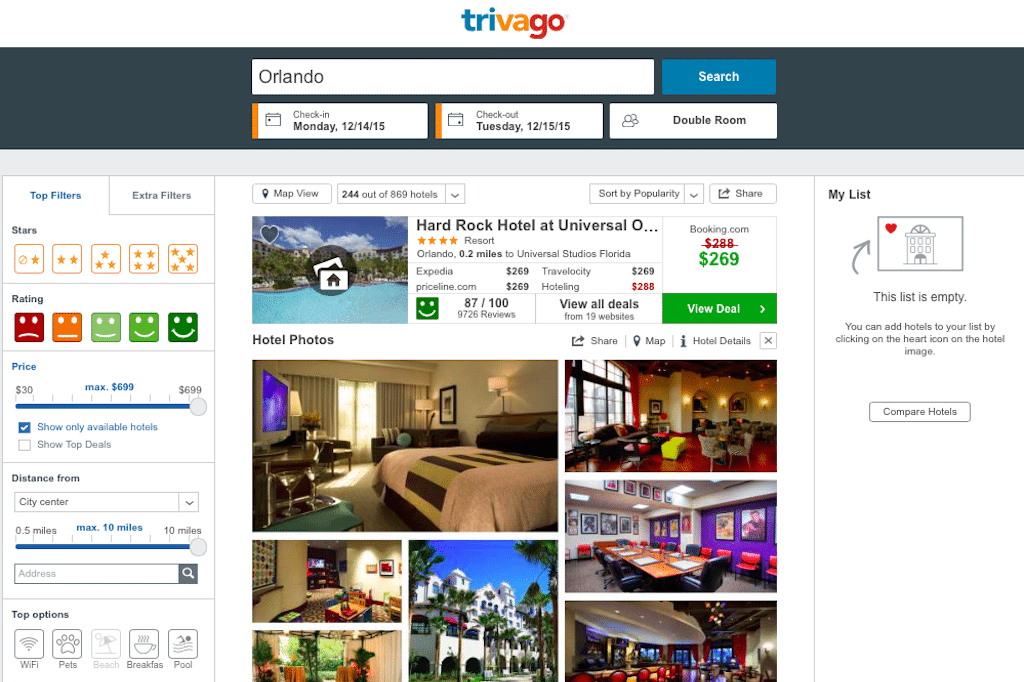
To understand what trivago is, one must look past the interface and examine the technical ecosystem that allows it to index more than 5 million hotels and alternative accommodations across approximately 190 countries. It is a masterclass in how modern web-scale platforms manage the challenges of data latency, algorithmic ranking, and cross-platform synchronization.
The Technical Infrastructure of a Metasearch Engine
At its core, trivago is a metasearch platform. The technical distinction between a metasearch engine and a traditional search engine or a booking site is significant. While a search engine like Google indexes the entire web, and an OTA like Expedia maintains its own inventory and transaction processing, a metasearch engine focuses exclusively on inventory transparency across multiple disparate sources.
Data Aggregation and API Integration
The primary technological challenge for trivago is the sheer volume and volatility of the data it handles. Hotel prices change by the minute based on demand, seasonality, and local events. To provide accurate information, trivago’s backend must maintain thousands of simultaneous connections with OTAs (such as Booking.com or Agoda) and direct hotel providers.
These integrations are managed through a robust series of APIs (Application Programming Interfaces). Each provider has a different data structure, varying levels of latency, and unique protocols for information exchange. trivago’s software architecture uses sophisticated data ingestion pipelines that normalize this fragmented information into a unified format. This allows the platform to display a side-by-side comparison that is consistent for the end-user, regardless of where the data originated.
Microservices and Scalability
To handle peak traffic periods—such as global holiday seasons—trivago relies on a microservices-based architecture. Historically, the company underwent a massive transformation from a monolithic PHP codebase to a decentralized system. This shift allowed developers to deploy updates to specific features (like the filtering system or the map view) without impacting the entire platform.
By utilizing containerization technologies like Docker and orchestration tools like Kubernetes, trivago ensures that its infrastructure can scale horizontally. If the search demand in Europe spikes, the system can automatically allocate more computing resources to that region’s data processing nodes, ensuring that the user experience remains fast and fluid.
The Algorithms Behind Search and Personalization
A search tool is only as good as its relevance. For trivago, the “search” isn’t just about finding any hotel; it is about finding the specific hotel that matches a user’s intent while navigating a sea of conflicting data points. This is achieved through a combination of ranking algorithms and machine learning models.
The Ranking Engine
When a user enters a destination, trivago does not simply list hotels in alphabetical order or by price alone. The ranking engine utilizes a weighted algorithm that considers several variables:
- Price Competitiveness: How the current offer compares to historical data and other providers.
- User Preferences: Implicit signals from the user’s current session, such as budget range and star rating preferences.
- Review Sentiment Analysis: Using Natural Language Processing (NLP) to aggregate and weigh reviews from multiple sources to provide a “trivago Rating Index.”
- Click-Through Rate (CTR): A feedback loop that informs the algorithm which properties are currently resonating with users.
Machine Learning and Predictive Analytics
trivago heavily utilizes machine learning (ML) to improve the user experience and optimize the business backend. One of the most critical applications of ML on the platform is “Learning to Rank.” By analyzing billions of historical search sessions, the platform can predict which hotel attributes (such as “free breakfast” or “proximity to city center”) are most likely to lead to a successful booking for a specific user profile.
Furthermore, predictive analytics are used to manage “rate leakage” and data accuracy. If a provider’s API consistently returns outdated prices, the system uses ML models to identify these anomalies and temporarily de-prioritize that source, ensuring that users are not frustrated by price changes when they click through to a booking site.
UI/UX Innovation and the Frontend Tech Stack
The front-end of trivago is designed to mask the underlying complexity of the data processing. Achieving a seamless user interface (UI) requires a high-performance tech stack capable of rendering dynamic content without lag.
React and Progressive Web Apps (PWA)
trivago was an early adopter of modern JavaScript frameworks, specifically React. This choice was driven by the need for a highly reactive interface that could handle complex state management—such as updating 20 different filters simultaneously without a page reload.
The platform is also built as a Progressive Web App (PWA). This is a strategic technological choice that allows the web version of trivago to behave like a native mobile app. For users in regions with inconsistent internet connectivity, the PWA architecture ensures that the site loads quickly by caching essential assets and using service workers to handle background data synchronization. This “mobile-first” engineering approach is critical, as a significant majority of travel searches now originate from mobile devices.
Speed and Performance Optimization
In the travel tech industry, every millisecond of latency correlates to a drop in conversion. trivago utilizes Content Delivery Networks (CDNs) to cache static assets close to the user’s geographic location. Additionally, they employ advanced image compression techniques and “lazy loading” to ensure that high-resolution hotel galleries do not slow down the initial search results page. The engineering team focuses on Core Web Vitals—metrics defined by Google to measure loading performance, interactivity, and visual stability—to maintain a high ranking in search engine results and provide a premium user experience.
Enterprise Technology: The trivago Business Studio
Beyond the consumer-facing app, trivago is a provider of B2B software solutions through the “trivago Business Studio.” This side of the platform is designed for hoteliers and property managers, providing them with the tools to manage their digital presence within the metasearch ecosystem.
Data Analytics for Hoteliers
The Business Studio provides hoteliers with a suite of analytical tools that offer insights into market trends. This is a Big Data play; trivago aggregates anonymized search data to tell a hotelier how many people are searching for their specific city, what price points are most competitive, and how their property compares to local rivals. This “Market Intelligence” software is powered by the same data lake that feeds the consumer search engine, repurposed for business strategy.
Bidding and Auction Algorithms
For hotels that want to drive direct bookings rather than relying on OTAs, trivago offers a “Rate Connect” feature. Technically, this operates on a Cost-Per-Click (CPC) bidding model. Hoteliers use an automated interface to bid on specific search terms or geographic regions. The underlying technology here is a real-time auction engine that determines which “Direct Website” link appears in the search results based on the bid amount and the quality of the landing page. This requires a high-speed transactional backend capable of processing millions of bids and clicks daily without error.
The Future: AI, Voice, and Semantic Search
As technology evolves, trivago is shifting its focus toward the next frontier of travel tech: artificial intelligence and conversational interfaces. The goal is to move from a “filter-based” search to a “semantic” search.
Generative AI and Personalization
The integration of Large Language Models (LLMs) is poised to transform how users interact with trivago. Instead of manually selecting checkboxes for “pool,” “pet-friendly,” and “near the Eiffel Tower,” users will eventually be able to input natural language queries like, “Find me a quiet boutique hotel in Paris for a weekend trip with a gym and late check-out.” trivago’s engineers are working on mapping these natural language inputs to their structured database, a task that requires sophisticated semantic mapping and AI-driven intent recognition.
Voice Search and IoT
With the rise of smart speakers and voice assistants, trivago is optimizing its software for voice-activated search. This involves optimizing for “long-tail” keywords and ensuring that the most relevant result can be delivered through an audio interface. The technical challenge here lies in the “One-Box” result—where the engine must be incredibly confident in its top recommendation, as users are unlikely to listen to a list of ten hotels via a voice assistant.
In conclusion, trivago is far more than a website for finding cheap hotels; it is a complex technological entity. It stands at the intersection of Big Data, high-performance cloud computing, and advanced machine learning. By continuously evolving its software architecture and refining its algorithms, trivago remains a pivotal player in the travel tech sector, turning the chaotic world of global hotel pricing into a structured, searchable, and user-friendly digital experience.
aViewFromTheCave is a participant in the Amazon Services LLC Associates Program, an affiliate advertising program designed to provide a means for sites to earn advertising fees by advertising and linking to Amazon.com. Amazon, the Amazon logo, AmazonSupply, and the AmazonSupply logo are trademarks of Amazon.com, Inc. or its affiliates. As an Amazon Associate we earn affiliate commissions from qualifying purchases.