
The term “Tri-State Area” is frequently used in casual conversation, weather reports, and regional advertisements, but from a financial and business perspective, it represents one of the most complex and potent economic engines in the world. While several regions in the United States claim the “tri-state” moniker, the most prominent refers to the metropolitan nexus of New York, New Jersey, and Connecticut. This region is not merely a geographic cluster; it is a multi-layered financial ecosystem that dictates global market trends, houses the world’s most significant financial institutions, and presents unique challenges and opportunities for personal finance, real estate investment, and corporate strategy.

Understanding the Tri-State Area requires looking beyond state lines to analyze how capital, labor, and infrastructure move across borders. For investors, business owners, and high-net-worth individuals, the Tri-State Area serves as a blueprint for navigating high-stakes fiscal environments.
Understanding the Tri-State Area as a Global Financial Entity
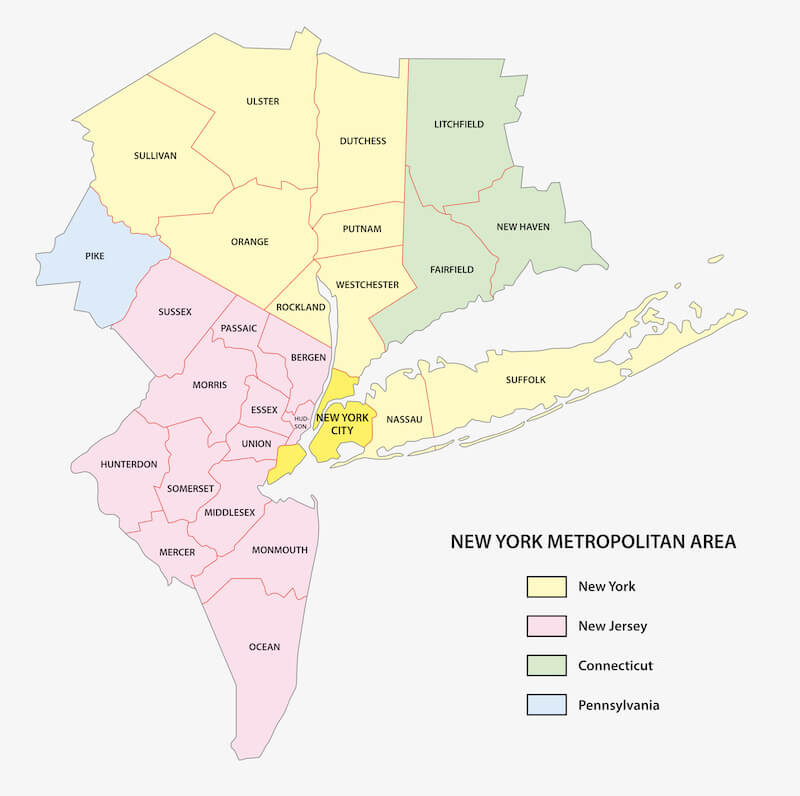
To grasp the financial gravity of the Tri-State Area, one must first understand its composition. The core of this region is the New York-Newark-Jersey City Metropolitan Statistical Area (MSA), which extends into parts of Connecticut and even Pennsylvania. However, for the purposes of high-level financial planning and business operations, the focus remains on the New York-New Jersey-Connecticut triad.
The New York-New Jersey-Connecticut Nexus
This region functions as a single, integrated labor market. A professional may live in the affluent suburbs of Greenwich, Connecticut, work in a skyscraper in Midtown Manhattan, and oversee manufacturing or logistics operations in Northern New Jersey. This physical interconnectedness facilitates a massive flow of capital. The economic output of this region is staggering; if the New York metropolitan area were its own country, its GDP would rank among the top 15 nations globally, rivaling economies like Canada or South Korea.
GDP Contribution and Market Influence
The primary driver of this economic density is the financial services sector. Wall Street remains the heartbeat of the Tri-State Area, but the wealth generated there ripples outward. This creates a secondary economy in the surrounding states—specifically New Jersey’s pharmaceutical and telecommunications sectors and Connecticut’s “Hedge Fund Alley” in Fairfield County. This concentration of wealth ensures that the region remains resilient during economic downturns, as the diversity of high-income industries provides a buffer against sector-specific volatility.
Real Estate Dynamics and Investment Strategies Across State Lines
For many in the “Money” niche, the Tri-State Area is synonymous with high-stakes real estate. The region offers some of the highest property valuations in the world, making it a playground for institutional investors and a complex puzzle for individual homeowners looking to build equity.
Residential vs. Commercial Investment Trends
The investment landscape in the Tri-State Area has shifted significantly over the last decade. Historically, Manhattan commercial real estate was the gold standard. However, the rise of remote work and the “hub-and-spoke” business model has increased the value of secondary markets in Jersey City, Hoboken, and Stamford.
From an investment perspective, “transit-oriented development” has become the mantra. Properties located within walking distance of New Jersey Transit, Metro-North, or the Long Island Rail Road (LIRR) command a premium. For the savvy investor, the goal is to identify neighborhoods that are currently undergoing infrastructure upgrades, as transportation connectivity is the single greatest predictor of real estate appreciation in this region.
The “Tax Flight” and Its Impact on Property Values
A recurring theme in Tri-State finance is the movement of wealth based on tax policy. High property taxes in New Jersey and New York have occasionally driven affluent residents toward Connecticut or further south to Florida. However, the region maintains its value because of the “proximity premium.” The concentration of elite talent and corporate headquarters creates a floor for property values. Even as some individuals move, the demand for residential real estate near the financial core remains high, ensuring that the Tri-State area remains a “safe haven” for capital preservation in real estate portfolios.
Navigating the Multi-State Tax Maze and Personal Finance
One of the most complex aspects of living or doing business in the Tri-State Area is the intricate web of taxation. For those earning an income in this region, tax planning is not a once-a-year task; it is a core component of their financial strategy.
Commuter Taxes and Reciprocity Agreements
Unlike some regions that have “reciprocity agreements” (where you only pay taxes to the state where you live), the Tri-State Area operates on a system of tax credits. If you live in New Jersey but work in New York City, you generally pay New York state income tax on the money earned there. New Jersey then grants you a credit for those taxes paid, so you aren’t “double-taxed,” but you are usually stuck paying whichever rate is higher.
For the high-income earner, this requires meticulous record-keeping. The “Convenience of the Employer” rule used by New York can be particularly aggressive, often taxing out-of-state employees even if they work from home, provided their home office isn’t a “necessity” for the employer. Managing this “tax nexus” is essential for maximizing net income.
Strategies for High Net Worth Individuals (HNWIs)
In the Tri-State Area, personal finance often overlaps with sophisticated estate planning. Because New York and Connecticut have their own estate or inheritance taxes (often with lower thresholds than the federal limit), HNWIs must utilize trusts, charitable vehicles, and strategic residency shifts to protect their legacy. Financial advisors in this region specialize in “multi-state optimization,” helping clients decide whether to park assets in a Connecticut-based trust or leverage New Jersey’s slightly different corporate tax incentives.
Business Strategy and Regional Logistics
For corporations and entrepreneurs, the Tri-State Area offers an unparalleled infrastructure but comes with a high cost of entry. Deciding where to incorporate or where to plant a flagship office involves a rigorous cost-benefit analysis.
The Cost of Doing Business in the Tri-State Hub
While New York City offers the most prestige and access to a dense talent pool, the cost of commercial rent and the “City Tax” can be prohibitive for startups. Consequently, we see a strategic distribution of business functions across the region. A firm might place its C-suite and investor relations team in a small, high-end Manhattan office, while moving its back-office operations, data centers, and logistics to the more affordable corridors of Northern New Jersey.
New Jersey, in particular, has positioned itself as the logistics capital of the region. The Port of New York and New Jersey is the busiest on the East Coast, making the state a vital hub for any business involved in global trade or e-commerce. The “money” here is in the supply chain—warehousing, distribution, and the fintech tools that manage the flow of goods.
Funding and Venture Capital Ecosystems
The Tri-State Area is the second-largest venture capital ecosystem in the United States, trailing only Silicon Valley. However, the flavor of “Tri-State Money” is different. While the West Coast focuses heavily on “disruption” and consumer tech, Tri-State VC is heavily weighted toward Fintech, Healthtech, and Insurtech.
This is because the region’s capital is “smart money”—it comes from people who have spent decades in the traditional banking, insurance, and pharmaceutical industries. For a business seeking funding, the Tri-State Area provides not just capital, but an immediate network of enterprise-level clients. The synergy between the “Old Money” of Wall Street and the “New Money” of tech startups creates a unique environment for business scaling that is difficult to replicate elsewhere.

The Future of the Tri-State Economy
As we look toward the future, the financial identity of the Tri-State Area is evolving. The region is currently grappling with post-pandemic urban shifts, the potential for decentralized finance (DeFi) to alter Wall Street’s dominance, and the ongoing challenge of aging infrastructure.
However, the fundamental economic strength of the New York, New Jersey, and Connecticut nexus remains undisputed. The concentration of intellectual capital, the depth of the liquid markets, and the sheer volume of wealth flowing through the region ensure its status as a global financial pillar. For anyone focused on the “Money” niche—whether as an investor, a taxpayer, or a business strategist—mastering the geography and the fiscal rules of the Tri-State Area is not just a regional necessity; it is a masterclass in global economics.
By understanding how these three states interact, one can better navigate the complexities of modern finance, leveraging the unique strengths of each jurisdiction to build, protect, and grow wealth in one of the most competitive markets on earth.
aViewFromTheCave is a participant in the Amazon Services LLC Associates Program, an affiliate advertising program designed to provide a means for sites to earn advertising fees by advertising and linking to Amazon.com. Amazon, the Amazon logo, AmazonSupply, and the AmazonSupply logo are trademarks of Amazon.com, Inc. or its affiliates. As an Amazon Associate we earn affiliate commissions from qualifying purchases.