
For many modern investors, the question “what is the Tesla stock price” is the starting point of a much deeper journey into the mechanics of the 21st-century equity market. Tesla, Inc. (ticker: TSLA) is not merely a car company; it is a financial phenomenon that has redefined valuation models, challenged short-sellers, and created a new generation of retail and institutional wealth. To understand the price of TSLA is to understand the intersection of high-growth tech valuation and the capital-intensive world of global manufacturing.
In the world of finance, a stock price is a real-time reflection of discounted future cash flows and market sentiment. For Tesla, this price is often detached from traditional automotive metrics, leading to intense debate among analysts. To truly grasp what governs the Tesla stock price, one must look past the daily fluctuations and examine the underlying financial pillars that support its multi-billion dollar market capitalization.
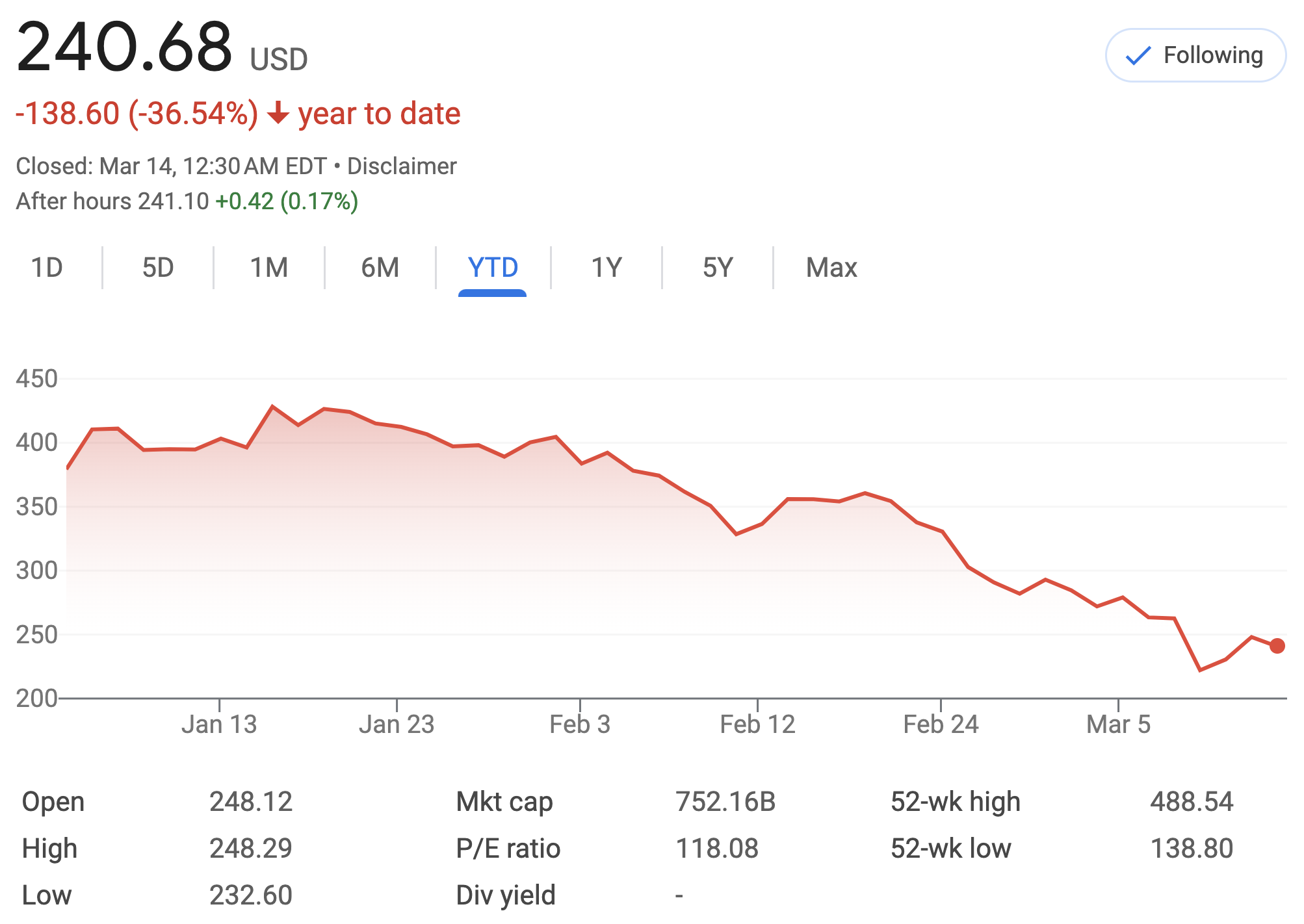
Understanding Tesla (TSLA) as a Financial Asset
The first step in evaluating Tesla’s stock price is recognizing its unique position in the capital markets. Unlike legacy automakers like Ford or General Motors, which are often valued based on steady dividends and low price-to-earnings (P/E) ratios, Tesla is treated by the market as a high-growth technology play.
The Volatility Factor
Tesla is historically one of the most volatile large-cap stocks in the S&P 500. For an investor, the “price” of Tesla is rarely a static figure; it is a moving target influenced by high beta—a measure of a stock’s volatility in relation to the overall market. When the broader tech sector rallies, Tesla often leads the charge. Conversely, when interest rates rise or growth stocks lose favor, Tesla can experience significant drawdowns. This volatility is a double-edged sword: it offers massive upside for those with high risk tolerance but requires a disciplined approach to capital preservation.
Market Capitalization vs. Traditional Automakers
At various points in its history, Tesla’s market capitalization has exceeded the combined value of the world’s top ten legacy automakers. From a fundamental finance perspective, this suggests that investors are not just buying a car company; they are buying into a dominant future market share of the entire energy and transportation ecosystem. When you look at the Tesla stock price, you are seeing a “premium” valuation. This premium is built on the expectation that Tesla will maintain higher operating margins than its competitors through vertical integration and software-based revenue.
Key Drivers of Tesla’s Stock Price
To understand why the Tesla stock price sits at any given level, investors must monitor specific Key Performance Indicators (KPIs) that the market uses to price the asset. These drivers are the fundamental engine behind the stock’s movement.
Delivery Numbers and Production Scalability
The most immediate catalyst for Tesla’s stock price is the quarterly delivery report. Because the market values Tesla on its growth trajectory, any stagnation in vehicle deliveries can lead to a sharp correction. Analysts look for a consistent Compound Annual Growth Rate (CAGR). The ability to scale production—moving from thousands of units to millions across global Gigafactories—is the primary proof point for the company’s valuation. When production targets are met or exceeded, the stock price typically reflects this as a de-risking of the investment thesis.
The Impact of Interest Rates and Macroeconomics
As a growth stock, Tesla is particularly sensitive to the Federal Reserve’s monetary policy. High-interest rates generally put downward pressure on the Tesla stock price for two reasons. First, higher rates increase the cost of auto loans, potentially softening demand for new vehicles. Second, in a high-rate environment, the present value of future earnings—which is where most of Tesla’s value lies—is discounted more heavily. Therefore, the “price” of Tesla is often as much a reflection of the bond market as it is of the company’s internal performance.
Profit Margins and the Shift to Energy Storage
While vehicle sales dominate the headlines, the “Money” aspect of Tesla increasingly involves its energy division (Solar and Powerwall) and its services. Investors closely watch the “Gross Margin” figures. In recent years, Tesla has engaged in strategic price cuts to maintain market share. While this moves more units, it can compress margins. The stock price fluctuates based on the market’s consensus on whether Tesla is a “high-margin tech company” or a “low-margin hardware company.”

Analyzing Financial Metrics and Valuation Models
Professional investors don’t just look at the price; they look at the ratios. To determine if the Tesla stock price is “fair,” one must employ various financial modeling techniques.
Price-to-Earnings (P/E) Ratio: Growth or Value?
Tesla’s P/E ratio has historically been significantly higher than the market average. To some, this suggests the stock is overvalued. However, proponents of the stock argue that the Forward P/E is the more relevant metric. If Tesla’s earnings grow by 50% year-over-year, a high P/E today might look like a bargain tomorrow. Analyzing Tesla requires a “PEG ratio” (Price/Earnings to Growth) approach, which adjusts the P/E by the company’s expected growth rate to provide a more balanced view of its cost.
Free Cash Flow and R&D Reinvestment
A hallmark of Tesla’s financial maturity has been its transition from burning cash to generating significant Free Cash Flow (FCF). FCF allows the company to fund its own expansion without relying on dilutive secondary stock offerings or high-interest debt. The stock price is supported by a healthy balance sheet, which currently boasts billions in cash and cash equivalents. This “war chest” provides a safety net during economic downturns and allows for aggressive reinvestment into Research and Development (R&D), which fuels future growth.
Risks and Headwinds in the Modern Market
No financial analysis of Tesla’s stock price is complete without addressing the “Bear Case”—the factors that could lead to a sustained decline in valuation.
Competition and Market Share Erosion
The “EV landscape” is no longer a vacuum. From premium European brands to low-cost Chinese manufacturers, competition is intensifying. If Tesla is forced to continue lowering prices to compete, its identity as a high-margin growth stock could be compromised. Investors price in the “Moat”—the competitive advantage that keeps a company ahead. If the market perceives that Tesla’s moat is shrinking, the stock price will likely undergo a “multiple compression,” where it is valued more like a traditional industrial firm.
Regulatory Hurdles and Federal Incentives
Tesla’s bottom line has historically benefited from the sale of Regulatory Credits to other automakers who fail to meet emissions standards. As other companies pivot to EVs, this “pure profit” revenue stream may dwindle. Additionally, government subsidies and tax credits play a massive role in consumer affordability. Changes in tax law or international trade tariffs (especially regarding battery components) can have an overnight impact on Tesla’s projected earnings and, consequently, its stock price.
The Long-Term Investment Thesis
For the long-term investor, the current Tesla stock price is often viewed as a “buy-in” point for a much larger structural shift in the global economy.
AI, Autonomous Driving, and Software-as-a-Service (SaaS)
The “bull case” for a much higher Tesla stock price often rests on Full Self-Driving (FSD) technology. If Tesla successfully transitions to a licensing model for its autonomous software or launches a functional “Robotaxi” network, its revenue model shifts from one-time hardware sales to recurring, high-margin software revenue. In financial terms, this would transform the company into a SaaS (Software as a Service) provider, which typically commands the highest valuation multiples in the market.

Building a Diversified Portfolio with TSLA
From a portfolio management perspective, Tesla often serves as the “growth engine.” Because it does not pay a dividend, the total return for shareholders comes exclusively from capital appreciation. Financial advisors often suggest that while Tesla provides high growth potential, it should be balanced with value stocks or fixed-income assets to mitigate the inherent volatility of the EV sector.
In conclusion, the Tesla stock price is a complex barometer of innovation, executive leadership, and macroeconomic trends. Whether one views it as an overextended bubble or the greatest investment opportunity of the decade depends on their analysis of the company’s financial fundamentals. By focusing on margins, delivery growth, and the potential for software-driven revenue, investors can move beyond the “what” of the price and understand the “why” of the valuation. As the global economy continues its transition toward electrification and automation, Tesla remains the central, albeit volatile, protagonist in the story of modern finance.
aViewFromTheCave is a participant in the Amazon Services LLC Associates Program, an affiliate advertising program designed to provide a means for sites to earn advertising fees by advertising and linking to Amazon.com. Amazon, the Amazon logo, AmazonSupply, and the AmazonSupply logo are trademarks of Amazon.com, Inc. or its affiliates. As an Amazon Associate we earn affiliate commissions from qualifying purchases.