
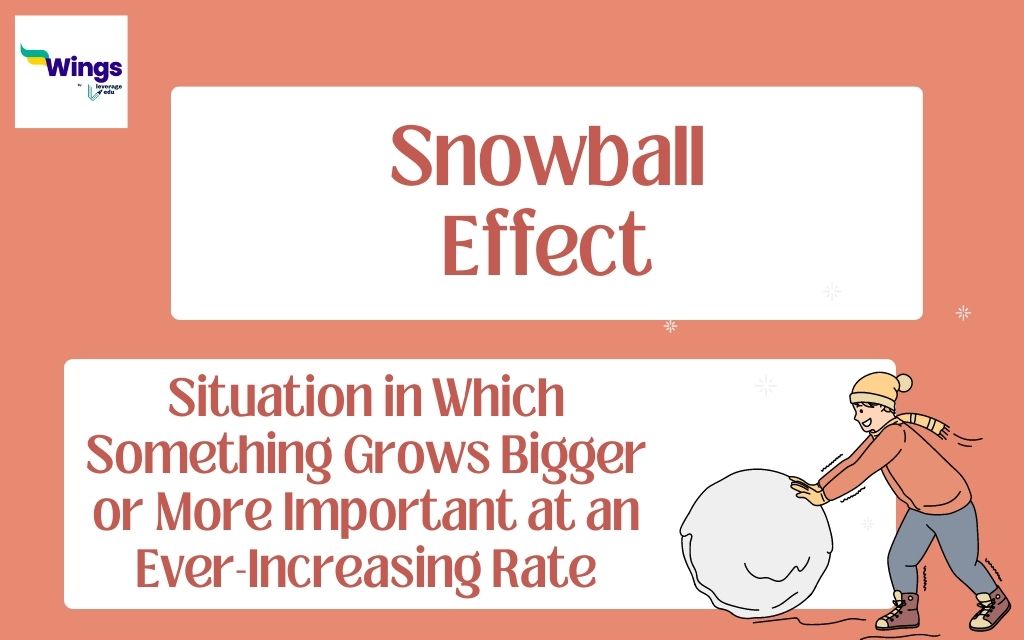
In the world of personal finance and wealth management, few concepts are as evocative or as powerful as the “snowball effect.” Named after the physical phenomenon where a small ball of snow, when rolled down a hill, continuously picks up more snow, gains mass, and accelerates its speed, this principle serves as the cornerstone for both debt elimination and wealth accumulation. At its core, the snowball effect is about the compounding power of momentum. It is the realization that small, consistent actions, when layered upon one another, eventually yield exponential results that far exceed the initial input.

Understanding the snowball effect is crucial for anyone looking to navigate the complexities of money management. Whether you are struggling to climb out of a mountain of high-interest debt or looking to build a multi-generational investment portfolio, the mechanics of the snowball remain the same. This article explores the dual nature of the financial snowball—how it can be leveraged to destroy liabilities and how it can be harnessed to build lasting assets.
The Mechanics of the Debt Snowball Method
The term “snowball effect” gained mainstream financial popularity through the “Debt Snowball” method. This strategy, championed by financial experts like Dave Ramsey, focuses on the psychological aspect of debt repayment rather than just the mathematical one. In a purely logical world, one would always pay off the debt with the highest interest rate first (often called the Debt Avalanche). However, human behavior is driven more by motivation and visible progress than by basis points and interest calculations.
Psychological Wins vs. Mathematical Logic
The Debt Snowball method dictates that an individual should list all their debts from the smallest balance to the largest, regardless of interest rates. By focusing all extra funds on the smallest debt while maintaining minimum payments on the rest, the debtor achieves a “quick win.”
This first victory is critical. It provides a dopamine hit and a sense of agency over one’s finances. When the smallest debt is gone, the entire payment that was going toward it is then redirected—or “snowballed”—into the next smallest debt. As each balance is eliminated, the monthly payment available for the next debt grows larger, creating a sense of unstoppable momentum. This psychological reinforcement ensures that the individual stays committed to the plan long enough to tackle the larger, more daunting balances.
Step-by-Step Implementation
Implementing a debt snowball requires a disciplined three-step process:
- Inventory and Minimums: List every liability—credit cards, student loans, car notes, and medical bills. Determine the minimum payment for each to ensure no accounts fall into delinquency.
- The Attack Phase: Identify the smallest balance. Every spare dollar from your budget—whether from a side hustle, a tax refund, or reduced spending—is funneled into this specific account.
- The Roll-Over: Once that first debt hits zero, you don’t “absorb” that extra cash back into your lifestyle. Instead, you take the entire amount you were paying on the first debt and add it to the minimum payment of the second debt. By the time you reach your final and largest debt, your monthly contribution toward it will be massive, allowing you to crush it in a fraction of the time it would have taken otherwise.
The Investment Snowball: Harnessing Compound Interest
While the debt snowball is about destroying liabilities, the investment snowball is about the exponential growth of assets. This is the phenomenon that Albert Einstein famously referred to as the “eighth wonder of the world”: compound interest. In the context of investing, the snowball effect describes how the returns on your principal investment start to generate their own returns.
The Power of Time and Reinvestment
The most important ingredient in the investment snowball is not the amount of money you start with, but the amount of time you allow the snowball to roll. In the early stages of an investment journey, the growth feels agonizingly slow. If you invest $10,000 and it grows by 7% in a year, you have made $700. It doesn’t feel life-changing.
However, in the second year, you aren’t just earning 7% on your $10,000; you are earning 7% on $10,700. As the years turn into decades, the “snow” begins to accumulate at a staggering rate. The curve of wealth starts flat and eventually turns vertical. This is why a 20-year-old who saves a modest amount can often end up wealthier than a 40-year-old who saves significantly more but has less “hill” (time) for their snowball to roll down.

Dividend Growth Investing
A specific application of the investment snowball is Dividend Growth Investing (DGI). In this strategy, investors purchase shares of companies that not only pay dividends but consistently increase those payouts year after year.
When an investor receives a dividend, they use it to purchase more shares of the company (often through a Dividend Reinvestment Plan, or DRIP). This creates a powerful feedback loop:
- More shares lead to higher dividend payments.
- Higher dividend payments allow for the purchase of even more shares.
- The company’s annual dividend increase adds an extra layer of velocity to the growth.
Over time, the “Yield on Cost”—the dividend income relative to the original investment—can reach 20%, 30%, or even 50%, effectively creating a self-sustaining income machine that grows regardless of stock market volatility.
Business Finance and Scaling Operations
The snowball effect is not limited to personal balance sheets; it is a fundamental principle of corporate finance and entrepreneurship. Successful businesses use the snowball effect to move from a fragile startup phase to a dominant market position.
Reinvesting Profits for Exponential Growth
In the early days of a business or a side hustle, profit margins are often thin, and the owner is tempted to withdraw capital for personal use. However, the most successful entrepreneurs treat their business as a snowball. By “plowing back” 100% of the profits into the business—whether through better equipment, more inventory, or marketing—they increase the business’s capacity to generate even more profit in the next cycle.
Consider a simple e-commerce side hustle. If the first $1,000 in profit is used to buy more inventory rather than a new television, the business can fulfill more orders. More orders lead to better wholesale pricing (economies of scale), which increases margins, which provides even more capital for expansion. This cycle of reinvestment is how a small basement operation transforms into a major enterprise.
The Dangers of the Negative Snowball
It is vital to recognize that the snowball effect works in both directions. Just as it can build wealth, it can also accelerate financial ruin. This is known as the “Negative Snowball” or a debt spiral.
When an individual or business uses high-interest debt (like credit cards or payday loans) to cover living expenses or operational deficits, the interest itself becomes a liability that requires more debt to service. As the interest compounds, the “ball” grows larger and rolls faster toward insolvency. Understanding the snowball effect means respecting its power and ensuring that the momentum is always working in your favor, not against you.
Tools and Strategies to Maintain Momentum
The greatest challenge of the snowball effect is the “messy middle.” This is the period after the initial excitement has worn off but before the exponential growth becomes visible. To successfully navigate this phase, one must use specific tools and behavioral strategies to maintain financial discipline.
Automation and Financial Tracking
To keep the snowball rolling, you must remove as much human error as possible.
- Automation: Set up automatic transfers to investment accounts or extra debt payments the day your paycheck hits. If you never “see” the money in your checking account, you won’t be tempted to spend it, and the snowball continues its descent uninterrupted.
- Visual Tracking: Because the early stages of compounding are subtle, using visual aids can be highly motivating. A “Debt Thermometer” or an “Investment Chart” that tracks your net worth over time can provide the visual proof of progress needed to stay the course during the slow years.
Behavioral Finance: Staying the Course
The snowball effect is ultimately a test of temperament. Market crashes, unexpected expenses, and “lifestyle creep” are all obstacles that threaten to stop the snowball’s momentum. In behavioral finance, we learn that the most successful “snowballers” are those who can ignore the noise of the short-term market and focus on the long-term trajectory.
The key is to define your “Why.” Whether it is achieving early retirement, providing for your children’s education, or building a philanthropic legacy, having a clear objective provides the friction needed to resist impulsive financial decisions. Remember: every time you “withdraw” from the snowball, you are essentially picking it up and moving it back to the top of the hill. Continuity is the secret sauce of wealth.
In conclusion, the snowball effect is the most reliable path to financial independence. By understanding the psychological power of the Debt Snowball and the mathematical inevitability of the Investment Snowball, you can take control of your financial destiny. It begins with a single, small decision—a modest extra payment or a small monthly contribution—and given enough time and consistency, it grows into an unstoppable force for financial freedom.
aViewFromTheCave is a participant in the Amazon Services LLC Associates Program, an affiliate advertising program designed to provide a means for sites to earn advertising fees by advertising and linking to Amazon.com. Amazon, the Amazon logo, AmazonSupply, and the AmazonSupply logo are trademarks of Amazon.com, Inc. or its affiliates. As an Amazon Associate we earn affiliate commissions from qualifying purchases.