
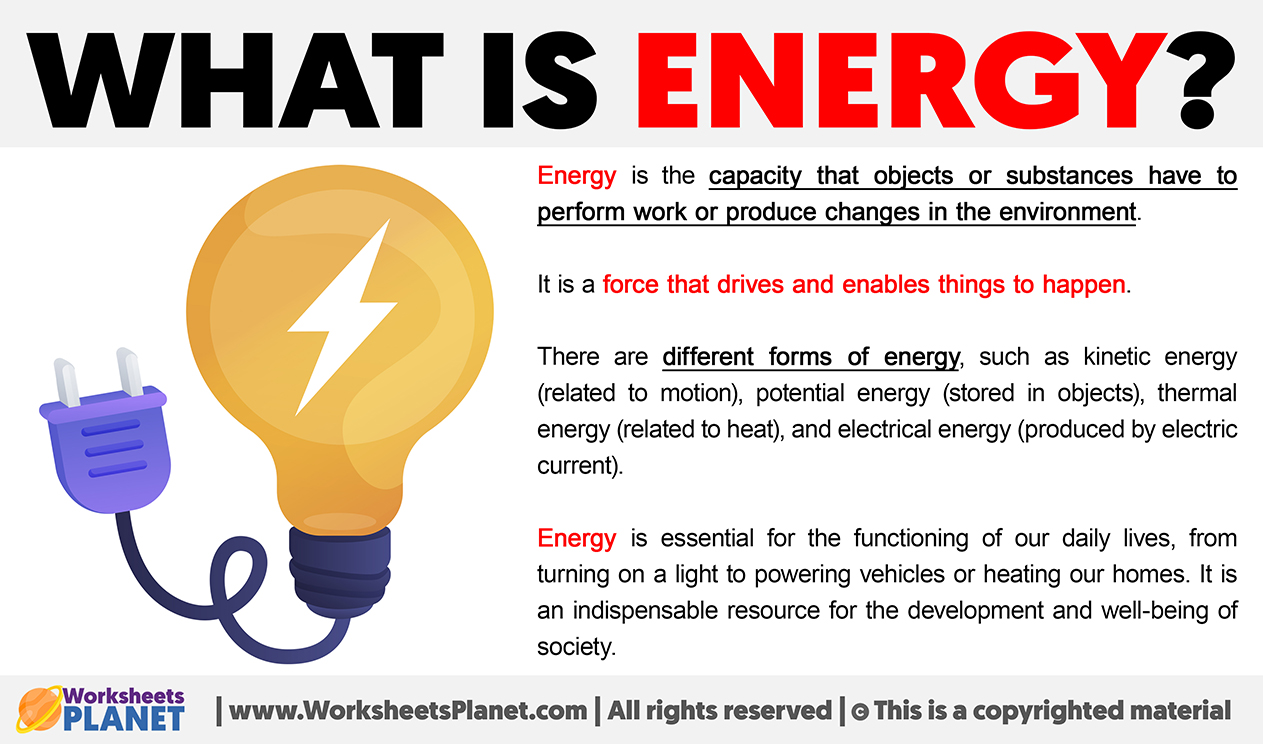
In the realm of physics, the scientific definition of energy is the “capacity to do work.” While this sounds simple—the ability to move an object against a force—it is the foundational principle upon which the entire modern technological landscape is built. From the semiconductors powering your smartphone to the massive server farms training the next generation of Artificial Intelligence, energy is the invisible currency of the digital world.
To understand technology, one must first understand the physics of energy. It is not merely a utility we pay for; it is a fundamental property of matter that can be converted, stored, and harnessed to process information. In this exploration, we will dive deep into the scientific definitions of energy through the lens of technological innovation, examining how the laws of thermodynamics, the chemistry of storage, and the physics of computation are shaping the future of human progress.

The Laws of Thermodynamics and the Foundation of Hardware
At its core, all technology is a machine for converting energy from one form to another to achieve a specific outcome. Whether that outcome is a pixel lighting up on a screen or a robotic arm welding a car frame, it follows the rigid constraints of thermodynamics.
The Law of Conservation and Circuit Efficiency
The First Law of Thermodynamics states that energy cannot be created or destroyed, only transformed. In the world of hardware engineering, this is a constant challenge. When electricity flows through a processor, not all of it is used for logic gates (computation). A significant portion is converted into heat due to resistance. This “waste” energy is still scientifically energy, but in a tech context, it is a barrier to performance. Engineers spend billions of dollars on thermal management systems—fans, liquid cooling, and heat sinks—to manage the energy that has transitioned from “useful electrical work” to “ambient thermal energy.”
Entropy and the Information Link
The Second Law of Thermodynamics introduces the concept of entropy, which suggests that systems naturally progress toward disorder. In technology, keeping a system organized requires a constant infusion of energy. Interestingly, there is a profound scientific link between energy and information. Landauer’s Principle suggests that erasing a single bit of information releases a specific, measurable amount of heat. This means that at the most fundamental level, the “scientific definition of energy” is inextricably linked to the “scientific definition of data.” As we push toward smaller transistors, the energetic cost of processing information becomes the ultimate limit of Moore’s Law.
Powering the Portable World: The Science of Energy Density
If energy is the capacity to do work, then the history of mobile technology is the history of energy density. Energy density refers to the amount of energy stored in a given system or region of space per unit volume or mass. For tech gadgets, this is the “holy grail” of hardware development.
Chemical Potential Energy in Lithium-Ion Systems
Most modern tech relies on the conversion of chemical potential energy into electrical energy. In a Lithium-ion battery, ions move between an anode and a cathode. The “scientific definition” here is found in the electrochemical gradient. Tech companies like Tesla, Apple, and Samsung are constantly experimenting with the molecular structure of these batteries to increase the energy density. The goal is to pack more “work capacity” into a smaller, lighter footprint. This is why your smartphone can now perform tasks that previously required a desktop computer; it isn’t just that the chips are faster, but that the energy delivery systems have become more concentrated.
The Solid-State Revolution and Beyond
The next frontier in tech energy is the solid-state battery. By replacing the liquid electrolyte with a solid material, engineers can significantly increase energy density and safety. This shift represents a transition in how we apply the physics of materials science to energy storage. By manipulating the atomic structure of the battery’s internal components, we can reduce the internal resistance, allowing for faster charging and longer lifespans. This is the scientific definition of energy efficiency put into practical, consumer-facing application.
AI and the Massive Energy Requirement of Modern Computation
Perhaps no sector of technology illustrates the scientific definition of energy better than Artificial Intelligence. In physics, work is done when energy is transferred. In AI, “work” is the process of adjusting billions of weights in a neural network during a training cycle. This requires a staggering amount of electrical energy.
Training Models: Converting Gigawatts into Intelligence
Large Language Models (LLMs) like GPT-4 or Gemini require massive data centers filled with GPUs (Graphics Processing Units). These units are designed to perform parallel mathematical calculations at high speeds. Each calculation requires a tiny burst of energy to switch a transistor’s state. When you multiply this by trillions of parameters and quadrillions of operations, you realize that “intelligence” in the digital age has a direct energetic equivalent. We are essentially “mining” energy to create logic. This has led to a tech-wide push for “Green AI,” where the focus is on optimizing algorithms to require fewer Joules per inference.
Edge Computing and Reducing Energy Latency
Another trend in tech is “Edge Computing,” which brings data processing closer to the source of the data (like a sensor or a phone) rather than a distant cloud server. From a scientific standpoint, this is an exercise in reducing the energy required for data transmission. Moving electrons over long distances through fiber optic or copper cables results in energy loss and latency. By processing energy and data locally, we make devices more responsive and less dependent on the massive power grids that support centralized data centers.
The Future of Energetic Innovation: Quantum and Fusion
As we look toward the future, the tech industry is looking to the most fundamental scientific definitions of energy to solve the looming power crisis. If we can master the energy of the atom or the behavior of subatomic particles, technology will take a quantum leap forward.
Nuclear Fusion: Replicating the Sun
Nuclear fusion is the ultimate “scientific definition” of clean energy. It is the process of fusing two light atomic nuclei to form a heavier one, releasing a massive amount of energy in the process. Tech billionaires and venture capital firms are now pouring billions into fusion startups. Unlike current fission reactors, fusion offers the promise of near-limitless energy with minimal waste. If successfully integrated into the grid, it would provide the high-density energy required to power the next century of tech advancement, from global-scale AI to interplanetary travel.
Quantum Computing and Zero-Point Energy
Quantum computing operates on a different energetic plane than classical computing. While classical bits are either 0 or 1, qubits exist in superpositions. This allows them to solve complex problems with a fraction of the total “work” a classical supercomputer would need. Furthermore, some researchers are investigating the concept of vacuum energy or zero-point energy—the lowest possible energy that a quantum mechanical physical system may have. While currently theoretical for most applications, the ability to harvest or manipulate energy at this microscopic level would represent the final frontier of technology, where we move from managing energy to fundamentally mastering the fabric of spacetime itself.
Conclusion
The scientific definition of energy—the capacity to do work—is the heartbeat of the technology industry. From the basic laws of thermodynamics that dictate how our laptops stay cool, to the complex electrochemical reactions in our batteries, and the massive power demands of AI, energy is the limiting factor and the primary enabler of innovation.
As we move forward, the “Tech” niche will continue to be defined by how efficiently we can harness, store, and utilize this fundamental property of the universe. To understand the future of software, hardware, and AI, one must simply follow the flow of energy. Whether it is through more efficient silicon, better battery chemistry, or the pursuit of fusion, our ability to define and manipulate energy will determine the limits of what humanity can build.
aViewFromTheCave is a participant in the Amazon Services LLC Associates Program, an affiliate advertising program designed to provide a means for sites to earn advertising fees by advertising and linking to Amazon.com. Amazon, the Amazon logo, AmazonSupply, and the AmazonSupply logo are trademarks of Amazon.com, Inc. or its affiliates. As an Amazon Associate we earn affiliate commissions from qualifying purchases.