
In a world increasingly driven by data and quantitative analysis, a firm grasp of fundamental mathematical concepts is more critical than ever, especially when navigating the complex landscape of personal and business finance. Among these foundational concepts, the “reciprocal of a number” might seem like a purely academic curiosity, relegated to high school algebra. However, beneath its simple definition lies a powerful tool that underpins a vast array of financial calculations, from understanding interest rates and investment returns to evaluating business performance and managing risk. Far from an abstract concept, the reciprocal offers a unique lens through which to view financial relationships, providing clarity and deeper insight into the mechanics of money. This article delves into the essence of the reciprocal, revealing how this seemingly basic mathematical operation serves as an indispensable asset in the financial toolkit of individuals and organizations alike.

The Core Concept: Defining the Reciprocal and Its Financial Significance
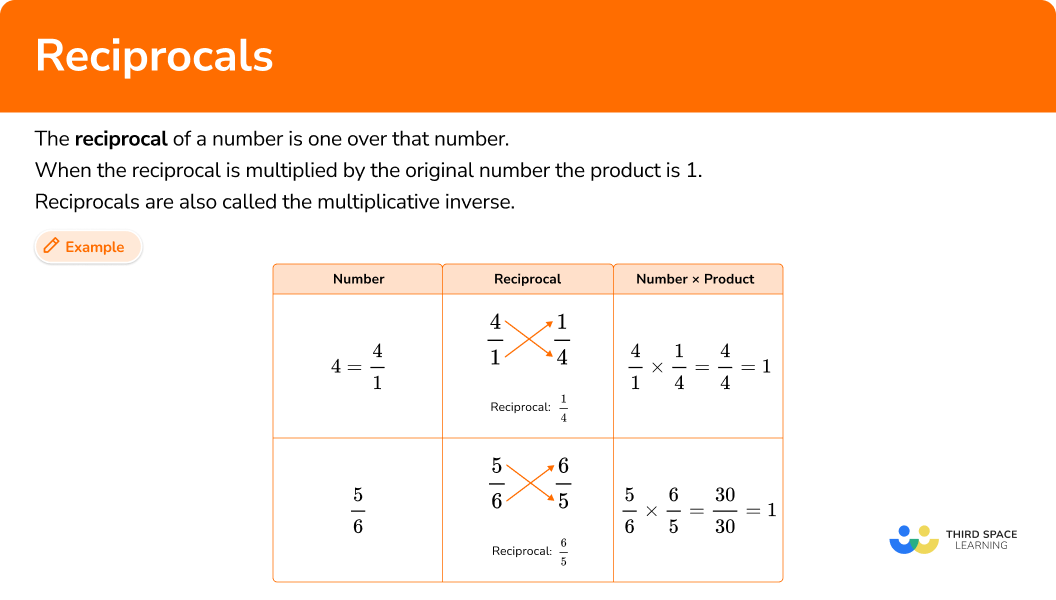
At its heart, the reciprocal of a number is surprisingly straightforward. It’s about inversion – finding a number that, when multiplied by the original number, results in one. This simple multiplicative inverse is a concept with profound implications for how we understand ratios, proportions, and inverse relationships in finance.
Basic Definition and Examples
Mathematically, if you have a number ‘x’, its reciprocal is 1/x. For instance, the reciprocal of 2 is 1/2 (or 0.5), because 2 * 0.5 = 1. The reciprocal of 0.25 is 1/0.25, which equals 4, because 0.25 * 4 = 1. The only number without a reciprocal is zero, as division by zero is undefined.
This seemingly simple definition immediately introduces the idea of an inverse relationship. When one quantity increases, its reciprocal decreases, and vice-versa. This inverse dynamic is a recurring theme across various financial domains, making the reciprocal a foundational concept for understanding how different financial metrics relate to each other.
Why it Matters Beyond Pure Math: Foundational to Ratios and Inverse Relationships
The reciprocal isn’t just a mathematical curiosity; it’s a building block for understanding many financial ratios and the inverse relationships that govern markets and economic principles. For example, if you know the price of one currency in terms of another, its reciprocal gives you the price of the second currency in terms of the first. If you know the number of units produced per hour, its reciprocal tells you the hours required per unit.
This ability to instantly flip a relationship provides immense analytical power. It allows for different perspectives on the same data, enabling more comprehensive decision-making. In finance, where multiple variables interact and influence each other, recognizing and utilizing reciprocal relationships can illuminate otherwise opaque connections, offering a clearer picture of value, risk, and opportunity.
Reciprocals in Personal Finance: Everyday Applications
For individuals managing their money, the concept of a reciprocal might not be explicitly labeled as such, but its principles are woven into many common financial calculations and considerations. Understanding these underlying mechanics empowers better budgeting, investing, and overall financial literacy.
Understanding Interest Rates and Returns
Consider interest rates. If a bank offers an annual interest rate, say 5%, this means for every $100 you invest, you earn $5. The reciprocal thinking comes into play when you want to achieve a specific return. If you want to earn $1 in interest, how much do you need to invest? The reciprocal of the interest rate (1/0.05 = 20) tells you that you need to invest $20 to earn $1.
Similarly, in investment returns, if you know your annual percentage return, the reciprocal can help conceptualize the “cost” of that return in terms of principal. While not always a direct calculation, thinking in terms of what $1 of return requires in capital, or how many units of capital are needed for a unit of return, employs reciprocal logic. It helps investors understand the efficiency of their capital and the leverage required to achieve certain targets.
Calculating Per-Unit Costs and Ratios
Reciprocals are constantly at play when evaluating per-unit costs or comparing ratios.
- Price per share vs. Shares per dollar: If a stock costs $100 per share, its reciprocal (1/100 = 0.01) means you get 0.01 shares per dollar. This might seem trivial, but for fractional share investing or large-scale portfolio construction, understanding the “bang for your buck” in terms of units can be insightful.
- Debt-to-income ratio: A common metric for lenders, this ratio measures how much debt an individual has relative to their income. While the primary ratio is debt/income, considering its reciprocal (income/debt) offers another perspective: how many units of income are available for each unit of debt. This inverse can highlight an individual’s repayment capacity in a different light.
- Cost per item vs. items per dollar: When shopping, comparing “cost per ounce” vs. “ounces per dollar” for different products can help identify the best value, particularly for bulk purchases or unit conversions.
Currency Exchange Rates
Currency exchange rates provide a perfect real-world example of reciprocals. If 1 US Dollar (USD) equals 0.92 Euros (EUR), then the reciprocal (1/0.92 ≈ 1.087) tells you how many US Dollars 1 Euro is worth. So, 1 EUR ≈ 1.087 USD. This inverse relationship is fundamental to international trade, travel, and investment, allowing for seamless conversion between currencies. Financial tools and calculators rely heavily on this reciprocal principle to display exchange rates from both perspectives, ensuring accurate transactions.

Investment Performance Metrics
Many investment metrics utilize reciprocal relationships to provide different insights.
- Price-to-Earnings (P/E) Ratio: A widely used valuation metric, the P/E ratio (Share Price / Earnings Per Share) indicates how much investors are willing to pay for each dollar of a company’s earnings. Its reciprocal, the Earnings Yield (Earnings Per Share / Share Price), represents the percentage of each dollar invested that is returned as earnings. A higher earnings yield typically suggests a more attractive investment from a value perspective.
- Dividend Yield: While not a direct reciprocal of P/E, dividend yield (Annual Dividend Per Share / Share Price) is another example where the inverse logic of ‘return per dollar invested’ is crucial. It tells investors the income generated per dollar of investment, offering a different measure of value compared to just the stock price.
Business Finance and Strategic Implications
In the corporate world, the application of reciprocals extends beyond simple calculations, playing a strategic role in valuation, risk management, and operational efficiency. Finance professionals use reciprocal thinking to gain deeper insights into a company’s health, market position, and potential.
Valuing Businesses and Investments
Beyond the P/E ratio and earnings yield, many valuation models inherently incorporate reciprocal relationships. Discounted Cash Flow (DCF) models, for instance, discount future cash flows back to the present value. The discount factor used is often 1 divided by (1 + discount rate), raised to the power of the number of periods, which is a reciprocal calculation at its core. This reflects the inverse relationship between future value and present value – money in the future is worth less today.
Furthermore, when comparing companies, analysts might look at metrics like Enterprise Value (EV) to Sales or EV to EBITDA. While these provide one perspective, their reciprocals (Sales to EV or EBITDA to EV) offer an alternative view of how much sales or operating profit a company generates per unit of enterprise value, which can be particularly useful in specific industry comparisons or when analyzing efficiency.
Leverage and Risk Management
Reciprocal thinking is paramount in understanding financial leverage and managing risk.
- Debt-to-Equity vs. Equity-to-Debt: A company’s debt-to-equity ratio (Total Debt / Shareholder Equity) is a key indicator of its financial leverage. A high ratio suggests greater reliance on debt. Its reciprocal, equity-to-debt, shows how much equity backs each dollar of debt. Both ratios provide critical information for creditors and investors, but viewing them reciprocally can highlight different aspects of a company’s financial structure and risk profile. For example, a low equity-to-debt ratio might signal higher risk, while a high debt-to-equity ratio might also suggest a higher risk, they are different ways of expressing the same fundamental relationship.
- Credit Risk: Lenders often assess a borrower’s ability to service debt. While the primary focus is on debt obligations, understanding the reciprocal of certain risk metrics can provide a clearer picture of solvency. For example, if a company’s interest coverage ratio (EBIT / Interest Expense) is 5, meaning it can cover its interest expenses 5 times over, the reciprocal (1/5 or 0.2) indicates that only 20% of its operating profit is consumed by interest payments. This provides a clear, inverse perspective on the financial burden of debt.
Production Efficiency and Cost Analysis
In operations and cost management, reciprocals are vital for assessing efficiency.
- Units per hour vs. Hours per unit: If a manufacturing line produces 60 units per hour, its reciprocal (1/60 = 0.0167 hours per unit) immediately tells you the average time it takes to produce one unit. This is critical for scheduling, pricing, and identifying bottlenecks.
- Revenue per employee vs. Employees per unit of revenue: While revenue per employee indicates productivity, its reciprocal shows how many employees are needed to generate a certain amount of revenue. This helps in workforce planning and understanding labor cost efficiency, especially for service-based businesses.
Financial Tools and Modeling: Leveraging Reciprocal Thinking
Modern finance relies heavily on sophisticated models and tools, many of which are built upon the fundamental principles of reciprocals. From spreadsheet functions to complex algorithmic trading, the ability to invert relationships is a cornerstone of financial analysis and forecasting.
Spreadsheets and Financial Models
Spreadsheet software like Microsoft Excel or Google Sheets are indispensable financial tools, and they frequently employ reciprocal calculations. When building financial models, analysts constantly convert rates, calculate inverses for discounting, or normalize data. For instance, converting an annual growth rate to a monthly growth factor often involves powers of reciprocals (e.g., (1+rate)^(1/12)). Understanding the reciprocal ensures that the logic embedded in these models accurately reflects real-world financial dynamics. The reciprocal function itself is a basic operation, but its strategic use within complex formulas can transform raw data into actionable insights.
Understanding Inverse Relationships in Market Dynamics
Beyond specific calculations, reciprocal thinking is essential for understanding the broader inverse relationships that characterize financial markets.
- Bond Prices and Yields: This is a classic example. When bond prices go up, their yields go down, and vice-versa. This inverse relationship is a direct application of reciprocal principles: if you pay more for a fixed income stream, your percentage return (yield) will be lower. Investors constantly monitor this dynamic to make decisions about fixed-income portfolios.
- Supply and Demand: While not a direct mathematical reciprocal, the economic principle of supply and demand often exhibits an inverse relationship between price and quantity demanded (as price goes up, demand typically goes down) and a direct relationship between price and quantity supplied (as price goes up, supply typically goes up). Understanding these inverse and direct forces is crucial for market analysis and forecasting price movements.
- Risk and Return: Generally, there’s an inverse relationship between certainty (low risk) and potential return in investments. Low-risk assets typically offer lower returns, while higher potential returns usually come with higher risk. While not a precise mathematical reciprocal, this principle guides diversification and asset allocation strategies, requiring investors to weigh these inversely related factors.
Conclusion
The reciprocal of a number, while a simple mathematical concept, is far from trivial in the world of finance. It provides a foundational understanding of inverse relationships, powers many critical financial calculations, and offers invaluable perspectives on personal and business financial health. From understanding how interest rates affect savings to dissecting complex investment ratios and managing corporate risk, reciprocal thinking empowers individuals and professionals to make more informed, insightful, and strategic financial decisions.
By explicitly recognizing and utilizing the power of this basic mathematical operation, we can unlock a deeper comprehension of financial mechanisms, move beyond superficial numbers, and navigate the intricate landscape of money with greater confidence and analytical prowess. The reciprocal isn’t just a number; it’s a key to unlocking financial clarity.
aViewFromTheCave is a participant in the Amazon Services LLC Associates Program, an affiliate advertising program designed to provide a means for sites to earn advertising fees by advertising and linking to Amazon.com. Amazon, the Amazon logo, AmazonSupply, and the AmazonSupply logo are trademarks of Amazon.com, Inc. or its affiliates. As an Amazon Associate we earn affiliate commissions from qualifying purchases.