
In the world of finance, the question “What is the rate today?” is rarely about a single number. Depending on whether you are a prospective homebuyer, a seasoned investor, a small business owner, or someone simply trying to protect their savings, the answer carries vastly different implications. We live in an era where data is instantaneous, and the “rate”—whether it refers to interest, exchange, or inflation—serves as the heartbeat of the global economy. Understanding these rates is not just an academic exercise; it is a fundamental requirement for sound personal and professional financial management.
Decoding Interest Rates: The Engine of Personal Finance
At the core of the financial world sits the interest rate. Often dictated by central banks, such as the Federal Reserve in the United States, this figure influences nearly every transaction involving borrowed capital. When people ask what the rate is today, they are most frequently inquiring about the cost of borrowing or the reward for saving.
The Federal Funds Rate and Its Ripple Effect
The federal funds rate is the interest rate at which commercial banks borrow and lend their excess reserves to each other overnight. While the average consumer does not interact with this rate directly, its influence is inescapable. When the central bank adjusts this rate, it sets off a chain reaction throughout the economy.
A rising rate is typically a tool used to combat inflation by making borrowing more expensive, thereby slowing down spending. Conversely, lowering the rate is intended to stimulate economic activity. For the individual, a high “rate today” means that the annual percentage rates (APRs) on credit cards, personal loans, and lines of credit are likely to be higher, increasing the total cost of debt.
Mortgage Rates: Homeownership in a Shifting Market
For many, the most critical rate is the 30-year fixed-rate mortgage. Mortgage rates do not move in perfect lockstep with the Federal Reserve’s decisions, but they are heavily influenced by them and by the yield on the 10-year Treasury note.
When searching for the current mortgage rate, one must understand that “the rate” is a moving target. It is influenced by the lender’s risk assessment, the borrower’s credit score, and the broader outlook for the housing market. In a high-rate environment, the purchasing power of a buyer diminishes significantly. For example, a 1% increase in interest rates can reduce a buyer’s budget by tens of thousands of dollars, shifting the balance of power from the buyer to the seller, or vice versa.
Savings and Yields: Capitalizing on High Interest
The silver lining of a high-interest-rate environment is found in the “yield.” For years, savers struggled with near-zero returns on their cash. Today, however, high-yield savings accounts (HYSAs) and Certificates of Deposit (CDs) offer rates that were unthinkable a decade ago.
When you ask what the rate is today for savings, you are looking at your ability to preserve and grow your liquid capital. Savvy individuals are currently moving funds out of traditional “big bank” checking accounts—which often pay negligible interest—and into specialized financial products that offer 4% or 5% APY. This shift ensures that while the cost of borrowing has gone up, the “rate” on one’s own capital is finally working in their favor.
Currency Exchange Rates: Global Value in Real-Time
In an increasingly globalized economy, the exchange rate is a vital metric for anyone involved in international trade, travel, or foreign investment. The foreign exchange (Forex) market is the largest and most liquid financial market in the world, operating 24 hours a day to determine the relative value of one currency against another.
Factors Driving Forex Fluctuations
The “rate today” for a currency pair, such as the EUR/USD or the GBP/JPY, is driven by a complex interplay of geopolitical stability, economic data releases, and interest rate differentials. If the United States has higher interest rates than Europe, the U.S. dollar often strengthens as investors seek the higher returns available in dollar-denominated assets.
Additionally, trade balances play a significant role. A country that exports more than it imports will generally see a higher demand for its currency. For the individual, these rates dictate the cost of a vacation in Paris, the price of imported goods at the grocery store, and the profitability of holding international stocks.
The Impact on International Business and Travel
For businesses, the exchange rate is more than just a convenience; it is a risk factor. Companies that source materials from abroad must constantly monitor the rate to maintain their margins. A sudden devaluation of their home currency can lead to “imported inflation,” where the rising cost of supplies forces them to raise prices for consumers.
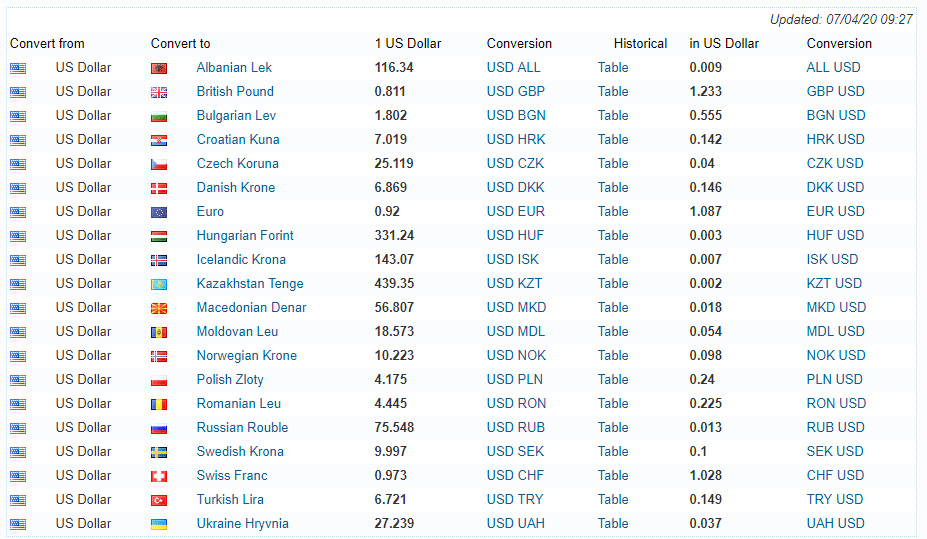
For travelers, the daily rate determines their purchasing power abroad. Monitoring the “mid-market rate”—the midpoint between the buy and sell prices of two currencies—is essential for avoiding the high fees often hidden in airport kiosks or traditional bank exchanges. Digital banking tools and fintech apps now allow users to lock in favorable rates instantly, providing a level of financial agility that was previously reserved for professional traders.
Inflation and Purchasing Power: The Hidden Rate
While interest and exchange rates are the most visible, the inflation rate is perhaps the most consequential for long-term financial health. Often referred to as the “silent tax,” inflation represents the rate at which the general level of prices for goods and services is rising, and, subsequently, how much purchasing power is falling.
Consumer Price Index (CPI) Explained
When economists discuss the inflation rate, they are usually referring to the Consumer Price Index (CPI). This index tracks a “basket of goods”—everything from rent and gasoline to milk and healthcare—to determine how much more expensive life has become compared to the previous month or year.
A healthy economy typically aims for a “target rate” of around 2%. When the rate today exceeds this target, the value of every dollar you hold in cash is eroding. If your salary does not increase at a rate that matches or exceeds inflation, you are effectively taking a pay cut, even if your nominal income remains the same.
Hedging Against Devaluation
Understanding the current inflation rate is the first step in building a resilient investment portfolio. When inflation is high, “cash is trash,” as the saying goes. Investors often look toward “real assets”—such as real estate, commodities, or Treasury Inflation-Protected Securities (TIPS)—to hedge against the loss of purchasing power.
Equity markets also respond to inflation rates. Companies with strong “pricing power”—the ability to raise prices without losing customers—tend to perform better in inflationary environments. By knowing the rate today, an investor can pivot their strategy to favor sectors like energy or consumer staples, which are often more resistant to inflationary pressures than high-growth tech stocks that rely on low-interest borrowing.
Tools for Tracking: How to Stay Informed
In the past, finding “the rate” required waiting for the morning newspaper or a call to a broker. Today, the democratization of financial data means that anyone with a smartphone can access real-time indicators. However, with this abundance of information comes the challenge of discernment.
Financial Apps and Real-Time APIs
The modern investor utilizes a suite of tools to stay updated. Apps like Bloomberg, Reuters, and specialized Forex trackers provide up-to-the-second data on market rates. For those managing personal portfolios, platforms like Yahoo Finance or TradingView allow users to set alerts. If the 10-year Treasury yield hits a certain threshold, or if the exchange rate for a specific currency pair drops, a notification is sent instantly.
Furthermore, many digital banking platforms now integrate these rates directly into their interfaces. This allows users to see the current APY on their savings or the “spot rate” for a currency conversion before they click “confirm.” The key is to use reputable sources that provide “live” data rather than “delayed” quotes, which can be 15 to 20 minutes behind.
Interpreting Market Sentiment
The rate today is not just a historical data point; it is a reflection of market sentiment and future expectations. For example, if the market “prices in” a future rate cut by the Fed, the rate on long-term bonds might drop even before the official announcement is made.
Financial professionals look at the “Yield Curve”—the relationship between short-term and long-term interest rates—to predict economic downturns. An “inverted yield curve,” where short-term rates are higher than long-term rates, has historically been a reliable indicator of an upcoming recession. By monitoring these nuances, individuals can move beyond simply knowing the number to understanding what that number signals for the months ahead.
Building a Resilient Financial Strategy
Ultimately, the question “What is the rate today?” should lead to a broader conversation about strategy. Financial rates are the weather patterns of the economic world; you cannot control them, but you can certainly prepare for them.
A resilient strategy involves diversification. When interest rates are high, it may be time to lock in long-term yields via bonds or CDs. When inflation is the primary concern, focusing on growth-oriented investments or inflation-indexed assets becomes a priority. For those with international exposure, using hedging tools or multi-currency accounts can mitigate the volatility of exchange rates.
In conclusion, staying informed about current financial rates is a pillar of modern literacy. Whether you are navigating the complexities of a mortgage, optimizing your investment portfolio, or managing a business budget, the rates of today dictate the opportunities of tomorrow. By keeping a close eye on interest, exchange, and inflation metrics, you empower yourself to make decisions rooted in data rather than guesswork, ensuring long-term stability in an ever-changing economic environment.
aViewFromTheCave is a participant in the Amazon Services LLC Associates Program, an affiliate advertising program designed to provide a means for sites to earn advertising fees by advertising and linking to Amazon.com. Amazon, the Amazon logo, AmazonSupply, and the AmazonSupply logo are trademarks of Amazon.com, Inc. or its affiliates. As an Amazon Associate we earn affiliate commissions from qualifying purchases.