
The concept of a “records life cycle” is a foundational principle in information governance, critical for any organization navigating the complexities of the digital age. Far from being a mere administrative chore, it represents a strategic framework for managing information from its inception to its ultimate disposition, ensuring its value, integrity, and compliance throughout its existence. In today’s technology-driven landscape, understanding and implementing an effective records life cycle isn’t just about managing paper files; it’s about leveraging advanced digital tools and strategies to control vast quantities of electronic information, data, and content. This comprehensive approach safeguards intellectual property, mitigates risk, optimizes operational efficiency, and underpins informed decision-making.

The Foundational Concept of Records Life Cycle
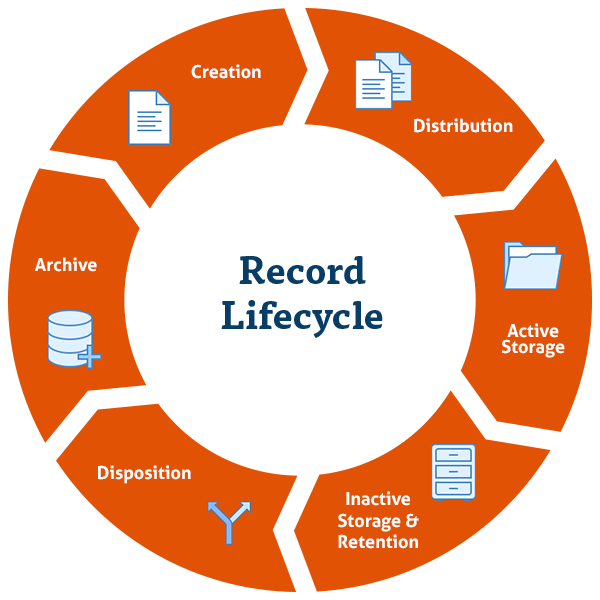
At its core, the records life cycle describes the predictable stages through which a record passes, whether it’s a physical document, an email, a database entry, or a multimedia file. This systematic view acknowledges that information is a dynamic asset, evolving in its relevance, access requirements, and legal obligations over time. For modern enterprises, this is not an abstract theory but a practical necessity, driven by an ever-increasing volume of digital data and stringent regulatory demands.
Defining Records in the Digital Age
A “record” is no longer solely a printed sheet with an official stamp. In the digital era, a record encompasses any documented information created, received, and maintained by an organization or individual as evidence of a transaction, activity, or event. This broad definition includes emails, instant messages, social media posts, database entries, sensor data, video conferences, software code, and digital contracts. The key characteristic is its evidential value and its role in demonstrating accountability and compliance. The digital nature of these records profoundly impacts how they are managed through their life cycle, necessitating sophisticated technological solutions for capture, storage, security, and retrieval.
Why a Life Cycle Approach is Crucial for Modern Organizations
Adopting a life cycle approach to records management moves beyond reactive storage to proactive governance. It recognizes that each stage of a record’s existence requires specific actions and controls. Without this structured approach, organizations risk data loss, compliance failures, security breaches, operational inefficiencies, and an inability to leverage their vast information assets effectively. From a technological standpoint, this translates into selecting, integrating, and maintaining systems that can seamlessly manage records across their entire journey, ensuring data integrity, accessibility, and defensibility at every step.
Key Stages of the Records Life Cycle and Technological Enablers
The records life cycle typically comprises several distinct stages, each supported and optimized by various technological solutions. Understanding these stages is essential for designing and implementing robust information management systems.
Creation and Capture: Data Ingestion and Workflow Automation
The life cycle begins when a record is created or received. In the digital realm, this could be anything from authoring a document in Microsoft Word to receiving an email, generating a transaction log in an ERP system, or capturing customer data via an online form.
- Technological Enablers: Modern Enterprise Content Management (ECM) systems, Customer Relationship Management (CRM) platforms, and Enterprise Resource Planning (ERP) systems are central to this stage. They provide structured environments for record creation. Optical Character Recognition (OCR) and Intelligent Character Recognition (ICR) technologies automate the conversion of physical documents into searchable digital records. Workflow automation tools ensure that newly created records are immediately routed for review, approval, and proper classification, reducing manual errors and accelerating business processes. AI-powered tools can also assist in automated data extraction from unstructured documents.
Classification and Indexing: Structuring Information for Retrieval
Once created or captured, records must be systematically classified and indexed to ensure they can be efficiently located, understood, and managed throughout their life cycle. This stage assigns context and attributes to the record.
- Technological Enablers: Metadata management is paramount. ECM systems offer robust capabilities for applying both technical metadata (e.g., file type, creation date) and business metadata (e.g., department, project name, retention category). AI and machine learning algorithms are increasingly used for automated classification, tagging records based on content, context, and predefined taxonomies or ontologies. This significantly reduces the manual effort and potential for human error associated with categorization, making information retrieval faster and more accurate.
Storage and Maintenance: Ensuring Accessibility and Security
This stage involves placing records in a secure, accessible, and compliant storage environment for their active lifespan. Maintenance includes safeguarding the record’s integrity and ensuring its readability over time.
- Technological Enablers: Cloud storage solutions (SaaS, IaaS, PaaS) offer scalable, cost-effective, and resilient options for digital record storage, often with built-in redundancy and disaster recovery capabilities. On-premise data centers remain vital for highly sensitive data or specific regulatory requirements. Data encryption (at rest and in transit), robust access controls, regular backups, and data integrity checks are critical technologies employed to secure records against unauthorized access, corruption, or loss. Content migration tools ensure that records remain accessible and usable as technology platforms evolve, preventing data obsolescence.
Use and Distribution: Collaboration and Access Control
During its active phase, a record is accessed, shared, and utilized to support business operations, decision-making, and collaboration. This stage demands efficient retrieval and secure dissemination.
- Technological Enablers: Document Management Systems (DMS) and collaboration platforms (e.g., SharePoint, Google Workspace, specialized ECM modules) facilitate secure sharing, version control, and co-authoring of digital records. Granular access permissions, enforced through identity and access management (IAM) systems, ensure that only authorized personnel can view, modify, or distribute specific records. Audit trails and logging capabilities track every interaction with a record, providing a transparent history of its use and bolstering accountability and compliance.
Disposition: Retention, Archiving, and Secure Destruction
The final stage determines the ultimate fate of a record. This could involve permanent archival for historical or legal reasons, or secure destruction when its retention period expires and it no longer holds business or legal value.
- Technological Enablers: Automated retention and disposition schedules, integrated into ECM systems, are crucial. These systems apply predefined rules based on legal, regulatory, and business requirements to automatically flag records for archival or deletion. Digital archiving solutions preserve records in a secure, immutable, and long-term format, often adhering to specific standards for digital preservation. For destruction, secure data erasure technologies ensure that records are irrecoverably deleted from all storage media, complying with data privacy regulations like GDPR and CCPA. Legal hold capabilities within these systems are vital for preventing the accidental deletion of records relevant to ongoing or anticipated litigation.
Technological Imperatives for Effective Records Life Cycle Management
Effective records life cycle management in the modern enterprise is inextricably linked to sophisticated technological infrastructure and strategic implementation.
The Role of Enterprise Content Management (ECM) Systems
ECM systems serve as the backbone for managing the entire records life cycle. These integrated platforms provide a comprehensive suite of tools for capturing, managing, storing, preserving, and delivering enterprise content and documents. They bring structure to unstructured information, automating processes, enforcing policies, and ensuring compliance across vast repositories of data. A modern ECM solution typically includes document management, workflow automation, records management, web content management, and digital asset management functionalities.
Leveraging Artificial Intelligence and Machine Learning
AI and ML are transforming records management by automating labor-intensive tasks and extracting deeper insights. AI-powered classification can automatically tag records with relevant metadata, improving searchability and compliance. Machine learning algorithms can analyze usage patterns to suggest optimal retention schedules or identify personally identifiable information (PII) for enhanced data privacy. Predictive analytics can even forecast potential compliance risks based on record content or access patterns.
Cloud Computing and Scalability
Cloud computing offers unparalleled scalability, flexibility, and cost-effectiveness for managing massive volumes of digital records. Software-as-a-Service (SaaS) ECM solutions reduce the burden of infrastructure management, while Infrastructure-as-a-Service (IaaS) and Platform-as-a-Service (PaaS) offer greater customization and control over storage and processing environments. The cloud facilitates remote access, disaster recovery, and global collaboration, all critical for a modern, distributed workforce.
Digital Security and Compliance Frameworks
Robust digital security is non-negotiable. Encryption, multi-factor authentication, intrusion detection systems, and regular security audits are essential to protect records from cyber threats. Furthermore, records life cycle management systems must be designed to facilitate compliance with a myriad of data privacy regulations (e.g., GDPR, CCPA, HIPAA) and industry-specific mandates. E-discovery capabilities, which allow for rapid identification and retrieval of relevant records for legal proceedings, are also critical components of a compliant technology infrastructure.
Benefits of a Technologically-Driven Records Life Cycle
Implementing a well-designed, technologically-driven records life cycle yields numerous strategic advantages for organizations.
Enhanced Efficiency and Productivity
Automation of record capture, classification, and workflow significantly reduces manual effort, speeds up business processes, and frees up employees to focus on higher-value tasks. Fast, accurate retrieval of information improves operational efficiency and accelerates decision-making.
Mitigated Risk and Improved Compliance
By enforcing consistent policies for retention, access, and disposition, organizations can dramatically reduce the risk of data breaches, litigation, and regulatory fines. Comprehensive audit trails provide indisputable evidence of compliance, demonstrating due diligence to auditors and regulators.
Better Decision-Making Through Accessible Data
When records are properly classified, indexed, and accessible throughout their life cycle, they become a rich source of actionable intelligence. Decision-makers can quickly access accurate, up-to-date information, leading to more informed and strategic choices.
Cost Optimization
While initial investments in technology are required, an optimized records life cycle reduces long-term costs associated with physical storage, manual processing, legal discovery, and potential penalties for non-compliance. Cloud solutions, in particular, offer pay-as-you-go models that scale with organizational needs.
Future Trends in Records Life Cycle Management
The evolution of technology continues to reshape the records life cycle, promising even greater automation, security, and insight.
Blockchain for Immutable Records
Blockchain technology holds promise for creating immutable, tamper-proof records. Its distributed ledger nature can ensure the integrity and authenticity of critical documents and data, making it invaluable for sensitive records requiring verifiable provenance and non-repudiation.
Hyperautomation and Intelligent Information Management
The convergence of AI, machine learning, Robotic Process Automation (RPA), and other advanced technologies will lead to hyperautomation in records management. This means even more processes, from classification to disposition, will be automated and optimized, creating self-governing information ecosystems.

Data Ethics and Governance in AI-driven Systems
As AI plays a larger role in managing records, ethical considerations and robust governance frameworks for AI become paramount. Ensuring that AI systems are fair, transparent, and accountable in their handling of organizational data and decision-making about record disposition will be a critical area of focus.
The records life cycle is no longer a peripheral concern; it is a core technological strategy for any enterprise aiming to thrive in the digital age. By embracing the right tools and methodologies, organizations can transform their information from a liability into a powerful asset.
aViewFromTheCave is a participant in the Amazon Services LLC Associates Program, an affiliate advertising program designed to provide a means for sites to earn advertising fees by advertising and linking to Amazon.com. Amazon, the Amazon logo, AmazonSupply, and the AmazonSupply logo are trademarks of Amazon.com, Inc. or its affiliates. As an Amazon Associate we earn affiliate commissions from qualifying purchases.