
To understand the price of Home Depot stock (ticker: HD), one must look far beyond the ticker symbol’s daily fluctuations on the New York Stock Exchange. While a simple search will yield a real-time numerical value, the true “price” of Home Depot is a reflection of global supply chains, the health of the American housing market, consumer discretionary spending, and the company’s own sophisticated capital allocation strategies. For the modern investor, evaluating Home Depot requires a deep dive into the financial metrics and macroeconomic drivers that sustain its status as a cornerstone of the retail and construction sectors.
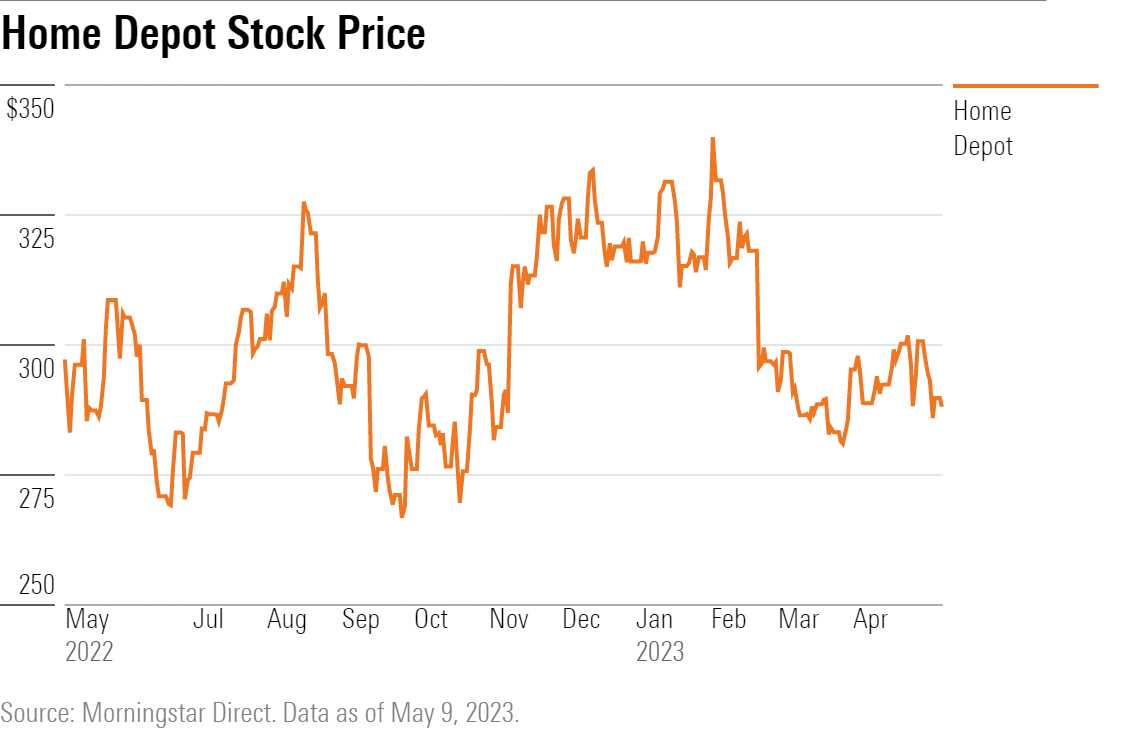
The Evolution of Home Depot’s Market Valuation
Since its IPO in 1981, Home Depot has evolved from a disruptive big-box retailer into a dominant blue-chip entity. Its stock price history is a study in compounding returns. For decades, the company has capitalized on the fundamental human need for shelter and the psychological drive for home improvement. However, the price of the stock today is shaped by different forces than those of the 1990s or early 2000s.
Historical Growth and Stock Splits
Home Depot’s price appreciation has been bolstered by a series of stock splits in its earlier years, which helped maintain liquidity and made the shares accessible to retail investors. While the company has not split its stock since 1999, the appreciation in share value since that era reflects a transition from a high-growth “land grab” phase—where the focus was on opening new stores—to a “productivity” phase. In this current era, the stock price is driven by increasing sales per square foot and optimizing the existing footprint through technological integration.
Dividend Legacy and Total Shareholder Return
When discussing the price of HD stock, one cannot ignore the dividend component. Home Depot is often classified as a premier “dividend achiever.” The company has a long history of not only paying dividends but aggressively increasing them. For investors, the “price” they pay today is often justified by the yield-on-cost they expect to achieve over the next decade. The company’s commitment to returning approximately 50% of its earnings to shareholders through dividends provides a floor for the stock price during volatile market cycles.
Macroeconomic Drivers of Home Depot’s Valuation
The stock price of Home Depot is often used as a proxy for the health of the broader U.S. economy, specifically the housing sector. Because the company’s revenue is tied to home values and renovation activity, several external factors exert constant pressure on its market valuation.
The Impact of Interest Rates and Mortgage Trends
Perhaps no factor influences HD’s stock price more directly than the Federal Reserve’s monetary policy. Higher interest rates typically lead to higher mortgage rates, which can cool the housing market. When home sales slow down, the “churn” of people moving into new homes—a period typically characterized by high spending on paint, flooring, and appliances—decreases.
However, Home Depot has shown resilience in high-rate environments. When homeowners are “locked in” to low-interest mortgages and cannot afford to move, they often choose to renovate their current properties instead. This “improve-in-place” trend provides a counter-cyclical buffer that supports the stock price even when the broader real estate market faces headwinds.
The Shift Toward the “Pro” Segment
Historically, Home Depot was the haven of the “Do-It-Yourself” (DIY) consumer. In recent years, the stock’s valuation has been increasingly tied to its success in capturing the “Pro” market—contractors, remodelers, and tradesmen. Professional customers represent a smaller percentage of the total customer base but account for roughly half of the company’s revenue.
The stock price often reacts to updates regarding Home Depot’s specialized Pro-ecosystem, including its fulfillment centers and personalized credit offerings. Investors view the Pro segment as a stickier, higher-margin revenue stream that justifies a higher price-to-earnings (P/E) multiple compared to retailers that rely solely on fickle consumer discretionary spending.
Fundamental Analysis: Decoding the Financials

To determine if the current price of Home Depot stock is a “fair value,” investors must look at the underlying financial statements. The company’s balance sheet and income statement reveal the efficiency that justifies its multi-hundred-billion dollar market capitalization.
Revenue Streams and Operating Margins
Home Depot consistently maintains impressive operating margins, often hovering in the 14% to 15% range. This is significantly higher than many of its retail peers. The stock price reflects the market’s confidence in management’s ability to control costs, manage inventory, and pass on inflationary pressures to consumers. When the company reports its quarterly earnings, the market pays close attention to “comparable store sales”—a metric that filters out the impact of new store openings to show the true organic growth of the business.
Capital Allocation and Share Buybacks
A major driver of Home Depot’s share price over the last decade has been its aggressive share repurchase program. By buying back billions of dollars of its own stock, the company reduces the total number of shares outstanding. This increases the Earnings Per Share (EPS) even if total net income remains flat. For investors, this creates a “synthetic” growth in the stock price. Critics often point to the company’s increasing debt levels used to fund these buybacks, but the market has generally rewarded this strategy due to Home Depot’s massive and predictable cash flows.
Inventory Turnover and Supply Chain Resilience
In the post-pandemic economy, inventory management has become a critical valuation metric. Home Depot’s “Interconnected Retail” strategy—which allows customers to buy online and pick up in-store (BOPIS)—has optimized its inventory turnover. The efficiency with which the company can move products from a distribution center to a customer’s truck directly impacts the bottom line and, consequently, the stock price.
Competitive Landscape: Home Depot vs. Lowe’s
No analysis of Home Depot’s stock price is complete without comparing it to its primary rival, Lowe’s Companies, Inc. (LOW). The two companies essentially operate as a duopoly in the home improvement space, but their stock prices often tell different stories.
Market Share and Pricing Power
Home Depot generally trades at a premium to Lowe’s, largely due to its superior penetration of the Pro market and its higher sales-per-square-foot. While Lowe’s has made significant strides in catching up, Home Depot’s early investments in urban supply chains and professional-grade logistics have given it a “moat” that protects its stock price. Investors often look at the “spread” between the P/E ratios of HD and LOW to determine which stock offers better value at a given moment.
Regional Dominance and Demographic Shifts
The geographic distribution of Home Depot stores also plays a role in its valuation. The company has a heavy presence in high-density urban areas and regions with aging housing stock. Since older homes require more maintenance and repair, Home Depot’s footprint is strategically aligned with the areas most likely to generate consistent demand. This geographic advantage is baked into the long-term price expectations of institutional investors.
Evaluating the Risks and Future Outlook
While Home Depot is often seen as a “safe” investment, several risks could deflate its stock price. Understanding these risks is essential for anyone trying to determine the right entry point for an investment.
Inflationary Pressures and Commodity Costs
Home Depot is highly sensitive to the price of raw materials, particularly lumber and copper. Significant fluctuations in commodity prices can squeeze margins or force price hikes that deter consumers. If inflation remains “sticky,” the discretionary portion of Home Depot’s business—such as patio furniture or high-end kitchen remodels—could see a decline, putting downward pressure on the stock.
Digital Transformation and E-commerce Threats
While Amazon has struggled to penetrate the heavy-and-bulky categories like lumber and water heaters, the threat of digital disruption is always present. Home Depot’s stock price depends on its ability to continue leading the “omnichannel” revolution. The company has invested billions in its website and mobile app to ensure that it remains the first choice for both the weekend warrior and the professional contractor. Any lag in technological adoption would likely result in a multiple compression for the stock.

Conclusion on Valuation
Ultimately, the price of Home Depot stock is a reflection of the company’s role as an essential service provider in the American economy. It is a business that thrives on the stability of the housing market and the continued professionalization of the home improvement industry. For the investor, the current price represents a bet on the continued durability of the American home as a primary asset class. By monitoring interest rates, Pro-segment growth, and capital allocation efficiency, one can gain a clearer picture of whether the current market price offers a margin of safety or a speculative peak. Regardless of daily volatility, Home Depot remains a masterclass in operational excellence and a vital barometer for the financial health of the consumer.
aViewFromTheCave is a participant in the Amazon Services LLC Associates Program, an affiliate advertising program designed to provide a means for sites to earn advertising fees by advertising and linking to Amazon.com. Amazon, the Amazon logo, AmazonSupply, and the AmazonSupply logo are trademarks of Amazon.com, Inc. or its affiliates. As an Amazon Associate we earn affiliate commissions from qualifying purchases.