
The term “legally blind” is a specific designation used by legal and governmental bodies to determine eligibility for certain benefits, services, and accommodations. It’s not a medical diagnosis in itself, but rather a functional definition based on vision standards. Understanding these standards is crucial for individuals seeking support, as well as for policymakers and professionals involved in disability services. While the exact wording and thresholds can vary slightly by jurisdiction, the core principles revolve around visual acuity and visual field.
Understanding Visual Acuity: The Foundation of Legal Blindness
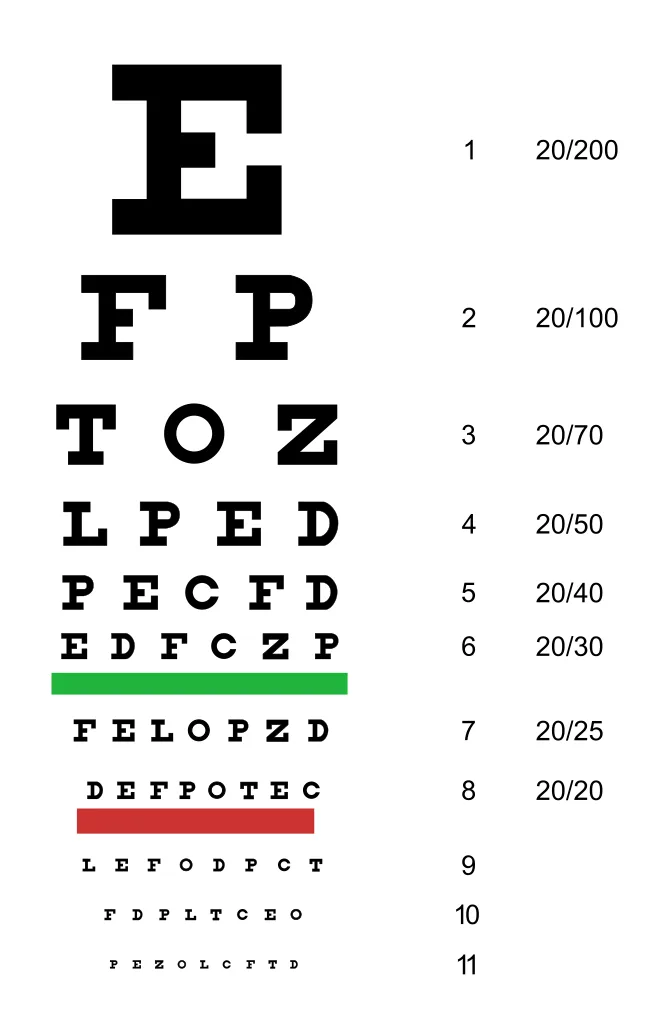
Visual acuity refers to the sharpness and clarity of vision. It’s typically measured using standardized eye charts, most commonly the Snellen chart, which displays letters of decreasing size. This measurement quantifies how well a person can see at a distance of 20 feet. The notation “20/X” means that a person can see at 20 feet what a person with normal vision can see at X feet. A higher “X” value indicates poorer vision.
The Snellen Chart and Its Significance
The Snellen chart’s design is ingenious in its simplicity and effectiveness. It starts with a large “E” at the top, and the letters progressively get smaller as you move down the chart. Each row corresponds to a specific visual acuity level. For example, if you can read the line marked “20/20,” you have normal vision – you can see at 20 feet what most people can see at 20 feet.
However, for the purpose of legal blindness, the standard is significantly lower. The critical threshold for visual acuity is typically considered to be 20/200 or worse in the better-seeing eye, even with the best possible correction. This means that if an individual can only see at 20 feet what a person with normal vision can see at 200 feet, they may meet this part of the definition. It’s important to emphasize “best possible correction” here. This implies that the individual has undergone a comprehensive eye examination and is wearing the strongest prescription glasses or contact lenses that can be prescribed to improve their vision. If, even with these aids, their vision remains at or below 20/200, they meet the visual acuity criterion for legal blindness.
Beyond 20/200: The Importance of Corrected Vision
The concept of “best possible correction” is paramount. Many conditions that affect vision, such as refractive errors like myopia (nearsightedness) or hyperopia (farsightedness), can be significantly improved with corrective lenses. The legal definition accounts for this by only considering uncorrected or inadequately corrected vision in the context of determining legal blindness. Therefore, an individual with a very high prescription but who achieves 20/20 vision with glasses is not considered legally blind based on visual acuity alone.
The standard of 20/200 is a globally recognized benchmark, although specific legal definitions might refine this with additional qualifiers or slightly different numerical values depending on the country or state. For instance, in some regions, the definition might include a consideration for the ability to see at a specific distance, such as being unable to see a certain number of fingers at a particular distance. However, the 20/200 Snellen acuity with best correction remains the cornerstone of this aspect of the legal blindness definition.
Visual Field: The Other Crucial Dimension
While visual acuity measures central vision (the ability to see fine details directly in front of you), visual field refers to the entire area that you can see without moving your head or eyes. It encompasses peripheral vision, which is essential for navigating environments, detecting movement, and maintaining spatial awareness. A constricted or diminished visual field can significantly impact a person’s ability to function independently, even if their central visual acuity is relatively good.
Understanding the Visual Field and Its Measurement
The visual field is typically measured using perimetry. This is a test that maps out the extent of a person’s vision. During a visual field test, the patient looks straight ahead into a machine, and lights or targets are presented in their peripheral vision. They indicate when they see the light, and the machine records their responses to create a map of their visual field.
The legal definition of blindness often includes a criterion related to visual field constriction. This means that even if an individual’s central visual acuity is better than 20/200, they might still be considered legally blind if their peripheral vision is severely limited.
The Cone of Vision: A Critical Threshold
The most common visual field criterion for legal blindness involves a limitation in the widest diameter of the visual field. Specifically, if the widest diameter of the visual field has been constricted to 20 degrees or less, the individual may meet the definition of legal blindness. This is often referred to as “tunnel vision.” Imagine looking through a narrow tube; you can see what’s directly in front of you, but your awareness of your surroundings is drastically reduced.
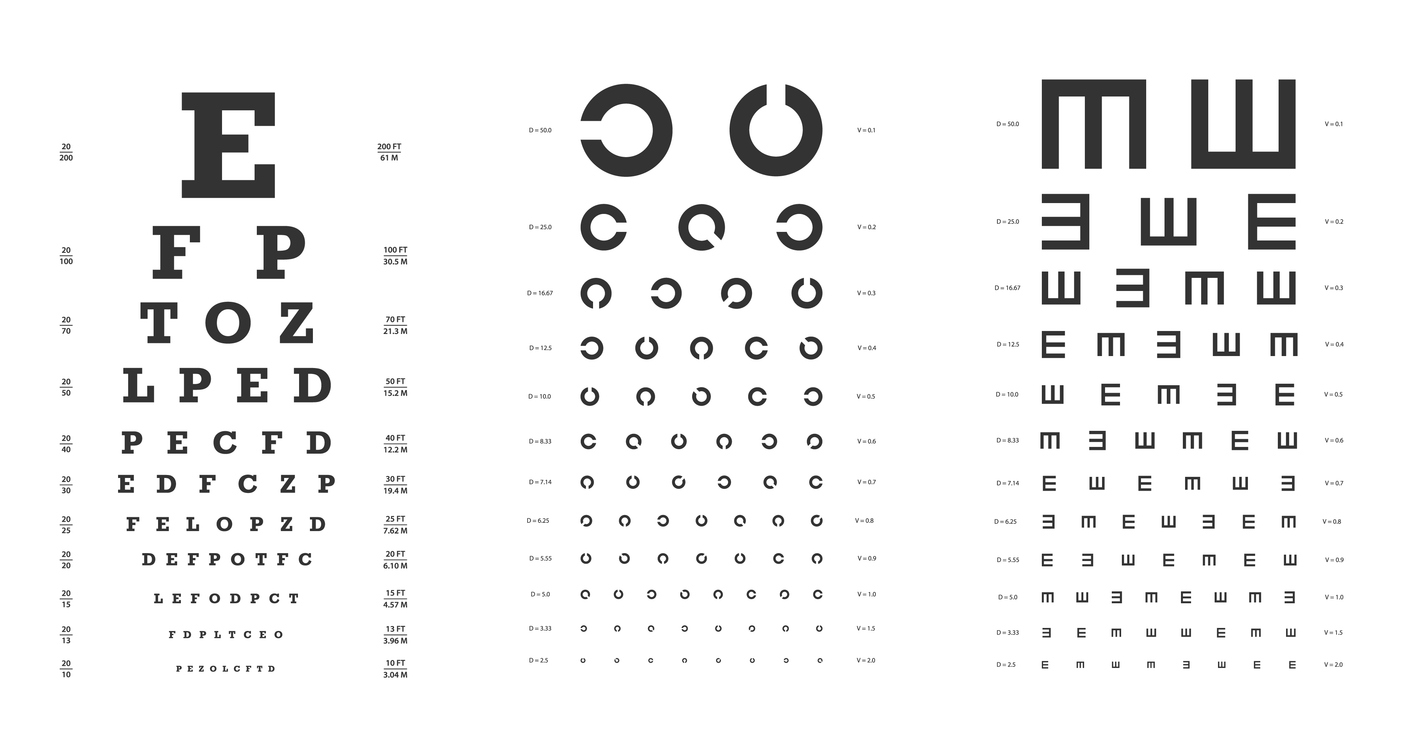
This constriction is measured from the point of fixation, which is the point you are looking at directly. A healthy visual field typically extends about 100 degrees outward (temporally), 60 degrees upward, and 60 degrees downward. A constriction to 20 degrees or less means that the entire field of vision has shrunk significantly, making it difficult to detect obstacles, other people, or traffic outside of a very narrow central area. Again, the “best possible correction” is considered in relation to visual acuity, but for visual field, the test is usually performed with the individual’s best corrected vision in place.
The Combined Criteria: Meeting the Legal Standard
It is important to understand that legal blindness is usually defined by meeting either the visual acuity criterion or the visual field criterion, not necessarily both. This is a critical distinction.
Scenario 1: Severe Acuity Loss
An individual might have a relatively intact visual field, meaning they can see a good range of what’s around them. However, if their central vision is so poor that they cannot read a standard eye chart even with the strongest prescription lenses, achieving a score of 20/200 or worse in their better eye, they would meet the criteria for legal blindness. This could be due to conditions like advanced macular degeneration, severe cataracts, or significant corneal scarring.
Scenario 2: Severe Visual Field Loss
Conversely, another individual might have quite sharp central vision, perhaps even better than 20/200. However, if they have experienced a severe loss of peripheral vision, resulting in a visual field of 20 degrees or less in their better-seeing eye, they would also be considered legally blind. This is often seen in conditions such as retinitis pigmentosa or glaucoma, where peripheral vision is progressively lost.
Scenario 3: Meeting Both Criteria (Less Common but Possible)
It is also possible, though less common, for an individual to meet both criteria. This would involve a significant reduction in both visual acuity and visual field.
The Purpose and Implications of Legal Blindness Designation
The designation of legal blindness is not simply a label; it has tangible practical implications, primarily related to access to resources and support services.
Access to Benefits and Services
In most countries and jurisdictions, legal blindness is the primary criterion for eligibility for a range of governmental and non-governmental benefits. These can include:
- Financial Assistance: Disability benefits, such as supplemental security income (SSI) or social security disability insurance (SSDI) in the United States, often have legal blindness as a qualifying condition.
- Tax Credits and Deductions: Various tax benefits are available to individuals who are legally blind.
- Vocational Rehabilitation Services: Programs designed to help individuals with disabilities find employment often prioritize those who are legally blind. This can include job training, adaptive equipment, and placement assistance.
- Educational Support: Students who are legally blind are eligible for specialized educational services and accommodations in schools, such as Braille instruction, assistive technology, and individualized education programs (IEPs).
- Assistive Technology and Devices: Access to specialized tools and technologies, such as screen readers, magnifiers, Braille displays, and navigation aids, is often facilitated by the legal blindness designation.
- Transportation Services: Reduced fares or specialized transportation services may be available.
- Housing Assistance: Certain housing programs might offer priority or specific accommodations.

Beyond the Numbers: Functional Vision and Quality of Life
It’s crucial to recognize that the legal definition, while standardized, is a simplified framework. Two individuals with the exact same “prescription” for legal blindness might experience their vision loss very differently. The impact of vision loss on an individual’s daily life depends on numerous factors beyond the numerical criteria. These include:
- The specific cause of vision loss: Different conditions affect vision in unique ways, impacting perception, color vision, depth perception, and light sensitivity.
- Age of onset: Vision loss that occurs gradually over many years allows for more adaptation than sudden loss.
- Individual coping mechanisms and resilience: Personal attitudes, support systems, and determination play a significant role.
- Availability and use of assistive technologies: The right tools can dramatically enhance independence and functionality.
- The environment: Navigating a familiar home is different from navigating a busy urban street.
Therefore, while the “prescription” for legal blindness provides a necessary objective standard for resource allocation, it’s only one part of the picture. Comprehensive assessments of an individual’s functional vision and needs are essential for providing truly effective support and maximizing their quality of life. The goal is not just to identify who meets a threshold, but to empower individuals with vision loss to live fulfilling and independent lives.
aViewFromTheCave is a participant in the Amazon Services LLC Associates Program, an affiliate advertising program designed to provide a means for sites to earn advertising fees by advertising and linking to Amazon.com. Amazon, the Amazon logo, AmazonSupply, and the AmazonSupply logo are trademarks of Amazon.com, Inc. or its affiliates. As an Amazon Associate we earn affiliate commissions from qualifying purchases.