
In an increasingly data-driven world, the ability to quickly and accurately process numerical information is not just a convenience but a necessity. Among the myriad of digital tools designed to simplify complex mathematical operations, the percentage calculator stands out as a deceptively simple yet profoundly powerful utility. Far from being a mere elementary school aid, this digital marvel serves as a critical component in the technological ecosystem, enabling precise calculations across an astonishing array of professional and personal contexts. At its core, a percentage calculator is a specialized software application or a feature within a broader digital platform, engineered to compute percentages based on user-provided inputs, effectively automating a fundamental mathematical concept that underpins countless real-world scenarios.
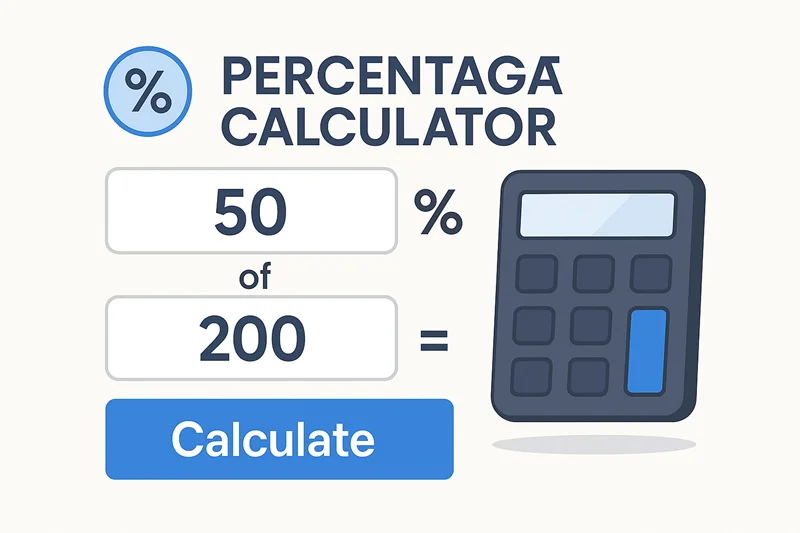
Its significance extends beyond simple arithmetic; it embodies the spirit of technological empowerment, providing immediate access to solutions that would otherwise require manual computation, often prone to human error. Understanding “what” a percentage calculator is involves not just defining its function but appreciating its design, its underlying algorithms, and its pervasive impact on how individuals and organizations make informed decisions daily.
The Fundamental Role of Digital Calculation Tools
The journey from abacus to sophisticated digital calculators represents a continuous human endeavor to streamline and enhance numerical processing. In this lineage, the percentage calculator is a modern iteration, leveraging digital prowess to tackle a specific, frequently encountered mathematical challenge. Its existence underscores a fundamental principle in technology: to abstract complexity and present actionable results with minimal effort from the user.
Demystifying Percentages: A Core Mathematical Concept
Before delving into the calculator itself, it’s essential to briefly revisit the concept of percentages. A percentage, denoted by the symbol “%”, is a number or ratio expressed as a fraction of 100. It’s a standardized way to represent parts of a whole, making comparisons easier and understanding proportions intuitive. Whether discussing discounts, growth rates, interest rates, or statistical distributions, percentages provide a universal language for proportional relationships.
The manual calculation of percentages – involving multiplication and division, often with decimals – can be tedious and prone to error, particularly when dealing with large numbers or multiple calculations. This inherent complexity makes it an ideal candidate for automation, paving the way for the digital percentage calculator. This tool doesn’t just perform sums; it interprets mathematical relationships, reflecting a thoughtful design that anticipates user needs and common percentage-based problems.
The Evolution from Manual to Digital Calculation
Historically, calculating percentages relied on mental arithmetic, paper and pencil, or general-purpose mechanical calculators. Each method, while functional, carried limitations in speed, accuracy, and accessibility. The advent of personal computers and later, smartphones and web applications, catalyzed a paradigm shift. Digital percentage calculators emerged as dedicated software tools, designed to perform these specific operations with instantaneity and precision.
This evolution isn’t merely about digitizing an existing process; it’s about embedding intelligence into the calculation. Modern percentage calculators often present multiple calculation types (e.g., “what is X% of Y?”, “X is what percentage of Y?”, “what is the percentage increase/decrease from X to Y?”), offering a user-friendly interface that guides the user through the input process. This bespoke design ensures that the tool is not just a calculator, but a problem-solver tailored to the nuances of percentage arithmetic.
Anatomy of a Percentage Calculator: How It Works
At its core, a percentage calculator operates on a set of well-defined mathematical formulas translated into algorithms. Its strength lies in its ability to abstract these formulas, allowing users to interact with a simple interface rather than complex equations.
Core Functions: Calculating Part from Whole, Whole from Part, and Percentage Change
A robust percentage calculator typically offers several modes of operation, catering to the most common percentage-related queries:
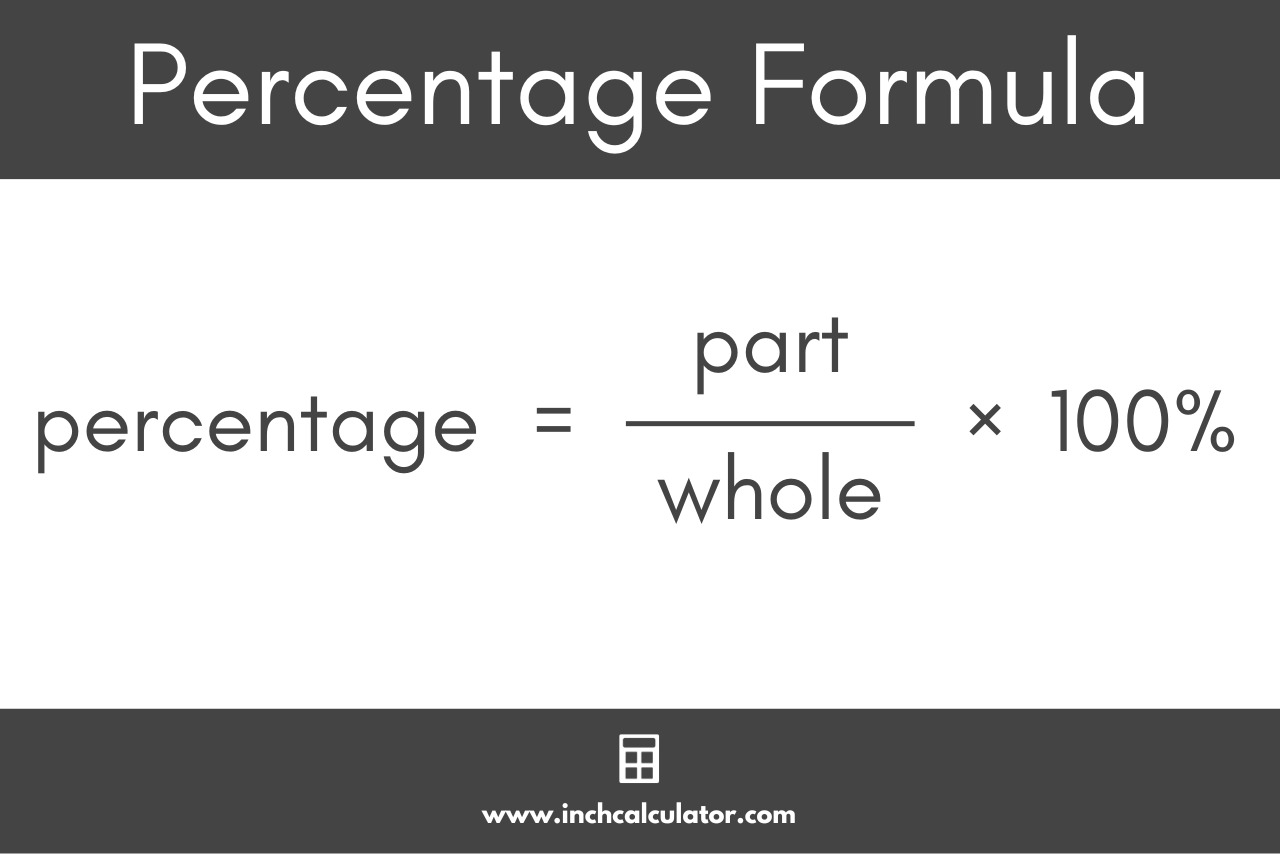
- “What is X% of Y?”: This fundamental function calculates a specific portion of a given whole. For example, finding 15% of $200. The underlying formula is (X/100) * Y. The calculator takes X and Y as inputs and immediately provides the result.
- “X is what percentage of Y?”: This function determines the proportion that one number represents of another, expressed as a percentage. For instance, if you scored 85 out of 100 on a test, what percentage is that? The formula is (X / Y) * 100.
- “What is the percentage increase/decrease from X to Y?”: This is crucial for analyzing growth or decline. For example, if a stock price went from $50 to $60, what’s the percentage increase? The formula for change is ((Y – X) / X) * 100. This mode is particularly useful for tracking trends and evaluating performance.
- “Calculate Y after adding/subtracting X%”: This function helps determine a final value after a percentage increment or decrement. For example, if an item costs $100 and there’s a 20% discount, what’s the final price?
Each of these functions is encapsulated within a user-friendly interface, where the user merely plugs in the known values, and the calculator instantly outputs the desired percentage or numerical result.
User Interface and Experience Design
The effectiveness of a percentage calculator heavily relies on its user interface (UI) and overall user experience (UX). A well-designed calculator is intuitive, clean, and requires minimal cognitive load. Key design elements include:
- Clear Input Fields: Distinct fields for each variable (e.g., “Percentage,” “Number,” “Result”).
- Mode Selection: Easy toggles or tabs to switch between different calculation types.
- Instantaneous Results: Calculations often happen in real-time as numbers are typed, or with a single click of a “Calculate” button.
- Error Handling: Mechanisms to prevent invalid inputs (e.g., non-numeric characters) and provide helpful feedback.
- Accessibility: Consideration for users with different needs, including clear fonts, sufficient contrast, and potentially keyboard navigation support.
The goal of UI/UX design in this context is to make the complex simple, allowing users to focus on the numbers themselves rather than the mechanics of the calculation.
Underlying Algorithms and Logic
Beneath the surface of a simple interface lies precise algorithmic logic. Modern percentage calculators are typically built using standard programming languages (like JavaScript for web-based tools, Swift/Kotlin for mobile apps, or Python for desktop applications) that implement the mathematical formulas described earlier. The logic accounts for:
- Input Validation: Ensuring that user inputs are valid numbers and handling edge cases like division by zero.
- Precision Management: Determining the number of decimal places for accurate results, especially crucial in financial calculations.
- Conditional Logic: Switching between different formulaic approaches based on the user’s selected calculation type.
- Performance Optimization: Ensuring that calculations are executed instantly, even with complex numbers.
While the end-user sees a straightforward tool, the development behind it involves meticulous attention to mathematical accuracy and robust software engineering practices, making it a true testament to the power of targeted software development.
Versatile Applications Across Industries and Daily Life
The true power of the percentage calculator lies in its ubiquity. It’s not confined to a single domain but permeates various aspects of professional life and personal management, making it an indispensable digital companion.
Business and Retail: Discounts, Markups, and Profit Margins
In the business world, percentages are the language of profitability and pricing.
- Discounts and Sales: Retailers constantly use percentage calculators to determine sale prices, apply promotional discounts, and calculate customer savings.
- Markups and Margins: Businesses use them to set product prices by applying a desired markup percentage to their cost, or to calculate profit margins to assess the health of their operations.
- Sales Tax: Calculating sales tax on purchases is another common application, ensuring correct pricing and compliance.
- Commissions: Sales professionals frequently use these tools to determine their earnings based on a percentage of sales.
These applications directly impact revenue, pricing strategies, and customer satisfaction, making the percentage calculator a fundamental business intelligence tool.
Finance and Investing: Interest Rates, Returns, and Financial Ratios
For financial professionals and individual investors, the percentage calculator is a cornerstone tool for understanding and managing money.
- Interest Rates: Whether calculating simple or compound interest on loans, savings accounts, or credit cards, percentages are paramount.
- Investment Returns: Investors use it to determine the percentage gain or loss on investments, calculate dividend yields, or analyze portfolio performance over time.
- Financial Ratios: Calculating key financial ratios (e.g., debt-to-equity ratio, profit margin ratio) for business analysis often involves percentage calculations to benchmark performance.
- Budgeting: Individuals use it to allocate percentages of their income to different spending categories, aiding in personal financial planning.
In finance, precision is paramount, and the instant accuracy offered by a digital percentage calculator is invaluable.
Education and Academia: Grading and Statistical Analysis
From classrooms to research labs, percentages play a critical role in evaluating performance and interpreting data.
- Grading: Teachers use percentage calculators to determine student grades on assignments, quizzes, and exams, converting raw scores into a standardized percentage.
- Statistical Analysis: In scientific research and academic studies, percentages are used to express frequencies, proportions, and changes in data sets, making complex statistics more digestible.
- Data Interpretation: Students and researchers use them to understand trends, compare different data sets, and present findings in a clear, quantitative manner.
The calculator aids in fostering quantitative literacy and analytical skills, which are essential across all levels of education.
Everyday Scenarios: Tips, Taxes, and Health Metrics
Beyond professional domains, the percentage calculator is a practical tool for navigating everyday life.
- Tipping: Calculating tips at restaurants or for service providers is a common daily use.
- Personal Budgeting: As mentioned, it helps in allocating portions of income for savings, expenses, and discretionary spending.
- Health and Fitness: Calculating body fat percentage, target heart rate zones, or nutrient intake percentages (e.g., daily value of nutrients) are common applications in health management.
- Recipe Adjustments: Scaling recipes up or down often involves calculating new ingredient amounts based on a percentage change.
These routine applications underscore how a simple digital tool can significantly simplify decision-making and improve efficiency in personal tasks.
Advantages and Benefits of Using a Percentage Calculator
The shift from manual to digital percentage calculation offers a multitude of advantages that transcend mere convenience, impacting accuracy, efficiency, and comprehension.
Enhancing Accuracy and Reducing Errors
The most significant benefit of a digital percentage calculator is its unparalleled accuracy. Human computation, especially under pressure or with complex numbers, is susceptible to errors. A calculator, once programmed correctly, performs computations flawlessly every single time. This reduction in error rate is crucial in contexts where precision is paramount, such as financial transactions, scientific research, or critical business decisions. It eliminates the tedious need for double-checking calculations, instilling confidence in the results.
Boosting Efficiency and Saving Time
Time is a valuable commodity, and digital tools are designed to save it. A percentage calculator provides instantaneous results, transforming what could be a multi-step manual process into a few quick inputs. This efficiency gain is particularly beneficial for individuals or professionals who perform numerous percentage calculations daily, freeing up time for more strategic tasks. For example, a retail manager can quickly reprice an entire inventory for a sale, or a financial analyst can rapidly assess multiple investment scenarios.
Empowering Financial Literacy and Data Interpretation
By simplifying the mechanics of calculation, a percentage calculator allows users to focus on the meaning of the numbers rather than the process of getting them. This facilitates better financial literacy, as individuals can easily understand the impact of interest rates, discounts, or investment returns. Similarly, in data analysis, it helps users interpret proportions and trends more effectively, fostering a deeper understanding of the underlying data and enabling more insightful decision-making. It acts as an educational tool, making complex proportional reasoning accessible.
Accessibility and Convenience in a Digital World
The pervasive nature of digital devices – smartphones, tablets, laptops – means a percentage calculator is virtually always within reach. Whether it’s a dedicated app, a feature within a spreadsheet, or a web-based utility, convenience is a major draw. This accessibility ensures that critical calculations can be performed on the go, in meetings, or during personal planning, without needing specialized equipment or mathematical expertise. This omnipresence underscores its integration into the fabric of modern digital life.
Choosing the Right Percentage Calculator and Future Trends
Given the abundance of available tools, selecting the right percentage calculator can make a difference in user experience and functionality. Moreover, like all tech tools, its future is intertwined with broader technological advancements.
Standalone Apps vs. Integrated Tools vs. Web-Based Utilities
Users have several options when choosing a percentage calculator:
- Standalone Apps: Dedicated mobile applications (iOS, Android) or desktop software offer focused functionality, often with offline capabilities and specialized features.
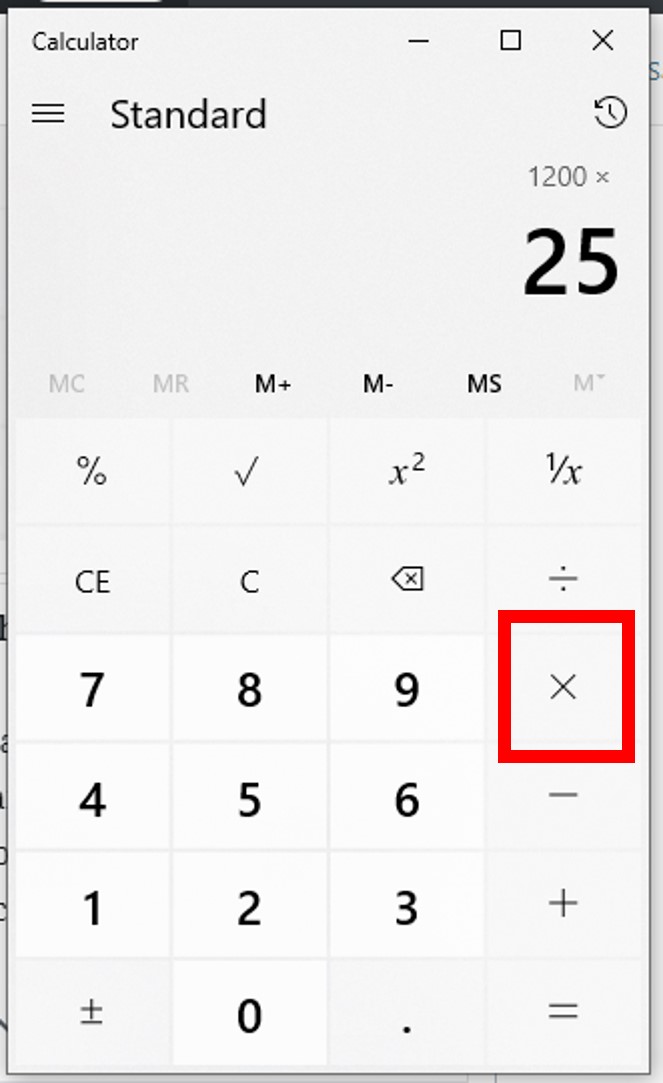
- Integrated Tools: Many general-purpose calculators (like those built into operating systems or physical scientific calculators) include percentage functions. Spreadsheet software (Excel, Google Sheets) also offers robust percentage calculation capabilities as part of their broader analytical toolkit.
- Web-Based Utilities: Numerous websites provide free, online percentage calculators, accessible from any device with an internet connection, often preferred for quick, ad-hoc calculations without needing to install anything.
The best choice depends on specific needs, frequency of use, and device preference. For critical, complex tasks, integrated tools like spreadsheets might be preferred for their ability to handle large datasets, while standalone apps offer convenience for daily use.
Key Features to Look For: Simplicity, Versatility, and Reliability
When evaluating a percentage calculator, consider these features:
- Simplicity and Intuitive Design: A clean, easy-to-use interface is paramount.
- Versatility: Does it offer all common calculation types (part of whole, percentage change, reverse calculations)?
- Accuracy and Precision Settings: Can it handle decimals accurately, and does it allow for adjusting precision?
- Speed: Does it provide instant results?
- Reliability: Is it stable and free from bugs?
- Additional Features: Some calculators may offer history logs, unit conversions, or integration with other tools.
A tool that balances simplicity with comprehensive functionality will serve users best.
The Future: AI Integration and Predictive Analysis
The percentage calculator, while effective in its current form, is not immune to technological evolution. Future iterations may see:
- AI Integration: Artificial intelligence could enhance calculators by interpreting natural language inputs (e.g., “What’s 15% off $200?”), providing contextual suggestions, or even identifying common percentage errors based on user patterns.
- Predictive Analysis: Advanced versions could integrate with financial data feeds or business metrics to not just calculate current percentages but also project future percentages based on trends and statistical models, moving from descriptive to predictive analytics.
- Enhanced Visualization: Representing percentage changes or distributions through interactive charts and graphs could make data interpretation even more intuitive.
- Voice Control and Smart Assistants: Integration with voice assistants could allow for hands-free percentage calculations, further boosting accessibility and convenience.
These advancements would elevate the percentage calculator from a mere utility to an intelligent analytical assistant, further cementing its role in our digital lives.
The percentage calculator, in its various digital forms, is a testament to the power of focused technological solutions. It transforms a potentially daunting mathematical concept into an accessible and instantaneous operation, serving as a critical enabler across diverse professional and personal landscapes. As technology continues to evolve, so too will this unassuming yet indispensable tool, promising even greater accuracy, efficiency, and insightful capabilities for future generations.
aViewFromTheCave is a participant in the Amazon Services LLC Associates Program, an affiliate advertising program designed to provide a means for sites to earn advertising fees by advertising and linking to Amazon.com. Amazon, the Amazon logo, AmazonSupply, and the AmazonSupply logo are trademarks of Amazon.com, Inc. or its affiliates. As an Amazon Associate we earn affiliate commissions from qualifying purchases.