
Navigating the landscape of tax obligations can often feel like traversing a complex maze. Whether you’re an individual taxpayer, a small business owner, or managing complex corporate finances, understanding how to pay owed taxes correctly and on time is not just a legal requirement but a cornerstone of sound financial health. The process involves more than simply writing a check; it encompasses a variety of methods, each with its own advantages and considerations, designed to accommodate diverse financial situations. Failing to meet these obligations can result in a cascade of penalties, interest, and legal complications. This guide aims to demystify the process, providing a professional, insightful, and engaging roadmap to effectively pay your federal, state, and even local taxes, ensuring compliance and peace of mind.
Understanding Your Tax Liability and Payment Deadlines
Before you can pay your taxes, you must first understand what you owe and when it’s due. This foundational knowledge is critical to avoiding missteps and ensuring a smooth tax payment experience.
Identifying What You Owe
Your tax liability is determined by your income, deductions, credits, and filing status. For most individuals, this involves federal income tax, potentially state income tax, and sometimes local income tax. Self-employed individuals also face self-employment tax, which covers Social Security and Medicare contributions. Businesses, depending on their structure, will owe corporate income tax, payroll taxes, and potentially various excise taxes.
Calculating what you owe typically begins with your annual tax return (e.g., Form 1040 for individuals, Form 1120 for corporations). Software and professional tax preparers can help accurately determine this amount, taking into account all relevant financial activities from the tax year. It’s crucial to distinguish between the tax you estimate you owe throughout the year and the actual amount due after filing your return.
Key Payment Deadlines
Tax deadlines are rigid and non-negotiable. The most widely known deadline is April 15th (or the next business day if April 15th falls on a weekend or holiday) for filing federal income tax returns and paying any remaining balance due for the previous year. However, this is just one piece of the puzzle.
- Quarterly Estimated Taxes: If you’re self-employed, have significant income from investments, or don’t have enough tax withheld from your salary, you may be required to pay estimated taxes quarterly. These payments are typically due on April 15th, June 15th, September 15th, and January 15th of the following year. Missing these can result in underpayment penalties.
- Extensions to File vs. Extensions to Pay: You can request an extension to file your tax return (typically until October 15th), but this is not an extension to pay. If you estimate you owe taxes, you must pay that estimated amount by the original deadline (April 15th) to avoid penalties and interest, even if you’re filing an extension.
- State and Local Deadlines: Each state and many local jurisdictions have their own distinct tax payment deadlines, which may or may not align with federal dates. It is imperative to check the specific tax authority websites for these dates.
Penalties and Interest for Non-Compliance
The Internal Revenue Service (IRS) and state tax authorities impose penalties and interest for various forms of non-compliance:
- Failure-to-Pay Penalty: Applied when you don’t pay the taxes you owe by the due date.
- Failure-to-File Penalty: Applied when you don’t file your tax return by the due date (including extensions). This penalty is generally much higher than the failure-to-pay penalty.
- Underpayment Penalty: Applies if you don’t pay enough tax through withholding or estimated tax payments throughout the year.
- Interest: Charges on underpayments and unpaid tax liabilities, which can accrue from the due date until the payment is made in full.
Understanding these penalties underscores the importance of timely and accurate tax payments.
Traditional and Modern Methods for Paying Federal Taxes
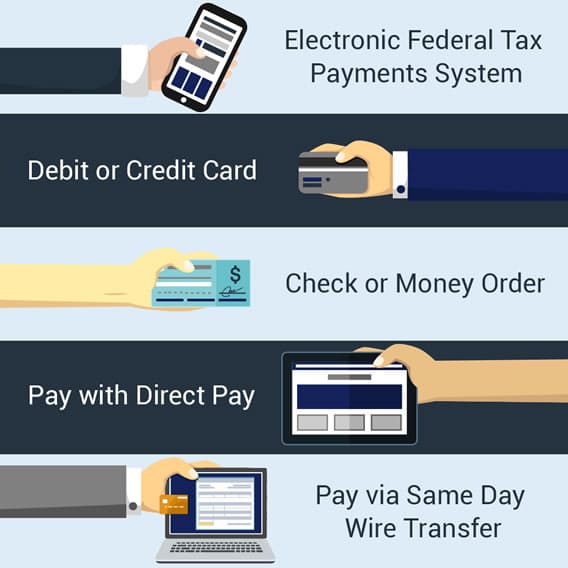
The IRS offers a variety of payment options designed for convenience and security. Choosing the right method depends on your preference for electronic vs. paper transactions, whether you need proof of payment, and any associated costs.
Direct Pay (IRS.gov)
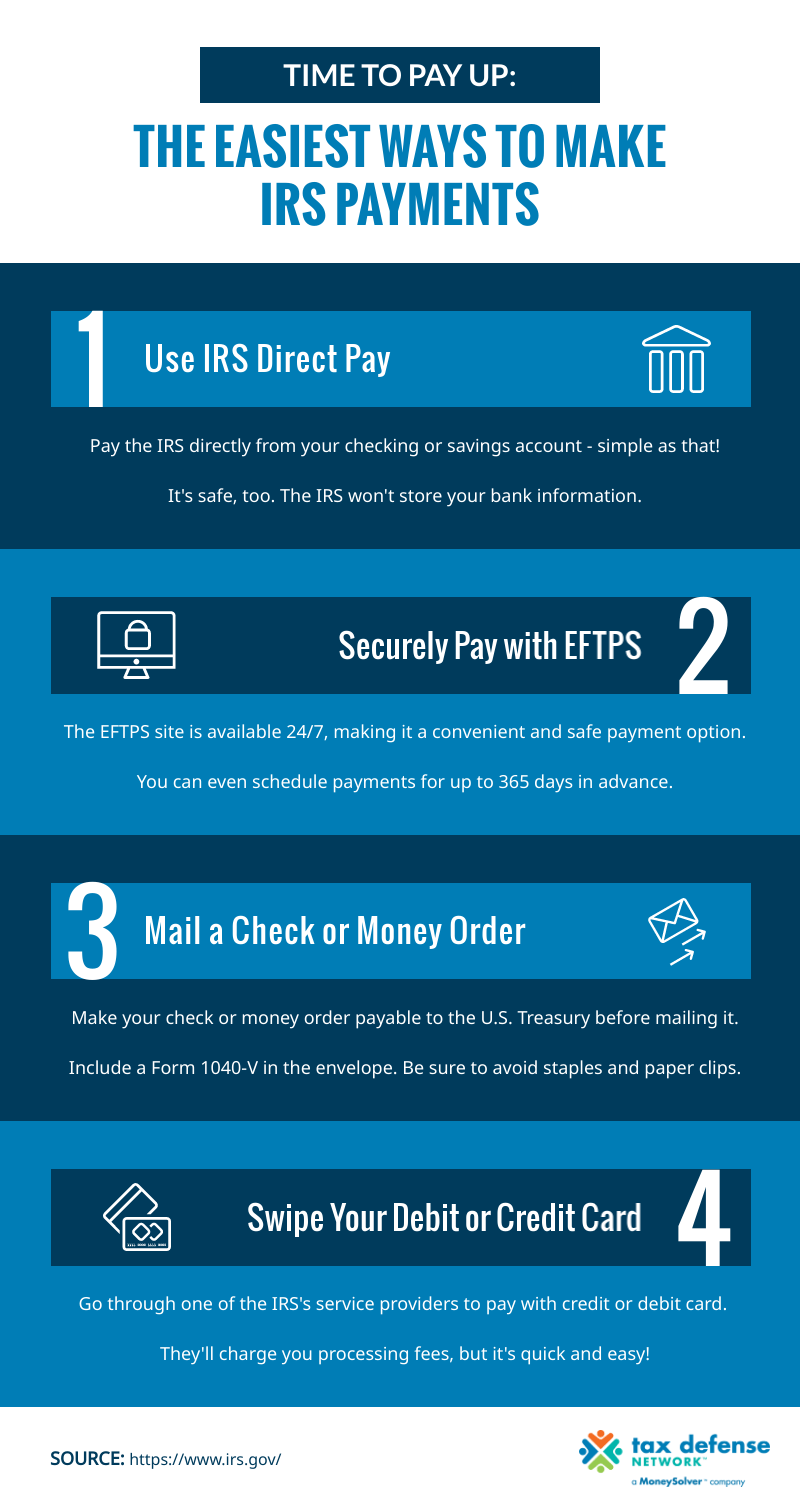
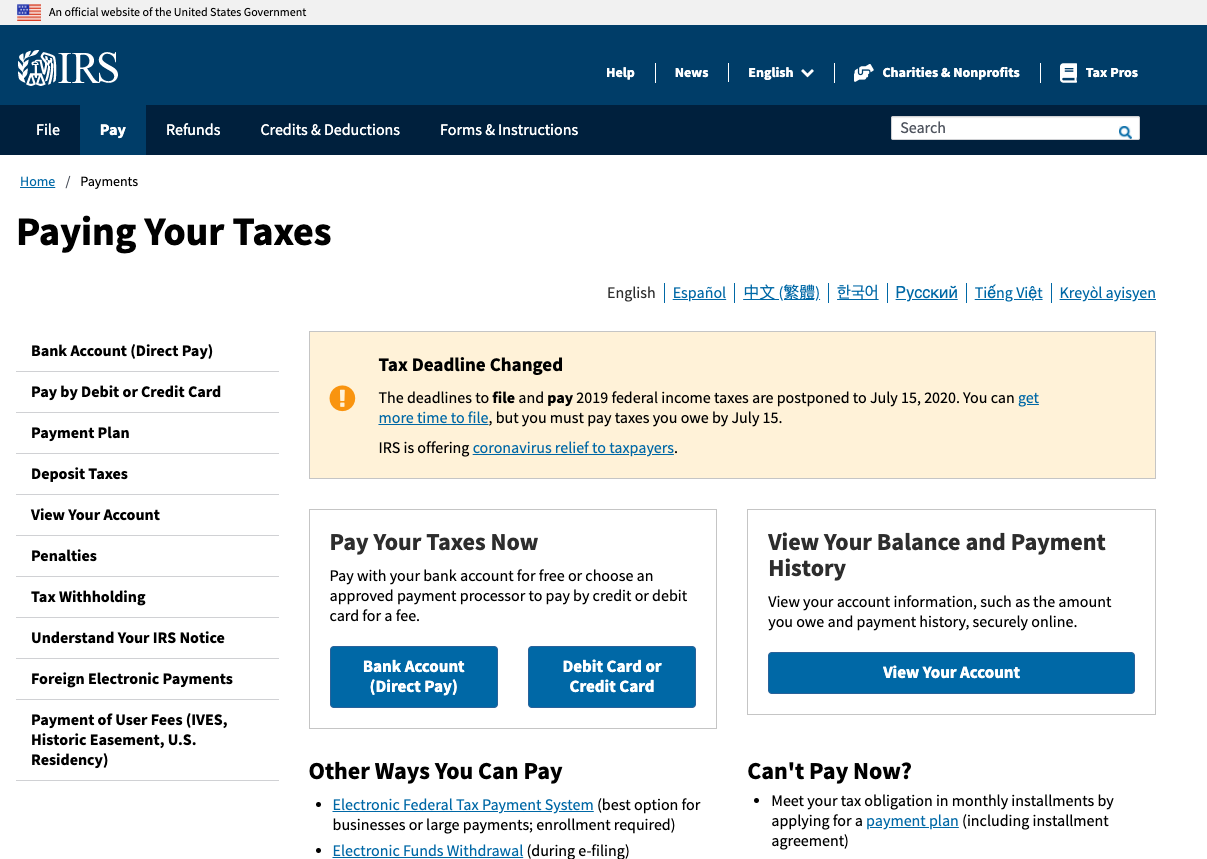
IRS Direct Pay is one of the easiest and most secure ways to pay your federal taxes directly from your checking or savings account. This free service allows you to make payments for Form 1040 series, estimated taxes, or other types of payments without prior registration. You can schedule payments up to 365 days in advance, view your payment history, and receive email confirmations. It’s an excellent option for one-time or occasional payments.
Electronic Federal Tax Payment System (EFTPS)
EFTPS is a free service provided by the U.S. Department of the Treasury, primarily used by businesses and individuals making estimated tax payments, but also available for all federal tax payments. Unlike Direct Pay, EFTPS requires enrollment and offers more robust features, such as the ability to schedule payments up to 365 days in advance, track payment history for up to 15 months, and manage multiple tax types. It’s ideal for those who make regular, recurring tax payments.
Paying by Debit Card, Credit Card, or Digital Wallet
For those who value convenience or wish to earn reward points, the IRS allows payments via debit card, credit card, or digital wallet (e.g., PayPal). These payments are processed through third-party payment processors, which charge a fee based on the transaction amount. While convenient, the fees can add up, and if paying by credit card, interest charges can quickly outweigh any rewards if the balance isn’t paid off promptly. This method is best suited for individuals who can pay their credit card bill immediately or whose rewards substantially exceed the processing fee.
Payment by Check, Money Order, or Cashier’s Check
The traditional method of mailing a check or money order is still available. You should make your check payable to the “U.S. Treasury” and include your name, address, daytime phone number, Social Security number or EIN, the tax year, and the related tax form or notice number. It’s crucial to mail your payment well in advance of the deadline, as the postmark date determines timeliness. Always send payments to the correct IRS address, which varies based on your location and the form you are filing. This method offers a paper trail but is slower and carries a slight risk of mail loss.
Cash Payments (Through Retail Partners)
For taxpayers who prefer or require making cash payments, the IRS has partnered with retail stores like 7-Eleven, Family Dollar, and Casey’s General Stores. You must first register online with one of the IRS’s official payment processors (e.g., PayNearMe, VanillaDirect) to receive a payment code or barcode. You then take this code to a participating retail location to make your cash payment. This option provides a secure way to pay with cash, offering a receipt for proof of payment, though a fee may apply.
State and Local Tax Payment Options
While federal taxes often get the most attention, state and local taxes are equally important and have their own distinct payment systems.
Navigating State Tax Websites
Every state with an income tax operates its own tax collection agency and portal. Most state tax agencies offer electronic payment options similar to the IRS, including direct debit from a bank account, credit/debit card payments (often with associated fees), and dedicated online portals for businesses (akin to EFTPS). For example, many states have their own online systems for individual income tax, estimated tax, sales tax, and payroll tax payments. It is critical to visit your specific state’s department of revenue or treasury website for accurate information and payment links.
Local Property and Income Taxes
Local taxes, such as property taxes or municipal income taxes, are managed at the county or city level. Property taxes are typically paid directly to the county tax assessor or treasurer’s office. Payment methods often include online portals for electronic funds transfer (EFT) or credit card payments, mail-in checks, and in-person payments. Some local governments also offer direct debit programs, allowing property tax payments to be automatically deducted from your bank account on a schedule. Local income taxes, where applicable, may be handled through a local tax bureau or collected by the state on behalf of the municipality.
Understanding Differences and Nuances
The key takeaway for state and local taxes is that there’s no single, universal system. Each jurisdiction has its own rules, forms, payment methods, and deadlines. It is vital to consult the official websites of your specific state’s department of revenue and your local county/city tax authority. Failure to do so can lead to missed deadlines, incorrect payments, and subsequent penalties.
What If You Can’t Afford to Pay Your Taxes?
Discovering you owe taxes you can’t immediately pay can be stressful, but the IRS and state tax agencies offer solutions to help taxpayers facing financial hardship. Ignoring the problem is the worst course of action.
Short-Term Payment Plans (Payment Agreements)
If you can pay off your tax liability within a short period (typically up to 180 days), the IRS may grant a short-term payment plan. While this option helps avoid immediate collection actions, interest and penalties continue to accrue until the full amount is paid. You can usually request this agreement when filing your return or by contacting the IRS directly.
Installment Agreements
For taxpayers who need more time, an installment agreement allows you to make monthly payments for up to 72 months (6 years). You can set up an installment agreement online through the IRS’s Online Payment Agreement tool if you owe a combined total of under $50,000 in tax, penalties, and interest. While interest and penalties still apply, entering an installment agreement can significantly reduce or prevent additional failure-to-pay penalties. This plan provides a structured way to resolve your tax debt without facing more aggressive collection efforts.
Offer in Compromise (OIC)
An Offer in Compromise (OIC) is an agreement between a taxpayer and the IRS that settles a tax liability for a lower amount than what is owed. An OIC is typically considered when a taxpayer faces significant financial hardship and cannot pay their full tax liability. The IRS will assess your ability to pay, income, expenses, and asset equity to determine if an OIC is appropriate. The process is rigorous and requires a detailed financial disclosure, and acceptance is not guaranteed. It’s often viewed as a last resort.
“Currently Not Collectible” Status
In cases of extreme financial hardship, where paying taxes would leave you unable to meet basic living expenses, the IRS may place your account in “Currently Not Collectible” (CNC) status. While in CNC status, the IRS temporarily suspends collection efforts. However, interest and penalties continue to accrue, and the IRS may periodically review your financial situation to see if your ability to pay has improved. This is a temporary reprieve, not a permanent solution, and does not erase the debt.
Seeking Professional Assistance
Navigating these relief options can be complex. If you find yourself unable to pay your taxes, it’s highly advisable to seek assistance from a qualified tax professional, such as a Certified Public Accountant (CPA) or an Enrolled Agent (EA). They can help you understand your options, prepare the necessary paperwork, and negotiate with tax authorities on your behalf, maximizing your chances of a favorable outcome.
Best Practices for Tax Payment and Financial Health
Beyond simply knowing how to pay, adopting proactive strategies can simplify your tax obligations and contribute to overall financial well-being.
Proactive Planning and Budgeting
The best way to avoid a stressful tax bill at year-end is to plan throughout the year. For employees, regularly review your W-4 form to ensure appropriate withholding. For the self-employed or those with significant outside income, consistently setting aside funds and making estimated tax payments is crucial. Incorporate tax savings into your annual budget to avoid last-minute surprises.
Maintaining Accurate Records
Thorough record-keeping is paramount. Keep all income statements (W-2s, 1099s), receipts for deductible expenses, bank statements, and investment records organized. This makes tax preparation easier, ensures accuracy, and provides documentation in case of an audit. Digital record-keeping solutions can streamline this process significantly.
Reviewing Your Tax Situation Annually
Life changes—marriage, divorce, new children, buying a home, starting a business, or changes in income—all have tax implications. Reviewing your tax situation annually, preferably before the year ends, allows you to adjust your financial strategies, make necessary payments, or take advantage of new tax laws or credits.
Automating Payments
Leverage technology to automate your tax payments whenever possible. Using EFTPS for estimated taxes, scheduling Direct Pay installments, or setting up direct debits for state and local taxes can help ensure timely payments, reduce the risk of missed deadlines, and free up mental bandwidth. Automation is a powerful tool for consistent financial compliance.
By understanding the various payment methods, adhering to deadlines, and preparing proactively, you can navigate your tax obligations with confidence and contribute positively to your financial stability. The world of taxes doesn’t have to be daunting; with the right approach, it becomes a manageable aspect of responsible financial management.
aViewFromTheCave is a participant in the Amazon Services LLC Associates Program, an affiliate advertising program designed to provide a means for sites to earn advertising fees by advertising and linking to Amazon.com. Amazon, the Amazon logo, AmazonSupply, and the AmazonSupply logo are trademarks of Amazon.com, Inc. or its affiliates. As an Amazon Associate we earn affiliate commissions from qualifying purchases.