
In the intricate world of finance, from personal budgeting to multinational investment strategies, understanding the fundamental building blocks of numerical relationships is paramount. While often relegated to elementary school mathematics, the concepts of the numerator and denominator form the bedrock upon which countless financial calculations, analyses, and decisions are made. Grasping these simple definitions unlocks a deeper comprehension of everything from expense ratios and profit margins to investment diversification and market share. At its core, finance is about managing resources, assessing value, and predicting outcomes – all activities that require a precise understanding of parts in relation to a whole.
The Foundational Language of Financial Proportions
Every time you hear about a percentage, a ratio, or a proportion in a financial context, you are implicitly dealing with a numerator and a denominator. These seemingly basic terms are the essential components of a fraction, representing how a part relates to its total or another part. Without a clear distinction between these two, financial data becomes a mere collection of numbers, devoid of the comparative insight needed for informed action.
Defining the Basics: Parts and Wholes
To truly leverage the power of fractional thinking in finance, we must first solidify our understanding of these core terms.
Numerator: The “Part” in Focus
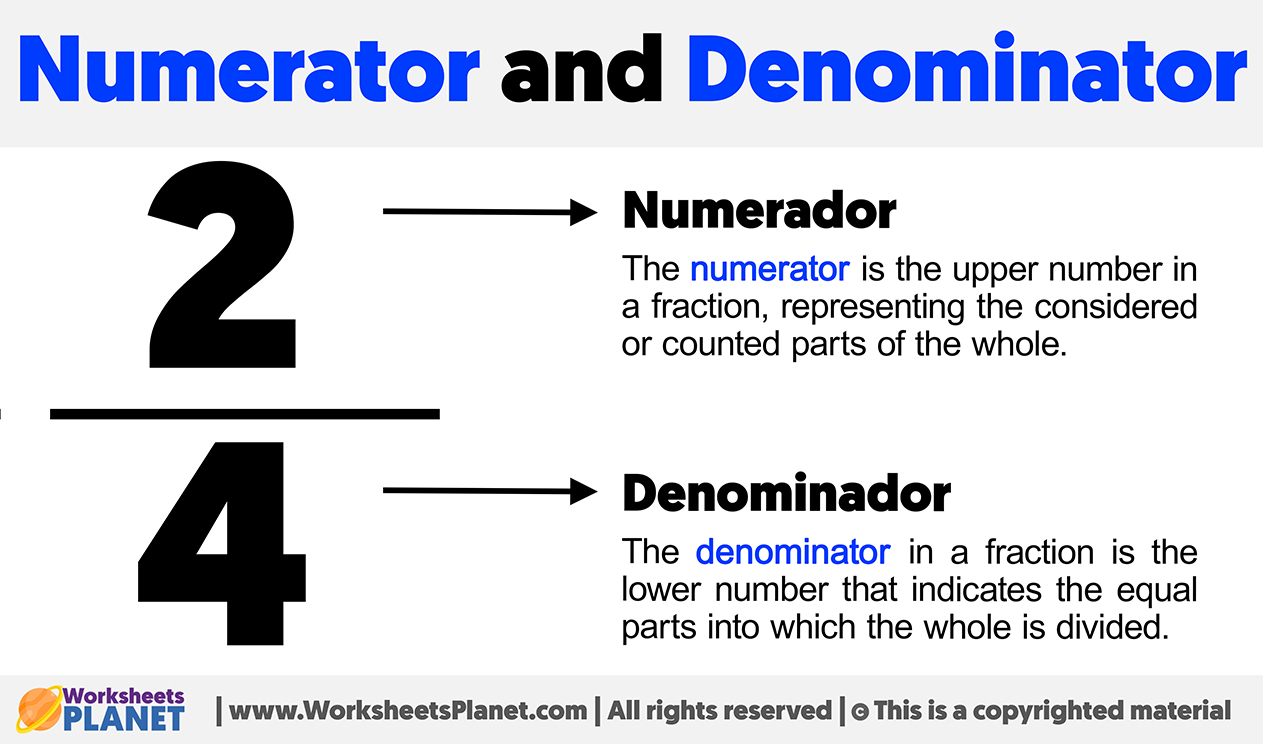
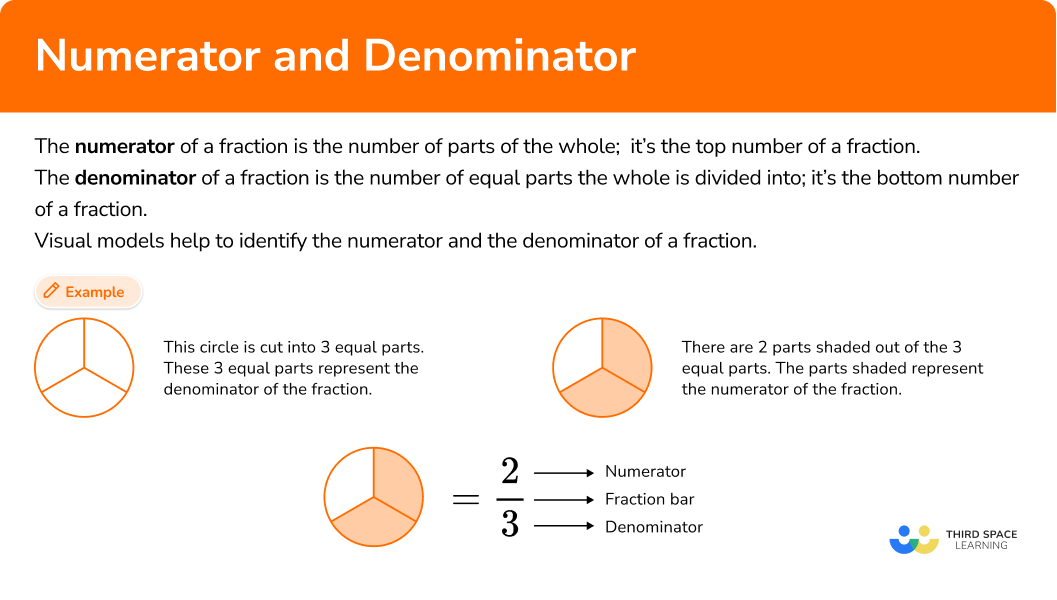
The numerator is the top number in a fraction. It represents the part of a whole that we are specifically interested in or referring to. In financial terms, the numerator often quantifies a specific subset, a particular expense, a certain type of income, or a portion of an asset. For instance, if you’re looking at what percentage of your income goes to housing, your monthly housing payment would be the numerator. It’s the “what we’re measuring” component. It isolates the specific element whose size or value you want to understand relative to a larger context.
Denominator: The “Whole” or Reference
The denominator is the bottom number in a fraction. It signifies the total or the whole against which the numerator is being compared. In finance, the denominator typically represents the entire sum, the total income, the complete portfolio value, or the entire market. Using the housing example, your total monthly income would be the denominator. It provides the crucial context, the baseline against which the numerator’s significance is evaluated. A large numerator with a small denominator tells a very different story than the same large numerator with an even larger denominator.
Why Fractions Matter Beyond the Classroom
The ability to conceptualize data as parts of a whole is not just an academic exercise; it’s a critical skill for financial literacy. Whether you’re a novice investor, a seasoned business owner, or simply managing your household budget, understanding how individual figures contribute to a larger sum is key. It allows for:
-
Comparative Analysis: Quickly assess the relative size or importance of different components.
-
Trend Identification: See how proportions change over time, signaling shifts in financial health or market dynamics.
-
Goal Setting: Define achievable targets based on realistic allocations of resources.
-
Risk Assessment: Understand how certain parts of a portfolio or business contribute to overall exposure.
Applying Fractions in Personal Finance Management
For individuals, the principles of numerator and denominator are implicitly used in almost every aspect of personal finance. They provide the framework for understanding where money comes from, where it goes, and how to optimize its flow.
Budgeting: Allocating Your Income
Budgeting is, at its heart, an exercise in fractional allocation. You are dividing your total income (the denominator) into various spending categories (numerators).
The 50/30/20 Rule and Fractional Thinking
A popular budgeting guideline, the 50/30/20 rule, is a direct application of fractional thinking. It suggests allocating 50% of your after-tax income to needs, 30% to wants, and 20% to savings and debt repayment. Here, your total after-tax income is the denominator, and the amounts allocated to needs, wants, and savings are the respective numerators. By setting these proportions, individuals gain a clear picture of their financial priorities and ensure their spending aligns with their long-term goals. Understanding these fractions allows you to quickly assess if you’re overspending in one area or undersaving in another.
Understanding Expense Ratios
Beyond broad categories, individual expenses can also be viewed fractionally. For instance, determining what fraction of your total “needs” budget goes to groceries versus utilities can help identify areas for potential savings. If your grocery bill (numerator) is a disproportionately large fraction of your total needs (denominator), it signals an area to investigate.
Debt Management: Quantifying Your Obligations
Debt can be a significant drag on financial health, and fractions provide the tools to measure and manage it effectively.
Debt-to-Income Ratios
Lenders frequently use the debt-to-income (DTI) ratio to assess your ability to manage monthly payments and repay new debt. This ratio is calculated by dividing your total monthly debt payments (the numerator) by your gross monthly income (the denominator). A high DTI suggests a larger fraction of your income is already committed to debt, potentially making you a higher risk for new loans. Understanding this ratio helps individuals gauge their financial capacity and work towards a healthier debt load.
Interest Rates as Fractional Costs

Interest rates are essentially fractions expressed as percentages. An annual interest rate of 5% means that for every dollar borrowed (the denominator), 5 cents (the numerator) is owed in interest over a year. Deconstructing interest rates into their fractional components reveals the true cost of borrowing and the power of compounding over time. This understanding is vital for evaluating loans, credit card offers, and mortgages.
Fractions in the World of Investing and Business
Moving beyond personal finances, the concepts of numerator and denominator become even more critical in the complex arenas of investing and business finance. They are the analytical lenses through which performance is measured, risk is assessed, and strategic decisions are forged.
Investment Portfolios: Diversification as a Fractional Approach
A well-diversified investment portfolio is built on the principle of fractional allocation. Investors distribute their capital (the denominator) across various asset classes, industries, and geographies (numerators) to mitigate risk and optimize returns.
Asset Allocation: Dividing Your Wealth
Asset allocation strategies, such as dividing your investments into stocks, bonds, and real estate, are direct applications of fractional thinking. An investor might decide to allocate 60% of their portfolio to stocks, 30% to bonds, and 10% to real estate. Here, the total portfolio value is the denominator, and the value of each asset class represents its respective numerator. Regularly reviewing these proportions ensures the portfolio remains aligned with the investor’s risk tolerance and financial goals.
Understanding Stock Splits and Share Ownership
When a company announces a stock split, say 2-for-1, it means that for every one share you previously owned (denominator), you now own two (numerator), though the total value of your holdings initially remains the same. Understanding these fractional changes is key to tracking your equity stake and evaluating its relative impact on your overall portfolio. Similarly, your ownership percentage in a company (your shares as a numerator over total outstanding shares as a denominator) determines your voting power and share of future profits.
Business Finance: Measuring Performance and Value
For businesses, fractions are indispensable for analyzing operational efficiency, profitability, and market standing.
Profit Margins and Revenue Shares
Profit margins are classic examples of fractional analysis. Gross profit margin, for instance, is calculated by dividing gross profit (numerator) by total revenue (denominator). Net profit margin uses net profit as the numerator. These ratios tell a business what fraction of every dollar of sales translates into profit, indicating efficiency and financial health. Similarly, understanding revenue shares (e.g., what fraction of total revenue comes from a specific product line) guides strategic decisions on product development and marketing efforts.
Market Share and Competitive Analysis
A company’s market share is its sales (numerator) as a fraction of the total sales within its industry (denominator). This crucial metric indicates a company’s competitive position and growth potential. A rising market share suggests successful strategies and increased influence, while a declining one signals challenges. Businesses constantly monitor these fractions to benchmark against competitors and adapt their strategies accordingly.
Online Income and Side Hustles: Fractional Earnings and Commissions
The digital economy thrives on models that frequently rely on fractional distribution of income. From content creators to freelance service providers, understanding the numerator and denominator is key to calculating actual earnings and optimizing income streams.
Commission Structures: What Fraction Do You Keep?
Many online income models, particularly in sales, affiliate marketing, or agency work, operate on commission structures. You earn a specific percentage or fraction of a sale, service fee, or referral. If you earn a 15% commission on a product that sells for $100, then $15 (numerator) is your share out of the $100 total (denominator). Accurately calculating these fractions is essential for understanding your take-home pay and evaluating the profitability of different ventures.
Royalty Payments and Revenue Sharing Models
Artists, authors, and software developers often receive royalty payments, which are a fraction of the sales generated by their work. Similarly, many online platforms operate on revenue-sharing models, where creators receive a specific percentage of ad revenue or subscription fees generated by their content. Knowing the numerator (your share) and the denominator (total revenue generated) is critical for negotiating terms and projecting income.
Optimizing Time and Resources: A Fractional View of Productivity
Even in time management for side hustles, fractional thinking applies. If you have 20 hours a week for your side hustle (denominator), allocating 10 hours to client work (numerator) means half your time is directly billable. Understanding these fractions helps optimize your efforts, identifying which activities yield the highest proportional return for your time invested.
The Power of Fractional Understanding for Financial Empowerment
The seemingly simple concepts of the numerator and the denominator are, in fact, powerful tools for financial empowerment. They provide a universal language to dissect, analyze, and comprehend the complex financial landscape.
Moving beyond rote memorization, recognizing how these fundamental mathematical concepts underpin virtually every financial metric allows individuals and businesses alike to transition from merely observing numbers to truly understanding their implications. This depth of insight fosters proactive decision-making, enabling better budgeting, smarter investing, more efficient business operations, and ultimately, greater financial control and success. Embrace the power of the part and the whole, and watch your financial literacy flourish.
aViewFromTheCave is a participant in the Amazon Services LLC Associates Program, an affiliate advertising program designed to provide a means for sites to earn advertising fees by advertising and linking to Amazon.com. Amazon, the Amazon logo, AmazonSupply, and the AmazonSupply logo are trademarks of Amazon.com, Inc. or its affiliates. As an Amazon Associate we earn affiliate commissions from qualifying purchases.