
In the ecosystem of American higher education, the Advanced Placement (AP) program, administered by the College Board, is often marketed as a golden ticket. To students, it is a badge of academic rigor; to parents, it is a strategic financial instrument. The premise is simple: pay a relatively small fee now to earn college credit, thereby bypassing thousands of dollars in future tuition costs. However, this investment carries a significant risk profile. When we examine the question of “what is the lowest pass rate for AP exams,” we are not merely looking at academic statistics—we are looking at the ROI (Return on Investment) of a high-stakes financial gamble.
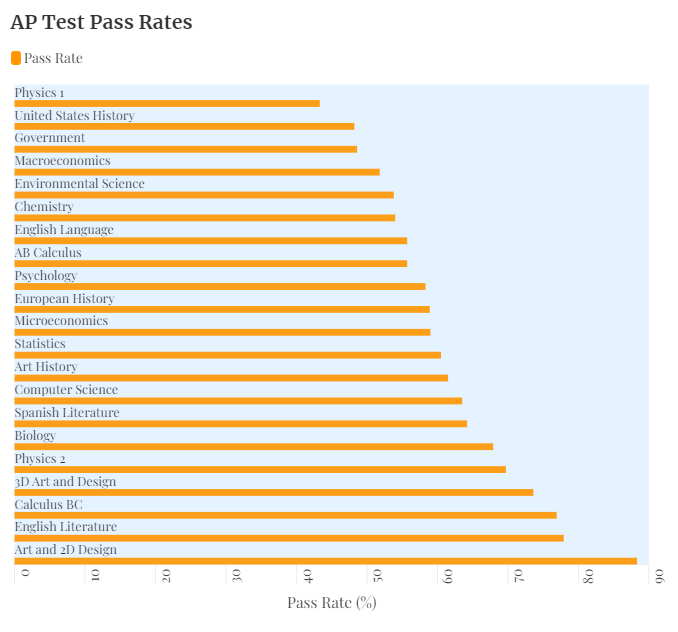
A “pass” in the AP world is generally considered a score of 3, 4, or 5. Anything below that—a 1 or a 2—usually results in zero college credit. For families operating on tight budgets, a failing score on an exam with a historically low pass rate represents a total loss of the exam fee, the cost of prep materials, and, most importantly, the potential tuition savings. To understand the financial landscape of AP testing, we must dive into the subjects where students struggle the most and analyze the economic implications of these academic hurdles.
The ROI of the 3: Understanding the Financial Mechanics of AP Exam Success
To view AP exams through a financial lens, one must first quantify the value of a passing score. The average cost of a single credit hour at a public four-year institution is approximately $390, while at private institutions, it can soar above $1,500. Given that most AP exams grant three to four credit hours, a single passing score can be valued anywhere from $1,170 to $6,000.
The Tuition-Saving Potential of Advanced Placement
When a student passes an AP exam, they are essentially purchasing college credit at a massive discount. As of 2024, the standard fee for an AP exam is $98. If that $98 investment yields a score of 3 or higher, and the student’s chosen university accepts that score for a 3-credit course, the student has realized a minimum 1,000% return on their investment. For students who take five or ten exams over their high school career, the cumulative savings can equal a full year of college tuition, potentially shaving $20,000 to $50,000 off the total cost of a degree. This “early graduation” model is a primary driver of the AP program’s popularity in middle- and upper-class financial planning.
Opportunity Cost: When a Failing Score Becomes a Lost Investment
The financial narrative shifts dramatically when we look at exams with low pass rates. If a student spends $98 on an exam and fails, that money is gone. But the “sunk cost” goes deeper. The student has also invested approximately 120 to 180 hours of classroom time and additional hours of study. In the world of personal finance, time is a commodity. If those hours were spent in a part-time job or a vocational program, they would have a tangible cash value. When a student chooses a difficult AP subject—like Physics 1 or English Literature—they are placing a high-risk bet with their time and capital. If the pass rate for that specific exam is under 50%, the statistical probability suggests a coin-flip chance that the investment will yield a zero percent return.
Identifying the Low-Yield Assets: Which AP Exams Have the Lowest Pass Rates?
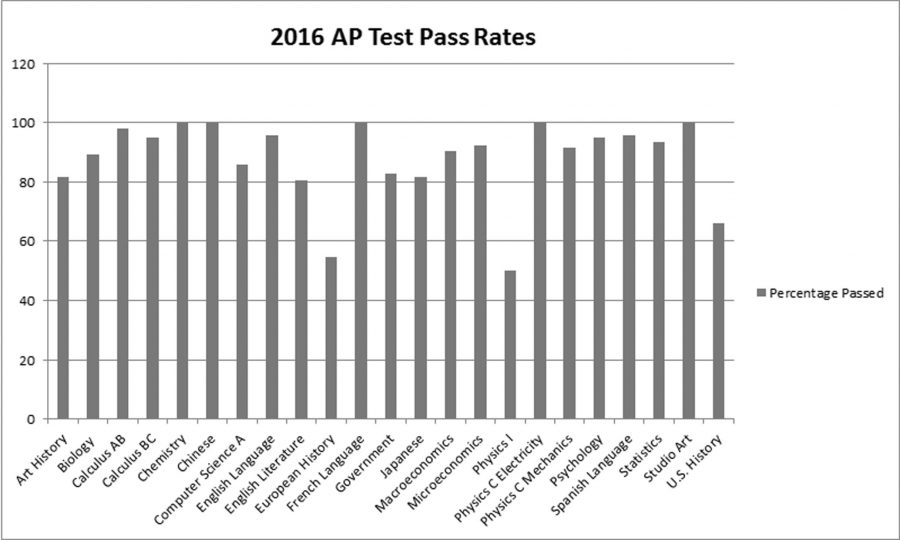
Not all AP exams are created equal. While subjects like AP Chinese Language and Culture often boast pass rates exceeding 85%, other subjects consistently see more than half of their test-takers fail. For a savvy financial planner or a student looking to maximize their “educational equity,” knowing which exams have the lowest pass rates is essential for risk assessment.
The Statistical Outliers: Physics 1 and English Literature
Historically, AP Physics 1 holds the title for one of the lowest pass rates in the entire AP catalog. In recent years, the pass rate has frequently hovered between 40% and 45%, with only about 7% to 8% of students achieving the coveted “5.” From a financial perspective, AP Physics 1 is a high-risk asset. The curriculum is notoriously conceptual and rigorous, making it one of the most difficult “buys” for college credit.
Similarly, AP English Literature and Composition often sees pass rates in the 45% to 50% range. Despite being one of the most widely taken exams, the subjective nature of the grading and the depth of analysis required mean that nearly one out of every two students loses their exam fee investment. For students aiming for a high ROI, these subjects require a much higher “capital injection” in the form of tutoring and study hours to ensure a payout.
Global Perspectives: Why History and Human Geography Often Miss the Mark
AP Human Geography and AP World History are often the first AP courses students take, usually in the 9th or 10th grade. This early entry contributes to lower pass rates—often around 52% to 55%. Because these students are “junior investors” in the academic market, they often lack the testing stamina and analytical maturity required to secure a 3 or higher. Financially, this is a risky strategy; schools encourage young students to take these exams to boost school rankings, but for the individual family, it often results in a $98 loss before the student has even reached their junior year.
The Business of Testing: How the College Board’s Revenue Model Intersects with Difficulty
To truly understand the money behind low pass rates, one must look at the provider: The College Board. While officially a non-profit organization, the College Board generates over $1 billion in annual revenue, a significant portion of which comes from AP exam fees.
Fee Structures and the Economics of Retaking Exams
Unlike the SAT, which students frequently retake to improve their scores, AP exams are only offered once a year. If a student fails, they cannot simply pay another $98 a month later to try again; they must wait an entire year, by which point they have usually moved on to other courses. This creates a “one-shot” investment window. However, the College Board has successfully expanded its “market share” by encouraging schools to adopt AP curricula even in districts where pass rates are historically low. From a business standpoint, the College Board earns its $98 regardless of whether the student gets a 1 or a 5. This creates a disconnect between the “seller’s” profit and the “buyer’s” outcome.
Market Saturation and the Expansion of AP Offerings
The financial growth of the AP program relies on volume. By introducing more “niche” exams and pushing for universal participation, the College Board increases its revenue. However, as more students—including those who may not be academically prepared for the rigor—enter the pool, the aggregate pass rates for difficult subjects like AP Chemistry or AP Calculus AB tend to remain low or even drop. For the consumer, this means the “market” is becoming more saturated with high-risk options. It requires a more discerning eye to determine which exams are legitimate financial shortcuts and which are merely revenue generators for the testing giant.
Mitigating Financial Risk: Strategies for Maximizing Pass Rates and Protecting Education Capital
Just as an investor wouldn’t put all their money into a volatile cryptocurrency without research, a student should not sign up for low-pass-rate AP exams without a mitigation strategy. Protecting your educational capital requires a proactive approach to ensure that the $98 fee results in thousands of dollars in saved tuition.
Investing in Preparation: The Cost of External Tutoring vs. Self-Study
To increase the odds of a payout, many families turn to the secondary market: test prep. The market for AP tutoring and prep books (like Princeton Review or Barron’s) is a multi-million dollar industry.
- Self-Study (Low Cost): A $25 prep book is a small additional investment. If it raises a score from a 2 to a 3, the ROI is exponential.
- Professional Tutoring (High Cost): Private tutors can charge $50 to $200 per hour. If a family spends $1,000 on tutoring to ensure a pass in AP Physics 1, their total investment is roughly $1,100. If the credit earned replaces a $4,000 college course, the net profit is still $2,900. However, if the student still fails, the total financial loss is now $1,100 instead of $98. Risk management is key.
Diversifying Your Academic Portfolio for Better Financial Outcomes
A sound financial strategy involves diversification. Instead of loading up exclusively on high-risk, low-pass-rate STEM exams, students should balance their “portfolio” with subjects that have higher statistical pass rates or those that align better with their strengths. For example, if a student is talented in languages, AP Spanish Language (pass rate ~80%) is a “blue-chip stock”—a safe bet for credit. By balancing one high-risk exam (like Physics) with two or three low-risk exams (like Psychology or Art History), a student can ensure that their total “investment portfolio” yields enough credits to justify the costs and the time spent.

Conclusion: The Bottom Line on Low Pass Rates
The question of “what is the lowest pass rate for AP exams” serves as a vital metric for any family navigating the rising costs of higher education. When we identify that subjects like AP Physics 1, AP English Literature, and AP Human Geography consistently produce more “failures” than “successes,” we are identifying financial pitfalls.
In the world of personal finance, information is power. Understanding that these exams represent a high-stakes investment helps students and parents move away from a “participation” mindset and toward a “results” mindset. To win the game of college finance, one must treat the AP program not just as a high school requirement, but as a strategic business decision. By carefully selecting exams, investing wisely in preparation, and understanding the business model of the College Board, families can protect their capital and ensure that their path to a degree is as cost-effective as possible. The goal is to move beyond being a mere statistic in a low pass rate and instead become a beneficiary of the massive ROI that a well-placed AP score can provide.
aViewFromTheCave is a participant in the Amazon Services LLC Associates Program, an affiliate advertising program designed to provide a means for sites to earn advertising fees by advertising and linking to Amazon.com. Amazon, the Amazon logo, AmazonSupply, and the AmazonSupply logo are trademarks of Amazon.com, Inc. or its affiliates. As an Amazon Associate we earn affiliate commissions from qualifying purchases.