
In the world of personal finance and wealth preservation, the term “500 grams” carries a weight far beyond its physical measurement. While the average person might associate half a kilogram with groceries or household items, to the sophisticated investor, 500 grams represents a critical threshold in precious metals—specifically gold and silver. This specific unit of measurement, roughly equivalent to 16.07 troy ounces, has emerged as a “Goldilocks” zone for those looking to bridge the gap between small-scale retail collecting and institutional-grade investing.
Understanding what 500 grams represents in a financial context requires a deep dive into market liquidity, manufacturing premiums, and the strategic allocation of physical assets within a diversified portfolio. As global markets face unprecedented volatility, the 500-gram bar has become a symbol of stability for high-net-worth individuals and retail investors alike.
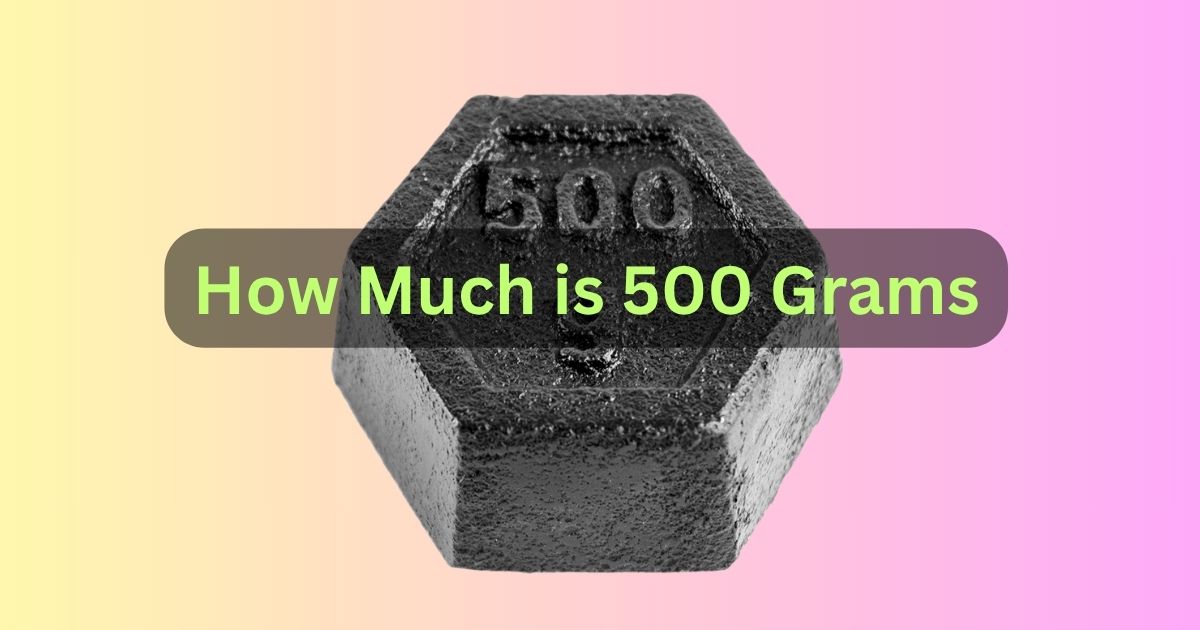
Understanding the 500-Gram Metric in the Precious Metals Market
To understand the financial significance of 500 grams, one must first understand the transition of the global bullion market toward metric standardization. While the United Kingdom and the United States have historically leaned on the troy ounce, the rest of the financial world—led by emerging markets in Asia and established refineries in Switzerland—increasingly favors the gram.
Why Grams Over Ounces?
The shift toward gram-denominated bars, such as the 500-gram unit, is a response to the globalization of finance. In major gold-trading hubs like Dubai, Shanghai, and Zurich, the metric system is the standard. For an investor, holding a 500-gram bar ensures easier valuation and resale across international borders. Unlike the 400-ounce “Good Delivery” bars held by central banks, which are inaccessible to most individuals, or the 1-ounce coins that carry high premiums, the 500-gram bar provides a clean, divisible, and universally recognized unit of value.
The “Goldilocks” Zone of Liquidity
In investment terms, liquidity refers to how quickly an asset can be converted into cash without a significant loss in value. The 500-gram bar sits in a unique position. It is large enough to offer significant cost savings on the “premium” (the price paid over the market spot price), yet it remains small enough to be sold to a local bullion dealer or a private buyer on short notice. If an investor holds a 1-kilogram bar, they may find it difficult to liquidate only a portion of their holding if they need a specific amount of cash. Conversely, holding 500 grams allows for a significant store of wealth that remains manageable in a single transaction.
The Financial Case for 500-Gram Gold and Silver Bars
When evaluating the “Money” aspect of 500 grams, we must look at the math behind the investment. Every time a refinery produces a gold or silver bar, there are fixed costs involved: assaying, minting, packaging, and shipping. These costs are passed on to the investor as a premium.
Hedging Against Inflation and Currency Volatility
The primary reason for holding 500 grams of precious metal is the preservation of purchasing power. Unlike fiat currency, which can be printed by central banks—thereby diluting its value—physical gold and silver have intrinsic value. In times of high inflation, the “real” value of 500 grams of gold tends to remain stable or increase, while the value of paper money in a savings account may effectively shrink. For an investor with a portfolio worth $500,000, moving a portion of that wealth into a 500-gram gold bar (currently valued at tens of thousands of dollars) acts as a form of financial insurance.
Cost-Efficiency: Lowering the Premium Over Spot
From a business finance perspective, 500 grams is a highly efficient unit. When you buy 500 individual 1-gram bars, you pay a massive premium because the refinery had to strike, certify, and package 500 different items. When you buy a single 500-gram cast bar, those operational costs are consolidated. This “bulk buy” logic allows the investor to acquire more actual metal for every dollar spent. For serious wealth builders, the 500-gram bar represents the point where the cost-to-value ratio becomes highly favorable, often beating out the popular 10-ounce bars in terms of pure value for money.

Portfolio Diversification and Asset Allocation Strategies
Financial advisors often recommend that a percentage of one’s net worth be held in “hard assets.” This is where the 500-gram unit becomes a strategic tool for portfolio construction. It is not merely a hunk of metal; it is a non-correlated asset that performs differently than stocks, bonds, or real estate.
Integrating Bullion into a Modern Investment Portfolio
In a standard “60/40” portfolio (60% stocks, 40% bonds), a sudden market crash can be devastating because these assets often move in the same direction during a crisis. Introducing a 500-gram gold bar adds a layer of protection. Historically, when the stock market enters a “risk-off” environment, precious metals tend to see an inflow of capital. By holding 500 grams, an investor has a significant enough position to move the needle on their total portfolio performance, offsetting losses in the equities market.
Physical Assets vs. Digital Gold (ETFs)
Many investors ask why they should hold a physical 500-gram bar instead of buying a Gold ETF (Exchange Traded Fund). The answer lies in “counterparty risk.” When you own an ETF, you own a piece of paper that promises value. If the financial institution managing that ETF faces insolvency or if the banking system experiences a “black swan” event, your access to that wealth may be restricted. Physical possession of 500 grams of bullion removes the middleman. It is a private, tangible asset that exists outside the digital banking infrastructure, providing a level of security that digital digits on a screen simply cannot match.
Logistics, Security, and Storage for High-Value Weights
Owning 500 grams of a precious metal—particularly gold—introduces specific logistical considerations. As of current market rates, 500 grams of gold is a high-value asset that requires professional-grade security and careful documentation.
Private Vaulting vs. At-Home Security
Deciding where to keep 500 grams is a critical financial decision. While the compact size of a 500-gram gold bar (roughly the size of a smartphone, but much thicker) makes it easy to hide, the risk of theft or fire at home is non-negligible. Many investors opt for “allocated storage” in professional vaults. This ensures the bar is insured, audited, and kept in a high-security environment. Furthermore, keeping the bar within a professional chain of custody makes it much easier to sell later, as the buyer knows the bar has never left a secure, verified environment.
Verifying Purity and Authenticity
In the business of money, trust but verify is the golden rule. A 500-gram bar should always come with a certificate of authenticity from a reputable refinery (such as PAMP Suisse, Valcambi, or Perth Mint). These bars are typically stamped with a serial number, weight, and purity (usually .9999 for gold). For the investor, ensuring the bar is “London Bullion Market Association” (LBMA) approved is vital. This certification ensures that the 500 grams you are buying is recognized by all major banks and dealers worldwide, ensuring you get the best possible price when it comes time to liquidate.
Market Outlook: Why 500 Grams is the Future of Wealth Preservation
As we look toward the future of global finance, the 500-gram unit is likely to grow in popularity. With the rise of the “BRICS” nations and a general trend toward de-dollarization, physical commodities are returning to the center of the economic stage.

Global Economic Indicators to Watch
Investors holding 500 grams of bullion should keep a close eye on real interest rates and central bank behaviors. When real interest rates (nominal rates minus inflation) are low or negative, the opportunity cost of holding gold disappears, making the 500-gram bar more attractive. Currently, central banks around the world are purchasing gold at record levels. They aren’t buying digital ETFs; they are buying physical bars. By following the “smart money” and holding 500 grams, individual investors are aligning their personal finance strategy with the world’s most powerful financial institutions.
In conclusion, “What is 500 grams?” is a question with a multi-layered answer. In the realm of money and finance, it is more than a weight; it is a strategic asset. It represents an optimal balance of liquidity, cost-efficiency, and security. Whether used as a hedge against a failing currency, a tool for portfolio diversification, or a long-term legacy asset for one’s heirs, the 500-gram bar stands as one of the most effective ways to consolidate and protect wealth in an uncertain age. For the modern investor, mastering the nuances of this 0.5-kilogram powerhouse is an essential step in achieving true financial independence.
aViewFromTheCave is a participant in the Amazon Services LLC Associates Program, an affiliate advertising program designed to provide a means for sites to earn advertising fees by advertising and linking to Amazon.com. Amazon, the Amazon logo, AmazonSupply, and the AmazonSupply logo are trademarks of Amazon.com, Inc. or its affiliates. As an Amazon Associate we earn affiliate commissions from qualifying purchases.