
The financial world is a complex tapestry woven with economic indicators, corporate performance, and investor sentiment. Amidst this intricate landscape, one name frequently surfaces in headlines, investor conversations, and daily news briefings: the Dow Jones Industrial Average (DJIA). Often simply referred to as “the Dow,” this index is arguably the most recognized barometer of the U.S. stock market and, by extension, the health of the American economy. When people ask, “What is the Dow Jones currently?”, they’re seeking more than just a number; they’re looking for an immediate snapshot of market mood, a signal of economic strength or weakness, and a guide for their own financial decisions.

Understanding the Dow goes beyond merely tracking its daily fluctuations. It involves grasping its history, its composition, the forces that drive its movements, and its implications for both the professional investor and the everyday saver. In an era where information travels at light speed and market dynamics shift with unprecedented swiftness, a comprehensive understanding of the Dow is not just beneficial—it’s essential for anyone navigating the waters of personal finance and investing. This article will unravel the complexities of the Dow Jones, providing insights into what it represents, what influences its current standing, and how to interpret its signals in your financial journey.
Understanding the Dow Jones Industrial Average
To fully appreciate the Dow’s current position, one must first grasp its foundational elements. Far from being a mere collection of numbers, the DJIA is a carefully curated index with a rich history and a specific methodology that shapes its influence.
A Brief History and Purpose
The Dow Jones Industrial Average was conceived by Charles Dow, co-founder of Dow Jones & Company, and first published on May 26, 1896. Initially comprising just 12 predominantly industrial companies, its primary purpose was to provide a clear, simple measure of the health of the American industrial sector. In a burgeoning industrial economy, this offered an invaluable lens through which to view progress and prosperity. Over the decades, as the U.S. economy evolved from an industrial powerhouse to a more diversified, service-oriented, and technologically advanced nation, so too did the Dow. Its purpose, however, remained consistent: to serve as a bellwether for the broader market, offering a concise summary of the performance of leading American enterprises. Despite the emergence of other comprehensive indices like the S&P 500 or the Nasdaq Composite, the Dow has retained its symbolic power and remains a critical reference point for gauging market sentiment.
The “Dirty Thirty” – Components and Calculation
Today, the Dow Jones Industrial Average consists of 30 large, publicly traded companies based in the United States. These companies are selected not strictly by size, but by their reputation, sustained growth, and investor interest, making them leaders in their respective industries and broad representatives of the U.S. economy. The selection process is managed by the editors of The Wall Street Journal and S&P Dow Jones Indices. The current list includes household names from various sectors, such as Apple (technology), Boeing (aerospace), Coca-Cola (consumer goods), Goldman Sachs (financials), and Johnson & Johnson (healthcare), among others.
Crucially, the DJIA is a price-weighted index, which sets it apart from market-capitalization-weighted indices like the S&P 500. In a price-weighted index, stocks with higher share prices have a greater impact on the index’s value than those with lower share prices, regardless of their total market capitalization. This means a one-dollar change in a high-priced stock will move the Dow more than a one-dollar change in a low-priced stock. To maintain consistency over time, especially after stock splits or other corporate actions, a “Dow Divisor” is used. This divisor is adjusted to ensure that the index’s value remains comparable before and after such events, preventing artificial jumps or drops. While this methodology has its critics, it contributes to the Dow’s unique character and its often-cited sensitivity to the movements of its higher-priced components.
Why the Dow Matters to the Broader Economy
The Dow’s significance extends far beyond its constituent companies or its calculation method. It acts as a crucial indicator of investor confidence and economic outlook. A rising Dow typically signals optimism about corporate profits, economic growth, and overall market health, which can positively influence consumer spending and business investment. Conversely, a falling Dow can reflect anxieties about recessions, geopolitical instability, or declining corporate earnings, potentially leading to reduced economic activity. While it doesn’t represent the entire market—after all, it tracks only 30 companies out of thousands—its components are so influential and interconnected that their performance often provides a reliable proxy for the broader economic pulse. Economists, policymakers, and financial analysts closely monitor the Dow for clues about current trends and potential shifts in the economic landscape.
Decoding Current Market Movements: What Drives the Dow?
Understanding what the Dow Jones is currently doing requires an appreciation of the multifaceted forces that exert pressure on its trajectory. Market movements are rarely singular in origin; rather, they are the result of an intricate interplay of economic data, corporate performance, and global events.
Macroeconomic Factors and Federal Reserve Influence
One of the most potent drivers of the Dow’s current state is the macroeconomic environment. Key economic indicators frequently released by government agencies—such as inflation rates (Consumer Price Index, Producer Price Index), employment reports (non-farm payrolls, unemployment rate), Gross Domestic Product (GDP) figures, and consumer confidence surveys—provide a collective pulse of the economy. Positive data often spurs optimism, signaling strong corporate earnings and consumer demand, which tends to push the Dow higher. Conversely, weaker-than-expected data can ignite fears of an economic slowdown or recession, leading to market pullbacks.
The Federal Reserve’s monetary policy decisions also hold immense sway. Changes in interest rates, for instance, directly impact borrowing costs for businesses and consumers, influencing investment, spending, and corporate profitability. When the Fed raises rates, it often aims to cool an overheating economy and curb inflation, but it can also make borrowing more expensive, potentially dampening economic growth and stock market performance. Conversely, rate cuts are typically designed to stimulate the economy, making borrowing cheaper and encouraging investment, which can be bullish for stocks. The Fed’s forward guidance, commentary on the economic outlook, and asset purchase/reduction programs are meticulously scrutinized by investors, as they provide critical clues about the future direction of monetary policy and its likely impact on the Dow.
Corporate Earnings and Sectoral Performance
While macroeconomic factors set the stage, the individual performance of the 30 Dow components plays a direct role in the index’s movements. Quarterly earnings reports are major events, offering transparency into how these bellwether companies are performing. Strong earnings, robust revenue growth, and optimistic forward guidance from these corporate giants can significantly boost the Dow. This is particularly true for higher-priced components, given the index’s price-weighted methodology. Investors interpret strong corporate results as a sign of underlying economic health and future growth potential, leading to increased buying activity.
Conversely, missed earnings targets, revenue shortfalls, or cautious outlooks can trigger sell-offs. Beyond individual company results, the performance of specific sectors within the Dow can also influence the index. For instance, if the technology sector (represented by companies like Apple or Microsoft) experiences a strong surge, or if financial institutions (like Goldman Sachs or JPMorgan Chase) report exceptionally well, these movements can have a ripple effect across the entire index, reflecting investor confidence or concern in particular segments of the economy.
Geopolitical Events and Global Sentiment
In an increasingly interconnected world, geopolitical events and shifts in global sentiment can quickly reverberate through financial markets, impacting the Dow. Major international conflicts, trade disputes, political instability in key economic regions, or even significant policy changes in large economies outside the U.S. can create uncertainty and volatility. For example, tensions between major trading partners might raise concerns about supply chain disruptions or tariffs, potentially affecting the profitability of multinational Dow components. Similarly, a global health crisis or a sudden shift in commodity prices (like oil) can have widespread implications, influencing everything from manufacturing costs to consumer spending, thereby impacting corporate earnings and overall market confidence. Investors continuously monitor these global developments, incorporating them into their risk assessments and investment strategies, which collectively contribute to the Dow’s daily fluctuations.
Interpreting the Dow for Personal Finance and Investment Strategy
For individuals managing their personal finances and building investment portfolios, the Dow Jones serves as more than just a headline figure. It’s a valuable data point that, when understood correctly, can inform strategic decisions without becoming the sole focus of one’s investment philosophy.
Short-Term Volatility vs. Long-Term Trends
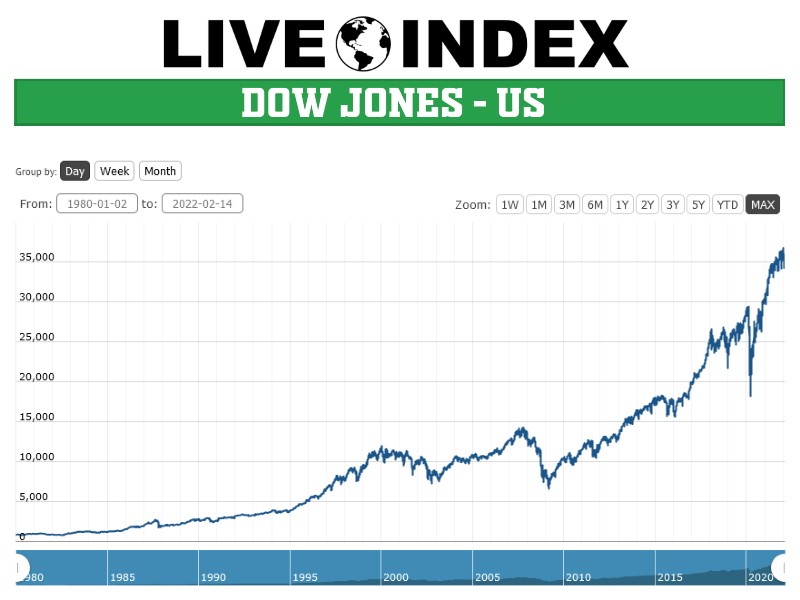
One of the most crucial lessons for any investor is to distinguish between short-term market noise and long-term investment trends. The Dow Jones can exhibit significant daily, weekly, or even monthly volatility, driven by breaking news, technical trading, or fleeting sentiment. A 500-point swing in a single day, while dramatic, does not necessarily signal a fundamental shift in the economy or the long-term prospects of high-quality companies. Reacting emotionally to every short-term dip or rally can lead to poor investment decisions, such as selling at lows or buying at highs.
Instead, a more prudent approach involves observing the Dow’s movements within the context of longer-term trends. Is the index generally moving upwards over several quarters or years, despite intermittent corrections? Or is it showing a sustained downward trajectory that might indicate deeper economic issues? Focusing on these broader patterns helps investors maintain perspective, avoid panic selling, and stick to their long-term financial plans. Historically, despite numerous corrections and bear markets, the U.S. stock market (as broadly represented by indices like the Dow) has demonstrated a robust long-term upward trend, reflecting innovation, economic growth, and corporate adaptability.
The Dow as a Diagnostic Tool, Not a Sole Indicator
While undeniably important, the Dow should be viewed as a diagnostic tool rather than the definitive measure of market health or economic prosperity. It provides a useful, high-level overview, but its limited number of components and price-weighted methodology mean it doesn’t offer a complete picture. For example, it might not fully capture the performance of smaller companies, emerging growth sectors, or industries not represented by its 30 constituents.
Savvy investors use the Dow in conjunction with other indices, such as the S&P 500 (which tracks 500 large-cap U.S. companies and is market-cap weighted), the Nasdaq Composite (heavily weighted towards technology and growth stocks), and various Russell indices (covering small-cap and mid-cap companies). By observing these different barometers, investors gain a more holistic understanding of market breadth, sectoral performance, and underlying economic health. For personal finance, this means not letting the Dow alone dictate your financial decisions, but rather using it as one piece of a larger puzzle to confirm or challenge your broader market outlook.
Diversification Beyond the Index
Perhaps the most critical takeaway for individual investors looking at the Dow is the importance of diversification. Even if the Dow is performing exceptionally well, concentrating one’s investments solely on its 30 components, or even just on large-cap U.S. stocks, carries inherent risks. A well-diversified portfolio typically includes a mix of asset classes (stocks, bonds, real estate), geographical regions (U.S., international developed markets, emerging markets), market capitalizations (large-cap, mid-cap, small-cap), and sectors.
Diversification helps mitigate risk by ensuring that a downturn in one particular company, sector, or country does not cripple an entire portfolio. While the Dow’s performance might reflect the overall sentiment towards large U.S. companies, a diversified approach acknowledges that different parts of the market and global economy will perform differently at various times. For investors building long-term wealth, this strategy is paramount, protecting against the inherent volatility and sector-specific risks that even an iconic index like the Dow cannot escape.
Practical Steps for Tracking and Engaging with the Dow
For those keen to stay informed about the Dow Jones’s current status and integrate this knowledge into their financial routines, there are numerous accessible resources and practical approaches.
Essential Financial Resources and Platforms
Staying updated on the Dow’s movements is easier than ever thanks to a plethora of digital tools and traditional media. Reputable financial news outlets are indispensable. Websites like The Wall Street Journal, Bloomberg, Reuters, CNBC, and Yahoo Finance offer real-time quotes, detailed charts, news analyses, and expert commentary on the Dow and its components. These platforms often include customizable watchlists where you can track the Dow and other indices alongside your personal holdings.
Beyond news sites, most online brokerage platforms (e.g., Fidelity, Charles Schwab, E*TRADE) provide comprehensive market data, including live Dow quotes, historical performance graphs, and news feeds directly integrated into their dashboards. Investing apps designed for mobile devices also offer convenient, on-the-go access to market data and news, often with push notifications for significant market events. For more in-depth analysis, financial data providers like S&P Dow Jones Indices (the official maintainer of the DJIA) offer detailed information on the index’s methodology and historical data. Utilizing a combination of these resources ensures a well-rounded and timely understanding of the Dow’s current standing and the factors influencing it.
Incorporating Dow Insights into Your Financial Planning
While the Dow should not be the sole driver of investment decisions, insights gleaned from its performance can be valuable inputs into your broader financial planning. For instance, understanding a period of prolonged Dow strength might encourage rebalancing your portfolio if your equity allocation has grown significantly beyond your target. Conversely, during periods of market weakness reflected by the Dow, it might present opportunities to invest in quality companies at lower valuations, assuming such investments align with your long-term strategy and risk tolerance.
Additionally, monitoring the Dow helps in assessing the general economic climate, which can influence decisions beyond just stock investing. For example, a sustained downturn indicated by the Dow might signal a weakening job market or a more cautious economic outlook, potentially impacting career decisions or major purchases. Regularly reviewing the Dow’s performance within the context of your overall financial goals—whether saving for retirement, a down payment, or education—helps to maintain an informed perspective and can prompt timely discussions with a financial advisor to adjust strategies as needed. It’s about using the Dow as a guidepost, not a strict directive, to ensure your financial plan remains robust and responsive to market realities.

Conclusion
The Dow Jones Industrial Average stands as a testament to the enduring power of American enterprise and a continuously relevant benchmark for global financial markets. When we ask “what is the Dow Jones currently?”, we are tapping into a century-old tradition of gauging economic health and investor sentiment. While its specific calculation methods and limited number of components mean it doesn’t tell the entire story of the market, its iconic status, the influence of its constituents, and its consistent presence in financial discourse make it an indispensable indicator.
For individuals navigating the complexities of personal finance and investing, understanding the Dow means more than just tracking its daily numbers. It requires appreciating the macroeconomic forces that shape it, recognizing the corporate performances that propel it, and interpreting its movements within a broader context of long-term trends and diversified strategies. By leveraging accessible financial tools and maintaining a balanced perspective, the Dow Jones can be a valuable ally in building financial literacy and making informed decisions, ultimately contributing to a more secure and prosperous financial future. In a world of constant change, the Dow remains a steadfast, if sometimes volatile, window into the heartbeat of the American economy.
aViewFromTheCave is a participant in the Amazon Services LLC Associates Program, an affiliate advertising program designed to provide a means for sites to earn advertising fees by advertising and linking to Amazon.com. Amazon, the Amazon logo, AmazonSupply, and the AmazonSupply logo are trademarks of Amazon.com, Inc. or its affiliates. As an Amazon Associate we earn affiliate commissions from qualifying purchases.