
In the fast-paced world of global finance, few phrases are uttered more frequently by investors, news anchors, and casual observers alike than “What is the Dow doing?” The Dow Jones Industrial Average (DJIA) serves as more than just a numerical value on a flickering screen; it is a psychological barometer for the American economy and a cornerstone of the broader financial landscape. When people ask what the Dow is doing, they are rarely looking for a simple point-total update. Instead, they are seeking an interpretation of market health, a pulse check on corporate stability, and a signal of what the future holds for their personal portfolios.

Understanding the movements of the Dow requires peeling back the layers of market mechanics, economic indicators, and investor sentiment. To truly grasp what the Dow is doing—and why it matters—we must examine its internal structure, the external forces that drive its volatility, and its role in the modern era of diversified investing.
Decoding the Mechanics: How the Dow Moves
To understand what the Dow is doing today, one must first understand how it is built. Unlike many other indices, the Dow Jones Industrial Average is a price-weighted index composed of 30 prominent “blue-chip” companies listed on stock exchanges in the United States.
The Price-Weighted Methodology
Most modern indices, such as the S&P 500, are market-capitalization-weighted, meaning larger companies have a greater impact on the index’s movement. The Dow is unique—and sometimes criticized—because it is price-weighted. In this system, companies with higher stock prices have a more significant influence on the index’s daily fluctuations than those with lower stock prices, regardless of their actual company size. When a high-priced stock in the Dow moves by $5, it shifts the index far more than a $5 move in a lower-priced component. This mechanical quirk is essential to keep in mind when analyzing why the Dow may be climbing even if the majority of its components are stagnant.
The 30 Blue-Chip Components
The “Industrial” in the Dow’s name is largely a historical vestige. Today, the index includes leaders from various sectors, including healthcare, technology, consumer discretionary, and financial services. Because the Dow only tracks 30 companies, it represents the “cream of the crop” of American industry. When the Dow is performing well, it suggests that the massive, stable pillars of the economy—companies like UnitedHealth, Goldman Sachs, and Microsoft—are seeing sustained demand and institutional confidence. Conversely, a “down” Dow often indicates a retreat from “safe” large-cap stocks toward more defensive positions.
Macro-Economic Drivers: Why the Dow Fluctuates
When an investor asks what the Dow is doing, they are usually observing the result of massive global shifts in capital. Several core economic pillars dictate whether the index trends upward into “bull” territory or slides into a “bear” market.
Monetary Policy and the Federal Reserve
The single most influential factor in the Dow’s performance is often the Federal Reserve’s stance on interest rates. When the Fed lowers interest rates, borrowing becomes cheaper for corporations, fueling expansion and boosting stock valuations. In these environments, the Dow typically experiences strong upward momentum as investors seek higher returns in equities rather than low-yield bonds. Conversely, when the Fed raises rates to combat inflation, the Dow often reacts with volatility. Higher rates increase the cost of capital and can lead to a “cooling” effect on corporate earnings, causing the index to retract.
Inflation and Consumer Sentiment
The Dow is a reflection of the American consumer. Since many Dow components are consumer-facing giants (such as Walmart, Coca-Cola, and Home Depot), the index is highly sensitive to inflation. When the cost of living rises, consumer spending may shift, impacting the quarterly earnings of these blue-chip companies. If the Dow is “flat” or declining during a period of high inflation, it may indicate that investors fear a squeeze on profit margins as companies struggle to pass increased costs onto the consumer.
Geopolitical Stability and Trade
As a collection of multinational corporations, the Dow is deeply affected by international relations. Trade wars, global conflicts, and supply chain disruptions can all cause sudden “dips” in the Dow. Because these 30 companies operate globally, their revenue is tied to the stability of foreign markets. A strong U.S. dollar, while a sign of domestic strength, can actually hurt the Dow’s performance by making American exports more expensive and reducing the value of international profits when converted back into dollars.
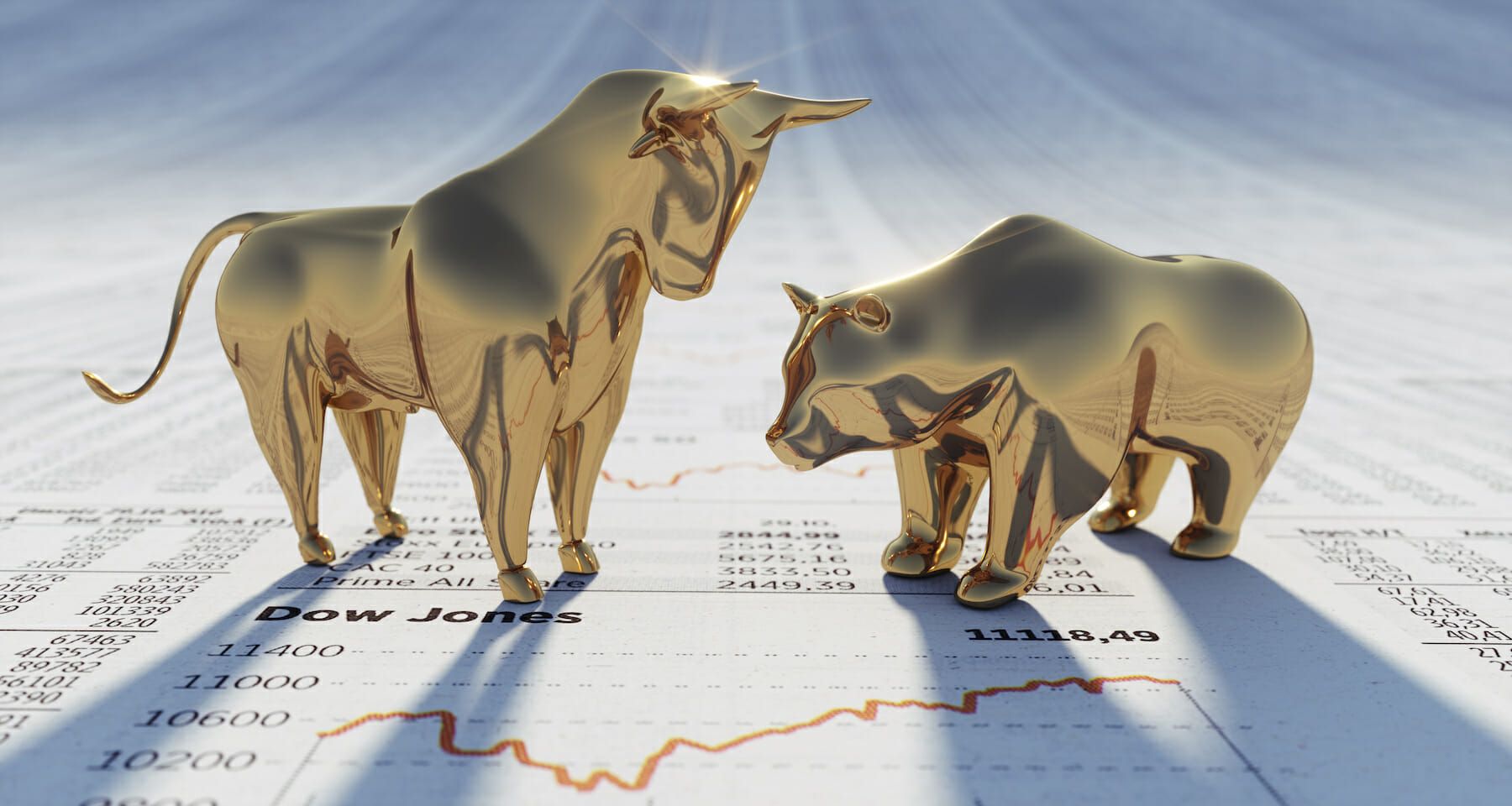
Interpreting Market Sentiment: Bulls, Bears, and Corrections
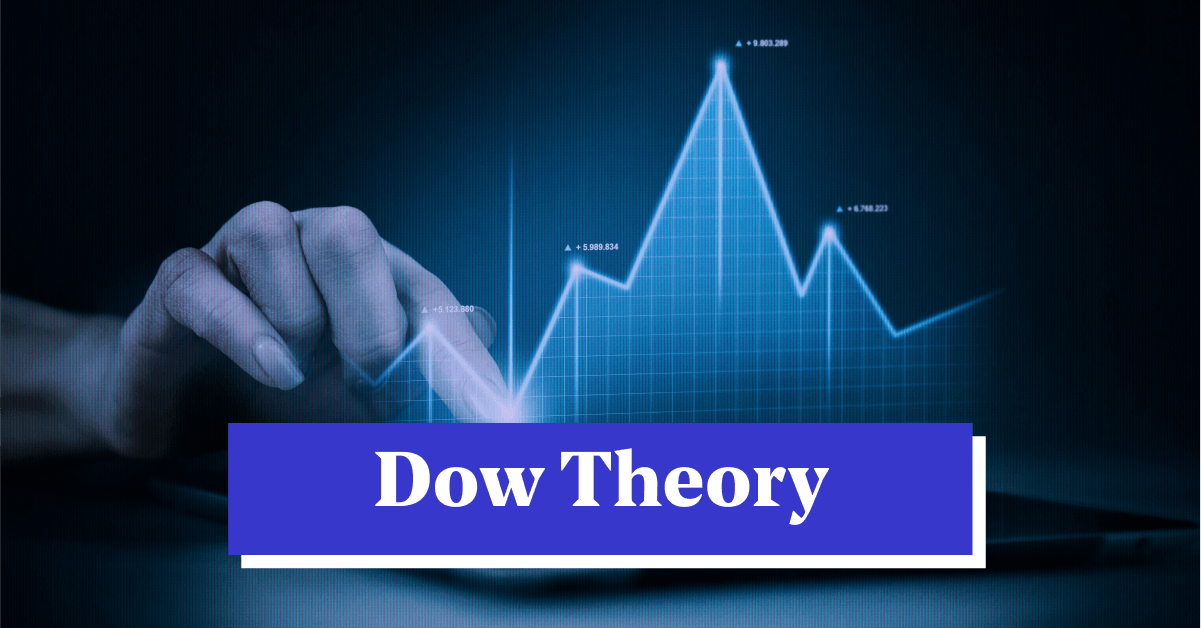
Analyzing what the Dow is doing involves more than looking at a single day’s gain or loss; it requires looking at the trajectory and the “mood” of the market.
Identifying Market Corrections
In financial terms, a “correction” is defined as a decline of 10% or more from a recent peak. When the Dow enters a correction phase, it is often a sign that the market was “overbought” or that investors are reassessing the value of stocks in light of new economic data. Understanding this context helps investors avoid panic. Often, what the Dow is doing during a correction is simply “resetting” to a more sustainable valuation level after a period of irrational exuberance.
The Psychological Impact of Milestones
The Dow is famous for its psychological milestones—10,000, 20,000, 30,000, and beyond. While these numbers are technically arbitrary, they carry immense weight in investor psychology. When the Dow approaches a major round number, there is often “resistance,” where selling pressure increases. Conversely, once a milestone is crossed and held, it often becomes a “support” level. When the news reports that the Dow is “testing new highs,” it often triggers a “Fear Of Missing Out” (FOMO) among retail investors, which can further drive the index upward in a self-fulfilling prophecy.
The Dow vs. The World: Contextualizing Performance
To answer “What is the Dow doing?” accurately, one must compare it to other market indicators. The Dow does not exist in a vacuum, and its performance relative to other indices tells a story about where money is flowing.
The Dow vs. the S&P 500
While the Dow tracks 30 stocks, the S&P 500 tracks 500. If the Dow is up but the S&P 500 is down, it suggests that “value” and “blue-chip” stocks are in favor, while the broader market—including mid-sized companies—is struggling. This often happens during times of economic uncertainty when investors “flight to quality,” seeking the safety of established Dow giants.
The Dow vs. the Nasdaq
The Nasdaq Composite is heavily weighted toward technology and growth stocks. There are days when the Nasdaq might be surging while the Dow is stagnant. This usually indicates a “risk-on” environment where investors are chasing high-growth tech companies. On the flip side, when the Dow outperforms the Nasdaq, it often signals a “rotation” out of speculative tech and into “old economy” sectors like manufacturing, energy, and banking.
Investment Strategies: How to Act on the Dow’s Movement
Understanding what the Dow is doing is only the first step; the second is knowing how to use that information to manage a personal portfolio or business finances.
Long-term Investing and Index Funds
For the average investor, “what the Dow is doing” on a daily basis should be secondary to long-term trends. History shows that despite short-term volatility, the Dow has a long-term upward trajectory. Many investors use Exchange-Traded Funds (ETFs) that track the Dow (such as the DIA) to gain exposure to these 30 industrial leaders. By practicing dollar-cost averaging—investing a set amount regularly regardless of the index’s price—investors can capitalize on the Dow’s growth without having to time the market perfectly.
Using the Dow as a Hedging Signal
For business owners and professional investors, the Dow’s movement can serve as a signal to hedge risk. If the Dow is showing signs of a prolonged downturn, it may be time to shift allocations into more defensive assets, such as treasury bonds or precious metals. Furthermore, observing which specific sectors within the Dow are lagging can provide insights into which parts of the economy are under the most stress.
Conclusion: The Dow as an Economic Compass
When we ask “What is the Dow doing?”, we are engaging in a century-old tradition of gauging the health of the American dream. While the index has its limitations—such as its narrow focus on only 30 companies and its price-weighted methodology—it remains the most cited financial metric in the world for a reason. It represents the ultimate “Blue Chip” list, the companies that are “too big to fail” and that form the backbone of global commerce.
By monitoring the Dow through the lens of interest rates, corporate earnings, and global politics, investors can move beyond the “noise” of daily price swings. Understanding the Dow is not about predicting the next 100-point move; it is about recognizing the broader cycles of the economy and positioning oneself to benefit from the long-term resilience of the world’s leading corporations. Whether the Dow is climbing to new heights or retracting in the face of uncertainty, its movement is a constant teacher for those willing to study the language of the markets.
aViewFromTheCave is a participant in the Amazon Services LLC Associates Program, an affiliate advertising program designed to provide a means for sites to earn advertising fees by advertising and linking to Amazon.com. Amazon, the Amazon logo, AmazonSupply, and the AmazonSupply logo are trademarks of Amazon.com, Inc. or its affiliates. As an Amazon Associate we earn affiliate commissions from qualifying purchases.