
In the landscape of modern engineering and global infrastructure, the distinction between renewable and non-renewable energy is often framed through an environmental lens. However, for those in the technology and software sectors, the difference is primarily one of hardware architecture, data management, and material science. As we move away from the “burn and spin” mechanics of the industrial age toward the silicon-based, AI-optimized systems of the digital age, understanding the technical nuances between these two energy paradigms is essential.
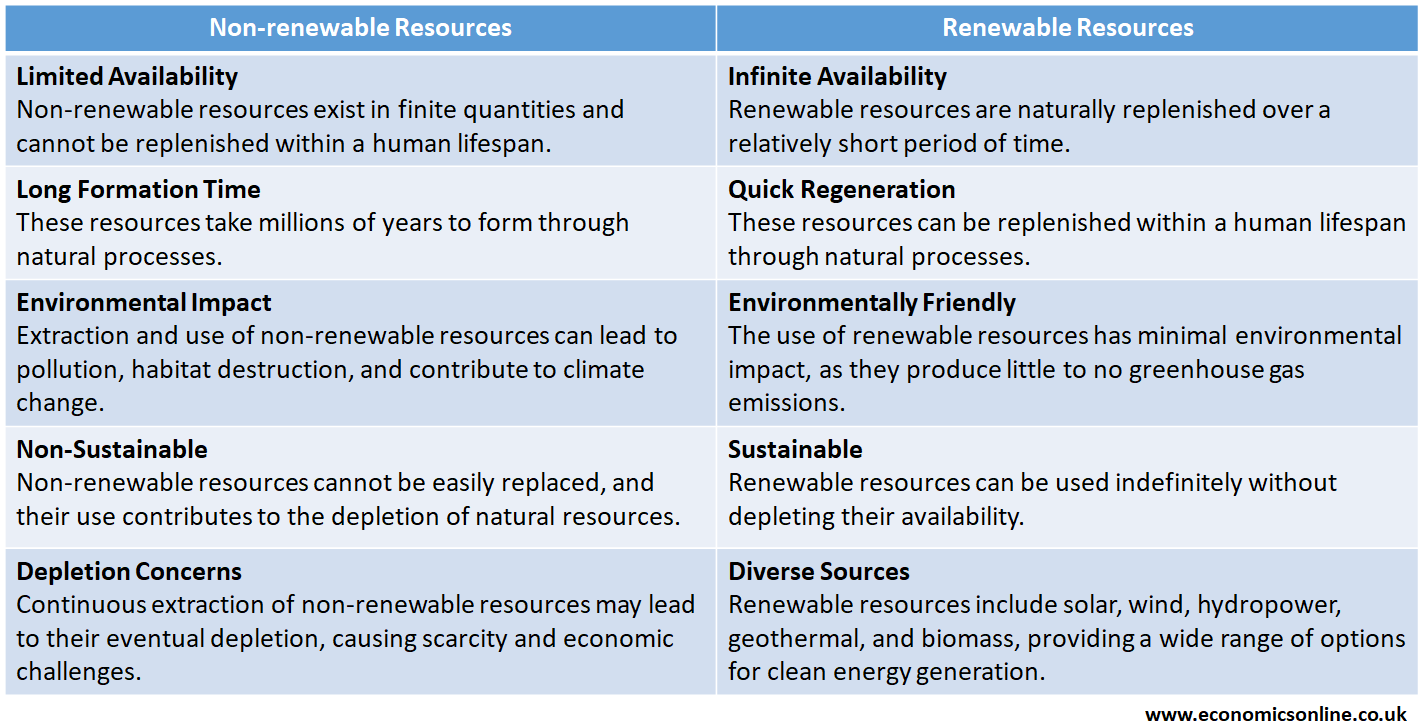
At its core, the difference lies in the source’s replenishment rate and the technological stack required to convert that source into usable electricity. Non-renewable energy relies on finite, high-energy-density materials that require extraction and combustion, while renewable energy utilizes ambient physical phenomena—sunlight, wind, and water—transformed through sophisticated semiconductors and kinetic captures.

1. The Engineering of Power: Extraction vs. Harvesting
The fundamental technological divergence begins at the point of energy capture. Non-renewable energy systems are built around “extraction,” while renewable systems are designed for “harvesting.”
Fossil Fuel Infrastructure: The Legacy of Combustion
Non-renewable energy technology—including coal, natural gas, and oil—is centered on thermal dynamics. These systems utilize a “centralized combustion model.” In a coal-fired or gas-peaker plant, the primary tech stack involves high-pressure boilers, steam turbines, and massive cooling towers. From a software perspective, these plants are relatively static; they are designed to provide a “baseload,” meaning they run at a constant, predictable output.
The engineering challenge in non-renewables is efficiency in combustion and the mitigation of byproducts. Technological advancements in this sector have focused on “Clean Coal” carbon capture and storage (CCS) and high-efficiency gas turbines. However, the hardware remains heavy, mechanical, and prone to degradation due to the extreme heat and pressure inherent in the combustion process.
The Photovoltaic and Kinetic Revolution
Conversely, renewable energy technology represents a shift toward solid-state electronics and advanced aerodynamics. Solar energy, specifically Photovoltaic (PV) tech, is essentially a semiconductor industry. There are no moving parts; instead, photons strike silicon wafers, displacing electrons to create a current. This is “clean” technology in the literal sense—no friction, no combustion, and minimal maintenance.
Wind energy, while mechanical, relies on sophisticated composites and materials science. Modern turbines are outfitted with hundreds of sensors that adjust the pitch of the blades in real-time based on wind speed and direction—an optimization task handled by edge computing. Unlike the static nature of a gas plant, a wind farm is a dynamic, data-driven network.
2. The Role of Storage and Grid Intelligence
One of the most significant technical hurdles in the transition from non-renewable to renewable energy is the “Intermittency Problem.” Non-renewable energy is “dispatchable”—you can burn more gas when demand spikes. Renewable energy is variable—the sun doesn’t always shine, and the wind doesn’t always blow. This has necessitated a massive surge in energy storage technology.
Battery Innovation: Solving the Intermittency Problem
The tech world is currently obsessed with the “Battery Race.” While Lithium-ion (Li-ion) remains the standard for consumer electronics and EVs, the grid requires different solutions. We are seeing the rise of Long-Duration Energy Storage (LDES), including flow batteries, thermal storage, and solid-state batteries.
The technology here involves sophisticated Battery Management Systems (BMS). A BMS uses complex algorithms to monitor the State of Charge (SoC) and State of Health (SoH) of thousands of individual cells, ensuring they charge and discharge safely. This is a massive software challenge that involves predictive modeling to determine when to store energy and when to dump it into the grid.
Smart Grids and AI-Driven Energy Distribution
Non-renewable energy was built for a “top-down” grid—power flows from a big plant to your house. Renewables are pushing us toward a “distributed” grid. This requires the “Smart Grid”—a mesh network of IoT (Internet of Things) devices that balance supply and demand in real-time.
Artificial Intelligence plays a critical role here. Machine learning models analyze decades of weather data to predict wind and solar output 24 to 48 hours in advance. On the demand side, AI manages “Smart Homes” and industrial plants, shifting heavy power usage to times when renewable production is at its peak. This transformation turns the energy grid into a giant, automated software platform.

3. Sustainability Through Tech: Efficiency and Lifecycle Management
A common technical critique of renewable energy is the “embedded carbon” and material cost of the hardware itself. To address this, the tech industry is focusing on circularity and lifecycle monitoring.
From Mining to Recycling: The Tech Hardware Lifecycle
Non-renewable energy is consumed once; once you burn a gallon of oil, it is gone. Renewable hardware, such as solar panels and EV batteries, contains valuable minerals like lithium, cobalt, and rare earth elements. The difference is that these materials are “recoverable.”
New “Battery Passport” technologies, often built on blockchain or secure digital ledgers, are being developed to track the provenance and usage of these materials from the mine to the recycling facility. This ensures that the hardware used for renewable energy doesn’t become the electronic waste of tomorrow. Software-driven logistics are optimizing the “reverse supply chain” to reclaim up to 95% of the materials in a spent battery.
Digital Twin Technology in Renewable Maintenance
Because renewable assets like offshore wind farms are often in remote, harsh environments, the tech industry uses “Digital Twins.” A Digital Twin is a virtual replica of a physical asset. By feeding real-time sensor data into a 3D model, engineers can simulate stress and predict when a component will fail before it actually does.
This “Predictive Maintenance” is a hallmark of renewable tech. It reduces the need for human intervention and lowers the operational costs of sustainable energy, making it more competitive with the established non-renewable infrastructure that has had over a century to optimize its processes.
4. Future Horizons: Emerging Tech in the Energy Sector
The gap between renewable and non-renewable energy is being further bridged—or widened—by “frontier tech” that seeks to combine the best of both worlds: high energy density and zero carbon emissions.
Green Hydrogen and Fusion: The Next Frontier
Green Hydrogen is a major tech trend. It uses renewable electricity to power electrolyzers that split water into hydrogen and oxygen. The hydrogen acts as a “chemical battery” that can be stored and transported, much like natural gas but without the carbon footprint. The engineering challenge here is in membrane technology and high-pressure storage.
Nuclear Fusion, often called the “Holy Grail” of energy tech, represents the ultimate non-renewable (in the sense that it uses fuel) but sustainable source. Unlike current nuclear fission, which splits atoms, fusion joins them—mimicking the sun. This requires incredible technological feats, such as magnetic confinement using superconductors and high-powered lasers. If successful, fusion would represent a total paradigm shift in how we categorize energy.
Decentralization and Web3 Energy Trading
Finally, we are seeing the emergence of Peer-to-Peer (P2P) energy trading. Using blockchain technology, neighbors with solar panels can sell excess energy directly to each other without a central utility company. These “Virtual Power Plants” (VPPs) use software to aggregate thousands of small solar and battery systems into a single, reliable power source that can support the main grid.
This level of decentralization is impossible with non-renewable sources, which require massive, centralized industrial complexes. Renewable energy is essentially “democratizing” the electron, turning every building with a roof into a potential node in a global energy network.
Conclusion
The difference between renewable and non-renewable energy is more than just the source; it is a fundamental shift in the technological foundation of our civilization. Non-renewable energy is a triumph of 19th and 20th-century mechanical engineering—relying on combustion, centralization, and finite resources. Renewable energy is a 21st-century technological ecosystem—relying on semiconductors, AI, distributed networks, and circular material science.
As we continue to innovate, the line between “energy tech” and “information tech” will continue to blur. The transition is not just about saving the planet; it is about upgrading an aging, analog system to a faster, smarter, and more efficient digital architecture. Whether through the optimization of silicon solar cells or the management of global smart grids, the future of energy is undeniably high-tech.
aViewFromTheCave is a participant in the Amazon Services LLC Associates Program, an affiliate advertising program designed to provide a means for sites to earn advertising fees by advertising and linking to Amazon.com. Amazon, the Amazon logo, AmazonSupply, and the AmazonSupply logo are trademarks of Amazon.com, Inc. or its affiliates. As an Amazon Associate we earn affiliate commissions from qualifying purchases.