
In the hyper-competitive landscape of the music industry, the terminology used to describe a body of work is rarely accidental. While a casual listener might use the terms “mixtape” and “album” interchangeably, from a brand strategy perspective, they represent two distinct vehicles for market positioning, audience engagement, and identity construction. Understanding the difference between these two formats is essential for any artist looking to build a sustainable personal brand.
In this exploration, we analyze how the mixtape and the album serve as strategic tools in an artist’s brand portfolio, examining their roles in market entry, brand equity, and the overarching narrative of a creative professional.
Defining the Sonic Identity: Product Positioning and Artist Branding
At its core, the distinction between a mixtape and an album is a matter of product positioning. In any other industry, a company might launch a “beta” version of a product before releasing the “flagship” model. In music, the mixtape often serves as that beta—a way to test the market and refine the brand identity without the high-stakes pressure of a major commercial release.
The Mixtape as a Minimum Viable Product (MVP)
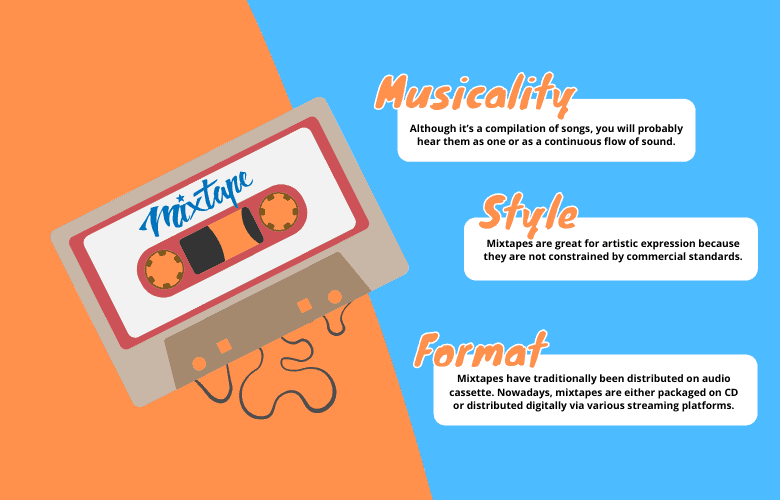
In the world of brand strategy, a Minimum Viable Product (MVP) is a version of a new product that allows a team to collect the maximum amount of validated learning about customers with the least effort. For an artist, a mixtape functions as an MVP. It is traditionally less polished, often featuring unoriginal beats or experimental flows that might not fit a “commercial” mold.
From a branding standpoint, the mixtape allows for high-frequency output. By releasing mixtapes, an artist can maintain a constant presence in the consumer’s mind, building “brand salience.” Because the expectations for production value are lower, the artist can take creative risks that define their “edgy” or “authentic” persona, which are crucial components of a grassroots brand identity.
The Album as the Flagship Brand Statement
Conversely, an album is a brand’s flagship product. It is a cohesive, highly curated statement that defines an artist’s legacy for a specific era. If the mixtape is about “the grind” and “the process,” the album is about “the arrival” and “the vision.”
An album requires a narrative arc. Strategically, it is used to consolidate the brand’s gains, moving the artist from a niche or “underground” category into a broader, more prestigious market segment. The album is where the brand’s core values are crystallized into a polished, marketable package designed for longevity and critical acclaim.
Market Entry vs. Market Consolidation
The choice between releasing a mixtape or an album often depends on where an artist sits in the brand lifecycle. Brand managers must decide whether the current goal is to acquire new users (listeners) or to deepen the loyalty of existing ones.
Building Brand Awareness through Low-Barrier Content
For emerging artists, the mixtape is the ultimate tool for brand awareness. Historically, mixtapes were distributed for free, serving as a low-barrier entry point for potential fans. In the digital age, even “commercial mixtapes” on streaming platforms retain this “low-barrier” feel. They are often longer, more eclectic, and less “guarded” than albums.
By lowering the stakes, an artist can flood the market. This strategy is similar to “content marketing” in the corporate world—providing free value to build trust and authority before asking for a financial commitment. The mixtape builds the community, creating a foundation of “brand advocates” who feel they discovered the artist before they went mainstream.
Strengthening Brand Equity through Cohesive Narratives
Once an audience is established, the strategy shifts toward brand equity—the value premium that a brand realizes from a product with a recognizable name as compared to its generic equivalent. This is where the album becomes essential.
An album is a “premium” offering. It is usually accompanied by a more rigorous marketing rollout, higher price points (in terms of vinyl or special editions), and a focused PR campaign. By presenting a body of work as an “album,” the artist signals to the market that this content is significant, intentional, and worth the consumer’s undivided attention. This elevation is what allows a brand to move from being a “content creator” to a “cultural icon.”
Visual Identity and Marketing Collateral
A brand is not just what you hear; it is what you see and how you feel. The visual language surrounding mixtapes and albums differs significantly, reflecting their unique strategic goals.
Guerrilla Marketing vs. Curated Campaigns
Mixtape branding often adopts a “guerrilla” aesthetic. The cover art might be more experimental, DIY, or even intentionally “raw.” This visual strategy reinforces the brand’s authenticity and connection to the streets or the subculture. The marketing is often decentralized—social media snippets, “leaked” tracks, and viral challenges. It feels organic, which is a powerful branding tool for Gen Z and Millennial demographics who are often cynical toward over-produced corporate marketing.
The Role of Packaging and Digital Presence
The album, however, demands a “high-concept” visual identity. From the typography on the back cover to the color palette of the music videos, every element of an album rollout is designed to create a world. This is “experiential branding.”
When an artist releases an album, they aren’t just selling songs; they are selling an era. Think of iconic album covers that have become logos in their own right. The album’s marketing collateral is designed to be timeless, aiming for a permanent spot in the cultural zeitgeist rather than the temporary buzz sought by a mixtape.
Case Studies in Strategic Music Branding
To see these strategies in action, we can look at how major figures in the industry have used these formats to manipulate their brand perception.
The Drake Approach: Blurring the Lines for Market Dominance
Drake is a master of brand fluidity. By labeling projects like More Life as a “playlist” or If You’re Reading This It’s Too Late as a “mixtape,” he strategically lowered the critical bar while maintaining high commercial output.
By calling a project a mixtape, he protects the “prestige” of his studio albums. If a mixtape doesn’t perform as well or receives mixed reviews, the brand remains intact because it was “just a mixtape.” If it performs exceptionally well (as his often do), it adds to his legend as an artist who can dominate the charts even with his “side projects.” This is a classic diversification strategy used by major conglomerates to protect their flagship brands while dominating secondary markets.
The Independent Artist: Using Mixtapes to Define Niche Authority
Consider an artist like Chance the Rapper, who built a massive global brand almost exclusively through mixtapes (Acid Rap, Coloring Book). For Chance, the “mixtape” label was a brand pillar in itself—it stood for independence, industry disruption, and a “for the people” ethos.
His brand was built on the subversion of the traditional album-and-label model. By winning Grammys with a mixtape, he didn’t just win an award; he validated his brand’s core promise of independence. This shows that the label “mixtape” can be a powerful psychological trigger for a target audience that values counter-culture movements.

Conclusion: Choosing the Right Vehicle for Your Brand Story
The difference between a mixtape and an album is not found in the bitrate of the audio or the length of the tracklist; it is found in the intent of the brand.
For the artist-entrepreneur, the mixtape is the laboratory—a place for high-volume experimentation, market testing, and the cultivation of a raw, authentic connection with an early-adopter audience. It is a tactical tool used to gain ground and maintain visibility in a fast-moving digital economy.
The album, conversely, is the monument. It is a strategic tool for consolidation, used to signal maturity, artistic vision, and a move toward the “luxury” or “legacy” tier of the market. It is where the brand’s story is told with the most clarity and where its long-term value is cemented.
In modern brand strategy, the most successful artists are those who understand how to cycle between these two formats. They use mixtapes to keep the conversation going and albums to change the conversation entirely. By mastering the nuance between the two, an artist ensures that their brand remains both relevant to the current moment and significant for years to come.
aViewFromTheCave is a participant in the Amazon Services LLC Associates Program, an affiliate advertising program designed to provide a means for sites to earn advertising fees by advertising and linking to Amazon.com. Amazon, the Amazon logo, AmazonSupply, and the AmazonSupply logo are trademarks of Amazon.com, Inc. or its affiliates. As an Amazon Associate we earn affiliate commissions from qualifying purchases.