
In the realm of modern diagnostic medicine, ultrasound technology stands as a cornerstone of non-invasive visualization. When a clinician orders a thyroid ultrasound, they are utilizing one of the most sophisticated applications of acoustic engineering and digital signal processing available today. To the untrained eye, the screen may appear as a chaotic flurry of gray, black, and white pixels. However, to a radiologist supported by high-definition hardware and AI-driven software, those pixels form a precise map of human anatomy. Understanding what a “normal” thyroid ultrasound looks like requires a deep dive into the hardware specifications, the physics of sound propagation, and the sophisticated software algorithms that translate echoes into actionable medical data.
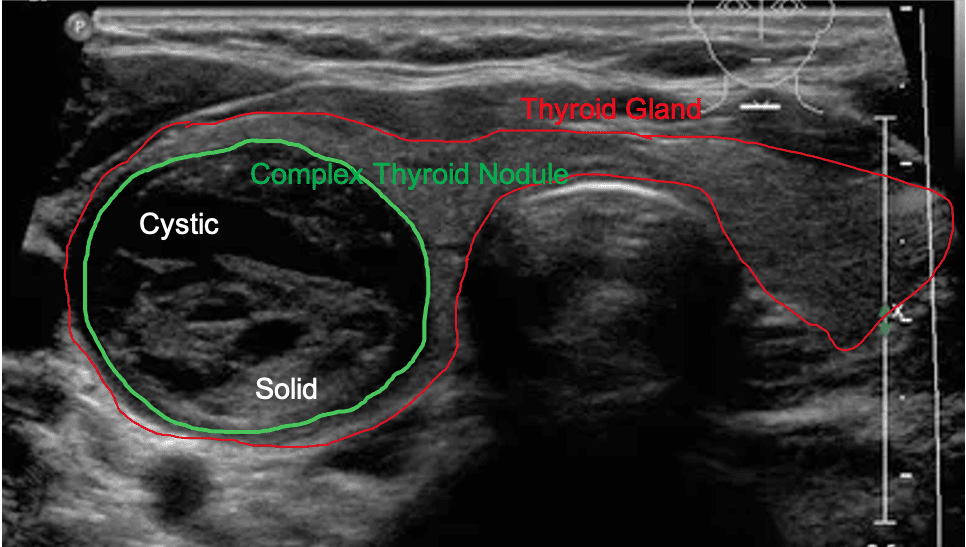
The Physics of Clarity: Understanding High-Frequency Transducer Technology
At the heart of any thyroid ultrasound is the transducer, a piece of hardware that acts as both the “speaker” and the “microphone.” For thyroid imaging, the technology used is significantly different from that used in abdominal or cardiac imaging.
The Role of Piezoelectric Crystals
A normal thyroid image begins with piezoelectric crystals located in the head of a linear array transducer. When an electric current is applied, these crystals vibrate at specific frequencies. For thyroid imaging, technologists typically employ high-frequency transducers ranging from 7.5 to 15 MHz (and sometimes up to 18 MHz in ultra-high-resolution units). The tech choice here is a trade-off: higher frequencies provide superior spatial resolution—allowing the software to distinguish between two structures just millimeters apart—but they lack the depth penetration of lower-frequency waves. Because the thyroid is a superficial gland located just beneath the skin of the neck, high-frequency tech is the optimal choice for capturing a “normal” baseline.
Spatial Resolution and Axial Depth
The software processing the sound waves must account for “axial resolution” (the ability to distinguish objects along the path of the beam) and “lateral resolution” (the ability to distinguish objects side-by-side). A normal thyroid scan relies on these technical parameters to produce a “clean” image. In a high-quality system, the software suppresses “speckle noise”—the graininess inherent in ultrasound—using adaptive algorithms. This ensures that the borders of the thyroid lobes are sharp and distinct, rather than blurred or “bleeding” into the surrounding muscular tissue.
Visualizing Normality: The Digital Anatomy of a Healthy Thyroid
When the hardware and software work in harmony, they produce a cross-sectional view of the neck. A normal thyroid on an ultrasound display has very specific digital characteristics that signal health and stability.
Echogenicity and Tissue Texture
In technical terms, a normal thyroid is “hyperechoic” or “isoechoic” relative to the surrounding strap muscles. This means the thyroid tissue appears brighter (whiter) than the muscles nearby. The texture, or “echo texture,” of a normal thyroid is homogeneous. On a high-resolution monitor, this looks like a fine, consistent grain throughout the entire gland. If the tech detects a “coarse” texture, it suggests a deviation from the norm. The digital consistency of the image is the primary indicator that the cellular structure of the gland is uniform and healthy.
Distinguishing the Isthmus and Lobes
The thyroid is shaped like a butterfly, and the imaging tech must capture three distinct parts: the right lobe, the left lobe, and the isthmus (the bridge connecting them). A normal scan shows symmetrical lobes with smooth, well-defined margins. The software allows the technician to place digital calipers on the screen to measure the dimensions. Typically, a normal adult thyroid lobe measures about 4–6 cm in length and 1.3–1.8 cm in anteroposterior diameter. Any tech-enabled measurement within these bounds, coupled with a thin isthmus (usually less than 3 mm), confirms a normal anatomical footprint.
AI and Machine Learning in Image Interpretation

The most significant tech trend in thyroid imaging is the integration of Artificial Intelligence (AI) and Machine Learning (ML). While the human eye is excellent at pattern recognition, AI software can analyze pixel density and variance with mathematical precision that exceeds human capability.
Computer-Aided Diagnosis (CAD) Systems
Modern ultrasound machines are often equipped with CAD software. When scanning a thyroid, these systems run real-time analysis on the “normalcy” of the tissue. They look for “microcalcifications” or “hypoechoic regions” (dark spots) that might be too small for a human to notice during a live scan. In a normal thyroid ultrasound, the AI provides a “clear” or “low-risk” assessment, effectively acting as a second set of eyes for the radiologist. These algorithms are trained on datasets containing millions of images, allowing them to differentiate between benign anatomical variations and actual pathology.
Reducing Inter-Observer Variability
One of the historical “bugs” in ultrasound technology was inter-observer variability—the idea that two different technicians might produce different-looking scans. Modern software has mitigated this through standardized imaging protocols and automated gain control. Automated gain control adjusts the brightness of the image at different depths, ensuring that a “normal” thyroid looks the same regardless of whether the scan is performed in a high-end hospital or a rural clinic. This technological standardization is crucial for longitudinal tracking, allowing doctors to compare images taken years apart with high confidence.
Advanced Imaging Modes: Beyond Gray Scale
A standard “normal” thyroid ultrasound uses B-mode (Brightness mode) imaging, but modern tech offers layers of data beyond simple gray-scale pictures. These advanced modes provide a functional look at the gland, not just a structural one.
Color Doppler and Vascularity Mapping
Color Doppler is a software overlay that utilizes the Doppler shift—the change in frequency of sound waves reflecting off moving objects (in this case, red blood cells). In a normal thyroid, the “Power Doppler” or “Color Flow” setting will show a moderate, organized pattern of blood flow. It should not look like a “thyroid inferno” (excessive blood flow) or be completely devoid of signals. The tech visualizes this as blue and red flickers across the screen, indicating that the gland’s vascular system is supplying the tissue without the chaotic proliferation seen in inflammatory conditions or tumors.
Elastography and Tissue Stiffness Tech
Elastography is a relatively new software feature in high-end ultrasound units. It measures the “stiffness” of the tissue by observing how it deforms under slight pressure or by using “shear waves.” A normal thyroid is soft and pliable. On an elastography map, a healthy thyroid typically displays as a uniform green or blue color, signifying low stiffness. This “virtual palpation” tech allows clinicians to confirm that the gland’s physical properties are normal without needing a biopsy, relying instead on the software’s ability to calculate Young’s Modulus (a measure of elasticity) in real-time.
The Future of Thyroid Imaging: Portable Tech and Cloud Integration
As we look toward the next decade of diagnostic tech, the definition of where and how we visualize a “normal” thyroid is shifting from large, console-based machines to ultra-portable, interconnected devices.
Point-of-Care Ultrasound (POCUS)
The emergence of handheld ultrasound probes that connect to a smartphone or tablet via USB-C or Bluetooth is a game-changer. These POCUS devices utilize “Butterfly-on-a-Chip” technology, which replaces traditional piezoelectric crystals with thousands of micro-machined sensors on a single silicon chip. This allows a primary care physician to confirm a “normal” thyroid during a routine physical. While the resolution was once inferior to console units, advanced image reconstruction algorithms now allow these pocket-sized tools to produce images that are remarkably close to traditional high-end hardware.

Data Security and Cloud-Based Radiomics
In the modern tech ecosystem, a thyroid ultrasound image is not just a picture on a screen; it is a massive data file (often in DICOM format). A “normal” result is now stored in the cloud, where it can be analyzed by “radiomics” software. Radiomics involves extracting large amounts of quantitative features from medical images using data-characterization algorithms. These features, which are often imperceptible to humans, help in creating a digital “fingerprint” of the patient’s health. As this data is uploaded, encryption and HIPAA-compliant cloud storage ensure that the digital representation of a patient’s anatomy remains secure yet accessible for future comparisons.
The “normal” thyroid ultrasound is a masterpiece of modern technology. It represents the intersection of high-frequency hardware, sophisticated signal processing, and the burgeoning power of artificial intelligence. For the patient, it offers peace of mind; for the technologist, it is a testament to the precision of 21st-century engineering. As AI continues to refine its predictive capabilities and hardware becomes increasingly portable, our ability to define, visualize, and maintain “normality” in human health will only become more profound.
aViewFromTheCave is a participant in the Amazon Services LLC Associates Program, an affiliate advertising program designed to provide a means for sites to earn advertising fees by advertising and linking to Amazon.com. Amazon, the Amazon logo, AmazonSupply, and the AmazonSupply logo are trademarks of Amazon.com, Inc. or its affiliates. As an Amazon Associate we earn affiliate commissions from qualifying purchases.