
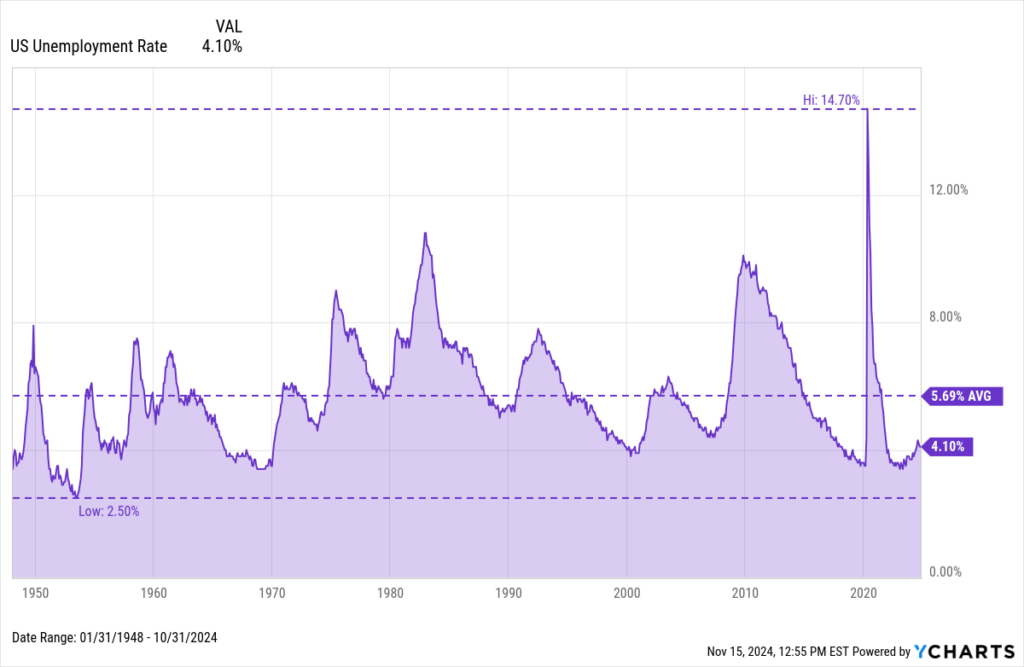
In the complex machinery of the global economy, few metrics carry as much weight as the United States unemployment rate. For the average investor, business owner, or personal finance enthusiast, this single percentage point is far more than a government statistic; it is a pulse check on the nation’s economic health, a predictor of stock market volatility, and a primary driver of Federal Reserve policy. As of the most recent reports from the Bureau of Labor Statistics (BLS), the U.S. unemployment rate has stabilized around 4.1%, a figure that suggests a labor market in transition—cooling from the frantic post-pandemic hiring spree but remaining resilient in the face of restrictive monetary policy.
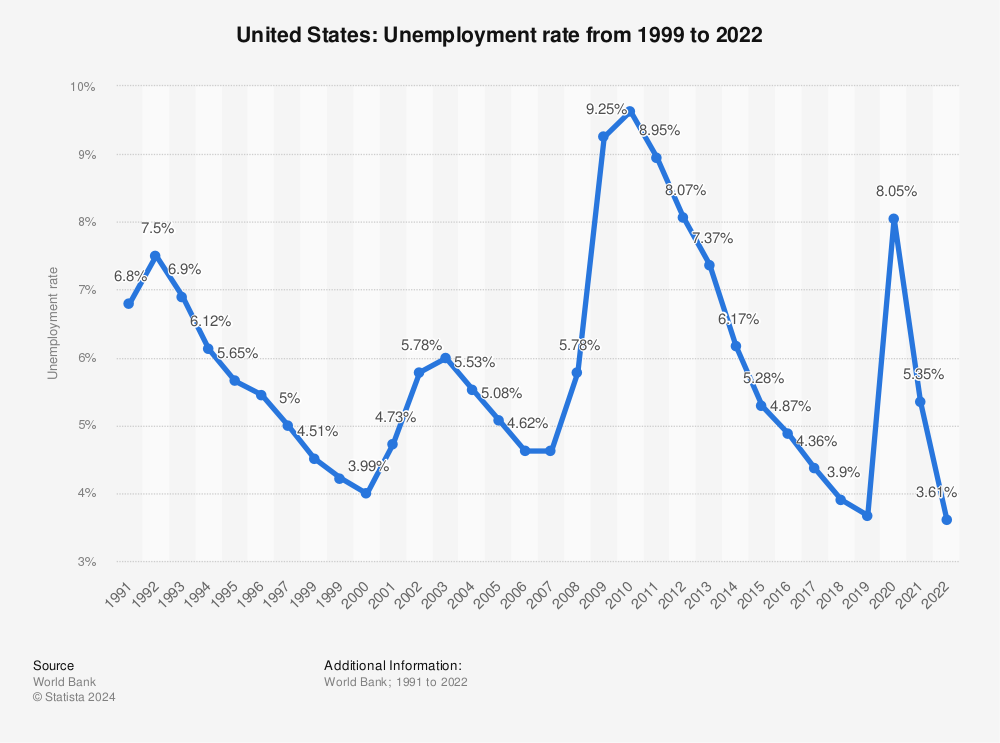
Understanding the nuances of this figure is critical for anyone looking to navigate the modern financial landscape. The unemployment rate dictates the flow of capital, the cost of borrowing, and the purchasing power of the dollar. To truly master one’s personal finances or investment portfolio, one must look beyond the headline number and analyze the underlying structural shifts within the American workforce.
The Macroeconomic Landscape: Interpreting the Numbers
When the BLS releases its monthly “Employment Situation” report, the world watches. However, the headline unemployment rate, technically known as the U-3 rate, only tells part of the story. To make informed financial decisions, one must understand how this data is curated and what the various layers of employment data signal about the broader economy.
The Difference Between U-3 and U-6
The standard unemployment rate (U-3) measures individuals who are without a job, have actively looked for work in the prior four weeks, and are currently available to work. While this is the benchmark for political and media discourse, savvy investors often look to the U-6 rate for a more comprehensive picture. The U-6 rate includes “underemployed” individuals—those working part-time for economic reasons—and “discouraged workers” who have stopped looking for work but want a job.
When the gap between U-3 and U-6 widens, it often signals hidden stress in the economy. Currently, while the U-3 remains historically low at 4.1%, the U-6 rate has shown slight upward pressure, suggesting that while jobs are available, the quality or “fullness” of that employment may be beginning to fray. For a business owner, this might indicate an easing of the “war for talent,” providing an opportunity to hire specialized skill sets at more competitive rates.
The Labor Force Participation Rate
Another vital metric is the Labor Force Participation Rate. A low unemployment rate is less impressive if it is driven by people leaving the workforce entirely. In the current economic cycle, participation among “prime-age” workers (25–54) has remained remarkably strong. From a personal finance perspective, a high participation rate suggests a robust consumer base. If more people are working, more people are spending, which supports corporate earnings and, by extension, equity prices.
Why the Unemployment Rate Matters for Investors and Business Owners
The relationship between employment data and financial markets is often counterintuitive. In many scenarios, “bad news” for the labor market is viewed as “good news” for the stock market, primarily because of how the Federal Reserve reacts to employment trends.
The Federal Reserve’s Dual Mandate
The Federal Reserve has a dual mandate: to promote maximum employment and maintain stable prices (low inflation). When the unemployment rate is extremely low, it often leads to wage-push inflation. As businesses compete for a limited pool of workers, they raise wages, which in turn leads to higher prices for goods and services.
If the current unemployment rate stays too low for too long, the Fed may keep interest rates higher to cool the economy. For investors, this means higher borrowing costs and potentially lower valuations for growth stocks. Conversely, a slight uptick in the unemployment rate—such as the move from 3.5% to 4.1%—can actually be a catalyst for a market rally, as it signals to the Fed that they can safely begin cutting interest rates, lowering the cost of capital for businesses.
The Sahm Rule and Recessionary Signals
Economists often point to the “Sahm Rule” as a definitive indicator of an impending recession. The rule states that a recession is likely underway when the three-month moving average of the national unemployment rate rises by 0.50 percentage points or more relative to its low during the previous 12 months.
Recently, the U.S. labor market has skirted the edges of this rule. For a personal investor, monitoring this trend is vital for asset allocation. If the unemployment rate begins to climb rapidly, it may be time to pivot toward defensive sectors such as healthcare, utilities, or consumer staples, while trimming exposure to cyclical industries like luxury retail or travel.

The Impact on Personal Finance and the Labor Market
Beyond the charts and Federal Reserve meetings, the current unemployment rate has a direct impact on your wallet. From your ability to negotiate a raise to the interest rate on your mortgage, the labor market is the foundation of personal financial stability.
Wage Growth vs. Inflation
Even with an unemployment rate near 4%, the real question for personal finance is whether wages are keeping pace with the cost of living. Over the last year, wage growth has finally begun to outpace inflation, meaning “real wages” are rising. This increases the discretionary income available for investing in retirement accounts or brokerage portfolios.
However, if the unemployment rate were to climb toward 5%, the leverage would shift back to employers. In a “tight” labor market, employees have the “quit power” to leave for higher-paying opportunities. In a “loose” labor market, the focus shifts from career advancement to job security. Understanding this cycle allows individuals to time their career moves—seeking a higher salary when the unemployment rate is low and focusing on skill acquisition and “recession-proofing” their roles when the rate begins to climb.
The Rise of the “Skills-Based” Economy
The current unemployment data also masks a significant shift in how people work. We are seeing a divergence where low-skill roles face automation risks while high-skill, tech-adjacent roles remain in high demand regardless of the headline unemployment figure. For those looking to increase their “online income” or “side hustles,” the current environment favors those who can provide specialized digital services. As traditional companies look to lean out their full-time staff, they are increasingly turning to high-level contractors and consultants, creating a fertile ground for the professional gig economy.
Strategies for Financial Resilience in Fluctuating Job Markets
Regardless of whether the current rate is 3% or 6%, the key to long-term wealth is building a financial fortress that is indifferent to the month-to-month fluctuations of the BLS report.
Building an Adaptable Emergency Fund
The traditional advice of saving 3–6 months of expenses is a baseline, but in a shifting labor market, “liquidity is king.” If you work in a volatile sector—such as tech or finance—aiming for 9–12 months of liquid cash provides the psychological and financial runway to pivot without liquidating long-term investments during a market downturn.
Diversifying Income Streams
The current economic climate has proven that “single-source dependency” is a major financial risk. Leveraging the current labor market to build secondary income streams is no longer optional; it is a necessity for financial independence.
- Passive Income: Utilizing dividends, REITs, or high-yield savings accounts (which currently offer attractive rates due to the Fed’s stance on employment and inflation).
- Active Side Hustles: Capitalizing on the “fractional” work trend by offering consulting services in your professional niche.
- Digital Assets: Building online platforms or products that generate income regardless of your employment status.
By diversifying income, you insulate your lifestyle from the “hiring freezes” that often accompany a rising unemployment rate.
Looking Ahead: The Future of the US Labor Economy
As we look toward the final quarters of the year and into the next, the U.S. unemployment rate will remain the primary focal point for economic forecasting. While 4.1% represents a “soft landing” scenario for many, the structural changes beneath the surface are permanent.
The Remote Work Revolution and Regional Unemployment
We are seeing a decoupling of geography and employment. While a specific city might have a high unemployment rate due to the decline of a local industry, the “digital” unemployment rate for remote-capable roles remains extremely low. This geographic arbitrage allows savvy individuals to live in low-cost-of-living areas while earning salaries indexed to major financial hubs, a strategy that exponentially accelerates the path to FIRE (Financial Independence, Retire Early).
AI and Structural Unemployment
Finally, we must consider structural unemployment—where there is a mismatch between the skills workers have and the skills employers need. As Artificial Intelligence integrates into business finance and corporate operations, certain roles will inevitably vanish. However, history shows that technological shifts create more jobs than they destroy; they simply require a different set of competencies. Staying ahead of this curve is the ultimate “investment” in one’s own human capital.
In conclusion, the current unemployment rate of the United States is a multifaceted tool. To the casual observer, it is a sign of stability. To the astute financial mind, it is a signal to rebalance portfolios, negotiate harder for wage increases, or prepare for the next phase of the interest rate cycle. By understanding the gravity of this metric, you can move from being a passenger in the economy to being a strategic driver of your own financial future.
aViewFromTheCave is a participant in the Amazon Services LLC Associates Program, an affiliate advertising program designed to provide a means for sites to earn advertising fees by advertising and linking to Amazon.com. Amazon, the Amazon logo, AmazonSupply, and the AmazonSupply logo are trademarks of Amazon.com, Inc. or its affiliates. As an Amazon Associate we earn affiliate commissions from qualifying purchases.