
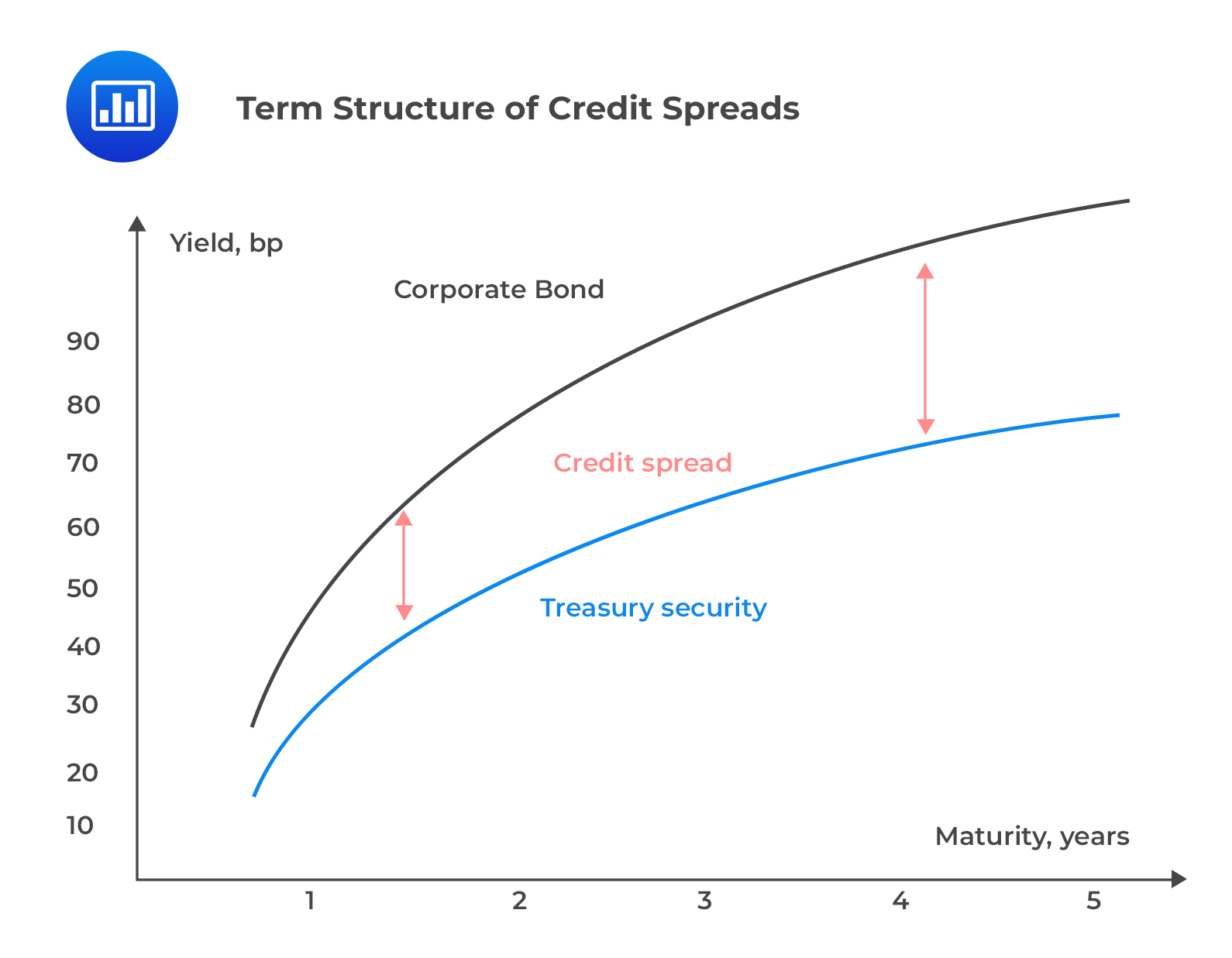
In the intricate world of finance, few concepts offer as much insight into market health, risk appetite, and investment opportunity as the credit spread. Far from being an arcane academic term, the credit spread is a vital pulse point, revealing the market’s assessment of credit risk and its implications for both investors and borrowers. At its core, a credit spread is the difference in yield between two debt instruments of similar maturity but different credit quality. This differential is not merely a statistical anomaly; it is a profound indicator, reflecting the additional compensation investors demand for taking on greater credit risk – the risk that a borrower might default on their obligations.
Understanding the credit spread is indispensable for anyone navigating the financial markets, from retail investors managing their personal portfolios to institutional managers making multi-billion dollar decisions. It influences bond prices, determines borrowing costs for corporations and governments, and often signals impending economic shifts. By dissecting this crucial metric, we gain a clearer picture of how risk is priced, how capital flows are directed, and where the smart money is likely heading.
Unpacking the Fundamentals: Defining the Credit Spread
To truly grasp the significance of the credit spread, one must first understand its foundational components and how they interact. It’s a concept built on the principle of risk-adjusted return, where investors expect higher compensation for assuming higher risk.
The Yield Differential at Its Core
The credit spread is fundamentally a yield differential. Imagine two bonds, both maturing in 10 years. One is issued by a highly stable, financially robust government (often considered “risk-free” in its domestic currency for practical purposes, like U.S. Treasury bonds), and the other is issued by a private corporation. Even if both bonds promise to pay interest, the market will likely demand a higher interest rate (and thus offer a lower price) for the corporate bond. This is because the corporation carries a higher perceived risk of default compared to the government. The difference between the yield of the corporate bond and the yield of the “risk-free” government bond is the credit spread. It’s the premium for credit risk.
This premium is typically quoted in “basis points” (bps), where one basis point equals 0.01%, or as a percentage. For instance, if a corporate bond yields 5% and a comparable Treasury bond yields 3%, the credit spread is 2% or 200 basis points.
The Components: Risk-Free Rate vs. Risky Assets
The two primary components that form a credit spread are:
-
The Risk-Free Rate: This is the theoretical rate of return an investor would expect from an investment with absolutely no risk of financial loss. In practice, the yield on government bonds (like U.S. Treasuries, German Bunds, or Japanese Government Bonds, depending on the currency) is used as a proxy for the risk-free rate. These bonds are backed by the full faith and credit of sovereign nations, making their default risk minimal, especially for developed economies.
-
The Risky Asset’s Yield: This refers to the yield of any debt instrument that carries a degree of credit risk. This could be a corporate bond, a municipal bond, a syndicated loan, or even a sovereign bond from a country perceived to have higher default risk than the chosen risk-free benchmark. The yield on these assets comprises the risk-free rate plus the credit spread (the compensation for credit risk) and potentially other premia such as liquidity premium or term premium.
Illustrative Examples: Corporate vs. Government Bonds
Consider a practical example. A 5-year U.S. Treasury bond might yield 3.00%. A 5-year bond issued by General Motors might yield 4.50%. The credit spread for General Motors’ 5-year bond over the U.S. Treasury is 1.50% or 150 basis points. This 150 bps is the market’s current assessment of the additional risk associated with lending to General Motors compared to lending to the U.S. government for the same duration.
Similarly, in the realm of international finance, a country like Italy might issue 10-year government bonds yielding 4.00%, while Germany’s 10-year Bunds yield 2.50%. The credit spread of Italian government debt over German Bunds is 1.50% or 150 basis points, reflecting the market’s perception of higher sovereign credit risk in Italy. These spreads are not static; they fluctuate constantly in response to new information, economic data, and market sentiment.
The Credit Spread as an Economic Barometer and Investment Tool
Beyond its technical definition, the credit spread serves as a potent indicator, offering valuable insights into the broader economic landscape and guiding strategic investment decisions.
Reflecting Economic Health and Investor Sentiment
Credit spreads are often referred to as a “canary in the coal mine” for the economy. When economic conditions are robust, companies are generally healthier, default risks are lower, and investor confidence is high. In such an environment, investors are more willing to take on risk, leading to narrower credit spreads (i.e., the yield premium for corporate bonds over government bonds shrinks). Conversely, during periods of economic uncertainty, recession fears, or financial crises, perceived default risks escalate, and investors flock to safer assets. This “flight to quality” drives up the demand for risk-free assets (lowering their yields) and simultaneously increases the demand for higher compensation on riskier assets (widening credit spreads). A sharp widening of credit spreads often precedes or accompanies economic downturns, signaling increased stress in the financial system.
Guiding Investment Decisions: Risk, Return, and Relative Value
For investors, understanding credit spreads is fundamental to constructing and managing a fixed-income portfolio.
-
Risk-Adjusted Returns: Investors use credit spreads to assess whether the additional yield offered by a risky asset adequately compensates them for its inherent credit risk. A bond with a high yield but a very narrow spread might suggest insufficient compensation for its risk.
-
Relative Value Investing: Sophisticated investors engage in relative value strategies by comparing the spreads of different issuers within the same industry or across industries, or comparing different maturities of the same issuer. If a company’s bond spread is unusually wide compared to its peers with similar credit quality, it might signal an undervalued opportunity. Conversely, a very narrow spread could indicate an overvalued asset.
-
Sector and Industry Allocation: Credit spreads can also inform strategic allocation decisions. If spreads in a particular industry are widening significantly, it might suggest underlying stress in that sector, prompting investors to reduce exposure.
Implications for Borrowers: Cost of Capital
The credit spread isn’t just an investor metric; it’s a critical determinant for borrowers. Corporations, municipalities, and even sovereign nations depend on bond markets to raise capital for their operations, investments, and public projects. The credit spread directly impacts their cost of borrowing. A wider credit spread means the borrower has to pay a higher interest rate to attract investors, increasing their financing costs. This can have significant implications for a company’s profitability, its ability to fund growth, or a government’s fiscal budget. For highly leveraged companies or nations, a sudden widening of spreads can trigger a liquidity crisis or even default if they cannot refinance existing debt at affordable rates.
Key Drivers and Influencers of Credit Spreads
Credit spreads are dynamic and influenced by a confluence of factors, ranging from the specific characteristics of the debt issuer to broad macroeconomic trends and global events.
Issuer-Specific Factors: Creditworthiness and Industry Dynamics

The most direct determinant of a credit spread is the perceived creditworthiness of the borrower. This is often quantified by credit ratings assigned by agencies like Standard & Poor’s, Moody’s, and Fitch.
-
Financial Health: A company’s profitability, cash flow, debt levels, and liquidity directly impact its ability to service debt. Strong financials typically lead to tighter spreads, while deteriorating metrics widen them.
-
Industry Outlook: The prospects of the industry in which an issuer operates are also crucial. A company in a declining or highly competitive industry might face wider spreads than one in a growth sector, even if their current financial health is similar.
-
Management Quality and Corporate Governance: The perceived quality of a company’s management and its governance practices can also influence investor confidence and, consequently, credit spreads.
-
Specific Debt Covenants: The terms and conditions (covenants) of a bond issue, such as restrictions on future borrowing or asset sales, can also affect its perceived risk and spread.
Macroeconomic Environment: Interest Rates, Inflation, and Growth
Broader economic forces exert a powerful influence on credit spreads:
-
Interest Rates: While a bond’s yield moves inversely with its price, the credit spread is relative to the risk-free rate. Rising benchmark interest rates can sometimes lead to wider spreads if investors perceive higher financing costs for borrowers or if it signals an impending economic slowdown. However, the relationship is complex and not always linear.
-
Inflation: High or volatile inflation can negatively impact a borrower’s real earnings and increase operating costs, potentially widening spreads. Central banks’ responses to inflation (e.g., interest rate hikes) can also ripple through credit markets.
-
GDP Growth: Strong economic growth generally improves corporate earnings and reduces default risk, leading to tighter spreads. Conversely, weak growth or recessionary fears tend to widen spreads.
-
Employment Data: Robust employment figures suggest a healthy economy, supporting tighter spreads, while rising unemployment points to economic weakness.
Market-Specific Conditions: Liquidity and Supply/Demand
The mechanics of the market itself play a significant role:
-
Market Liquidity: Bonds that are heavily traded and easy to buy or sell (highly liquid) typically have tighter spreads because investors require less compensation for the ability to exit their position quickly. Illiquid bonds, often from smaller issuers or less popular sectors, tend to have wider spreads.
-
Supply and Demand: A flood of new bond issuance can push prices down and yields up (widening spreads) if demand doesn’t keep pace. Conversely, strong demand for a limited supply of bonds can tighten spreads.
-
Investor Risk Appetite: During periods of “risk-on” sentiment, investors are more willing to take on credit risk, leading to tighter spreads. During “risk-off” periods, they flee to safety, causing spreads to widen.
Geopolitical Events and Systemic Risks
Major geopolitical events (e.g., wars, trade disputes, political instability) and systemic risks (e.g., financial crises, pandemics) can trigger rapid and dramatic movements in credit spreads. These events introduce uncertainty, increase perceived risks across the board, and often lead to a sharp widening of spreads as investors prioritize capital preservation over return. For instance, the global financial crisis of 2008 and the COVID-19 pandemic saw unprecedented widening of credit spreads across almost all asset classes.
Analyzing and Leveraging Credit Spreads in Practice
For practitioners in the financial markets, credit spread analysis is not just about understanding; it’s about action—identifying opportunities, managing risk, and optimizing portfolio performance.
Credit Spread Analysis in Fixed Income Investing
Fixed income portfolio managers constantly monitor credit spreads to make informed investment decisions. They analyze historical spread data, compare spreads across different issuers and sectors, and project future movements based on economic forecasts. This analysis helps them:
-
Identify Undervalued/Overvalued Securities: A bond with a spread that is significantly wider than its historical average or its peers might be undervalued, offering an attractive entry point. Conversely, a bond with an unusually tight spread might be overvalued, signaling a potential sell.
-
Sector Rotation: By observing spread differentials between different industries (e.g., financials vs. industrials), managers can strategically shift investments to sectors where they believe risk is being better compensated or where improvements are anticipated.
-
Duration Management: While credit spreads are primarily about credit risk, they also interact with interest rate risk. A bond with a longer duration will see its price more dramatically affected by changes in its yield, including those driven by credit spread movements.
Identifying Opportunities: Widening vs. Narrowing Spreads
-
Widening Spreads: When credit spreads widen, it indicates that investors are demanding higher compensation for credit risk. This can be a sign of deteriorating credit quality, increased economic uncertainty, or a general flight to safety. For brave investors, a significant widening of spreads in fundamentally sound companies can present buying opportunities if they believe the market is overreacting and the spreads will eventually narrow.
-
Narrowing Spreads: Conversely, narrowing spreads suggest improving credit quality, increased investor confidence, or an “animal spirits” environment where investors are chasing higher returns. For current bondholders, narrowing spreads lead to capital gains as bond prices increase. However, from a new investment perspective, very tight spreads might suggest limited upside and higher risk for the incremental return.
Hedging Credit Risk with Spreads
Sophisticated investors and institutions use credit spreads as a basis for hedging strategies, particularly through instruments like Credit Default Swaps (CDS). A CDS is essentially an insurance contract against a borrower’s default. The CDS spread is the annual premium paid by the buyer of the protection to the seller. If a corporate bond spread widens, indicating increased default risk, the cost of buying CDS protection on that entity will also typically increase. Investors can use CDS to hedge their direct bond holdings or to express a view on the credit health of an entity without owning its bonds directly.
The Interplay with Credit Ratings
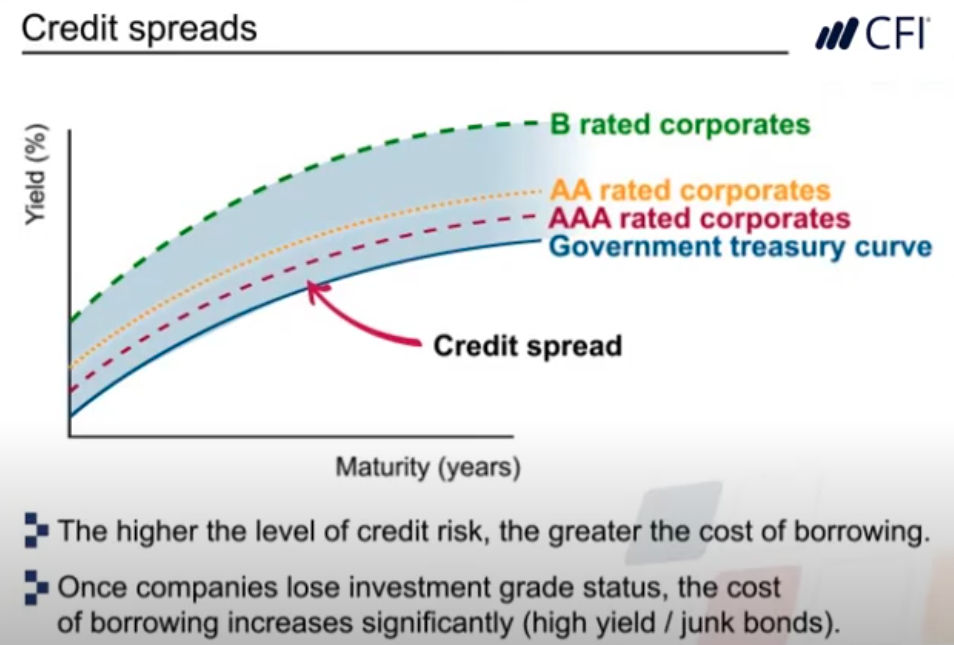
Credit ratings from agencies are foundational to credit spread analysis. A company’s rating (e.g., AAA, BBB, junk status) provides an initial assessment of its credit risk. Generally, higher-rated bonds (investment-grade) have tighter spreads than lower-rated bonds (high-yield or “junk” bonds). However, credit spreads offer a more real-time, market-driven assessment of risk than credit ratings, which can be slower to adjust. Spreads can anticipate rating changes and provide granular insights that a broad rating category might miss. Sometimes, the market’s perception (reflected in the spread) can diverge from the rating agencies’ view, creating potential opportunities or warnings.
Navigating the Complexities and Future Outlook
While immensely powerful, credit spread analysis is not without its complexities. Its interpretation requires a nuanced understanding of numerous interconnected variables.
Challenges in Credit Spread Interpretation
One of the biggest challenges is isolating the true “credit risk” component of a spread. Other factors like liquidity premiums, tax implications, and embedded options can also contribute to the yield differential, making it difficult to pinpoint the exact market-perceived credit risk. Furthermore, spreads can be volatile, especially for less liquid securities or during periods of market stress, making real-time analysis crucial but challenging. Distinguishing between a fundamental deterioration in credit quality versus a temporary market dislocation due to broader risk aversion requires deep research and experience.
The Evolving Landscape: Quantitative Models and Big Data
The future of credit spread analysis is increasingly intertwined with technological advancements. Quantitative models are becoming more sophisticated, incorporating a vast array of economic, financial, and even alternative data points to predict spread movements with greater accuracy. Big data analytics allows for the processing of massive datasets, identifying patterns and correlations that might be missed by traditional methods. Machine learning and artificial intelligence are being employed to build predictive models that can react to market events and news flows in real-time, offering a significant edge in a fast-paced environment.
Staying Ahead: Continuous Monitoring and Adaptation
In a globalized and interconnected financial system, credit spreads are in constant flux. Successful navigation requires continuous monitoring of financial news, economic indicators, geopolitical developments, and issuer-specific information. Investors and financial professionals must remain adaptable, ready to adjust their strategies as new information emerges and market dynamics shift. The ability to interpret widening and narrowing spreads, understand their underlying drivers, and translate that understanding into actionable investment decisions is a hallmark of astute financial management.
In conclusion, the credit spread is far more than just a number; it is a dynamic barometer of economic health, a precise tool for risk assessment, and a powerful guide for investment decisions within the money niche. Its insights are invaluable for anyone seeking to understand the true cost of money, the price of risk, and the ever-shifting opportunities in the debt markets. Mastery of this concept is a cornerstone for sound financial strategy in a complex world.
aViewFromTheCave is a participant in the Amazon Services LLC Associates Program, an affiliate advertising program designed to provide a means for sites to earn advertising fees by advertising and linking to Amazon.com. Amazon, the Amazon logo, AmazonSupply, and the AmazonSupply logo are trademarks of Amazon.com, Inc. or its affiliates. As an Amazon Associate we earn affiliate commissions from qualifying purchases.