
The proposal to eliminate federal income tax on tips has rapidly shifted from a niche campaign talking point to a central fixture of the national economic dialogue. For millions of service industry workers—from servers and bartenders to hair stylists and rideshare drivers—the prospect of keeping 100% of their gratuities represents a significant shift in personal finance management. However, moving from a political proposal to a functional change in the Internal Revenue Code is a complex process involving legislative hurdles, fiscal analysis, and administrative restructuring at the IRS.
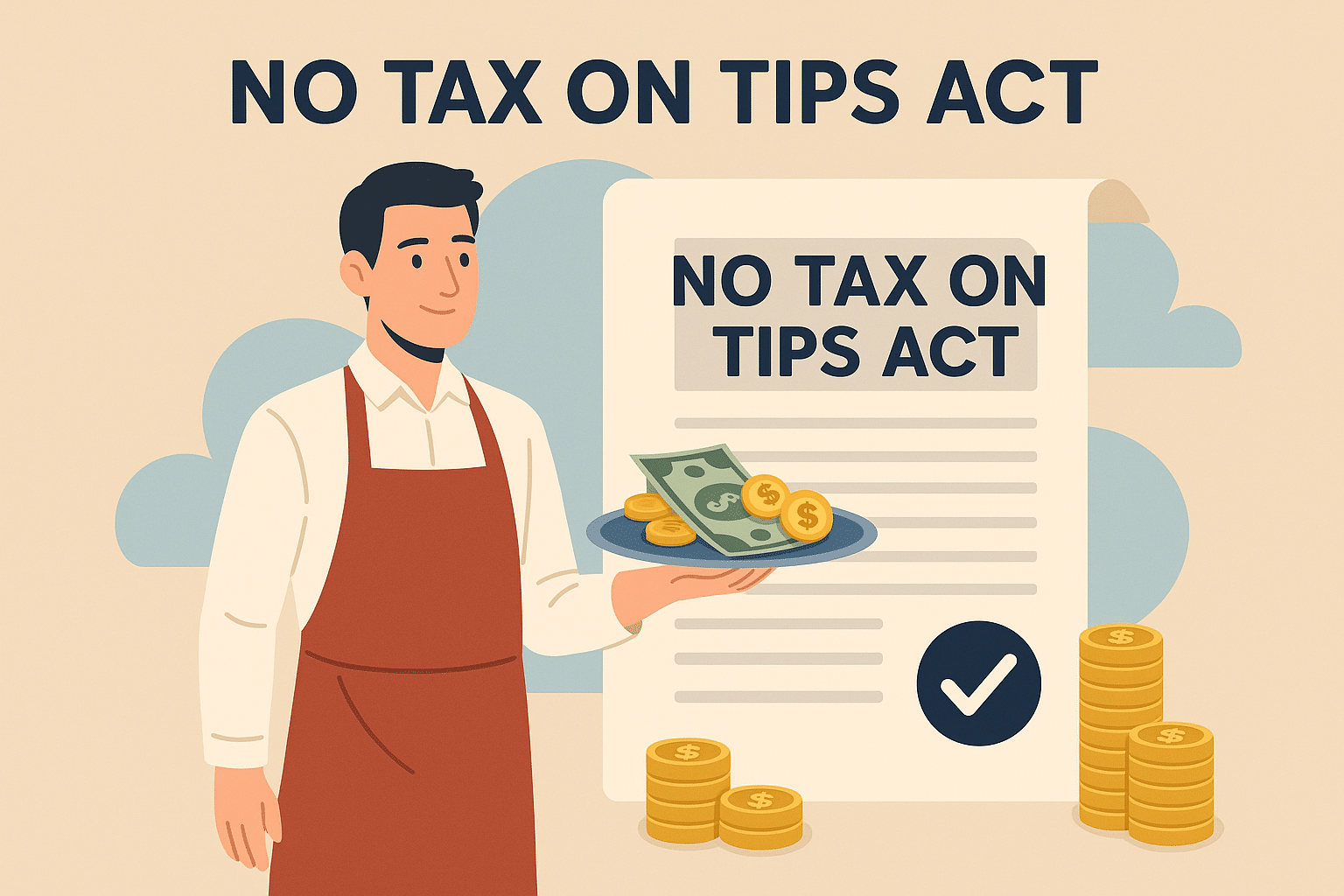
As it stands, there is no immediate “go-live” date for a “no tax on tips” policy because it has not yet been codified into federal law. To understand when such a change might go into effect and how it would reshape the financial landscape for both employees and employers, one must look at the current tax obligations, the legislative roadmap required for change, and the broader economic consequences of such a pivot.
The Current Landscape of Tip Taxation and Reporting
Under the existing U.S. tax framework, tips are considered taxable income, no different from hourly wages or annual salaries. The Internal Revenue Service (IRS) requires employees who receive more than $20 in tips in any given month to report those tips to their employer. These earnings are subject to federal income tax, as well as Social Security and Medicare taxes (often referred to as FICA).
From a personal finance perspective, tips are unique because they are often received in cash or via digital platforms that bypass immediate withholding. This creates a complex reporting environment. Currently, employers are responsible for withholding the employee’s share of taxes and paying the employer’s share of FICA based on the total income reported. For many workers in the service sector, the actual paycheck received from an employer might be remarkably small—sometimes near zero—because the taxes owed on their total tipped income are being deducted from their low base hourly wage.
The move to eliminate taxes on tips would fundamentally alter this cash-flow dynamic. If tips were exempt from federal income tax, the immediate “take-home” value of every shift would increase. However, the nuance of the proposal—specifically whether it applies only to federal income tax or also to payroll taxes—remains a critical point of debate among economists and tax professionals.
The Distinction Between Income Tax and Payroll Tax
When discussing “no tax on tips,” it is vital to distinguish between federal income tax and FICA taxes. If a policy only eliminates federal income tax, workers would still see deductions for Social Security and Medicare. If the policy eliminates both, the immediate financial boost to the worker is greater, but it raises long-term questions regarding the worker’s future Social Security benefits, which are calculated based on taxed earnings over a lifetime.
The Legislative Roadmap: When Could the Law Change?
For a “no tax on tips” policy to become reality, it must pass through the standard legislative process or be included in a larger tax reconciliation bill. Given the current political climate, the most likely window for this change is 2025.
The Role of the 2025 Tax Cliff
A significant portion of the Tax Cuts and Jobs Act (TCJA) of 2017 is set to expire at the end of 2025. This “tax cliff” will force Congress to debate a massive overhaul of the tax code. Most policy analysts believe that “no tax on tips” would be folded into these broader negotiations. If a bill is passed in the first half of 2025, it is possible that the changes could be made retroactive to the beginning of the tax year, though a more traditional implementation would see the changes take effect on January 1, 2026.
Legislative Drafting Challenges
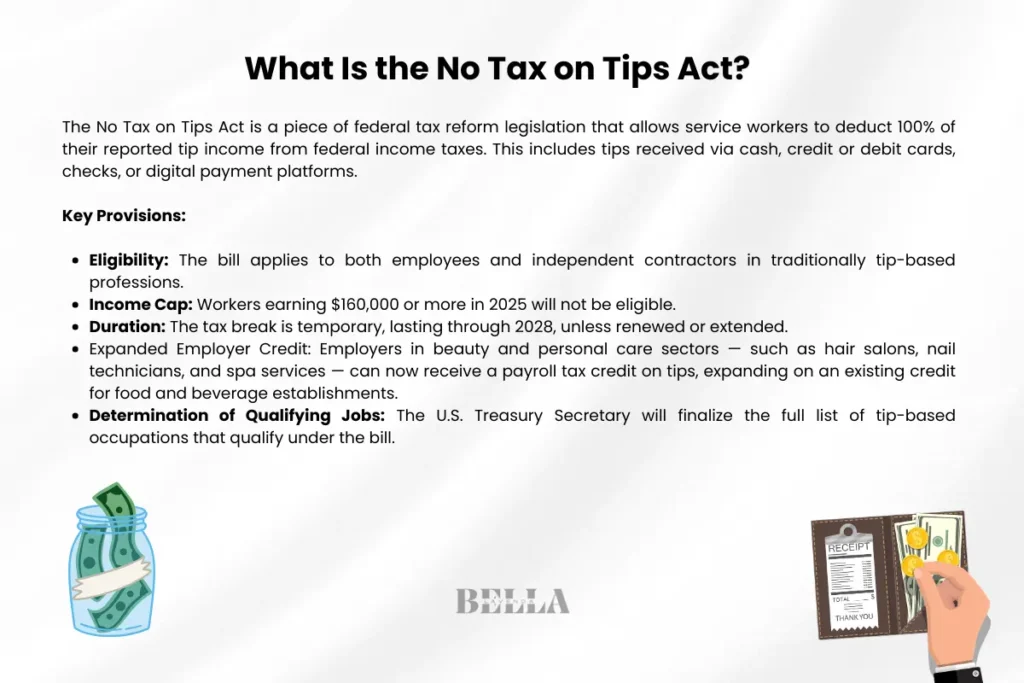
Writing the law is not as simple as striking a line from the tax code. Legislators must define exactly what constitutes a “tip.” Without a strict definition, there is a risk that high-earning professionals in other industries—such as lawyers or consultants—could attempt to reclassify portions of their fees as “tips” to avoid taxation. To prevent this “reclassification loophole,” the law would likely include income caps or industry-specific limitations, which adds layers of complexity to the drafting process and could delay implementation.
The Congressional Budget Office (CBO) Review
Before any such bill can move to a vote, the CBO must “score” it, providing an estimate of how much revenue the federal government will lose. Estimates suggest that eliminating taxes on tips could reduce federal revenue by $150 billion to $250 billion over ten years. Finding ways to offset this loss is a primary hurdle that could stall the “go-live” date of the policy.
Financial Implications for Service Workers and Personal Finance
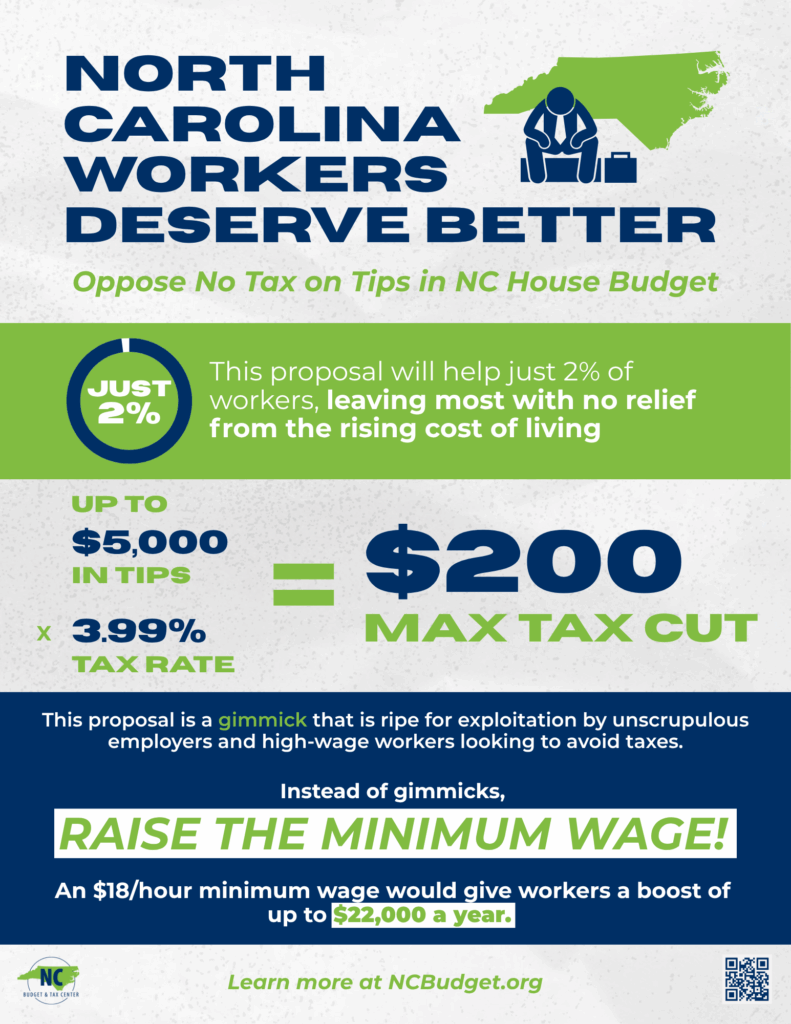
The elimination of taxes on tips would represent one of the most significant changes to personal finance for the service class in decades. For a worker earning $40,000 a year, with $20,000 of that coming from tips, the tax savings could range from $2,000 to $5,000 annually, depending on their tax bracket and filing status.
Impact on Take-Home Pay and Budgeting
The most immediate benefit is an increase in discretionary income. For many in the service industry, tips are used for immediate expenses like groceries and rent, while the bi-weekly paycheck covers larger fixed costs or taxes. If tips are untaxed, the “velocity of money” for these households increases. This could lead to higher rates of personal saving or increased consumer spending, which stimulates local economies.
The Retirement and Benefits Trade-off
However, there is a hidden financial risk. Social Security benefits are calculated based on your “taxed” earnings. If tips are no longer taxed, they are no longer “covered earnings.” This means a worker who spends thirty years in the service industry might find themselves with significantly lower Social Security checks upon retirement. Financial advisors would likely recommend that if this law passes, service workers must aggressively pivot toward private retirement accounts, such as Roth IRAs, to compensate for the reduction in future federal benefits.
Debt-to-Income Ratios and Borrowing
Another consideration is how lenders view untaxed income. When applying for a mortgage or a car loan, lenders look at “taxable income” to verify a borrower’s ability to repay. If a significant portion of a worker’s income is no longer reflected on their tax returns as taxable, it could paradoxically make it harder for them to qualify for loans unless the legislation specifically requires employers to continue tracking and verifying these earnings for credit purposes.
Business Strategy and Compliance: What Employers Need to Know
The transition to a “no tax on tips” environment would require a massive overhaul of payroll systems and accounting practices. Business owners in the hospitality and service sectors must prepare for several shifts in financial management.
Adjustments to Payroll Software
Currently, payroll providers automate the calculation of tip credits and tax withholdings. A change in the law would require a total reconfiguration of these systems. Employers would need to ensure that their software can distinguish between “taxable hourly wages” and “non-taxable tipped income” while still accurately calculating the employer’s portion of taxes, assuming the employer’s FICA obligations remain in place.
The Section 45B Credit
Under current law, many restaurant owners benefit from the Section 45B credit, which allows them to claim a tax credit for the FICA taxes they pay on employee tips. If tips are no longer taxed, this credit might disappear. For a large restaurant group, the loss of the 45B credit could represent a significant increase in their overall tax liability, potentially offsetting the perceived benefits of the policy for the industry as a whole. Business owners will need to conduct a cost-benefit analysis to see how the removal of tip taxes affects their bottom line.
Wage Structures and Competition
If tips become tax-free, they become “more valuable” than hourly wages. This could lead to a shift in how businesses attract talent. Employers might lean more heavily into tip-based models rather than higher base wages to offer the most attractive “net pay” package to employees. This could further solidify the tipping culture in the U.S., even as some regions have attempted to move toward a “no-tip, higher-wage” model.
The Future of Tipping Culture and Economic Oversight
While the primary focus of the “no tax on tips” debate is on the immediate financial gain for workers, the long-term implications for the economy and the IRS are profound.
IRS Oversight and Auditing
The IRS has historically struggled with the “tip gap”—the difference between tips actually received and those reported. If tips become tax-free, the incentive for workers to under-report might vanish, but the incentive for businesses to misclassify regular wages as tips would skyrocket. This would likely lead to increased IRS scrutiny of service-based businesses to ensure that hourly wages aren’t being artificially lowered and replaced with “guaranteed tips” just to avoid taxes.
Economic Distortion
Economists warn of potential “distortionary effects.” If one sector of the economy (service) becomes essentially tax-exempt while another (retail or manufacturing) remains fully taxed, it could lead to an unnatural shift in the labor market. People might migrate toward tipped professions not because they prefer the work, but because the tax-advantaged status of the income provides a higher standard of living than skilled labor in other sectors.
Ultimately, the question of when “no tax on tips” goes into effect is tied to the 2024 election cycle and the subsequent legislative session in 2025. While the concept has gained bipartisan traction, the financial machinery required to implement it—ranging from new IRS forms to restructured payroll algorithms—means that even with a fast-tracked bill, a functional start date earlier than 2026 is unlikely. For now, workers and business owners should continue to maintain meticulous records under the current system, while preparing their financial strategies for a potentially radical shift in how the service economy is taxed.
aViewFromTheCave is a participant in the Amazon Services LLC Associates Program, an affiliate advertising program designed to provide a means for sites to earn advertising fees by advertising and linking to Amazon.com. Amazon, the Amazon logo, AmazonSupply, and the AmazonSupply logo are trademarks of Amazon.com, Inc. or its affiliates. As an Amazon Associate we earn affiliate commissions from qualifying purchases.