
The phenomenon of a “wandering baseline” is a common and often frustrating technical issue encountered across a multitude of technological applications, from sophisticated scientific instruments and medical diagnostic equipment to everyday audio systems and industrial sensors. At its core, a wandering baseline refers to an undesirable, slow, and often irregular deviation or drift in the baseline of a measured signal. Instead of remaining stable at a zero or reference point, the entire signal appears to fluctuate up and down, making accurate measurement, interpretation, and analysis significantly more challenging. Understanding the root causes of this technical anomaly is paramount for effective troubleshooting, system design, and ensuring data integrity in various tech environments.
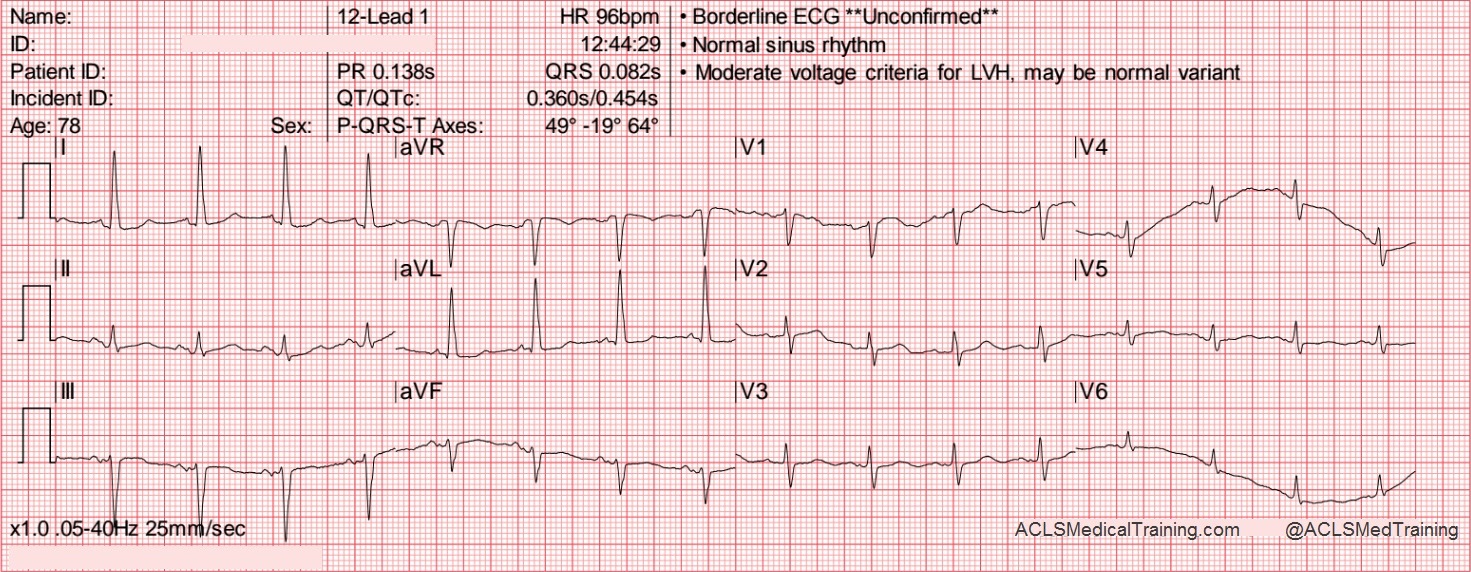
The Nature of Baseline Wander in Technical Systems
A wandering baseline manifests as a low-frequency drift that superimposes itself upon the actual signal of interest. This makes it difficult to distinguish the true signal peaks or valleys from the shifting baseline, leading to potential misinterpretations, reduced signal-to-noise ratio, and compromised data quality. While the specific impact varies by application, the underlying mechanisms often share common technical principles related to stability, interference, and component performance.
In medical diagnostics, such as electrocardiography (ECG) or electroencephalography (EEG), a wandering baseline can obscure critical cardiac rhythms or brainwave patterns, potentially leading to diagnostic errors. In analytical chemistry, instruments like spectrophotometers, chromatographs, or pH meters might exhibit baseline drift due to environmental changes or sensor degradation, affecting the accuracy of quantitative analysis. Similarly, in high-precision measurement systems, industrial sensors, or even audio recording setups, unwanted baseline shifts can introduce noise, distort readings, or compromise the fidelity of the output. The broad applicability of this issue highlights its significance across the technological landscape, from research and development to manufacturing and consumer electronics.
Environmental and External Electromagnetic Interferences
Many causes of a wandering baseline stem from the immediate environment surrounding the technological system or from external forces acting upon it. These factors often introduce subtle, low-frequency changes that manifest as baseline drift.
Temperature and Humidity Fluctuations
Most electronic components and sensors are designed to operate within specific temperature ranges. Significant or rapid changes in ambient temperature can cause components to expand or contract, altering their electrical properties (e.g., resistance, capacitance, gain) and leading to drift. Thermoelectric effects within circuits, where temperature gradients generate small voltages, can also contribute to baseline instability. Humidity, too, plays a role, particularly in sensitive circuits where moisture can affect insulation resistance or cause condensation, leading to leakage currents and altered electrical pathways that manifest as a slow baseline shift. Instruments that are not properly stabilized or shielded from environmental variability are particularly susceptible.
Electromagnetic Interference (EMI) and Radio Frequency Interference (RFI)
The modern technological environment is saturated with electromagnetic fields generated by power lines, communication devices, motors, fluorescent lights, and other electronic equipment. These fields can induce unwanted currents or voltages in sensitive signal paths, cables, and sensors. While high-frequency EMI/RFI often appears as broadband noise, low-frequency components of these interferences, or slowly changing field strengths, can manifest as a wandering baseline. Poorly shielded cables, inadequate grounding, or proximity to strong electromagnetic sources are common culprits. For example, a medical device placed too close to a running refrigerator or a laboratory instrument near a high-power radio transmitter might pick up these interferences.
Mechanical Vibration and Movement
Physical movement or vibration of the measurement setup can directly impact the stability of signals, especially in systems relying on precise physical alignment or sensitive transducers. In medical applications, patient movement is a primary cause of wandering baselines in ECGs. Even subtle vibrations from machinery, building movements, or acoustic noise can be transmitted through instrument casings to sensitive components, causing microphonic effects or transient changes in electrical connections that appear as baseline drift. This is particularly relevant for optical systems, force transducers, and accelerometers where mechanical stability is paramount.
Hardware, Sensor, and Connection Imperfections
The physical integrity and performance of the hardware components within a system are critical determinants of baseline stability. Degradation, manufacturing flaws, or poor integration can all contribute to a wandering baseline.
Sensor Degradation and Aging
Sensors are the primary interface between the physical world and the electrical system. Over time, sensors can degrade due to chemical exposure, physical wear, or simply aging. This degradation can alter the sensor’s fundamental characteristics, such as its impedance, sensitivity, or offset voltage, leading to a slow, continuous drift in its output even when the measured parameter is constant. Examples include electrode corrosion in pH meters, fatigue in strain gauges, or changes in photosensitive materials in optical detectors. Regular calibration and timely replacement of aging sensors are crucial.

Faulty Cables, Connectors, and Electrodes
The often-overlooked components like cables and connectors are frequently responsible for baseline wander. Loose connections, corroded contacts, damaged insulation, or poor quality cabling can introduce variable resistance, intermittent contact, or act as antennas for picking up interference. In medical devices, poorly applied or dried-out electrodes significantly increase skin impedance, making the system more susceptible to environmental noise and causing dramatic baseline shifts with patient movement. Similarly, in laboratory settings, old or low-quality coaxial cables can introduce noise and signal reflection, contributing to an unstable baseline.
Inadequate or Improper Grounding
Grounding is fundamental for electrical stability. An improper or “dirty” ground can create potential differences across different parts of a circuit, leading to ground loops. A ground loop occurs when there are multiple paths to ground, allowing stray currents to flow and induce small, variable voltages that are then superimposed on the signal path. These induced voltages often have a low-frequency component (e.g., 50/60 Hz power line frequency or its harmonics) or fluctuate slowly, appearing as a wandering baseline. Isolated grounds, single-point grounding, and proper shielding are essential to mitigate these issues.
Component Drift and Noise in Amplification Stages
Electronic components like resistors, capacitors, and operational amplifiers are not perfect. Their characteristics can drift with temperature, age, or voltage variations. Amplifiers, especially low-noise, high-gain stages, can introduce their own low-frequency noise components, known as “1/f noise” or “flicker noise,” which becomes more prominent at lower frequencies and can manifest as a slow baseline drift. If the input stage of an amplifier is not well-designed or adequately stabilized, even minuscule changes can be amplified, leading to significant baseline wander at the output.
Power Supply and Electrical System Instabilities
The quality and stability of the electrical power supplied to a technological system directly influence its operational integrity. Fluctuations and imperfections in the power supply are significant contributors to baseline wander.
Power Line Noise and AC Ripple
Alternating current (AC) power lines are inherently noisy. They carry voltage fluctuations, transients, and harmonics in addition to the fundamental frequency (50 or 60 Hz). If a power supply unit (PSU) is poorly designed, aging, or inadequate for the demand, it may not effectively filter out these imperfections. The remaining “AC ripple” (small, unwanted AC voltage riding on the DC output) can introduce a periodic or slowly varying component into the system’s power rails. This ripple, especially its low-frequency components, can then couple into sensitive analog circuits, causing the baseline to wander or oscillate subtly at the ripple frequency or its sub-harmonics.
Voltage Fluctuations and Transients
Beyond ripple, the main power grid can experience general voltage fluctuations, sags, swells, or brief transient spikes due to external electrical events (e.g., motors starting, lightning strikes, grid switching). While modern power supplies often include regulation, severe or sustained fluctuations can impact the stability of regulated DC outputs, leading to subtle changes in reference voltages or operating points within the electronic circuits. These shifts, particularly if slow or intermittent, can be misinterpreted as a wandering baseline. Uninterruptible Power Supplies (UPS) or dedicated line conditioners can help mitigate these issues.
Ground Loops Revisited (Power System Context)
While mentioned under hardware, ground loops are often exacerbated by the power distribution system. If an instrument is connected to power via one outlet and a peripheral (e.g., a computer, external display, or data acquisition unit) connected to the same instrument is powered from a different outlet, slight differences in the ground potential between these outlets can create a ground loop. This difference can cause measurable current to flow through the signal cable’s shield or ground wire, inducing a voltage that adds to the signal and causes baseline drift. This is a common problem in complex setups involving multiple interconnected devices.
Data Acquisition and Signal Processing Shortcomings
Even with pristine hardware and a stable environment, issues within the digital interface and processing algorithms can introduce or fail to correct for baseline wander.
Analog-to-Digital Converter (ADC) Noise and Drift
Analog-to-Digital Converters (ADCs) are crucial components that translate continuous analog signals into discrete digital values. While ADCs are designed for precision, they are not immune to noise and drift. Offset drift in the ADC’s input stage or reference voltage variations can cause the entire digital baseline to shift over time. Quantization noise, though usually random, can sometimes contribute to the perception of baseline instability if not properly managed, particularly for very low-amplitude signals.
Improper Filtering and Signal Conditioning
Signal conditioning circuits, including filters, are designed to clean up and optimize the analog signal before digitization. If the chosen filters are inappropriate for the signal’s characteristics or the expected noise profile, they can exacerbate or fail to address baseline wander. For instance, a high-pass filter is often used to remove DC offset and low-frequency baseline drift. However, if its cutoff frequency is too high, it might distort the actual signal. Conversely, if no appropriate low-frequency rejection filter is used, existing baseline wander will pass straight through to the digital domain. Moreover, poorly designed filter components can introduce their own drift.

Calibration Errors and Drift
Regular calibration is essential for maintaining accuracy in any measurement system. If a system’s calibration is performed incorrectly, or if the calibration itself drifts over time due to component aging or environmental changes, the reported baseline values will shift. A common scenario is when a system is calibrated at one temperature and then operated at another, causing a thermal drift that appears as a wandering baseline. Automated or periodic self-calibration routines, along with stable internal references, are vital for long-term baseline stability in advanced tech systems.
In conclusion, a wandering baseline in technical systems is rarely attributable to a single cause but rather a confluence of environmental factors, hardware imperfections, electrical instabilities, and data processing nuances. A holistic understanding of these diverse causes is fundamental for engineers, technicians, and users to effectively diagnose, prevent, and mitigate this pervasive technical challenge, thereby ensuring the reliability and accuracy of critical technological measurements and applications.
aViewFromTheCave is a participant in the Amazon Services LLC Associates Program, an affiliate advertising program designed to provide a means for sites to earn advertising fees by advertising and linking to Amazon.com. Amazon, the Amazon logo, AmazonSupply, and the AmazonSupply logo are trademarks of Amazon.com, Inc. or its affiliates. As an Amazon Associate we earn affiliate commissions from qualifying purchases.