
The sudden downturn in a high-profile stock like NVIDIA (NVDA) often prompts investors and market watchers to seek immediate answers. While specific, isolated incidents can sometimes trigger sharp declines, stock market movements, especially for widely held and influential companies, are rarely attributable to a single cause. Instead, a confluence of macroeconomic shifts, sector-specific pressures, company-specific developments, and evolving investor sentiment typically orchestrates these price corrections. Understanding these intricate layers is crucial for navigating investment decisions and distinguishing between temporary market noise and fundamental shifts.
The Dynamics of Market Correction and NVIDIA’s Valuation
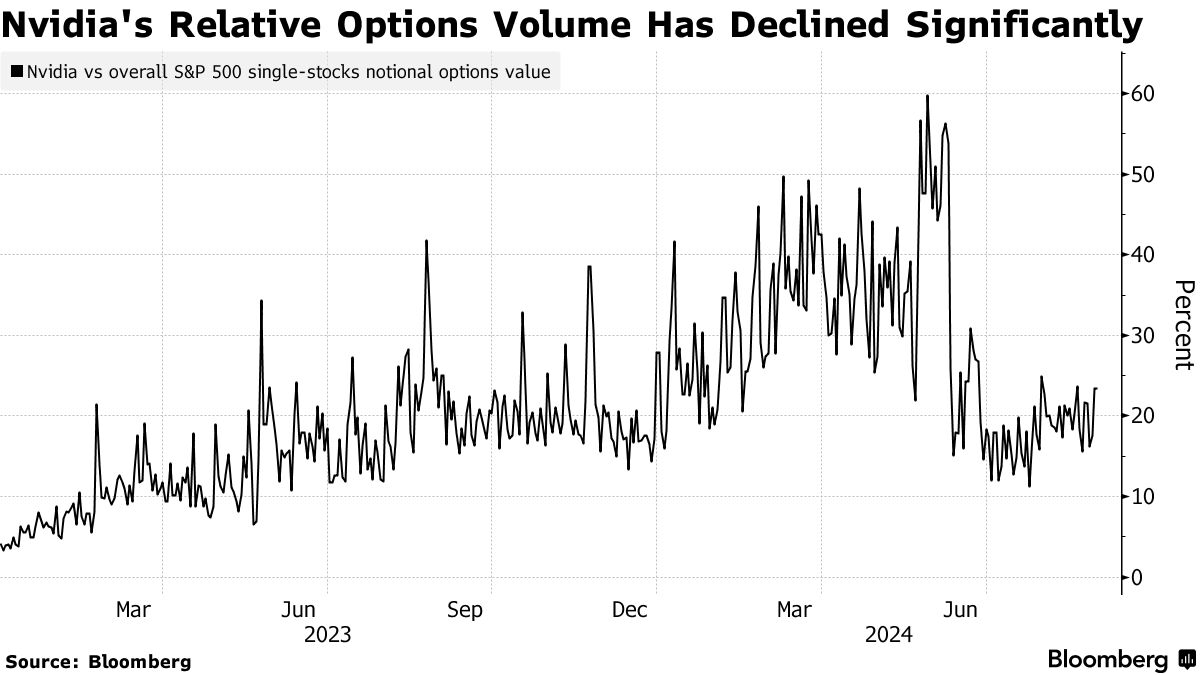
NVIDIA’s journey to becoming one of the most valuable semiconductor companies in the world has been nothing short of spectacular, primarily driven by its dominance in graphics processing units (GPUs) essential for gaming, professional visualization, and, most significantly, artificial intelligence (AI) and data centers. This rapid ascent, however, often leads to elevated valuations that are highly susceptible to market shifts.
Unpacking NVIDIA’s Rapid Ascent and High Expectations
For years, NVIDIA has ridden successive waves of technological innovation, from the gaming boom to the cryptocurrency craze, and more recently, the explosion of generative AI. Each wave has propelled its revenue growth and profitability, leading investors to price in increasingly optimistic future growth scenarios. This often translates into high valuation multiples, such as a high price-to-earnings (P/E) ratio or price-to-sales (P/S) ratio, indicating that a significant portion of its current stock price is based on anticipated future performance rather than just current fundamentals.
While such valuations are justifiable for companies with strong competitive moats and clear growth runways, they also mean that the stock becomes particularly sensitive to any perceived threats to that growth trajectory or any broader re-evaluation of market risk. Investors have high expectations for NVDA, and even a slight miss or a cautious outlook can trigger disproportionate reactions.
The Inevitability of Pullbacks
Even the most robust growth stocks are not immune to market corrections. A “drop” can often be a healthy part of a stock’s cycle, serving as a rebalancing mechanism. It can be caused by profit-taking, where long-term investors or traders sell off a portion of their holdings to lock in gains after a significant run-up. Alternatively, it might reflect a broader market rotation, where institutional money shifts from high-growth, high-valuation stocks to more defensive, value-oriented assets, particularly during periods of economic uncertainty. These pullbacks, while unsettling in the short term, are often a natural process where the market recalibrates expectations and valuations.
Macroeconomic Currents and Sector-Specific Pressures
The broader economic environment plays a profound role in dictating investor appetite for various asset classes, and high-growth technology stocks are particularly sensitive to these shifts.
Interest Rates and the Cost of Capital
One of the most significant macroeconomic factors impacting growth stock valuations is interest rates. When central banks embark on a cycle of interest rate hikes, it has a twofold effect. Firstly, it increases the cost of borrowing for companies, potentially impacting their ability to fund future growth initiatives. Secondly, and more critically for valuation, higher interest rates increase the “discount rate” used in financial models to calculate the present value of a company’s future earnings. Since growth stocks like NVIDIA are valued heavily on their projected future cash flows, a higher discount rate significantly reduces their present valuation. As risk-free rates (like government bond yields) rise, the relative attractiveness of higher-risk equities, especially those with stretched valuations, diminishes. Investors demand a higher premium for holding equities, leading to a downward re-evaluation of prices.
Inflationary Concerns and Consumer Spending
Persistent inflation erodes consumer purchasing power, potentially impacting demand for NVIDIA’s products in consumer-facing segments like gaming GPUs. More broadly, high inflation can lead to increased operational costs for businesses, including raw materials, labor, and logistics, which can squeeze profit margins if companies cannot pass these costs onto customers. Furthermore, if inflation prompts aggressive monetary tightening, it can lead to a general economic slowdown or even a recession, which would invariably impact enterprise spending on data center infrastructure and AI investments, a crucial growth engine for NVIDIA.
Geopolitical Tensions and Supply Chain Volatility
The semiconductor industry is inherently globalized, making it highly vulnerable to geopolitical tensions and supply chain disruptions. Trade disputes, regional conflicts, or even stricter export controls by governments can disrupt the flow of critical components, raw materials, or finished products. NVIDIA, like many others in the industry, relies on complex global supply chains for manufacturing, assembly, and distribution. Any severe disruption can lead to production delays, increased costs, and ultimately, missed revenue targets, all of which can weigh heavily on investor sentiment and stock performance.
Company-Specific Catalysts and Shifting Investor Sentiment
While macro factors set the stage, specific company developments and how they are perceived by the market are often the immediate triggers for a stock drop.
Earnings Reports and Forward Guidance
NVIDIA’s quarterly earnings reports are pivotal moments. Even if a company meets or slightly beats analyst expectations for current revenue and earnings per share (EPS), a significant miss on future guidance can send the stock tumbling. Forward guidance provides investors with management’s outlook on upcoming quarters and often sets the tone for future analyst revisions. If management offers a more conservative outlook due to anticipated slowdowns in certain segments, increased competition, or supply chain issues, investors may interpret this as a deceleration of growth, leading to a sell-off. Similarly, any unexpected slowdown in key segments like data center growth or a significant inventory correction in gaming can unnerve the market.
Competitive Landscape and Innovation Hurdles
Despite NVIDIA’s formidable position, the competitive landscape in semiconductors is fierce. Competitors like AMD are continually innovating in GPUs and CPUs, while major hyperscalers (e.g., Google, Amazon, Microsoft) are increasingly developing their own custom AI chips (ASICs) to reduce reliance on third-party providers. While NVIDIA’s CUDA ecosystem and technological lead remain strong, any perception of a narrowing competitive gap, slower-than-expected product cycles, or challenges in maintaining its innovation edge could lead to investor concern. Doubts about future market share or profit margins, even if speculative, can impact a stock with a premium valuation.
Analyst Revisions and Institutional Trading
The opinions and actions of major financial institutions and analysts hold considerable sway over stock prices. A downgrade from a prominent investment bank or a significant reduction in a price target can trigger a wave of selling, especially from institutional investors who often adjust their portfolios based on such recommendations. Similarly, large-scale selling by hedge funds, mutual funds, or other institutional players, whether due to rebalancing, risk aversion, or a change in investment thesis, can exert substantial downward pressure on a stock’s price, often exacerbating short-term volatility.
Navigating Volatility: A Long-Term Investor’s Perspective
For long-term investors, a significant drop in a stock like NVIDIA, while concerning, can also present an opportunity for re-evaluation and strategic action rather than panic.
The Importance of Due Diligence
A stock drop necessitates a return to fundamental analysis. Investors should revisit their initial investment thesis: Have the core reasons for investing in NVIDIA changed? Is the company’s long-term growth trajectory still intact? Are its competitive advantages still robust? Focus on the underlying business health, its balance sheet, cash flow generation, technological leadership, and market positioning rather than succumbing to short-term market noise. Understanding the nature of the drop – whether it’s macro-driven, sector-specific, or company-specific – helps in assessing the long-term impact.
Dollar-Cost Averaging and Portfolio Diversification
For those with a long-term outlook, a significant price correction can be an opportunity to buy more shares at a lower price through dollar-cost averaging, thereby reducing the average cost of their holdings over time. This strategy helps mitigate the risk of trying to time the market perfectly. Furthermore, the episode underscores the critical importance of portfolio diversification. Relying too heavily on a single stock, no matter how promising, exposes an investor to undue risk. A diversified portfolio across different asset classes, sectors, and geographies can cushion the impact of volatility in any single holding.
Separating Noise from Fundamental Shift
The market is inherently emotional and reactive in the short term. It’s crucial for investors to differentiate between temporary market jitters or profit-taking and genuine, long-term shifts in a company’s business prospects. While macroeconomic headwinds can create temporary pressures, a fundamentally strong company with solid innovation, robust financials, and a clear growth strategy is often well-positioned to recover and thrive once the broader market conditions stabilize. A stock drop should prompt an objective re-assessment, not an impulsive reaction.
aViewFromTheCave is a participant in the Amazon Services LLC Associates Program, an affiliate advertising program designed to provide a means for sites to earn advertising fees by advertising and linking to Amazon.com. Amazon, the Amazon logo, AmazonSupply, and the AmazonSupply logo are trademarks of Amazon.com, Inc. or its affiliates. As an Amazon Associate we earn affiliate commissions from qualifying purchases.