
In the landscape of American commercial real estate, the “mega-mall” stands as a testament to the sheer scale of capital investment and consumer psychology. While the narrative of the “retail apocalypse” has dominated financial headlines for the past decade, a specific class of assets has defied the downward trend of traditional brick-and-mortar stores. When we ask, “What is the biggest shopping mall in America?” we are not just asking about square footage; we are inquiring about a multi-billion dollar economic ecosystem that serves as a cornerstone of regional finance and international investment.
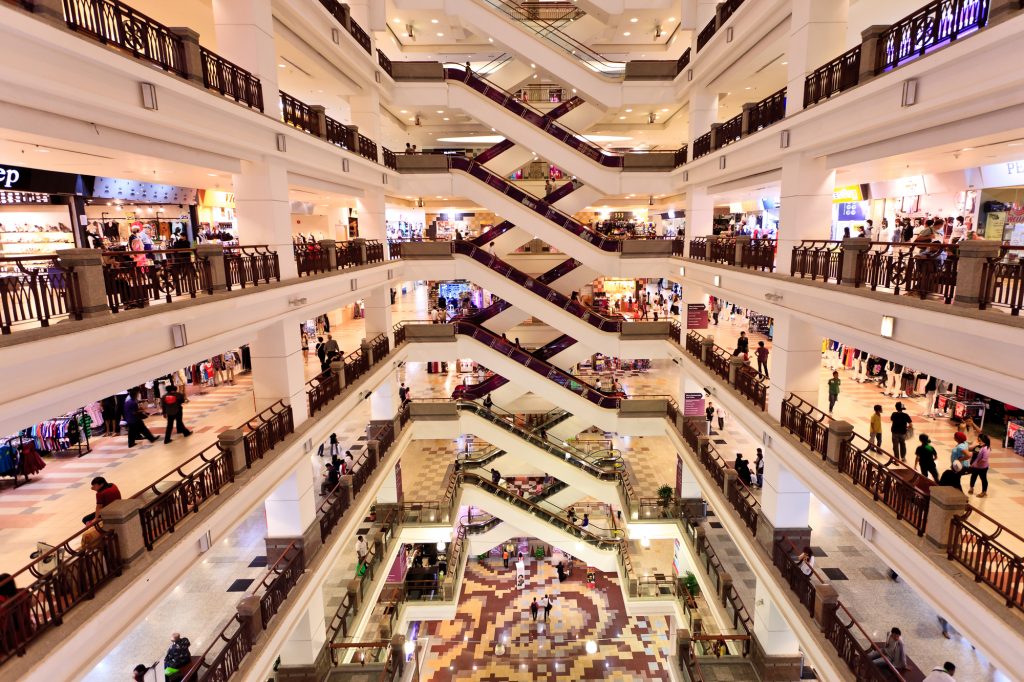
The title of the largest mall in the United States is a contest between two massive properties owned by the same entity, the Triple Five Group: the Mall of America in Bloomington, Minnesota, and the American Dream mall in East Rutherford, New Jersey. From a financial perspective, these are not merely shopping centers; they are complex financial instruments that blend retail, entertainment, and hospitality into a singular revenue-generating machine.
The Battle for the Crown: Identifying America’s Largest Malls by Revenue and Footprint
To understand the financial magnitude of these entities, one must look at the physical and fiscal footprints they occupy. The Mall of America (MOA) has long held the title of the largest mall in the U.S. by total stores and square footage, while the American Dream mall serves as a modern challenger with a focus on high-density entertainment investment.
Mall of America: The Multi-Billion Dollar Economic Engine
Opened in 1992, the Mall of America represents one of the most successful long-term plays in commercial real estate history. Spanning over 5.6 million square feet, the MOA is a city unto itself. Financially, its success is rooted in its ability to attract over 40 million visitors annually—a figure that exceeds the population of several mid-sized countries.
For investors and analysts, the MOA is a study in “destination economics.” It generates billions of dollars in economic activity for the state of Minnesota. The mall’s financial structure relies on high-occupancy rates and a diverse tenant mix that ranges from high-end luxury to essential services. Because it functions as a tourist destination, its revenue streams are more resilient to local economic downturns compared to standard suburban malls.
American Dream: The High-Stakes Investment in Retail-tainment
The American Dream mall is a fascinating financial case study in risk and reward. With a development cost exceeding $5 billion, it represents one of the most expensive retail projects ever conceived. While slightly smaller in terms of pure retail store count than the MOA, its financial model is heavily weighted toward “retail-tainment.”
Nearly 50% of the American Dream’s footprint is dedicated to entertainment, including an indoor ski slope, a DreamWorks water park, and a Nickelodeon Universe theme park. This capital-intensive strategy is designed to create a “moat” against e-commerce. By investing heavily in experiences that cannot be replicated online, the developers have gambled on a high-margin, high-overhead model that seeks to capture a larger share of the “experience economy” wallet.
The Business Model of the Mega-Mall: Beyond Traditional Retail
The financial viability of America’s largest malls rests on a sophisticated business model that transcends the simple landlord-tenant relationship. In the modern era, the “biggest” mall is defined by its ability to diversify income and maximize the “average revenue per visitor.”
Diversification of Income Streams
The traditional mall model relied almost exclusively on base rent and “percentage rent” (a portion of the tenant’s gross sales). However, the largest malls in America have pivoted to a multi-channel revenue approach. This includes:
-
Sponsorships and Naming Rights: Much like a professional sports stadium, mega-malls sell naming rights to attractions and zones within the facility.
-
Hospitality Integration: By integrating on-site hotels (such as the JW Marriott and Radisson Blu at the Mall of America), the malls capture the overnight travel budget of international tourists, significantly increasing the “length of stay” and total spend.
-
Advertising and Media: With tens of millions of eyeballs passing through their corridors, these malls function as massive out-of-home (OOH) advertising platforms, charging premium rates for digital signage and brand activations.
The Role of Anchor Tenants in Commercial Real Estate Value
Historically, the financial health of a mall was tied to its “Anchor Tenants”—usually large department stores like Macy’s or Nordstrom. In the biggest malls in America, the definition of an anchor has shifted. Today, a theme park or a massive flagship Apple Store serves as the anchor.
From a valuation perspective, these anchors are essential for securing favorable financing terms. Lenders view these high-traffic attractions as “demand generators” that guarantee a steady flow of consumers for the smaller, higher-rent-paying specialty tenants. The synergy between these low-rent/high-traffic anchors and high-rent/low-traffic boutiques is the fundamental math that keeps these billion-dollar assets afloat.
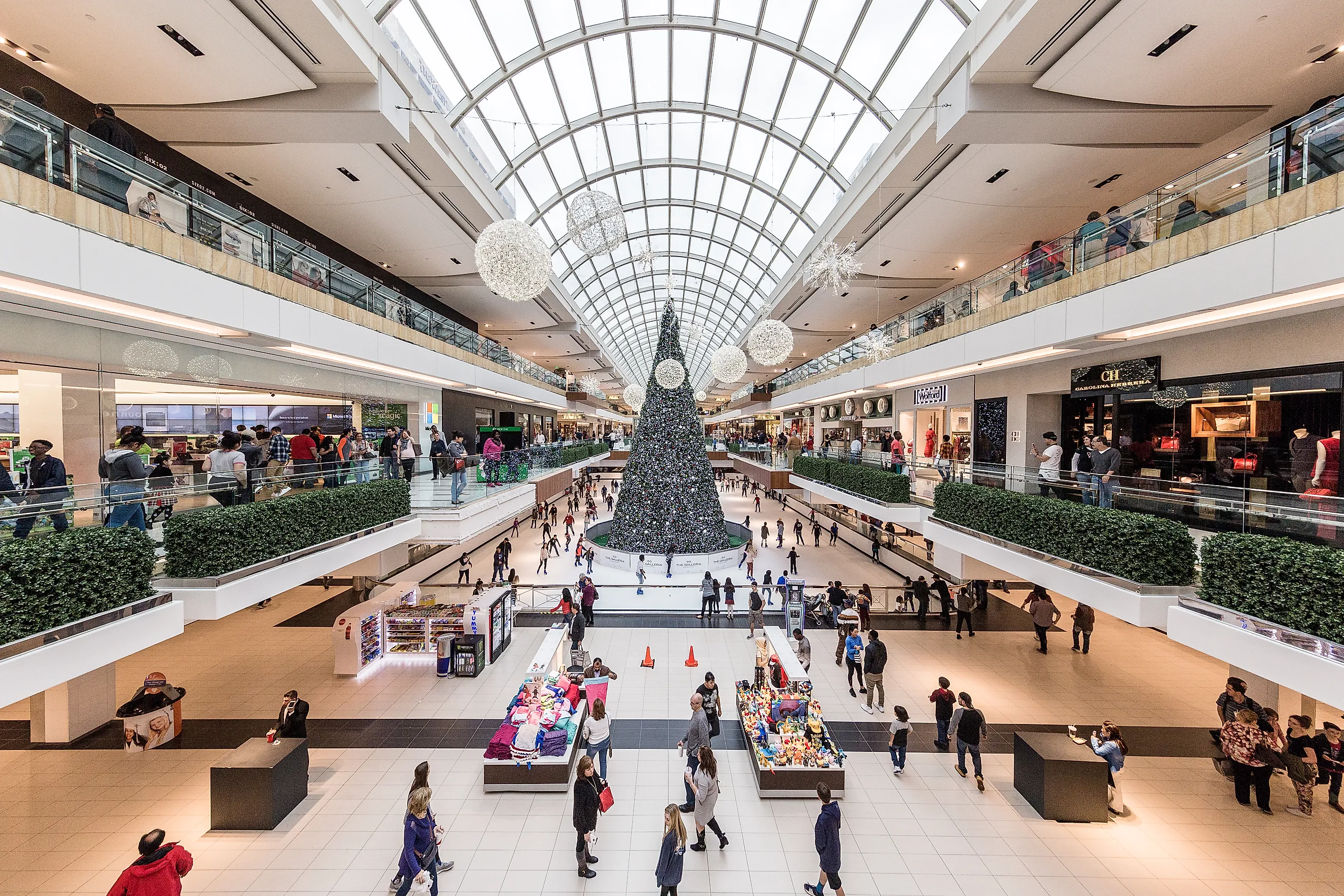
Financial Resilience in the Age of E-Commerce
The primary question investors ask when looking at the biggest malls in America is: “How do they survive Amazon?” The answer lies in the strategic deployment of capital expenditures (CapEx) and the institutionalization of the retail experience.
Capital Expenditures (CapEx) for Experiential Upgrades
To maintain their valuation, the Mall of America and American Dream must constantly reinvest in their physical infrastructure. This is not just about maintenance; it is about “re-tenanting.” When a traditional retailer fails, the mall’s management often spends millions to subdivide that space into fitness centers, medical clinics, or interactive museums.
This agility requires significant liquidity. The ability to pivot the use of 100,000 square feet from a failing department store to a profitable “competitive socializing” venue (like high-end bowling or indoor mini-golf) is what separates the survivors from the casualties of the retail shift. These upgrades are expensive, but they drive the foot traffic necessary to maintain the appraisal value of the entire property.
Real Estate Investment Trusts (REITs) and Stakeholder Interests
Many of the largest shopping centers in the U.S. are owned or managed by Real Estate Investment Trusts (REITs) or large private equity groups. These organizations are beholden to shareholders and bondholders, meaning their financial reporting is transparent and rigorous.
The financial health of these malls is often measured by Net Operating Income (NOI) and Funds From Operations (FFO). For a mall to be considered “the biggest” in a financial sense, it must demonstrate a growing NOI despite the headwinds of digital shopping. Analysts look at “sales per square foot” as the gold standard of mall health; America’s top-tier malls often see figures exceeding $1,000 per square foot, a stark contrast to the $300-$400 range seen in struggling secondary malls.
The Macroeconomic Impact on Regional Growth
The largest malls in America are more than just shopping centers; they are massive contributors to the Gross Domestic Product (GDP) of their respective regions. Their financial tendrils reach into public infrastructure, labor markets, and tax policy.
Employment and Tax Revenue Generation
The Mall of America employs over 11,000 year-round workers, a number that swells significantly during the holiday season. From a municipal finance perspective, these malls are “cash cows.” They generate hundreds of millions of dollars in sales tax, property tax, and payroll tax.
For the city of Bloomington, MN, or East Rutherford, NJ, the mall is often the single largest taxpayer. This creates a symbiotic relationship where the local government is incentivized to invest in roads, public transit, and security that benefit the mall, knowing that the mall’s financial success directly funds the city’s budget.
Tourism as a Financial Catalyst
The “biggest” malls function as international hubs. A significant portion of the Mall of America’s revenue comes from international tourists—specifically from China, Japan, and Western Europe—who view the mall as a primary destination, not a secondary stop.
This influx of “outside money” into the local economy has a multiplier effect. When a tourist spends $2,000 at a luxury boutique in the Mall of America, those dollars go toward local wages, which are then spent at local grocery stores and service providers. This “velocity of money” is why state governments are often willing to provide tax breaks or subsidized financing to help these mega-projects get off the ground or undergo massive expansions.

Conclusion: The Valuation of the American Mega-Mall
In conclusion, “the biggest shopping mall in America” is a title that carries immense financial weight. Whether it is the established dominance of the Mall of America or the high-risk, high-reward allure of the American Dream, these properties represent the pinnacle of commercial real estate investment.
They have survived the digital transition by evolving from simple transaction centers into complex, multi-faceted “experience hubs.” By diversifying their income, investing heavily in unique attractions, and serving as critical tax-revenue generators, these malls have proven that while the era of the small suburban mall may be fading, the era of the mega-mall—as a financial powerhouse—is very much alive. For the savvy investor or business analyst, these structures remain some of the most fascinating and resilient assets in the global financial landscape.
aViewFromTheCave is a participant in the Amazon Services LLC Associates Program, an affiliate advertising program designed to provide a means for sites to earn advertising fees by advertising and linking to Amazon.com. Amazon, the Amazon logo, AmazonSupply, and the AmazonSupply logo are trademarks of Amazon.com, Inc. or its affiliates. As an Amazon Associate we earn affiliate commissions from qualifying purchases.