
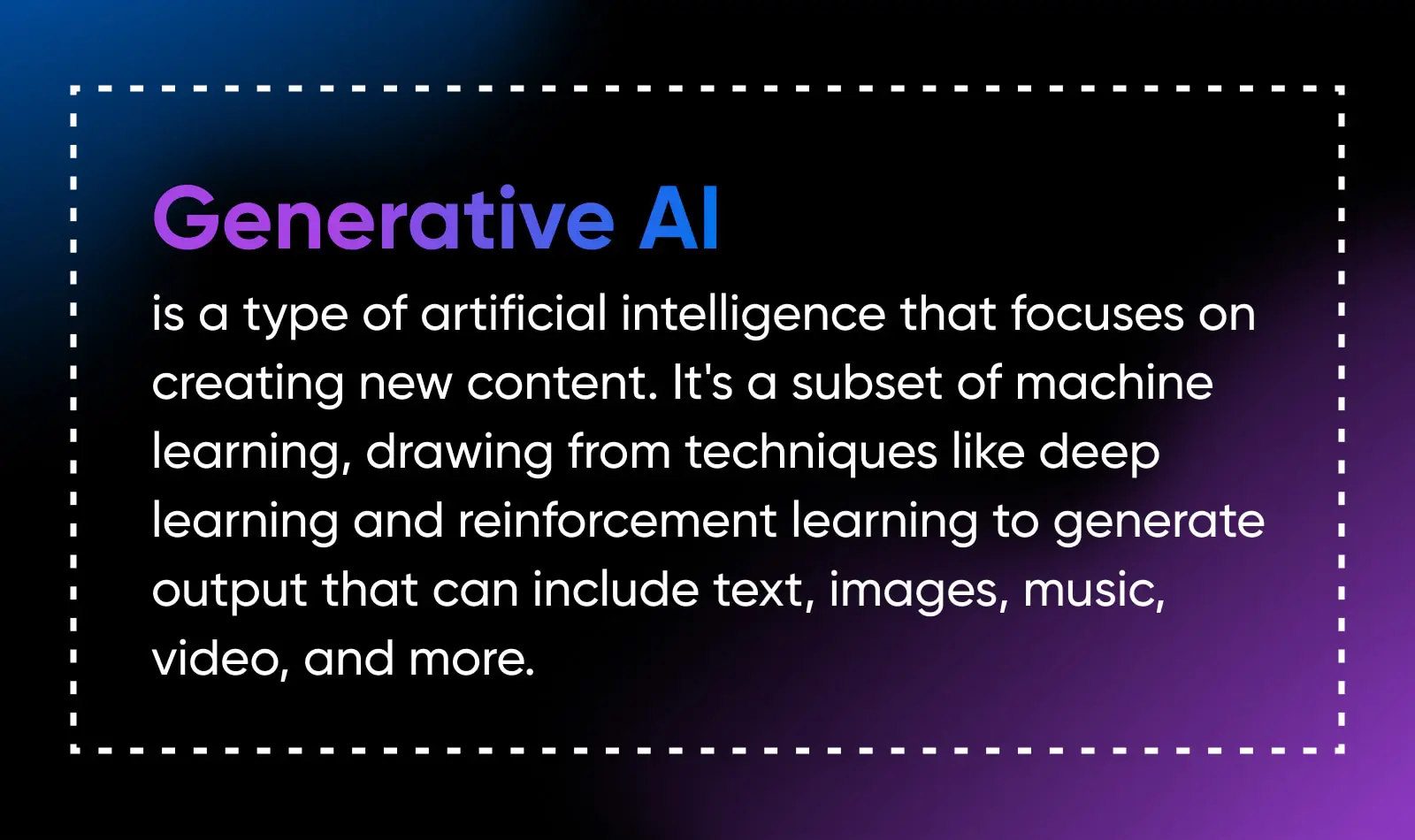
In the rapidly evolving landscape of modern technology, few terms have transitioned from academic obscurity to mainstream ubiquity as quickly as “generative.” While the word itself has roots in linguistics and biology, its current dominance is firmly rooted in the field of Artificial Intelligence (AI). When we ask “what does generative mean” today, we are typically inquiring about a specific class of AI models that do not merely analyze data but create entirely new content from it.
For decades, software was primarily “discriminative” or “analytical.” It was designed to categorize, filter, or predict based on existing parameters—think of a spam filter identifying a junk email or a recommendation engine suggesting a movie. Generative technology, however, represents a fundamental shift. It is the transition from computers that “know” to computers that “create.” This article explores the technical foundations, practical applications, and ethical implications of this transformative movement in the tech industry.
The Core Definition: From Discrimination to Creation
To understand what generative means in a tech context, one must first understand the distinction between traditional AI and generative AI. Traditional machine learning models are designed to find patterns and make classifications. If you show a traditional model ten thousand pictures of cats, it learns to identify a cat in a new, unseen photo. It “discriminates” between a cat and a non-cat.
The Difference Between Traditional and Generative AI
Generative AI takes the same dataset of ten thousand cats but aims for a different output. Instead of labeling an image, it learns the underlying mathematical distribution of what makes a “cat” look like a cat—the texture of the fur, the shape of the ears, the positioning of the eyes. Once it has internalized this “latent space,” it can generate an entirely new image of a cat that has never existed before.
In essence, “generative” means the ability of a system to use its training data to produce a novel output that follows the same rules as the original data but is unique in its composition. This applies to text, images, code, audio, and even 3D structures.
The Role of Probabilistic Prediction
At its heart, generative technology is a feat of advanced probability. When a tool like ChatGPT generates a sentence, it isn’t “thinking” in the human sense. Instead, it is predicting the next most likely token (a word or piece of a word) based on the tokens that came before it.
If you provide the prompt “The sky is,” the model calculates that “blue” has a higher probability of following than “sandwich.” By performing these calculations billions of times per second across vast neural networks, the system creates coherent, contextually relevant, and often startlingly creative content. “Generative” is therefore a description of the process: using learned probability distributions to generate new data points.
The Architectural Backbone: Transformers and Neural Networks
The explosion of generative tech didn’t happen by accident. It was fueled by specific breakthroughs in neural network architecture, most notably the “Transformer” model. Understanding what generative means requires a look under the hood at how these systems process information.
How Large Language Models (LLMs) Process Information
Before the invention of the Transformer architecture in 2017, AI models processed text sequentially. If a model was reading a paragraph, it would often “forget” the beginning of the sentence by the time it reached the end.
The Transformer introduced the “attention mechanism,” which allows the model to look at every word in a sentence simultaneously and weigh their importance relative to one another. This allows the system to understand nuance and long-range dependencies. When we call an AI “generative,” we are often referring to its ability to maintain context over long strings of data, allowing it to write entire essays or code complex applications without losing the “thread” of the logic.
Diffusion Models and the Alchemy of Images
In the realm of visual media, generative takes on a different technical meaning through “Diffusion Models.” Systems like Midjourney or DALL-E work by a process of adding and then removing noise.
During training, the model takes a clear image and gradually adds digital static (noise) until the image is unrecognizable. It then learns the reverse process: how to subtract that noise to recover the image. When a user enters a prompt, the model starts with a field of random noise and “de-noises” it into a sharp image that matches the textual description. This generative process allows for the creation of photorealistic art and design from simple natural language commands.

Practical Applications: How Generative Tech is Reshaping the Digital Landscape
The word “generative” is now synonymous with a new era of productivity tools. Across the tech sector, companies are integrating generative capabilities to bridge the gap between human intent and digital execution.
Automated Software Engineering and Coding
Perhaps the most profound application of generative technology is in software development. Tools like GitHub Copilot utilize generative models trained on billions of lines of open-source code. These models can “generate” entire functions, debug complex logic, and even translate code from one programming language to another.
For a developer, “generative” means having an AI pair-programmer that can handle the boilerplate tasks, allowing the human to focus on high-level architecture. This has effectively lowered the barrier to entry for software creation, making “natural language as a programming language” a near-term reality.
Content Synthesis and Personalized User Experiences
In the realm of digital marketing and UI/UX design, generative means hyper-personalization. Instead of creating one interface for a million users, companies can use generative models to create dynamic content tailored to the specific needs of an individual.
This extends to “synthetic media,” where generative AI can produce voiceovers for videos, create background music for apps, or generate marketing copy in dozens of languages simultaneously. The technology is moving away from static assets toward fluid, generated assets that adapt in real-time.
The Ethical and Technical Challenges of Generative Systems
While the “generative” label implies a creative leap forward, it also brings a host of technical and ethical challenges that the industry is currently grappling with. The very nature of how these models produce content leads to specific systemic risks.
Data Integrity and the Problem of Hallucination
Because generative models are probabilistic rather than deterministic, they are prone to “hallucination.” This occurs when a model generates a response that sounds confident and factually correct but is entirely fabricated.
In a tech review or tutorial context, this is a significant hurdle. If a generative model provides a command-line instruction that doesn’t exist or a fact that is false, it undermines the utility of the tool. Understanding what generative means involves acknowledging that these systems are “creative” by design, which sometimes means they prioritize the flow of language over the accuracy of the facts.
Copyright, Intellectual Property, and Training Data
The “generative” process requires massive datasets, often scraped from the internet. This has sparked a global debate over intellectual property. If a model generates an image in the style of a living artist, or code that mimics a proprietary algorithm, who owns that output?
The tech industry is currently navigating a series of landmark lawsuits and regulatory shifts aimed at defining the boundaries of “fair use” in the age of generative AI. For professionals, the term “generative” now carries a caveat of legal and ethical scrutiny regarding the provenance of the training data.

The Future Horizon: Towards Multi-Modal Intelligence
As we look toward the future of technology, the meaning of “generative” continues to expand. We are moving beyond single-mode models (text-to-text or text-to-image) toward “Multi-Modal” intelligence.
In this next phase, generative means the ability of a single AI to process and produce across all mediums simultaneously. Imagine an AI that can watch a video of a technical hardware repair, generate a written manual for it, write the software to automate the diagnostic, and speak the instructions to a technician in real-time.
This convergence is the ultimate expression of generative technology. It is no longer just a tool for writing emails or making digital art; it is becoming a foundational layer of the digital world. By transforming how we interact with data, “generative” has redefined the relationship between human creativity and machine execution. We are entering an era where the primary constraint on technology is no longer the complexity of the code, but the clarity of the human prompt.
aViewFromTheCave is a participant in the Amazon Services LLC Associates Program, an affiliate advertising program designed to provide a means for sites to earn advertising fees by advertising and linking to Amazon.com. Amazon, the Amazon logo, AmazonSupply, and the AmazonSupply logo are trademarks of Amazon.com, Inc. or its affiliates. As an Amazon Associate we earn affiliate commissions from qualifying purchases.