
The democratization of the financial markets over the last decade has fundamentally changed how individuals interact with wealth building. Gone are the days when trading was reserved for high-net-worth individuals with personal brokers and expensive terminal access. Today, anyone with a smartphone and a modest amount of capital can enter the global markets. However, this accessibility brings a new challenge: the paradox of choice. For a novice investor, the sheer number of available platforms—each claiming to be the most intuitive, cost-effective, or powerful—can be paralyzing.
Selecting the best trading platform for beginners is not about finding the one with the most bells and whistles. Instead, it is about identifying a service that balances ease of use with robust educational resources, low fee structures, and a clear path for growth as the user’s financial literacy evolves. In the realm of personal finance, your platform choice is the foundation upon which your investment strategy is built.
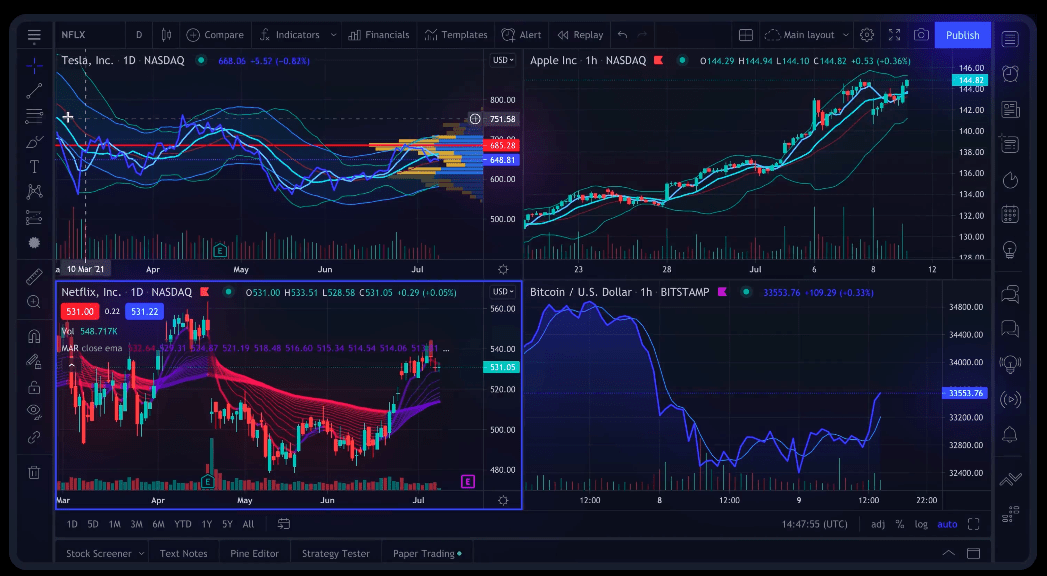
Core Features of a Beginner-Friendly Trading Platform
Before diving into specific brand recommendations, it is essential to understand the pillars that make a platform suitable for those just starting their financial journey. A beginner’s needs differ significantly from those of a professional day trader. While a professional might prioritize low-latency execution and complex algorithmic tools, a beginner requires clarity, safety, and guidance.
User Interface and Experience (UI/UX)
For a newcomer, a cluttered interface is the quickest path to a costly mistake. The best platforms for beginners feature a clean, intuitive layout that makes it easy to search for tickers, view price charts, and execute trades without confusion. Navigation should be logical, allowing users to switch between their portfolio overview, research tools, and account settings seamlessly. A “mobile-first” approach is often beneficial, as it allows users to monitor their investments on the go, but the desktop experience should be equally refined for more in-depth analysis.
Educational Resources and Research
Investing is as much about education as it is about capital. A top-tier beginner platform serves as a classroom. This includes integrated glossaries, video tutorials on market basics, webinars, and real-time market news. Beyond basic tutorials, the availability of high-quality third-party research—such as reports from Morningstar or Reuters—provides the data necessary for a beginner to move from speculative “hunches” to informed, data-driven decisions.
Low Barriers to Entry: Fractional Shares and No Minimums
Financial barriers can often discourage potential investors. Historically, if a single share of a high-performing tech company cost $3,000, a beginner with only $500 couldn’t invest in that company. The introduction of fractional shares changed this dynamic, allowing users to buy a “slice” of a stock for as little as $1. Additionally, platforms that require zero minimum deposit allow beginners to start small and scale their investments as they gain confidence and capital.
Top-Rated Platforms for New Investors
While many platforms cater to various niches, a few consistently stand out for their commitment to the beginner experience. These platforms have successfully bridged the gap between professional-grade tools and user-friendly accessibility.
Fidelity: The Comprehensive All-Rounder
Fidelity is frequently cited as the gold standard for both beginners and seasoned investors. Its primary strength lies in its versatility. For a beginner, Fidelity offers “Fidelity Spire,” an app specifically designed to help users manage their money and trade with simplicity.
One of Fidelity’s most significant advantages is its fee structure. It was one of the first major brokers to move to zero-commission trades for stocks and ETFs, and it offers “Fidelity Zero” index funds, which have no expense ratios. For a beginner looking to build a long-term portfolio without being eaten alive by fees, this is an unmatched benefit. Furthermore, their 24/7 customer service and vast library of educational content provide a safety net for those still learning the ropes.
Robinhood: The Mobile Pioneer
Robinhood revolutionized the industry by introducing zero-commission trading to the masses. Its interface remains perhaps the most streamlined and “gamified” in the industry, which is a double-edged sword. For a complete novice, the ease of use is unparalleled; buying a stock is as simple as a few taps.
Robinhood is particularly well-suited for the modern beginner who wants to dabble in multiple asset classes, including stocks, ETFs, and cryptocurrencies, all within one app. However, users should be aware that Robinhood’s simplicity comes at the cost of deep analytical tools. It is an excellent “entry-level” platform, but many investors eventually find themselves outgrowing its limited research capabilities.
Charles Schwab: Best for Education and Long-Term Growth
Charles Schwab is a powerhouse in the personal finance world, especially after its acquisition of TD Ameritrade. Schwab’s platform is built on the philosophy of “investor first.” Their educational suite is arguably the best in the business, offering everything from basic articles to deep-dive sessions on technical analysis.
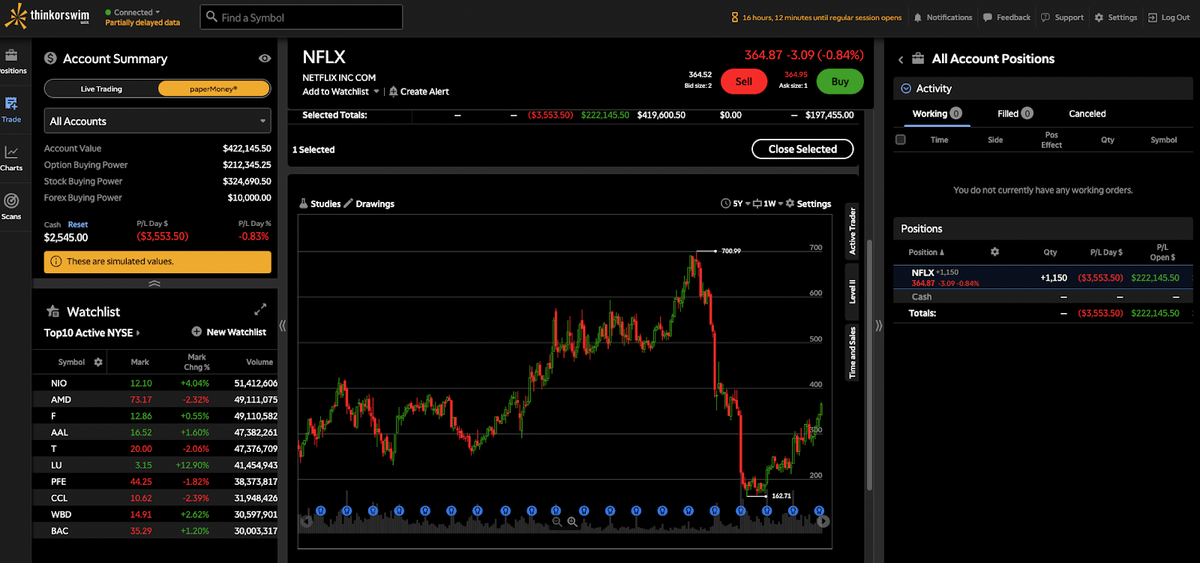
The integration of the “thinkorswim” platform (formerly of TD Ameritrade) provides beginners with a unique growth path. While the standard Schwab mobile app is easy to navigate, thinkorswim offers a “paper trading” feature. This allows beginners to practice trading with virtual money in real market conditions—an invaluable tool for building skills without risking actual capital.
Understanding Fee Structures and Commissions
In the modern trading landscape, “commission-free” has become the industry standard for stocks and ETFs. However, beginners must look beyond the “free” label to understand how platforms actually generate revenue and how that affects their bottom line.
The Shift to Zero Commissions
Most major U.S. brokerages now charge $0 for standard stock and ETF trades. This is a massive win for the retail investor, as it allows for small, frequent investments without the drag of a $5 or $10 flat fee per trade. However, commissions still exist for other assets, such as options (usually charged per contract) or mutual funds that are not on the broker’s “no-transaction-fee” list.
Hidden Costs: PFOF and Spreads
While you may not pay a flat commission, you might pay in other ways. Many “free” platforms use a practice called Payment for Order Flow (PFOF). This involves the broker sending your trade request to a market maker who pays the broker a small fee to execute the trade. In some cases, this can result in a slightly worse execution price for the investor. For a long-term beginner investor, a few cents’ difference per share is negligible, but it is a mechanic of the “Money” ecosystem that every participant should understand.
Account Fees and Expense Ratios
Beyond trading fees, beginners should watch for “maintenance fees,” “inactivity fees,” or fees for transferring assets out of an account (ACAT fees). Furthermore, when investing in ETFs or Mutual Funds, the platform is just the vehicle; the funds themselves carry “expense ratios.” A beginner should aim for low-cost index funds with expense ratios below 0.10% to ensure that the majority of their returns stay in their pocket.
Building a Financial Foundation: Risk Management
Choosing a platform is only the first step; the second is learning how to use it responsibly. A common mistake for beginners is treating a trading platform like a high-frequency trading desk. In the world of personal finance, the most successful beginners are those who prioritize risk management and long-term strategy over short-term gains.
Diversification through ETFs
Rather than trying to pick the “next big stock,” beginners are often better served by investing in Exchange-Traded Funds (ETFs). An ETF is a basket of stocks that tracks a specific index, such as the S&P 500. By buying a single share of an ETF, a beginner instantly gains exposure to hundreds of companies, significantly reducing the risk associated with any single business failing. Most top-tier platforms have excellent ETF screeners to help users find funds that align with their risk tolerance.
Setting Realistic Goals and Timelines
The “best” platform will include tools to help you track your progress against your goals. Whether you are saving for retirement in an IRA or building a “rainy day” fund in a standard taxable brokerage account, understanding your time horizon is critical. Platforms like Vanguard or Fidelity are particularly strong in this area, offering calculators that project future portfolio value based on historical returns and contribution levels.

How to Choose Your First Platform: A Step-by-Step Checklist
Choosing a platform is a personal decision that should align with your specific financial situation. Before opening an account, run through this checklist to ensure the platform meets your needs:
-
Identify Your Assets: Do you want to trade only stocks, or are you interested in options, bonds, and crypto? Ensure the platform supports your desired asset classes.
-
Verify the Fee Schedule: Look for $0 commissions on stocks and ETFs. Check for hidden monthly maintenance fees.
-
Evaluate the Minimums: If you have $100 to start, ensure the platform has a $0 account minimum and supports fractional shares.
-
Test the Education Suite: Browse the platform’s “Help” or “Learn” section. Is the content written in a way you understand?
-
Check Regulatory Status: Ensure the broker is a member of the SIPC (Securities Investor Protection Corporation), which protects the securities and cash in your account up to certain limits if the brokerage firm fails.
The journey into the financial markets is a marathon, not a sprint. The best trading platform for a beginner is one that provides the tools to start safely today while offering the sophisticated features necessary to support a lifetime of wealth creation. By prioritizing education, low costs, and a clear user interface, you can turn a daunting financial task into a manageable and rewarding component of your personal finance strategy.
aViewFromTheCave is a participant in the Amazon Services LLC Associates Program, an affiliate advertising program designed to provide a means for sites to earn advertising fees by advertising and linking to Amazon.com. Amazon, the Amazon logo, AmazonSupply, and the AmazonSupply logo are trademarks of Amazon.com, Inc. or its affiliates. As an Amazon Associate we earn affiliate commissions from qualifying purchases.