
The question of which coding language to learn first is perhaps the most common entry point for aspiring developers, tech enthusiasts, and career-shifters alike. However, the answer is rarely a single name. The “best” language is a moving target, shifting based on industry trends, the specific field of technology you wish to enter, and the current evolution of artificial intelligence.
In the modern technological landscape, software development has diversified into specialized niches ranging from low-level systems programming to high-level data visualization. To choose the right path, one must look beyond the syntax and understand the ecosystems, communities, and hardware architectures that these languages support. This guide provides a comprehensive breakdown of the most relevant programming languages today, categorized by their utility and market demand.
1. Defining Your Objective: The “Why” Before the “What”
Before diving into the technical specifications of a language, it is vital to identify your end goal. In the tech industry, a language is simply a tool in a developer’s toolbox. Just as a carpenter chooses a different saw for a fine cabinet than for a house frame, a programmer chooses a language based on the environment and the desired output.
Web Development: The Gateway to Tech
If your goal is to build websites or web applications, the path is relatively standardized. Web development is split into two main sections: the Front-end (what the user sees) and the Back-end (the server-side logic). For anyone looking for immediate visual feedback and a vast job market, the web development stack remains the most accessible entry point.
Data Science and Artificial Intelligence
The rise of Big Data and Generative AI has transformed the tech sector. If you are mathematically inclined or interested in machine learning, your choice of language will lean toward those with robust statistical libraries and the ability to handle massive datasets with minimal overhead.
Mobile and Game Development
Developing for the pocket-sized computers we carry every day requires a different approach. Whether you want to build the next viral social media app or a high-performance 3D game using engines like Unity or Unreal, you will need to prioritize languages that offer native performance and deep integration with mobile hardware or graphics processing units (GPUs).
2. The Versatile Giants: Python and JavaScript
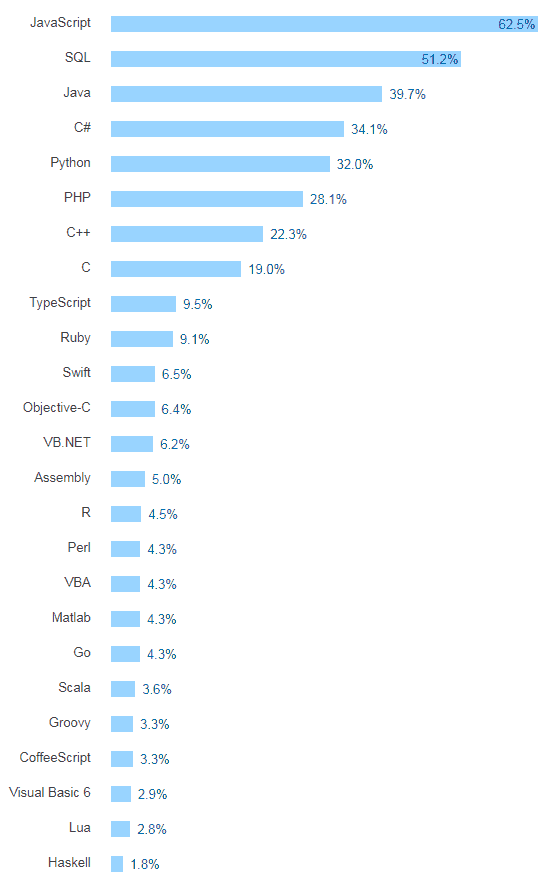
In any discussion about the best coding languages, two names consistently top the charts: Python and JavaScript. Their dominance is not accidental; it is the result of decades of community support and a relentless expansion into new technological domains.
Python: The King of Simplicity and AI
Python is frequently recommended as the first language for beginners due to its highly readable, English-like syntax. However, its simplicity belies its power. Python is the industry standard for Data Science, Machine Learning, and Scientific Computing.
With libraries like TensorFlow, PyTorch, and Scikit-learn, Python has become the backbone of the AI revolution. Beyond AI, it is widely used in back-end web development (via frameworks like Django and Flask) and automated testing. Its primary drawback is execution speed; because it is an interpreted language, it is slower than compiled languages like C++. However, for 90% of modern applications, the development speed Python offers far outweighs the sacrifice in runtime performance.
JavaScript: The Language of the Internet
JavaScript is the only language that runs natively in web browsers. If you want to create anything interactive on the web, JavaScript is non-negotiable. Over the last decade, the introduction of Node.js allowed JavaScript to move to the server-side as well, meaning a developer can now build an entire full-stack application using a single language.
The ecosystem surrounding JavaScript is massive. Frameworks like React, Vue, and Angular dominate front-end development, while the npm (Node Package Manager) registry provides access to millions of pre-written code packages. For those looking for a quick transition into a tech career, the “JavaScript Full-Stack” path remains one of the most reliable routes to employment.
3. Performance and Systems: The Power Players

While Python and JavaScript handle high-level logic, the “lower-level” languages are responsible for the infrastructure of the digital world. These languages provide more control over hardware resources, such as memory and CPU cycles, making them essential for systems that require extreme efficiency.
Rust: The Future of Systems Programming
For years, C and C++ were the undisputed leaders in systems programming. However, Rust has emerged as a formidable challenger. It solves the most significant issue in C++: memory safety. Rust prevents common bugs that lead to security vulnerabilities and system crashes, all while maintaining the speed of a compiled language.
Tech giants like Microsoft, Google, and Amazon are increasingly rewriting their core infrastructure in Rust. While it has a steeper learning curve than Python—requiring an understanding of concepts like “ownership” and “borrowing”—it is currently the most loved language among professional developers for its reliability and performance.
C# and C++: Powering Enterprise and Gaming
C++ remains the gold standard for high-performance software, including Adobe’s creative suite, high-frequency trading platforms, and AAA video games. If you are interested in the inner workings of operating systems or game engine development, C++ is essential.
Meanwhile, C# (developed by Microsoft) is the primary language for the Unity game engine and enterprise-level software. It strikes a balance between the ease of Java and the power of C++. For those looking to work in corporate environments or independent game development, C# offers a robust, well-documented environment.
4. The Impact of Artificial Intelligence on Language Selection
The emergence of AI-powered coding assistants, such as GitHub Copilot and Large Language Models (LLMs), has fundamentally changed how we perceive “learning to code.” Many beginners wonder if learning a specific syntax is even necessary when an AI can generate snippets in seconds.
Logic Over Syntax
In the AI era, the “best” language to learn is the one that teaches you the strongest underlying logic. AI is excellent at generating boilerplate code but often struggles with complex system architecture and debugging subtle logic errors. By learning a language like Python or Java, you learn how to structure instructions. Once you understand the logic, you can use AI to help you “translate” that logic into any other language.
The Role of Prompt Engineering and Code Review
As we move forward, the role of a developer is shifting from “writer” to “editor.” Learning a popular language like JavaScript or Python ensures that the AI you are using has been trained on a vast amount of data for that specific language. This leads to more accurate AI-generated suggestions. Understanding the code well enough to review and optimize what the AI produces is now a critical technical skill.
5. How to Start: Building a Sustainable Learning Path
Choosing a language is only the first step; staying consistent is the real challenge. The tech world moves fast, and “tutorial purgatory”—the act of watching videos without ever writing original code—is a common trap for beginners.
Focus on Documentation and Community
When choosing your first language, look at the quality of its documentation and the size of its community. A language like Python has millions of forum posts on Stack Overflow and thousands of hours of free tutorials on YouTube. When you inevitably run into a bug at 2:00 AM, having a large community means someone else has likely already solved your problem.
The Project-Based Approach
The most effective way to learn a language is to build something. Instead of memorizing syntax, pick a small project: a weather app, a simple calculator, or a bot that scrapes data from a website. This forces you to solve real-world problems and helps you understand why certain language features exist.
If you choose JavaScript, try building a personal portfolio website. If you choose Python, try automating a repetitive task on your computer. These projects become the foundation of a technical portfolio that proves your skills to potential employers or collaborators.
Conclusion: There Is No “Wrong” Choice
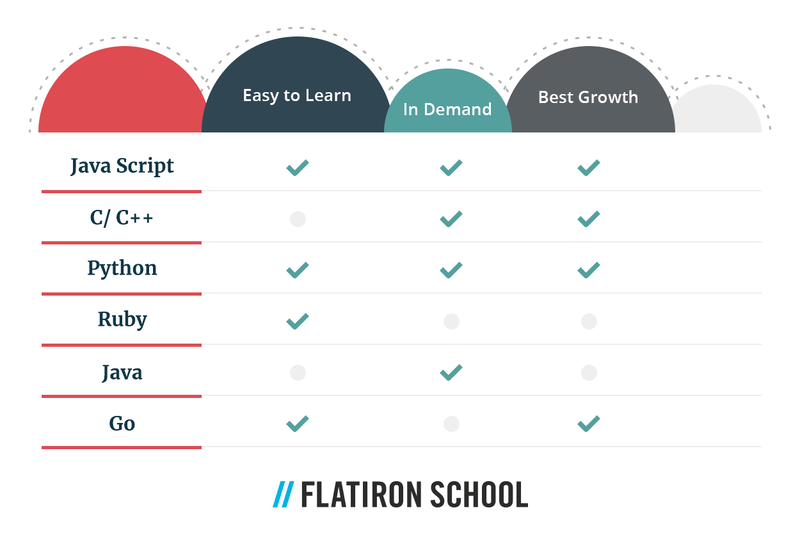
Ultimately, the best coding language to learn is the one you will actually stick with. If you are excited by data and AI, start with Python. If you want to see your creations live on the web, start with JavaScript. If you want to understand the “soul” of the machine and build high-performance tools, look toward Rust.
Once you master your first language, the second one becomes significantly easier to learn. The concepts of loops, variables, functions, and data structures are universal. In the end, the most valuable skill in technology isn’t knowing a specific language—it’s knowing how to learn, how to solve problems, and how to adapt to an ever-changing digital landscape.
aViewFromTheCave is a participant in the Amazon Services LLC Associates Program, an affiliate advertising program designed to provide a means for sites to earn advertising fees by advertising and linking to Amazon.com. Amazon, the Amazon logo, AmazonSupply, and the AmazonSupply logo are trademarks of Amazon.com, Inc. or its affiliates. As an Amazon Associate we earn affiliate commissions from qualifying purchases.