
When planning a vacation, the cruise industry often presents itself as the pinnacle of value-based travel. From a personal finance perspective, a cruise is essentially a bundled financial product, combining transportation, lodging, food, and entertainment into a single upfront price. However, the “sticker price” rarely reflects the final balance on a traveler’s credit card statement. To truly understand the average cost of a cruise, one must look past the marketing brochures and dissect the nuances of maritime pricing, hidden fees, and the economic variables that drive the total cost of ownership for a sea-based holiday.
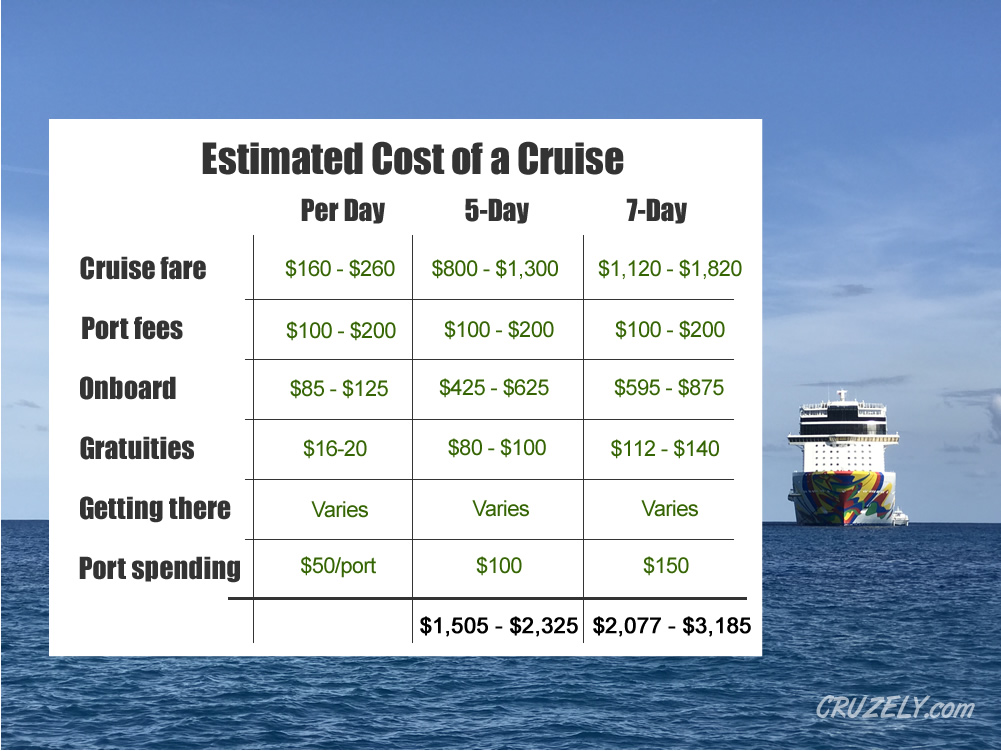
On average, a baseline cruise experience for a standard seven-day itinerary can range anywhere from $1,200 to $2,500 per person when all expenses are considered. This figure, however, is highly sensitive to market fluctuations, cabin selection, and individual spending habits. For the financially savvy traveler, navigating these costs requires a strategic approach to budgeting and an understanding of how cruise lines generate revenue.
The Core Investment: Breaking Down the Base Fare
The base fare is the most visible component of a cruise’s cost, yet it is often the most misleading. In the world of personal finance, this is the “entry cost,” but it does not equate to the “operating cost.” Most mainstream cruise lines (such as Carnival, Royal Caribbean, and Norwegian) utilize a tiered pricing model designed to lower the barrier to entry while maximizing onboard revenue.
Understanding the Price Per Day
To accurately compare cruise costs with land-based vacations, financial planners often look at the “per diem” rate. A budget-friendly cruise might advertise rates as low as $75 to $100 per person, per night. However, once you factor in the inevitable taxes and port fees—which are mandatory and not included in the initial advertised price—that rate often jumps by 20% to 30%. For a mid-tier experience, a realistic baseline per diem is approximately $150 to $200.
Cabin Categories and Value Allocation
Your choice of “real estate” on the ship is the largest driver of the base fare. From a budgeting standpoint, this is where travelers make their first major trade-off:
-
Interior Staterooms: These are the most cost-effective options, often lacking windows but providing the same access to ship amenities. They represent the best “utility per dollar” for those who plan to spend minimal time in their room.
-
Oceanview and Balcony Rooms: These typically command a 30% to 60% premium over interior rooms. While they offer better psychological comfort, the financial return on investment (ROI) depends entirely on how much the traveler values private outdoor space.
-
Suites and Luxury Tiers: These can cost three to five times the price of a standard room but often include “bundled” perks like free Wi-Fi, laundry, and specialty dining, which can actually simplify budgeting for high-net-worth travelers.
Beyond the Ticket: Accounting for Incremental Costs
The most significant mistake in vacation budgeting is failing to account for “ancillary spend.” Cruise lines are masters of the “upsell,” and for many companies, the profit margin on the ticket itself is slim; the real profit is made once the passenger is on board.
Gratuities and Service Charges
Most travelers are surprised to find a daily service charge added to their folio. These mandatory “tips” usually range from $16 to $20 per person, per day, depending on the cabin category. For a family of four on a seven-day cruise, this adds an automatic $450 to $560 to the final bill. When calculating the total cost, this should be treated as a fixed expense rather than a discretionary one.
The Beverage and Connectivity Tax
In the modern digital economy, connectivity is a major expense. Onboard Wi-Fi is rarely free and can cost between $20 and $35 per day, per device. Similarly, beverage packages—covering soda, specialty coffee, and alcohol—are significant financial commitments. An all-inclusive alcohol package often costs between $60 and $100 per person, per day, including a mandatory 18-20% service charge. Financially, these packages only make sense if your daily consumption exceeds the break-even point of purchasing drinks à la carte.
Shore Excursions and Onboard Activities
While the ship is a floating resort, the primary draw is the destinations. Shore excursions are a major profit center for cruise lines, with prices ranging from $50 for a simple walking tour to over $500 for helicopter tours or private boat charters. Budgeting for at least $100 to $150 per person per port is a safe middle-ground for those looking to experience the culture and geography of their stops without overextending their discretionary spending.
Geographic and Tiered Pricing Variables
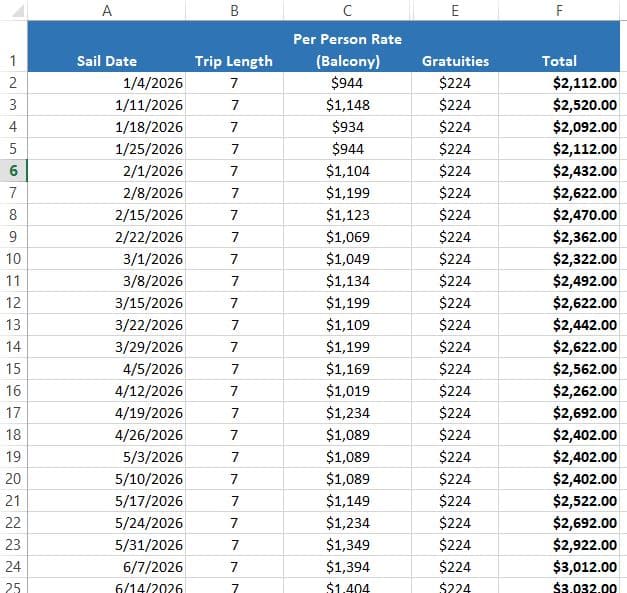
The “average” cost of a cruise is heavily dictated by the laws of supply and demand, as well as the operational overhead of specific regions.
Caribbean vs. Alaska vs. Europe
The Caribbean is the most price-competitive market in the world due to the sheer volume of ships. This competition drives down the average cost, making it the most affordable entry point for cruisers. Conversely, Alaska and the Mediterranean command higher premiums. An Alaskan cruise requires higher operational costs for fuel and specialized port infrastructure, while European cruises often involve higher port taxes and shorter sailing seasons. When planning, travelers must factor in the “cost of geography,” which can swing the total price by $1,000 or more.
Seasonality and Economic Cycles
Like any market-driven commodity, cruise prices fluctuate based on the school calendar and global holidays. “Shoulder seasons”—the periods just before or after peak travel times (such as May or September in the Caribbean)—offer the highest value. During these windows, prices can drop by 40% compared to the December holiday peak. From a wealth-management perspective, traveling during off-peak times is one of the most effective ways to preserve capital while enjoying the same level of service.
Luxury vs. Contemporary Lines
It is important to distinguish between “mass market” and “ultra-luxury.” While a contemporary line might have a low base fare and high add-ons, luxury lines (such as Silversea or Regent Seven Seas) often have a much higher base price (averaging $500 to $1,000 per day) but include everything from airfare to excursions and premium spirits. For travelers who dislike the “nickel and diming” of mass-market lines, the luxury sector offers a more predictable, albeit higher, financial layout.
Financial Strategies for Minimizing Travel Outlay
To achieve the best financial outcome when booking a cruise, one must treat the purchase with the same diligence as a significant investment or business expense.
Calculating the Total Cost of Ownership (TCO)
Before swiping a card, create a spreadsheet that includes:
-
The Base Fare (including taxes and port fees).
-
Transportation to the Port: Airfare, Uber/Lyft, or parking fees.
-
Pre-Cruise Lodging: Most experts recommend arriving a day early, necessitating a hotel stay.
-
Onboard Spend Estimates: Gratuities, Wi-Fi, and beverages.
-
Excursions and Incidentals: Souvenirs and off-ship dining.
By viewing the cruise through the lens of TCO, you avoid the “sunk cost fallacy” where a cheap initial ticket leads to overspending in other categories to “make the trip worth it.”
Leveraging Loyalty and Credit Rewards
Frequent cruisers can significantly offset costs by engaging with loyalty programs. These programs offer “milestone” rewards such as free laundry, cabin upgrades, and even complimentary cruises after a certain number of nights at sea. Furthermore, using a travel-focused credit card to pay for the fare can yield 2x to 5x points per dollar, which can be redeemed for airfare or statement credits, effectively providing a 2% to 5% discount on the entire experience.
The “Wave Season” and Booking Windows
In the cruise industry, “Wave Season” (January through March) is the equivalent of Black Friday. This is when the most aggressive promotions occur, often including “free” perks like beverage packages or onboard credit. Historically, booking either very early (12-18 months out) or very late (within 60 days of sailing) yields the best financial results. Early booking secures lower base rates, while last-minute booking allows cruise lines to offload unsold inventory at a steep discount, though this requires high flexibility and often results in higher last-minute airfare costs.
Conclusion: Maximizing Value Without Breaking the Bank
The average cost of a cruise is a fluid figure that depends heavily on how a traveler manages their discretionary spending and how well they understand the underlying fee structures of the maritime industry. While it is possible to sail for under $1,000 by being frugal and staying in an interior cabin, a more realistic expectation for a comfortable, mid-range experience is roughly $1,500 to $2,000 per person.
By applying sound financial principles—such as calculating the total cost of ownership, utilizing rewards systems, and timing the market—travelers can enjoy the high-value experience that cruising offers without falling into the common traps of hidden costs and impulsive onboard spending. Ultimately, the best “deal” on a cruise isn’t just the lowest price; it is the one that provides the highest ratio of experience-to-expenditure within a well-defined personal budget.
aViewFromTheCave is a participant in the Amazon Services LLC Associates Program, an affiliate advertising program designed to provide a means for sites to earn advertising fees by advertising and linking to Amazon.com. Amazon, the Amazon logo, AmazonSupply, and the AmazonSupply logo are trademarks of Amazon.com, Inc. or its affiliates. As an Amazon Associate we earn affiliate commissions from qualifying purchases.