
The Spanish alphabet, or el abecedario as it’s known in Spanish, is the foundation of communication for over 460 million native speakers worldwide and a significant number of second-language learners. While it shares many similarities with the English alphabet, understanding its unique features, pronunciation nuances, and historical evolution is crucial for anyone delving into the richness of the Spanish language. This exploration will go beyond simply listing letters; it will uncover the underlying principles, practical applications, and even a touch of the cultural significance that makes the Spanish alphabet so compelling.
Unveiling the Spanish Alphabet: Structure and Key Differences
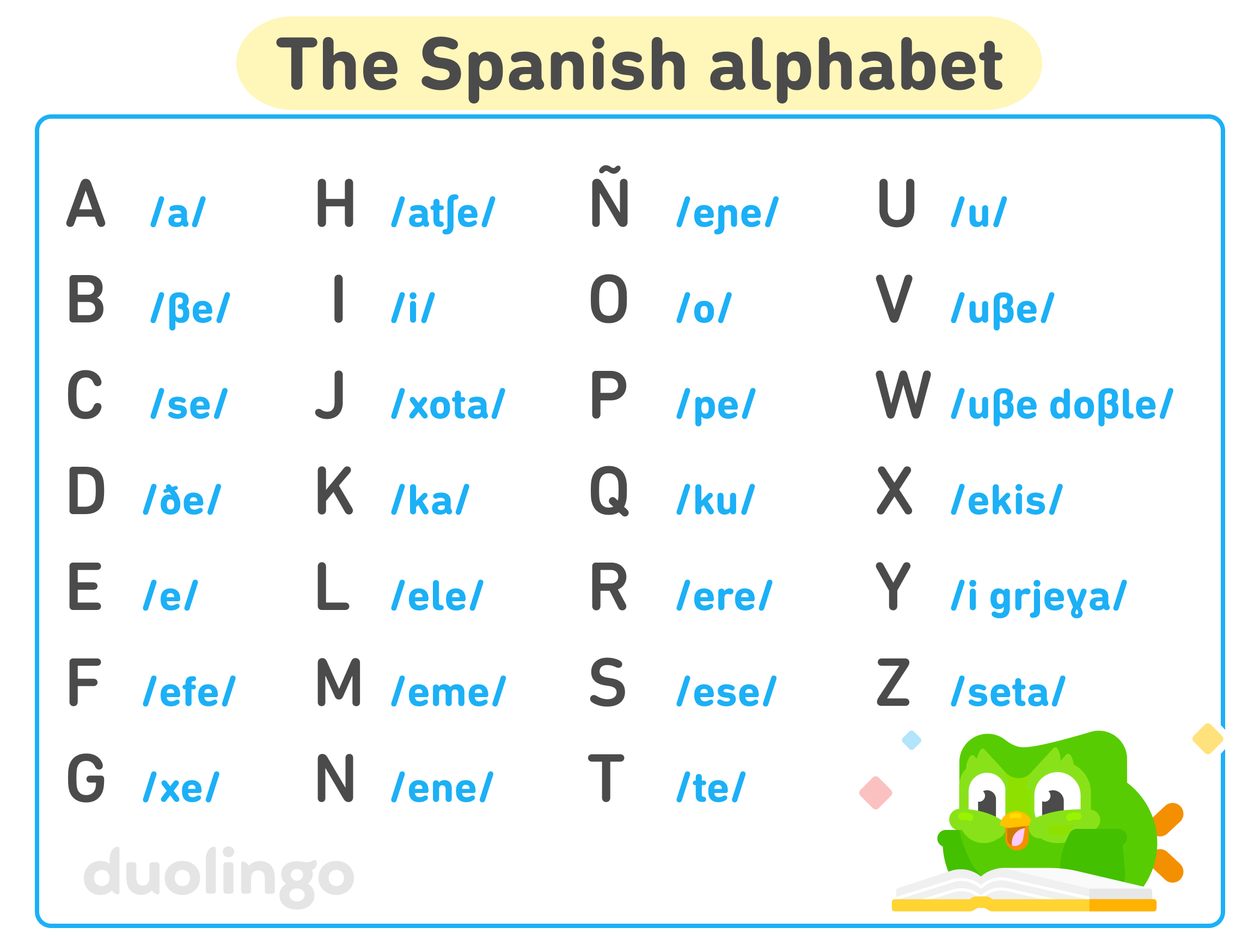
At its core, the Spanish alphabet is comprised of 27 letters, encompassing vowels and consonants. It’s a system that, for the most part, adheres to a phonetic principle, meaning letters generally correspond to specific sounds. This phonetic consistency is a significant advantage for learners, as mastering pronunciation becomes more straightforward once the individual letter sounds are understood.
The Vowels: The Soul of Spanish Pronunciation
Spanish boasts five pure, unadulterated vowel sounds: a, e, i, o, u. Unlike in English, where vowels can have multiple pronunciations depending on context, Spanish vowels are remarkably consistent.
- A: Pronounced like the ‘a’ in “father.” It’s an open sound, requiring a relaxed mouth.
- E: Pronounced like the ‘e’ in “bet.”
- I: Pronounced like the ‘ee’ in “see.”
- O: Pronounced like the ‘o’ in “go.”
- U: Pronounced like the ‘oo’ in “moon.”
The purity of these vowel sounds is a cornerstone of Spanish phonetics and contributes to the language’s melodic quality. Mastering these five sounds is the most important first step in acquiring accurate Spanish pronunciation.
The Consonants: Familiar Faces and Unique Twists
The majority of Spanish consonants are pronounced very similarly to their English counterparts. However, several have distinct sounds that require attention:
- C: Before ‘e’ and ‘i’, the ‘c’ in most of Spain is pronounced with a lisp-like sound, similar to ‘th’ in “thin.” In Latin America and some parts of Spain, it sounds like ‘s’. Before ‘a’, ‘o’, and ‘u’, and in consonant clusters, ‘c’ sounds like ‘k’.
- G: Before ‘e’ and ‘i’, the ‘g’ has a guttural sound, similar to the ‘ch’ in Scottish “loch” or the ‘j’ in Spanish itself. Before ‘a’, ‘o’, ‘u’, and consonants, it sounds like the hard ‘g’ in “go.”
- H: The ‘h’ is always silent in Spanish. It’s a remnant of older linguistic forms and has no phonetic value.
- J: This letter always has the guttural sound described for ‘g’ before ‘e’ and ‘i’.
- LL: This digraph was traditionally considered a separate letter and pronounced like the ‘y’ in “yes.” While officially alphabetized as part of ‘L’, the ‘ll’ sound persists and is often still taught as a distinct pronunciation. In some regions, it can also sound like ‘zh’ or ‘sh’.
- Ñ: This is a unique letter, representing a palatal nasal sound similar to the ‘ny’ in “canyon.” It’s crucial for distinguishing words and carries significant cultural weight.
- Q: Always followed by ‘u’, the ‘qu’ combination sounds like ‘k’ in English. It’s primarily used before ‘e’ and ‘i’ (e.g., queso – cheese).
- R: Spanish has two ‘r’ sounds: a single tap ‘r’ and a trilled ‘rr’. The single ‘r’ is a light flap of the tongue against the roof of the mouth, similar to the ‘tt’ in “butter” in American English. The double ‘rr’ is a sustained trill, requiring practice and coordination of the tongue.
- V: The ‘v’ in Spanish is often pronounced very softly, almost like a ‘b’. The distinction between ‘b’ and ‘v’ is less pronounced than in English.
- W: Primarily used in foreign words, the ‘w’ is usually pronounced like a ‘v’ or a soft ‘u’.
- X: The pronunciation of ‘x’ varies. It can sound like ‘ks’, ‘s’, or, in some cases (especially with indigenous place names), like a guttural ‘j’.
- Z: In most of Spain, the ‘z’ is pronounced like the ‘th’ in “thin.” In Latin America, it sounds like ‘s’.
The Diacritics: Adding Nuance and Clarity
Beyond the basic letters, Spanish utilizes diacritical marks that are fundamental to meaning and pronunciation:
- The Acute Accent (´): This mark over a vowel (á, é, í, ó, ú) indicates stress on that syllable when the word deviates from standard stress rules. It’s also used to differentiate homophones (words that sound alike but have different meanings).
- The Trema (¨): Placed over a ‘u’ (ü), it signifies that the ‘u’ should be pronounced in the digraph ‘gu’ before ‘e’ and ‘i’. For example, in pingüino (penguin), the ‘ü’ ensures the ‘u’ is sounded, rather than being silent as it usually is in ‘gue’ and ‘gui’.
The Evolution and Significance of the Spanish Alphabet
The Spanish alphabet is not a static entity; it has undergone centuries of evolution, influenced by historical events, linguistic shifts, and standardization efforts. Its current form is largely a product of the Real Academia Española (RAE), the official royal academy responsible for regulating the Spanish language.
Historical Roots: From Latin to Modern Spanish
The Spanish alphabet traces its lineage back to the Latin alphabet used by the Romans. Over time, as Vulgar Latin evolved into regional dialects, including what would become Spanish, certain letters were dropped, others were modified, and new ones were introduced.
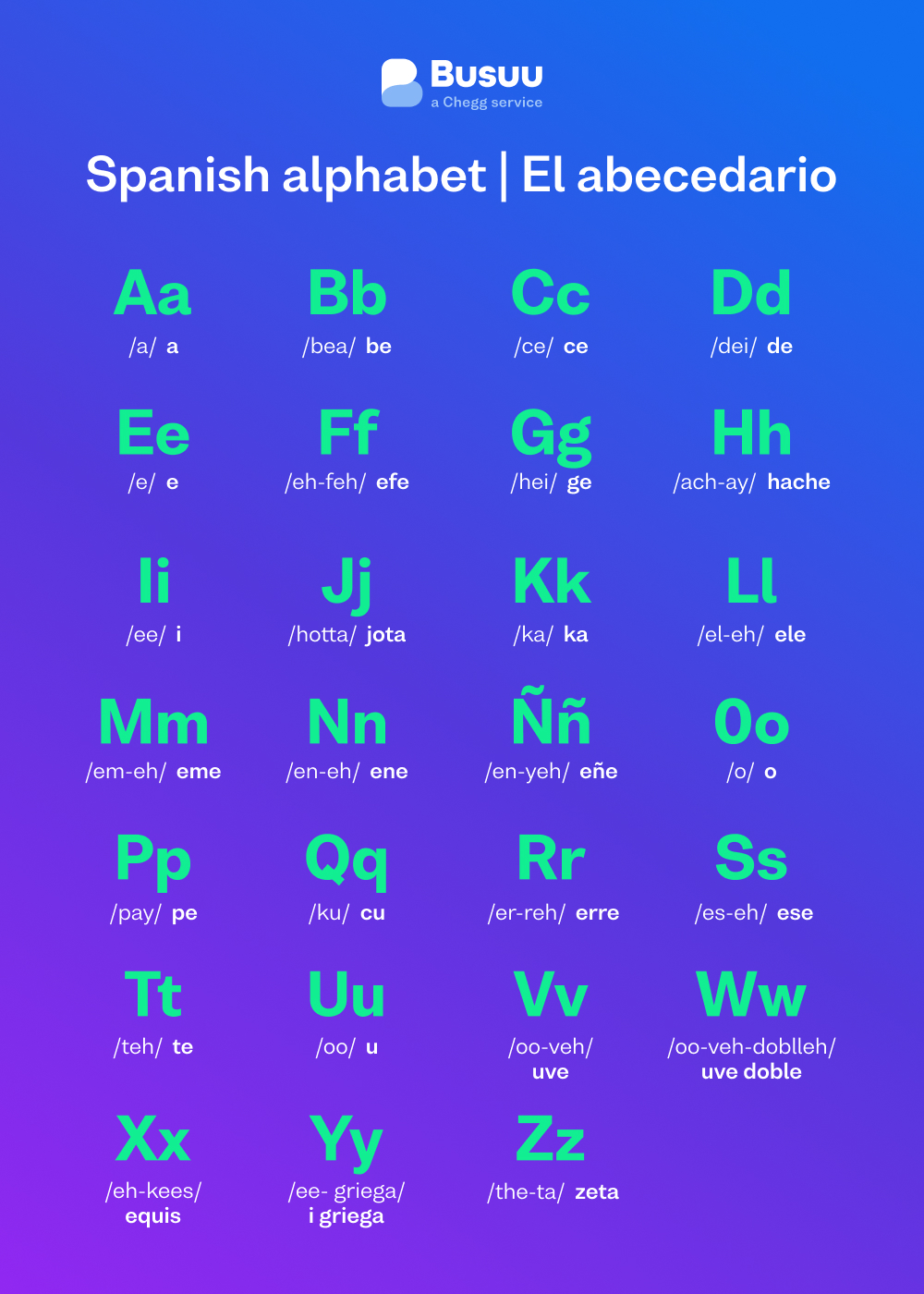
- The exclusion of certain letters: Letters like ‘k’ and ‘w’ were not originally part of the Latin alphabet and were only integrated into Spanish much later, primarily through borrowings from other languages.
- The introduction of ‘ñ’: The development of the ‘ñ’ is a fascinating story of linguistic innovation. It emerged as a ligature of two ‘n’s, representing a new sound and filling a phonetic need.
- The alphabet reforms: The RAE has played a pivotal role in standardizing the Spanish alphabet. Notable reforms occurred in the 18th and early 19th centuries, where the alphabet was streamlined and certain letters that represented the same sounds were consolidated. For instance, the letters ‘ch’ and ‘ll’ were historically treated as distinct letters with their own alphabetical order, but these were later classified as digraphs (combinations of two letters representing a single sound) and removed from the official alphabet, although their pronunciation remains significant.
The Alphabet in the Digital Age: Tech and Branding
In our increasingly digital world, understanding the Spanish alphabet has practical implications that extend beyond traditional language learning.
- Tech and Accessibility: For developers and designers creating globalized software, apps, and websites, accurate representation of Spanish characters is paramount. This includes ensuring proper rendering of accented letters and the ‘ñ’, which are essential for user experience and brand perception in Spanish-speaking markets. Tools for translation, localization, and internationalization rely on a robust understanding of character sets and their correct usage. For instance, when building AI tools for language processing or sentiment analysis, the algorithms must be trained on data that correctly interprets and generates Spanish alphabetic characters. Digital security also plays a role, as poorly handled character encoding can lead to vulnerabilities.
- Brand Strategy and Global Reach: For businesses and individuals aiming to establish a strong presence in Spanish-speaking markets, accurate and culturally sensitive use of the alphabet is a non-negotiable aspect of brand strategy. A brand name or slogan that is misspelled or improperly rendered due to a misunderstanding of Spanish orthography can alienate potential customers and damage a brand’s reputation. For example, personal branding efforts that involve creating a Spanish version of a name or tagline must be meticulously crafted. Corporate identity guidelines often include specific instructions for adapting logos and marketing materials to different languages, where the Spanish alphabet’s nuances are a key consideration.
The Alphabet and Financial Literacy: A Universal Language
While seemingly distant, the alphabet’s role in communication underpins all forms of knowledge, including financial literacy.
- Personal Finance and Investing: The ability to read financial advice, investment prospectuses, or even simple product descriptions in Spanish is crucial for Spanish speakers navigating personal finance. Understanding terms like inversión (investment), ahorro (savings), or préstamo (loan) relies on a firm grasp of the alphabet and its phonetic rules. Financial tools and apps designed for Spanish speakers must also correctly implement these characters.
- Online Income and Side Hustles: For those seeking to earn online income or develop side hustles in Spanish-speaking markets, effective communication is key. This could involve creating content, offering services, or engaging in e-commerce, all of which demand accurate use of the Spanish language. From writing compelling product descriptions for an online store to crafting engaging blog posts about financial topics, the alphabet is the bedrock of effective digital communication.
- Business Finance: Companies expanding into Latin America or Spain need their financial reports, contracts, and internal communications to be impeccably translated and presented. This requires linguists and finance professionals who understand not just the financial concepts but also the precise linguistic tools, starting with the alphabet, to convey them accurately.
Mastering the Spanish Alphabet: Practical Tips and Resources
Learning the Spanish alphabet is an accessible and rewarding endeavor. With consistent practice and the right resources, even the most unfamiliar sounds can be mastered.
Phonetic Drills and Practice
The key to mastering Spanish pronunciation lies in consistent phonetic practice.
- Listen and Repeat: Utilize audio resources, language learning apps, and native speaker interactions to hear the sounds and try to replicate them. Pay close attention to the subtle differences between similar sounds.
- Minimal Pairs: Practice words that differ by only one sound (e.g., pero – but, perro – dog) to sharpen your ear and pronunciation.
- Read Aloud: Regularly read Spanish texts aloud, focusing on applying the correct pronunciation for each letter and digraph.
Online Tools and Applications
The digital landscape offers a wealth of tools to aid in alphabet acquisition.
- Language Learning Apps: Platforms like Duolingo, Babbel, and Memrise often have dedicated modules for learning the alphabet and basic pronunciation.
- Online Dictionaries with Audio: Websites like SpanishDict or the RAE’s official dictionary (DLE) provide pronunciation guides and audio recordings for individual words, allowing you to hear how letters and combinations are spoken.
- YouTube Tutorials: Numerous channels offer free video tutorials specifically on Spanish pronunciation, covering the alphabet in detail.

The Cultural Connection
Understanding the Spanish alphabet is not just about mechanics; it’s also about appreciating the cultural context. The sounds and letters are intertwined with the history, literature, and everyday life of millions. From the passionate verses of poetry to the concise instructions of a technical manual, the Spanish alphabet is the silent architect of its rich and diverse linguistic tapestry.
In conclusion, the Spanish alphabet, el abecedario, is a fascinating and fundamental aspect of learning the language. Its phonetic nature, unique letter combinations, and diacritical marks contribute to its distinctiveness. By understanding its structure, evolution, and practical applications in technology, branding, and even financial literacy, learners can embark on a more confident and informed journey into the vibrant world of Spanish.
aViewFromTheCave is a participant in the Amazon Services LLC Associates Program, an affiliate advertising program designed to provide a means for sites to earn advertising fees by advertising and linking to Amazon.com. Amazon, the Amazon logo, AmazonSupply, and the AmazonSupply logo are trademarks of Amazon.com, Inc. or its affiliates. As an Amazon Associate we earn affiliate commissions from qualifying purchases.