
In an increasingly digital world, managing personal finances demands tools that are not only efficient but also intuitive. Venmo has emerged as a quintessential platform in this landscape, revolutionizing how individuals send and receive money. More than just a convenience, Venmo has become a vital financial instrument for millions, facilitating everything from splitting dinner bills to managing shared household expenses. Understanding how to effectively transfer money into your Venmo account is a foundational step in harnessing its full financial potential. This comprehensive guide delves into the various methods of funding your Venmo wallet, navigating the financial considerations, ensuring security, and ultimately optimizing its use for robust personal financial management.

Venmo: A Cornerstone of Modern Personal Finance
The advent of digital peer-to-peer (P2P) payment platforms like Venmo has fundamentally reshaped our relationship with money, providing unparalleled ease and speed in financial transactions. No longer are individuals solely reliant on traditional bank transfers or cash for immediate payments among friends, family, or even small businesses. Venmo exemplifies this shift, transforming incidental payments into a frictionless, almost social, experience.
The Evolution of Peer-to-Peer Payments
For centuries, financial interactions were tethered to physical currency or cumbersome banking procedures. The digital revolution, particularly with the proliferation of smartphones, paved the way for instantaneous money movement. P2P platforms like Venmo capitalized on this, offering a user-friendly interface that simplifies the process of sending and receiving funds. This evolution has democratized financial accessibility, allowing users to manage small-scale transactions with the same efficiency as larger financial institutions handle transfers. Venmo, owned by PayPal, leveraged this technological leap to create a social payment network, further integrating financial activity into our daily digital lives. This has made it an indispensable tool for many, moving beyond a mere novelty to a serious component of personal finance infrastructure.
Why Fund Your Venmo Account?
The primary allure of funding your Venmo account stems from its convenience and the financial flexibility it offers. While Venmo is primarily known for P2P payments, having a positive balance in your account unlocks several financial advantages:
- Seamless Spending: Funds transferred into Venmo can be used instantly to pay friends, make purchases at Venmo-enabled merchants, or even use with the Venmo Debit Card. This eliminates the need to constantly draw from an external bank account for every transaction, offering a dedicated digital wallet for your immediate spending needs.
- Budgeting and Expense Management: For some, funding a Venmo account with a specific allowance can serve as an informal budgeting tool for certain categories of expenses, such as social outings or shared utilities. It provides a clear demarcation of funds allocated for these purposes, aiding in tracking and managing outflows.
- Pre-emptive Fund Availability: When anticipating shared expenses or frequent payments to others, pre-funding your Venmo account ensures that funds are readily available. This avoids potential delays associated with bank transfers, especially for urgent payments, thereby enhancing financial preparedness.
- Consolidating Received Funds: Money received from others on Venmo can accumulate, creating a positive balance. Actively funding your account alongside these received sums allows for greater liquidity within the platform, making it a central hub for certain financial interactions.
Unlocking Your Venmo Wallet: Comprehensive Funding Methods
The process of transferring money into your Venmo account is designed to be straightforward, offering several pathways to suit different financial preferences and needs. Each method leverages existing financial infrastructure to seamlessly integrate funds into your digital wallet.
Linking Your Bank Account
The most common and often preferred method for funding Venmo is by linking your bank account. This typically involves connecting your checking or savings account via ACH (Automated Clearing House) transfers.
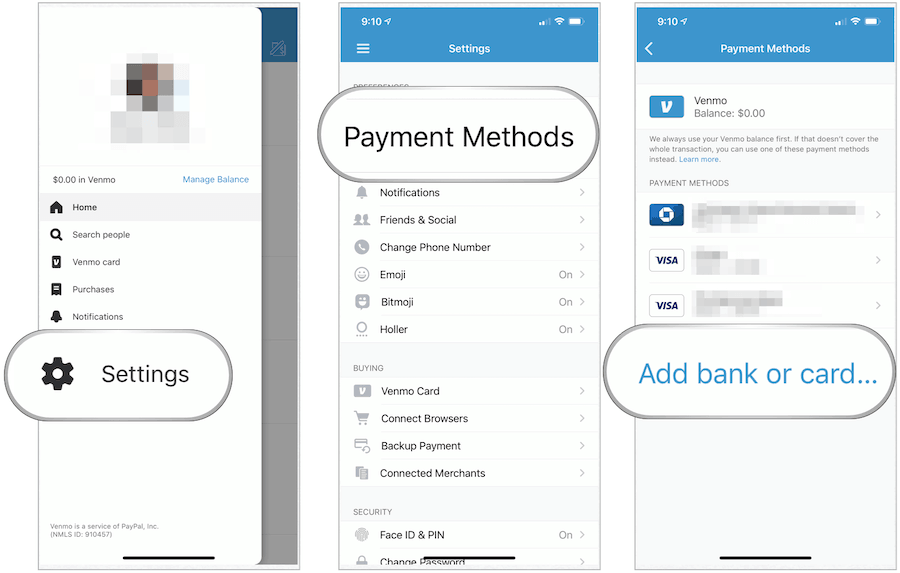
- Process: Within the Venmo app, navigate to “Settings” > “Payment Methods” > “Add a bank or card.” You’ll have the option to link instantly via your bank’s online login (which uses a secure third-party service like Plaid) or manually by providing your bank’s routing and account numbers.
- Financial Implications: Bank transfers are generally free for standard transfers, which typically take 1-3 business days to process. This makes them a cost-effective choice for planned funding. For users requiring immediate access to funds, Venmo offers an “Instant Transfer” option from your bank account to your Venmo balance for a small fee (usually 1.75% with a minimum of $0.25 and maximum of $25).
- Security: Venmo employs encryption and security protocols to protect your banking information. However, users are always advised to ensure they are using a secure network and to verify the legitimacy of any prompts.
Connecting a Debit Card
Linking a debit card to your Venmo account offers another convenient way to transfer funds, often providing quicker access than standard bank transfers.
- Process: Similar to linking a bank account, you’ll go to “Settings” > “Payment Methods” > “Add a bank or card” and select “Card.” You’ll then enter your debit card number, expiration date, CVV, and billing zip code.
- Financial Implications: Using a debit card to add money to your Venmo balance is typically free for standard transfers. However, if you’re using your debit card to send money to someone (rather than add to your own balance first), a fee might apply if the transaction isn’t funded directly from your Venmo balance or a linked bank account. For instant transfers from your Venmo balance to your linked debit card, the 1.75% fee applies.
- Convenience: Debit cards offer a direct link to your existing bank funds, making them a rapid and familiar funding source for many users.
Adding Funds via Credit Card (with caveats)
While it is possible to link a credit card to Venmo, using it to add money to your own balance is not directly supported in the same way as debit cards or bank accounts. Credit cards on Venmo are primarily for sending money to other individuals or paying merchants.
- Financial Implications: When sending money using a linked credit card, Venmo typically charges a 3% fee to cover processing costs. This fee makes credit card transactions an expensive option for peer-to-peer payments and generally not advisable for routine financial transfers due to the added cost impacting your budget. It’s crucial for users to be aware of this fee to avoid unexpected financial outlays.
- Strategic Use: Credit cards might be used strategically for very specific, urgent payments where the 3% fee is acceptable, or when aiming to earn rewards points (though the fee often negates the value of such rewards). For standard funding of your Venmo balance, credit cards are not the go-to method.
Receiving Money from Others
It’s important to remember that receiving money from other Venmo users is inherently a way to “fund” your account. These received funds automatically accumulate in your Venmo balance, instantly increasing your available financial resources within the platform without needing an external transfer. This cyclical nature of P2P payments is a core aspect of Venmo’s financial ecosystem.
Venmo Balance as a Funding Source
Any funds already present in your Venmo balance act as your primary funding source. This existing balance can be used to make payments, send money, or even spend via the Venmo Debit Card. Users often choose to let received funds accumulate, supplementing them with transfers from their bank or debit card when necessary, thereby managing a centralized digital wallet.
Navigating the Financial Landscape: Fees, Limits, and Best Practices
Understanding the financial mechanics of Venmo — particularly its fee structure and transaction limits — is paramount for effective personal finance management. Missteps in these areas can lead to unexpected costs or hinder timely financial operations.
Understanding Transaction Fees
While Venmo prides itself on being largely free for standard P2P transactions funded by a bank account or debit card, certain operations incur fees:
- Credit Card Fee: As mentioned, sending money via a linked credit card incurs a 3% fee. This is a critical point for budget-conscious users to remember, as habitual use can quickly erode personal funds.
- Instant Transfer Fees: Expedited transfers from your Venmo balance to an external bank account or debit card carry a 1.75% fee (minimum $0.25, maximum $25). While convenient for urgent access to funds, planned transfers can leverage the free 1-3 business day option.
- Check Cashing Fee: If you use Venmo’s “Cash a Check” feature, fees apply (usually 1% for government/payroll checks, 5% for all others, with minimum fees). This feature converts physical checks into Venmo balance funds.
Daily and Weekly Transfer Limits
Venmo implements various limits on sending, receiving, and transferring funds to external accounts. These limits are in place for security and regulatory compliance, and understanding them is crucial for managing larger financial transactions.
- Weekly Spending Limit (Venmo Balance): This limit varies based on account verification status, typically up to $7,000 for fully verified accounts when sending money.
- Weekly Bank Transfer Limit: For transfers from your Venmo balance to your bank account, fully verified users typically have a limit of up to $5,000 per week.
- Weekly Instant Transfer Limit: Instant transfers from Venmo to a bank account or debit card generally have a weekly limit up to $5,000.
These limits necessitate financial planning, especially for individuals dealing with significant sums or frequent high-value transactions. Always ensure your account is fully verified to access higher limits.
Strategic Funding for Cost Efficiency
To maximize the financial benefits of Venmo and minimize costs, consider these best practices:
- Prioritize Free Methods: For routine funding or sending money, always prioritize using your linked bank account or debit card to avoid unnecessary fees.
- Plan Instant Transfers: Only use instant transfers when immediate access to funds is critical. For non-urgent withdrawals from your Venmo balance, opt for the free standard bank transfer option.
- Budget for Credit Card Use: If using a credit card on Venmo is unavoidable, factor the 3% fee into your budget and consider whether the transaction truly warrants the added cost.
- Monitor Limits: Stay aware of your weekly limits to avoid delays in crucial financial operations. If you anticipate needing to transfer a large sum, plan ahead or consider alternative financial tools.
Safeguarding Your Funds: Financial Security on Venmo
The convenience of digital payments must always be balanced with robust financial security. Protecting your funds and personal financial information on Venmo is paramount to preventing fraud and maintaining peace of mind.
The Role of Two-Factor Authentication
Two-Factor Authentication (2FA) adds an essential layer of security to your Venmo account. By requiring a second form of verification (like a code sent to your phone) in addition to your password, 2FA significantly reduces the risk of unauthorized access, even if your password is compromised. Enabling 2FA is a fundamental step in safeguarding your financial assets within the platform.
Recognizing and Avoiding Scams
Unfortunately, the popularity of digital payment apps also attracts fraudsters. Users must remain vigilant against common financial scams:
- Phishing Attempts: Be wary of emails or messages purporting to be from Venmo that ask for personal information or direct you to suspicious links. Venmo will never ask for your password or sensitive financial details via unsolicited communication.
- Fake Payments: Scammers may send fake payment notifications for goods or services, hoping you’ll ship an item before realizing the payment never cleared or was reversed. Always verify payments directly within the Venmo app and ensure funds are truly available.
- “Accidental” Payments: If someone claims to have “accidentally” sent you money and asks you to return it, verify the transaction meticulously. It could be a trick where they use a stolen card, and if you send money back, you’re out the funds when the original “payment” is later reversed.
- “Buyer Protection” Guarantees: Venmo is primarily for transactions between trusted friends and family. It does not offer buyer or seller protection for most transactions outside of authorized business profiles. Be cautious when using Venmo for transactions with strangers for goods or services.
Protecting Your Linked Financial Information
Beyond in-app security, your broader digital habits contribute to Venmo’s financial security:
- Strong, Unique Passwords: Use a complex, unique password for Venmo that you don’t reuse on other platforms.
- Secure Networks: Avoid accessing your financial apps over public, unsecured Wi-Fi networks where data could be intercepted.
- Privacy Settings: Venmo offers privacy settings for transactions (public, friends, private). While the social aspect is fun, consider making financial transactions private to avoid exposing your spending habits to a wider audience.
- Regular Monitoring: Periodically review your Venmo transaction history and linked payment methods for any suspicious activity.
What to Do in Case of Suspicious Activity
If you suspect unauthorized activity on your account or fall victim to a scam, act immediately:
- Change Your Password: Secure your account by changing your password to a strong, new one.
- Report to Venmo: Contact Venmo support immediately through the app or website to report the suspicious activity. They can investigate and potentially take action to protect your funds.
- Contact Your Bank/Card Issuer: If your linked bank account or credit/debit card details were compromised, also inform your financial institution.
Optimizing Venmo for Enhanced Financial Management
Beyond simply moving money, Venmo can be a powerful component of a holistic personal financial management strategy. By integrating its features thoughtfully, users can gain better oversight and control over their digital spending.
Integrating Venmo into Your Budget
Rather than viewing Venmo as an isolated tool, consider how its features can enhance your budgeting efforts. Use its transaction history as a mini-ledger for specific categories, especially for shared expenses or discretionary spending. Exporting transaction data, where available, can feed into broader budgeting software or spreadsheets, offering a more complete picture of your financial inflows and outflows. Funding your Venmo balance with a fixed amount each month for certain expenditures can act as a simple envelope budgeting system, helping to prevent overspending in variable categories.
Venmo Debit Card and Credit Card Benefits
Venmo has expanded its offerings to include a Venmo Debit Card and a Venmo Credit Card, further integrating it into users’ daily financial lives.
- Venmo Debit Card: This card allows you to spend your Venmo balance anywhere Mastercard is accepted, turning your digital balance into spendable currency. It offers cashback on certain purchases and can be a valuable tool for those who prefer to manage a separate “spending money” balance directly within the app, separate from their primary bank account. This provides a direct bridge between your Venmo funds and everyday expenditures, simplifying tracking.
- Venmo Credit Card: For those seeking to earn rewards, the Venmo Credit Card offers automatic cash back in your top spending categories each month. This transforms everyday spending into a source of financial return, provided it’s managed responsibly to avoid accruing interest and debt. It encourages users to consolidate spending on a single card to maximize rewards, with the cashback directly deposited into their Venmo account, further enriching their digital wallet.

Future-Proofing Your Digital Wallet
The digital payments landscape is constantly evolving. To optimize your Venmo usage for long-term financial management, stay informed about new features, security updates, and changes to fee structures. Regularly review your privacy settings, update linked financial information as needed, and critically evaluate how new Venmo functionalities align with your personal financial goals. Embrace the platform’s evolution while always prioritizing secure and financially responsible practices.
In conclusion, transferring money into Venmo is a straightforward process, but mastering its nuances is key to leveraging it as a truly effective financial tool. By understanding the various funding methods, being mindful of fees and limits, diligently safeguarding your account, and strategically integrating it into your broader financial management, you can unlock Venmo’s full potential. It empowers users with control and convenience, making seamless digital funding an indispensable part of modern personal finance.
aViewFromTheCave is a participant in the Amazon Services LLC Associates Program, an affiliate advertising program designed to provide a means for sites to earn advertising fees by advertising and linking to Amazon.com. Amazon, the Amazon logo, AmazonSupply, and the AmazonSupply logo are trademarks of Amazon.com, Inc. or its affiliates. As an Amazon Associate we earn affiliate commissions from qualifying purchases.