
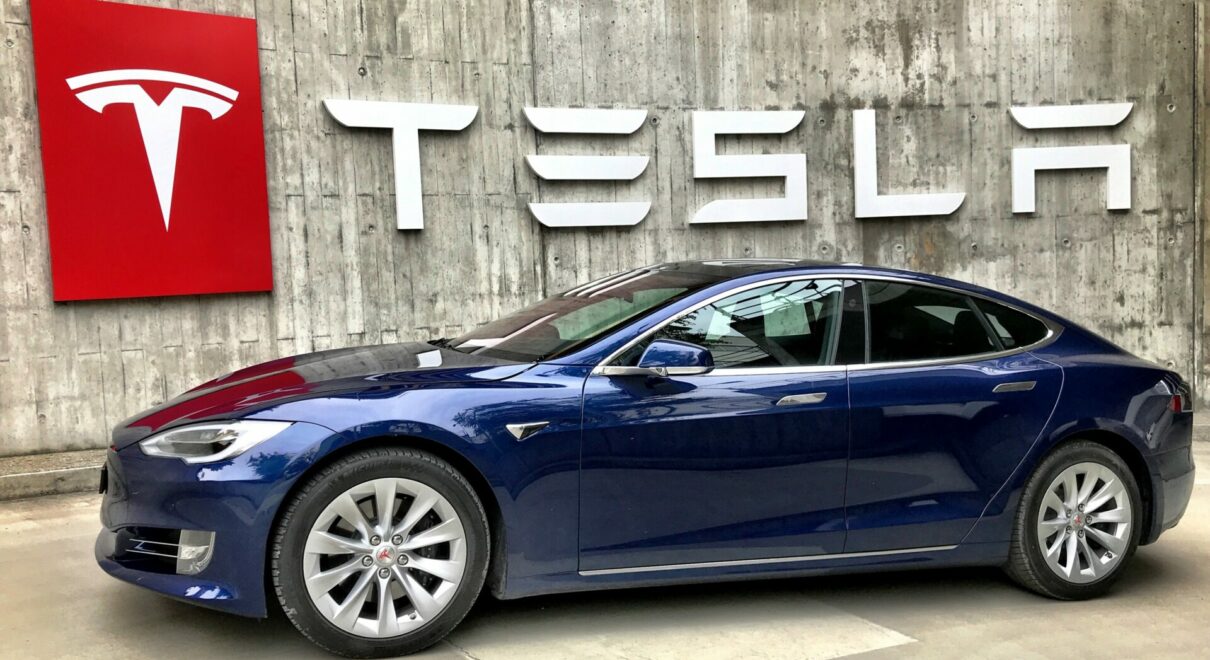
To the casual observer, Tesla is the world’s most recognizable manufacturer of electric vehicles (EVs). However, to view Tesla strictly through the lens of the automotive industry is to misunderstand its fundamental DNA. At its core, Tesla is a vertically integrated technology conglomerate. It is a software house, a robotics laboratory, a silicon design firm, and a renewable energy innovator all under one roof.
While traditional legacy automakers focus on mechanical engineering and outsource their software and battery chemistry, Tesla has taken the opposite approach. By treating the vehicle as a “computer on wheels” and the factory as “the machine that builds the machine,” Tesla has fundamentally disrupted how hardware and software interact. This article explores Tesla’s identity as a technology powerhouse, examining the engineering breakthroughs and digital ecosystems that define its market lead.

The Core of Tesla’s Ecosystem: Electric Vehicle Architecture and Battery Innovation
Tesla’s primary technological disruption began with the realization that an electric vehicle should not be a modified internal combustion engine (ICE) car, but a purpose-built piece of hardware. This shift in philosophy allowed Tesla to innovate in areas that legacy manufacturers are only now beginning to grasp: thermal management, battery chemistry, and powertrain efficiency.
The Structural Battery Pack and 4680 Cells
The heart of any EV is the battery, and Tesla’s approach to energy storage is what sets it apart. While most manufacturers purchase off-the-shelf battery modules, Tesla has invested heavily in the chemistry and physical form factor of its cells. The introduction of the 4680 cylindrical cell represents a massive leap in energy density and manufacturing efficiency.
By moving to a “tabless” design, Tesla reduced the internal resistance of the cells, allowing for faster charging and better thermal performance. More importantly, Tesla pioneered the “structural battery pack.” Instead of the battery being a heavy weight carried by the car, the battery pack is the car’s floor, providing structural rigidity and reducing the overall part count. This integration of chemical engineering and structural mechanics is a hallmark of Tesla’s tech-first approach.
Over-the-Air (OTA) Updates: Redefining Vehicle Longevity
Perhaps the most significant contribution Tesla has made to the tech world is the normalization of Over-the-Air (OTA) updates. Before Tesla, a car’s features were static the moment it left the dealership. If you wanted a better braking algorithm or a new infotainment feature, you had to buy a newer model.
Tesla treats its vehicles like smartphones. Through constant software iterations, Tesla can improve a vehicle’s range through better inverter efficiency, increase its horsepower, or even fix safety recalls remotely without the owner ever visiting a service center. This creates a software-defined vehicle where the hardware remains capable for years, kept fresh by a continuous stream of code.
Artificial Intelligence and the Quest for Full Self-Driving (FSD)
While many tech companies are working on Artificial Intelligence (AI) in a digital-only environment, Tesla is applying AI to the physical world at a scale never seen before. Tesla’s Full Self-Driving (FSD) program is essentially a massive experiment in “embodied AI,” where silicon brains must navigate the chaotic, unpredictable reality of human traffic.
Neural Networks and Computer Vision vs. LiDAR
One of the most debated aspects of Tesla’s technology is its “Vision Only” approach. While competitors like Waymo or Cruise rely on expensive LiDAR (Light Detection and Ranging) and highly detailed HD maps, Tesla relies exclusively on cameras and neural networks.
The rationale is simple but technologically complex: humans drive using vision and biological neural networks; therefore, a machine should be able to do the same. Tesla’s AI engineers train deep neural networks on millions of miles of real-world driving data collected from its global fleet. This “shadow mode” training allows the AI to learn from the best (and worst) human drivers, refining its ability to predict object behavior, recognize depth, and navigate complex intersections without the need for pre-mapped environments.
Dojo: The Supercomputing Backbone of Tesla AI
Training these massive neural networks requires an unprecedented amount of compute power. To solve this, Tesla didn’t just buy GPUs from vendors; they designed their own. The Dojo Supercomputer is a custom-built AI training machine designed from the ground up to process video data.
At the center of Dojo is the D1 chip, a high-performance processor designed specifically for AI workloads. By creating their own silicon, Tesla eliminates the bottlenecks found in general-purpose hardware. Dojo’s purpose is to take the petabytes of video data coming from the fleet and “teach” the FSD software how to drive with superhuman precision. This makes Tesla a major player in the semiconductor and supercomputing space, rivaling traditional tech giants.
Tesla Energy: Transforming the Grid through Software and Storage
Tesla’s mission statement is to “accelerate the world’s transition to sustainable energy.” This goal extends far beyond passenger cars. Tesla Energy is a massive, though often less-discussed, division that focuses on the two biggest hurdles of renewable energy: generation and storage.
Powerwall, Powerpack, and Megapack
Renewable energy sources like solar and wind are intermittent—they don’t work when the sun is down or the wind is still. Tesla’s solution is a suite of lithium-ion battery storage products. The Powerwall serves residential homes, while the Megapack is a massive utility-scale battery designed to replace traditional “peaker” power plants.
The technology here isn’t just in the hardware, but in the thermal management and safety systems that prevent “thermal runaway” in such high-density energy environments. By deploying Megapacks globally, Tesla is effectively creating a more resilient, decentralized electrical grid that can store excess renewable energy and discharge it when demand peaks.
Autobidder: The AI-Driven Energy Marketplace
The true “tech” magic of Tesla Energy lies in its software platform, Autobidder. As more homes and utilities adopt Tesla batteries, they become part of a “Virtual Power Plant” (VPP). Autobidder is an automated monetization platform that uses machine learning to predict energy demand and price.
It can automatically decide when to sell stored energy back to the grid for a profit and when to charge the batteries from the sun. This turns a simple hardware storage unit into an active, revenue-generating participant in the global energy market. In this sense, Tesla is becoming a digital energy utility provider, leveraging software to manage the world’s power consumption.
Beyond the Road: Robotics and the Evolution of the Optimus Program
The ultimate expression of Tesla’s tech stack is not a car, but a humanoid robot. Known as Optimus (or Tesla Bot), this project represents the convergence of everything Tesla has developed over the last decade: battery tech, AI inference, and high-performance actuators.
From Automotive Manufacturing to General-Purpose Humanoids
Tesla realized that a self-driving car is essentially a “robot on wheels.” The computer vision systems used to identify a pedestrian on a street can also be used to identify a tool on a factory floor. The FSD computer that fits inside a Model 3 is powerful enough to serve as the brain for a bipedal robot.
Optimus is designed to take over “dangerous, repetitive, and boring” tasks. To achieve this, Tesla is developing custom actuators—the “muscles” of the robot—that offer a balance of strength, precision, and energy efficiency. While still in development, Optimus represents Tesla’s transition into a general-purpose AI and robotics company.
The Synergy Between Tesla’s Silicon and Physical Robotics
What makes Tesla’s approach to robotics unique is the vertical integration. By designing the AI training chips (Dojo), the inference chips (FSD Computer), the software (Neural Networks), and the hardware (Actuators and Sensors), Tesla avoids the compatibility issues that plague other robotics firms.
If the robot needs a more efficient way to process tactile data from its fingers, Tesla’s engineers can modify the silicon and the software simultaneously. This level of control allows for a rapid iteration cycle that is common in software development but rare in heavy industry.
The Software-First Future
To answer “what is Tesla” requires looking past the glass and steel of their vehicles. Tesla is a technological ecosystem characterized by a relentless pursuit of efficiency through software and vertical integration. By owning the entire stack—from the lithium in the ground to the code that steers the car—Tesla has positioned itself at the intersection of AI, energy, and transportation.
Whether it is through the development of the world’s most advanced AI training supercomputer or the deployment of decentralized energy grids, Tesla’s identity is defined by its ability to solve complex physical problems with digital solutions. As the company continues to evolve into robotics and autonomous systems, it becomes increasingly clear that Tesla is not just competing with other automakers; it is competing with the world’s leading tech firms to build the infrastructure of the 21st century.
aViewFromTheCave is a participant in the Amazon Services LLC Associates Program, an affiliate advertising program designed to provide a means for sites to earn advertising fees by advertising and linking to Amazon.com. Amazon, the Amazon logo, AmazonSupply, and the AmazonSupply logo are trademarks of Amazon.com, Inc. or its affiliates. As an Amazon Associate we earn affiliate commissions from qualifying purchases.