
When investors ask, “What is Tesla stock price?” they are rarely looking for a singular numerical value that flickers across a ticker tape in real-time. Instead, they are typically inquiring about the underlying value, the momentum, and the financial health of one of the most polarizing and high-performing assets in the modern stock market. Listed under the ticker symbol TSLA on the Nasdaq, Tesla represents more than just a car manufacturer; it is a financial phenomenon that has redefined the parameters of growth investing and market capitalization in the 21st century.
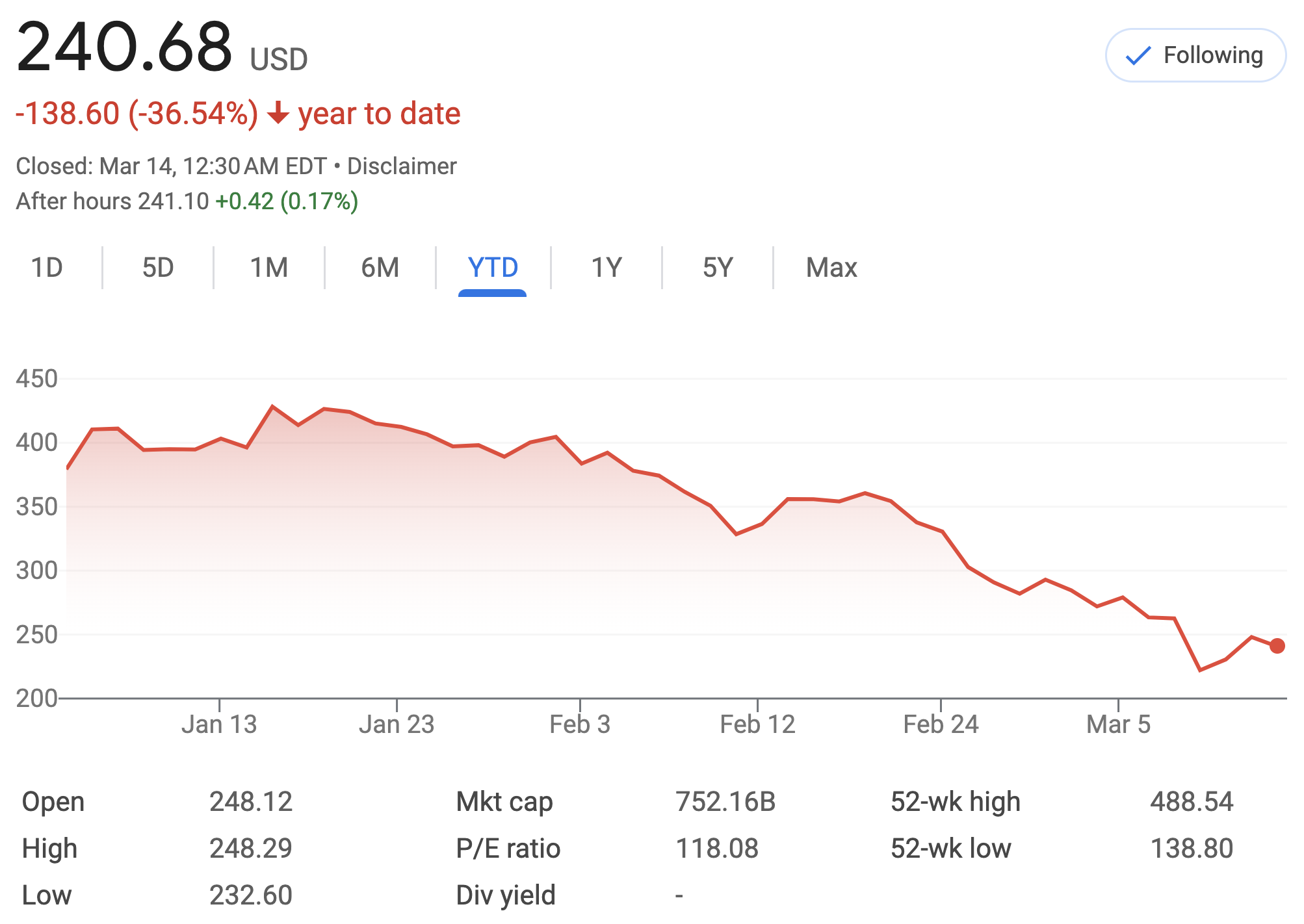
Understanding the Tesla stock price requires a deep dive into the mechanics of equity valuation, institutional sentiment, and the macroeconomic factors that influence the broader electric vehicle (EV) sector. For the modern investor, TSLA is often the cornerstone of a “high-risk, high-reward” portfolio, demanding a sophisticated level of financial literacy to navigate.
1. Deconstructing the Valuation: Why TSLA Defies Traditional Metrics
For many value investors, Tesla’s stock price has often seemed untethered from reality. However, to understand the price, one must understand how the market values “disruptive” growth versus traditional industrial output.
Market Capitalization vs. Share Price
The nominal share price of Tesla is a function of its total market capitalization divided by the number of outstanding shares. Tesla has undergone multiple stock splits (such as the 5-for-1 split in 2020 and the 3-for-1 split in 2022) to keep the share price accessible to retail investors. While the price per share might change after a split, the market cap—often hovering in the hundreds of billions or even exceeding a trillion dollars—is the true indicator of the company’s financial scale. Investors must focus on the market cap to compare Tesla to legacy automakers like Toyota or Volkswagen.
The Price-to-Earnings (P/E) Ratio Debate
One of the most discussed aspects of Tesla’s stock price is its P/E ratio. Historically, Tesla has traded at a P/E ratio significantly higher than the automotive industry average. While a traditional car company might trade at 6x to 10x earnings, Tesla has frequently traded at multiples exceeding 60x or even 100x. This suggests that the stock price is not just a reflection of current profits, but a “priced-in” expectation of future dominance in software, energy storage, and autonomous driving.
Cash Flow and Balance Sheet Strength
A critical component of the stock’s valuation is Tesla’s transition from a cash-burning startup to a cash-generating powerhouse. Analysts look at “Free Cash Flow” (FCF) to determine if the stock price is sustainable. Tesla’s ability to fund its Gigafactories through internal operations rather than debt has provided a “floor” for the stock price during market downturns, signaling to institutional investors that the company is financially mature.
2. Key Drivers of Price Volatility: What Moves the Needle?
Tesla is notorious for its volatility. The stock price can swing by 5% or 10% in a single trading session based on news cycles that would barely affect a more stable “Blue Chip” stock.
Quarterly Delivery Reports and Production Metrics
For Tesla, the primary catalyst for price movement is the quarterly delivery report. Because Tesla’s valuation is built on the premise of exponential growth, any “miss” in the number of vehicles delivered to customers can lead to a sharp decline in the stock price. Conversely, beating delivery estimates often triggers a “short squeeze,” where investors betting against the stock are forced to buy shares, driving the price even higher.
Regulatory Credits and Profitability Margins
A unique aspect of Tesla’s income statement is the sale of regulatory credits to other automakers who fail to meet environmental standards. In earlier years, these credits were the difference between a profit and a loss. Today, while Tesla is profitable on its own merits, the “Automotive Gross Margin” remains a key metric. If margins compress due to price cuts or rising raw material costs (like lithium), the stock price typically reacts negatively as investors fear a “race to the bottom” in EV pricing.
The “Elon Musk Premium” and Social Media Influence
It is impossible to discuss Tesla’s stock price without mentioning its CEO, Elon Musk. His public statements, acquisitions (such as X, formerly Twitter), and legal battles have a direct, if often unpredictable, impact on share value. This “key person risk” means that the stock price often prices in Musk’s personal brand and his perceived ability to innovate, making the stock as much a bet on a person as it is on a product.
3. Strategic Analysis: How to Evaluate Tesla as a Growth Asset

Investing in Tesla requires a dual-pronged approach, combining fundamental analysis with an understanding of technical market trends.
Fundamental Analysis: Looking Beyond the Car
To justify the current stock price, an investor must look at Tesla’s non-automotive revenue streams. This includes:
- Tesla Energy: Solar roof installations and Megapacks for grid storage.
- Full Self-Driving (FSD): The transition to a “SaaS” (Software as a Service) model where high-margin software subscriptions boost the bottom line.
- The Robotaxi Thesis: The potential for a decentralized ride-hailing network.
If an investor believes these sectors will mature, the current stock price may seem undervalued despite its high P/E ratio.
Technical Analysis: Support and Resistance Levels
For short-term traders, the Tesla stock price is often governed by “psychological” levels. Support levels (prices where the stock historically stops falling) and resistance levels (prices it struggles to move above) are vital. Because of Tesla’s high trading volume, it often follows technical patterns like “head and shoulders” or “moving average crossovers” more closely than less liquid stocks.
Long-term vs. Short-term Investment Strategies
Money managers often categorize Tesla as a “battleground stock.” Long-term investors (HODLers) often ignore daily fluctuations, focusing on the 5-to-10-year horizon of global EV adoption. Short-term traders, however, use the stock’s high “Beta” (a measure of volatility relative to the S&P 500) to profit from swing trading and options contracts.
4. Risks and External Pressures on Share Value
No investment is without risk, and Tesla faces unique challenges that can exert downward pressure on its stock price.
Global Competition and Market Share Erosion
While Tesla was once the only major player in the long-range EV space, the landscape has changed. In China, companies like BYD are offering competitive vehicles at lower price points. In Europe and the US, legacy giants like Hyundai, BMW, and Ford are catching up. As Tesla’s market share in specific regions fluctuates, the stock price must adjust to the reality of a more crowded and competitive marketplace.
Macroeconomic Factors: Interest Rates and Inflation
Tesla’s stock price is highly sensitive to the Federal Reserve’s interest rate environment. Higher interest rates make car loans more expensive, which can dampen demand for new vehicles. Furthermore, as a growth stock, Tesla’s future earnings are discounted more heavily when interest rates rise, often leading to a contraction in its valuation multiple.
Supply Chain and Geopolitical Tensions
With a massive Gigafactory in Shanghai and another in Berlin, Tesla is exposed to geopolitical risks. Trade tensions between the US and China, or disruptions in the supply of battery-grade minerals, can lead to production delays. Any threat to the “just-in-time” manufacturing model that Tesla employs is immediately reflected in a more cautious stock price.
5. Tesla’s Role in a Modern Investment Portfolio
The final consideration for anyone looking at the Tesla stock price is how it fits into a broader financial strategy.
Index Inclusion and Institutional Stability
Tesla’s inclusion in the S&P 500 in December 2020 marked a turning point for the stock. This meant that every index fund tracking the S&P 500 was required to buy TSLA shares, providing a level of institutional support and reducing the “penny stock” style volatility of its early years. Today, it is a staple in most growth-oriented ETFs and mutual funds.
Portfolio Allocation and Risk Management
Given its volatility, financial advisors often recommend that Tesla should not occupy an outsized portion of a diversified portfolio unless the investor has a very high risk tolerance. Rebalancing is key; when the Tesla stock price surges, it can quickly become 20% or 30% of a portfolio, exposing the investor to significant “single-stock risk.”

The Future Outlook: AI and Robotics
Many analysts argue that the future “Tesla stock price” will eventually be untethered from car sales entirely. If Tesla successfully pivots into a robotics company (via the Optimus program) or an AI powerhouse (via its Dojo supercomputer), the valuation could shift from an automotive multiple to a “Big Tech” multiple similar to Nvidia or Microsoft.
In conclusion, “What is Tesla stock price?” is a question that encompasses the entire spectrum of modern finance. It is a reflection of consumer demand, technological breakthrough, CEO personality, and global economic health. Whether you view it as an overvalued car company or the most important tech firm of the century, monitoring its price requires a disciplined focus on both the numbers in the balance sheet and the narrative of the future. For the informed investor, the price is not just a number—it is a signal of the market’s faith in the transition to a sustainable energy economy.
aViewFromTheCave is a participant in the Amazon Services LLC Associates Program, an affiliate advertising program designed to provide a means for sites to earn advertising fees by advertising and linking to Amazon.com. Amazon, the Amazon logo, AmazonSupply, and the AmazonSupply logo are trademarks of Amazon.com, Inc. or its affiliates. As an Amazon Associate we earn affiliate commissions from qualifying purchases.